There is a specific quality of light that exists along the Mediterranean coast — on the Greek islands, along the Amalfi Drive, in the hill towns of Provence — where the sun hits plaster walls and terracotta rooftops at an angle that makes everything look slightly ancient and completely unhurried. It is the kind of light that changes how you feel about time. Spending a single afternoon in a whitewashed courtyard in Santorini, or under the broad shade of a loggia in Tuscany, makes the sharp geometry and polished surfaces of modern life feel faintly ridiculous.
Mediterranean interior design is an attempt to bring that feeling home. Not as a theme park recreation — not the faux-Tuscan sponge painting and wrought-iron scrollwork of the 1990s, which was Mediterranean design at its worst — but as a genuine philosophy of living: choosing materials that age beautifully, building spaces that protect from heat and pull in light in equal measure, and treating the wall itself as something worth looking at before a single piece of furniture is placed in front of it.
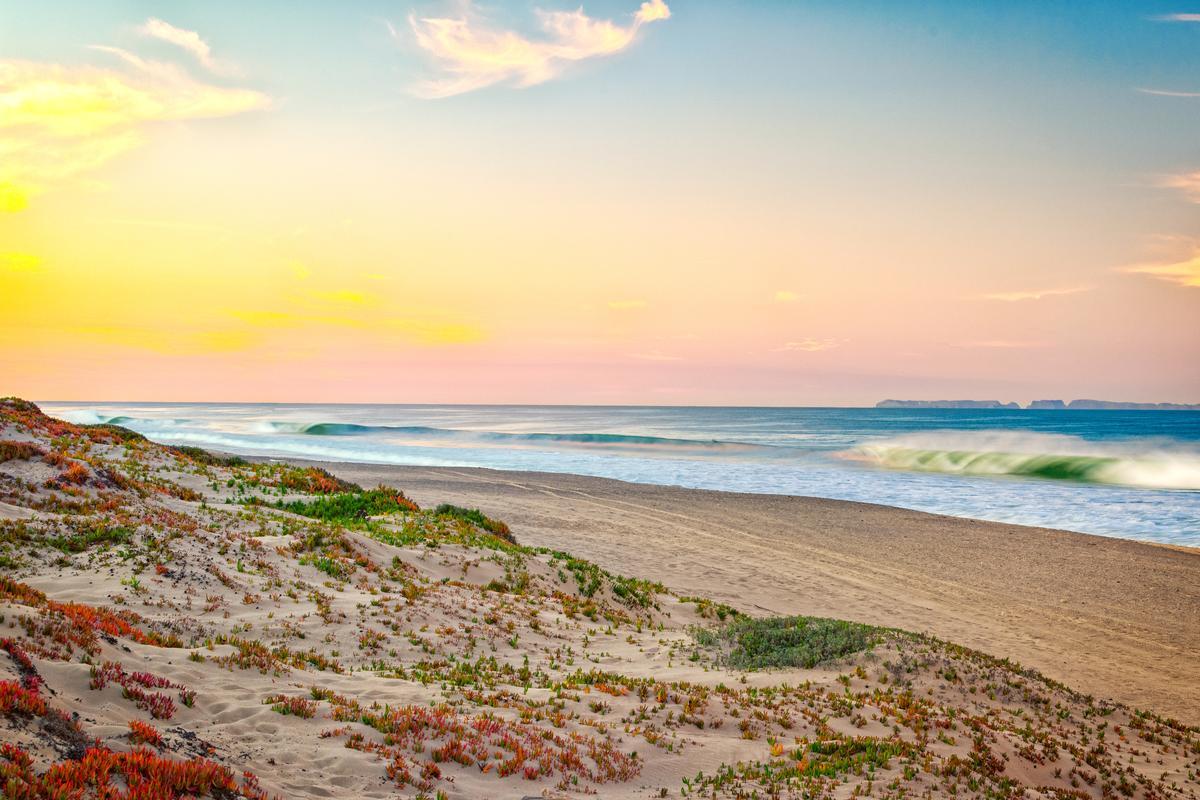
This guide covers the full picture: the history, the regional sub-styles, the evolution into Modern Mediterranean, why California became the style’s American home, how Picasso and Matisse are connected to your kitchen backsplash, and what art works best in spaces built around plaster, stone, and sun.
What Mediterranean Interior Design Actually Is
Mediterranean interior design draws from the centuries of cultural exchange between the countries bordering the Mediterranean Sea — Southern Europe, North Africa, and the Middle East — and translates their shared aesthetic into a residential style built around natural light, raw materials, and an indoor-outdoor relationship with the landscape. It is rooted in geography and climate rather than invented by a design movement or trend cycle, which is why it has survived through hundreds of years of fashion changes with its core character intact.
The style is defined by five core elements. An earthy, sun-baked palette forms the foundation: chalky whites, warm creams, and soft beiges carry the base, accented by terracotta orange, sea blue, olive green, and the golden ochre of sun-dried hillsides. Tactile, imperfect textures replace smooth drywall: hand-plastered stucco walls, raw stone surfaces, and exposed wooden ceiling beams add layers of material depth that no paint color can replicate. Arches and curves soften the architecture everywhere they appear — in doorways, recessed wall niches, and the sweeping windows designed to frame outdoor views rather than merely admit light. Terracotta, flagstone, and hand-painted encaustic cement tiles cover the floors, chosen specifically because they feel cool underfoot in the intense heat of a coastal Mediterranean summer. And heavy, dark-wood furniture — walnut, chestnut, wrought iron — grounds the interior with the same visual weight as the architecture surrounding it.
None of these choices are decorative in origin. Every one of them is a direct response to climate. Thick plaster walls insulate against blazing afternoon heat. Small arched windows in traditional Mediterranean buildings shade the interior from direct sun while still allowing the warm breeze to circulate. Stone floors release the heat they absorb during the day slowly through the night, keeping rooms comfortable without mechanical systems. The design is climatically intelligent, which is a large part of why it keeps working so well.

The Three Regional Sub-Styles
Mediterranean design is not a single, uniform aesthetic. It is a tapestry woven from centuries of trade, conquest, and cultural exchange across three distinct regions, each of which left a recognizable signature on the style.
Three Regional Signatures
- Italian & Tuscan: Old-world elegance shaped by the Renaissance and the rural farmhouse tradition. Dark wrought iron, carved wood, ornate architectural details, and a warm palette of ochre, deep terracotta, and burnished gold define the look.
- Spanish Colonial Revival: White stucco walls, dark wood accents, vibrant hand-painted ceramic tiles, heavy timber beams, inner courtyards with stone fountains, and wrought-iron balcony railings — the version that shaped residential architecture across California and Florida.
- Greek Cycladic: The most minimalist branch. Buildings whitewashed to deflect intense sun, smooth rounded corners, and strictly cobalt blue or sea-green accents creating a high-contrast, brilliantly simple palette — the version most directly influencing Modern Mediterranean today.
Traditional Mediterranean vs. Modern Mediterranean
The most important distinction in Mediterranean design right now is between its traditional and modern expressions, because they look substantially different despite sharing the same architectural bones.
Traditional Mediterranean design embraces grandeur, history, and a certain formal richness. It features heavy, dark-stained walnut and cherry furniture, highly saturated color accents in deep terracotta, cobalt, and ochre, ornate wrought-iron chandeliers and grilles, hand-painted ceramic tiles in vivid patterns, and walls that are heavily troweled or sponge-painted with decorative intention. Ceilings are packed with dark carved box beams. Every room has a quality of deliberate historical weight.
Modern Mediterranean — also called Mediterranean Minimalist or the New Mediterranean — takes those same historic bones and strips away the fussiness entirely. It keeps the arches, the plaster walls, the stone floors, and the warm palette, but lightens everything. Wood tones move from dark espresso to bleached oak and raw pine. The color palette becomes monochromatic and low-contrast — chalky bone, dusty sage, muted charcoal, faded terracotta rather than vibrant orange. Furniture becomes low-slung and sculptural with organic curved lines instead of ornate carved details. The plaster is smooth and matte — applied in natural lime-wash that interacts with daylight rather than competing with it. Heavy decorative ironwork disappears in favor of large unobstructed panes of glass that maximize the connection to the outside.
The modern version is driven by the same wabi-sabi philosophy that has shaped Japanese-influenced design globally — the celebration of imperfect, impermanent, and unrefined materials that develop character over time. Unpolished travertine with natural pits left exposed. Reclaimed wood with visible grain and age. Zellige tiles, each handmade with slight imperfections, that bounce light differently from every angle. These are materials that look better at ten years old than they did on the day they were installed.
How Popular Is Mediterranean Design Right Now?
Mediterranean design is experiencing one of the most significant revivals in contemporary interior design — but it is a revival of the modern expression, not a return to the 1990s Tuscan era. Design industry forecasters across major publications have identified what they call Refined Mediterranean or the New Mediterranean as one of the leading global residential design directions of the mid-2020s.
The revival is driven by the same forces pushing traditional interior design back into cultural favor: a widespread rejection of cold minimalism and the sterile gray-on-gray aesthetic that dominated the 2010s, and a genuine appetite for materials that feel real, warm, and earned. The death of all-gray has been good for Mediterranean design. Deep ochre, warm terracotta, limewashed bone, and raw travertine are appearing everywhere in high-end residential interiors right now, and every one of those choices is a page from the Mediterranean design playbook.
The style has also broken decisively out of its coastal origins. While it was historically tied to converted beach houses and cliffside villas, Mediterranean design now thrives equally well in inland desert communities where thick plaster walls and deep-shaded courtyards are actually climatically appropriate. Palm Springs, Scottsdale, and the communities of inland California have become major centers of the style specifically because their dry heat maps so closely to the climate that generated Mediterranean architecture in the first place.
“The design is climatically intelligent — thick plaster walls, arched shade windows, stone floors that cool through the night — which is a large part of why it keeps working so well.”
Mediterranean vs. American Coastal and Hamptons Style
Both styles draw inspiration from proximity to the ocean, but they look and feel almost opposite to each other, and understanding why clarifies what Mediterranean design is actually doing.
Mediterranean design is old-world, sun-baked, and historically weighted. Its palette is warm and earthy — chalky whites, terracotta, olive green, deep cobalt. Its walls are imperfect and tactile: textured plaster, lime-wash, raw stone. Its floors are cool stone — terracotta tiles, flagstone, or hand-painted encaustic cement. Its furniture is heavy and organic, built from dark woods and wrought iron with curved, arched silhouettes. Its architecture is designed to protect from heat — smaller arched windows, thick walls, deep shade — creating beautiful pockets of shadow in the interior even at midday.
Hamptons and American Coastal design is polished, airy, and tailored. Its palette is cool and crisp — bright whites, soft grays, navy blue, duck-egg, and pale tiffany. Its walls are smooth, linear drywall heavily accented with classic woodwork: beadboard, shiplap, wainscoting. Its floors are warm wide-plank hardwood in light oak or weathered gray. Its furniture is tailored and structured: overstuffed white linen sofas, rolled arms, light bleached wood and rattan. Its architecture is built to maximize softer northeastern light, using massive double-hung windows, glass French doors, and soaring vaulted ceilings to flood interiors with bright, even daylight.
The simplest summary: Mediterranean design creates a cool, shadowed sanctuary against blazing heat. American Coastal design creates an open, breezy pavilion to capture the light. One is built for the relentless sun of the Aegean. The other is built for the gentle seasonality of the Hamptons. Both are beautiful. They make completely different arguments about how to relate to the ocean.

Mediterranean vs. Pueblo Revival — The American Southwest Comparison
Because both Mediterranean and Pueblo Revival (Adobe) architecture feature thick earthy walls built to manage desert heat, they are frequently confused at a glance. They share historical DNA — Spanish colonization brought Mediterranean architectural concepts to the American Southwest, where they merged with the indigenous building traditions of the Puebloans — but they express that shared ancestry very differently.
The roofline is the fastest tell. Mediterranean architecture has sloped, pitched roofs covered in barrel-shaped red clay tiles — one of its most iconic visual signatures. Pueblo Revival has absolutely flat roofs with zero visible shingles or tiles, and a stepped, blocky, asymmetrical silhouette that closely mimics the multi-tiered look of ancient Pueblo complexes like Taos Pueblo.
Wall color and edge treatment differ equally. Mediterranean stucco is typically chalky white or warm cream with crisp, deliberate architectural finishing. Pueblo Revival stucco is heavily textured to mimic hand-smoothed mud adobe, in strict desert tones of deep ochre, rust, and rich brown-pink — and its edges are completely rounded and soft, making buildings that appear to grow organically from the soil rather than being constructed on it.
Wood tells the story most clearly. Pueblo Revival relies on vigas — large, round, unpeeled pine logs that pierce through interior ceilings and protrude past the exterior walls, with smaller latilla poles laid across them in a herringbone ceiling pattern. Mediterranean design uses square, dark-finished timber box beams that remain flush inside the walls, treated as polished architectural framework rather than raw tree trunks.
California and the Mediterranean — The American Riviera
No country outside Europe has adopted Mediterranean design as completely or as authentically as California, and understanding why requires understanding the geography rather than just the aesthetics.
California shares something genuinely rare with the Mediterranean coast: a true Mediterranean climate, defined by hot, dry summers, mild wet winters, and the specific quality of coastal light that produces the bleached, hazy, golden-hour atmosphere the style depends on. The Santa Ynez Mountains rise sharply behind Santa Barbara in exactly the same configuration as the Maritime Alps behind Nice, producing a microclimate that delivers over 300 days of sunshine per year and the same protected, south-facing coastal orientation that defines the French Riviera. This is why when you stand on Santa Barbara’s coast and look south over the Channel Islands, the sensation of being on the Mediterranean is not a romantic fantasy but a genuine geographic reality.
When a devastating 6.8 magnitude earthquake struck Santa Barbara in 1925 and leveled much of the downtown, city leaders made a historic civic decision that permanently defined both the city and California’s relationship with Mediterranean design: they mandated that the entire downtown and its residential sectors be rebuilt in a unified Spanish Colonial Revival style. The result — seamless white stucco buildings, heavy wrought-iron balconies, deeply recessed arched windows, and bright red-tile rooftops framing views of the Santa Ynez Mountains — earned the city a nickname it has carried ever since: The American Riviera.
Santa Barbara is the clearest example but not the only one. San Clemente, founded in 1925 by developer Ole Hanson, was designed from its inception as a coastal resort town built exclusively in the traditional Spanish style, with every home and commercial building featuring white plaster walls and red tile roofs. Pasadena combines Craftsman architecture with opulent Mediterranean and Spanish Revival estates from the early 20th century, anchored by a monumental civic center. Rancho Santa Fe, designed in the 1920s by architect Lilian Rice who was deeply inspired by rural Andalusian vernacular, features sprawling single-story haciendas with heavy timber beams, earthy stone pathways, and highly private central courtyards. And Carmel-by-the-Sea, beyond its famous storybook cottages, carries a heavy presence of Spanish Revival architecture centered on the Carmel Mission Basilica — one of the finest examples of late 18th-century Spanish architecture in the state.
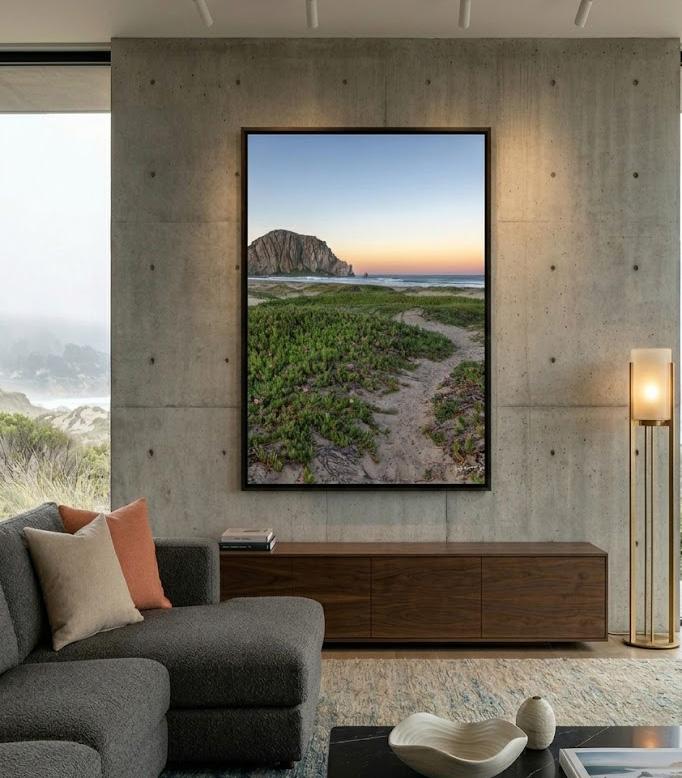
I photograph extensively along the California coast and Central Coast, and the Mediterranean quality of these places is unmistakable in the field — the specific light, the stucco and tile and bougainvillea, the way the mountains and the sea frame every view. You can see some of that work in the California photography collection.
Mediterranean Design and the Art World
The connection between Mediterranean interior design and fine art history runs so deep that understanding one illuminates the other in ways that most design articles skip entirely.
The Mediterranean wall is historically not a passive backdrop. Since the Minoans in Crete around 1600 BCE, and later the Romans in Pompeii, Mediterranean spaces have relied on frescoes — the technique of painting directly onto wet lime plaster so the pigment chemically fuses with the wall as it dries, becoming part of the architecture rather than sitting on top of it. Today’s obsession with lime-wash, microcement, and Roman clay in Modern Mediterranean interiors is a direct continuation of this tradition: by using multi-tonal, hand-applied plasters, contemporary designers treat the entire structural surface of a room as a giant, tactile, minimalist painting that interacts with shifting daylight throughout the day. The wall is the first artwork in the room.
The most important convergence between Mediterranean design and the modern art world happened in the mid-20th century, when Henri Matisse, Pablo Picasso, and Marc Chagall all moved from the gray, overcast light of northern Europe to the Côte d’Azur — the French Riviera — and had their entire artistic practice transformed by the experience. Picasso began working heavily in ceramic studios in Vallauris, creating loose, expressive terracotta plates and pitchers. Matisse, in his final years, used the blazing Mediterranean light as the subject and the tool of his late paper cut works. The colors, the looseness, the celebration of craft objects and folk pottery as valid aesthetic subjects — all of it came directly from the experience of living in Mediterranean light. The mid-century design aesthetic that followed — warm terracotta, expressive abstracts, handmade ceramic objects treated as fine art — was the domestic residue of that artistic migration south.
There is also the phenomenon of the Grand Tour — the 17th-to-19th-century tradition in which wealthy European aristocrats traveled through Italy and Greece to study classical art, returning home with crates of marble bust fragments, architectural sketches, and landscape paintings. This “collector’s mentality” is embedded in the DNA of traditional Mediterranean interior design: spaces that feel accumulated rather than purchased, where an ancient weathered amphora sits on a raw concrete pedestal next to a modern abstract canvas, and both objects are treated as equally worthy of contemplation.
The Mediterranean region has also long resisted the strict distinction Western art history draws between fine art and craft. A hand-woven Moroccan tapestry, a rough-chiseled travertine sink basin, or a set of irregular hand-molded zellige tiles are celebrated with the same reverence as a gallery canvas. The art is in the visible hand of the maker, the texture of the raw material, and the natural patina it develops over decades of human touch — which is exactly what wabi-sabi says about a Japanese tea bowl, and exactly what the Mediterranean art tradition has been saying for 3,000 years.
The Best Art for Mediterranean Interiors
Art selection in Mediterranean spaces has one governing principle: the work should complement the architecture without competing with it. Because the walls, floors, and textures of a well-executed Mediterranean room are already doing substantial visual work, art functions best as a complement to that material richness rather than a statement made in opposition to it.
Impressionistic and atmospheric landscape photography and painting are the most natural companions to Mediterranean interiors. Atmospheric images of sun-drenched coastlines, rolling hills lit in golden-hour warmth, misty forest canopies, dramatic coastal cliffs, or quiet harbor scenes bring the natural world indoors in a way that feels completely consistent with the Mediterranean philosophy of building as an extension of the landscape. The key quality to look for is atmosphere — images with genuine tonal depth, where light and shadow interact across the composition rather than reading as clean, graphic documentation. The landscape photography collection at Jongas Fine Art Photography includes work with the atmospheric depth and tonal warmth that speaks directly to Mediterranean interiors.
Textural abstract art works exceptionally well in Modern Mediterranean spaces specifically because the emphasis in these interiors is on texture rather than color. Large-scale abstract photography or painting with a monochromatic or low-contrast palette — chalky whites, deep sand tones, warm charcoal — echoes the hand-plastered quality of the walls themselves without introducing competing visual complexity. The abstract piece does not need to match the room. It needs to share its material language. An abstract photograph with the luminous depth of TruLife acrylic-mounting brings a visual weight and glow that interacts beautifully with the diffused, warm light of a Mediterranean interior.
Vintage botanical and architectural line drawings in structured gallery grids provide a clean, editorial counterpoint to heavy stone and exposed timber. The delicate precision of a sepia-tone olive branch botanical study or an architectural sketch of a classical arcade holds its own against textured walls precisely because the contrast is so deliberate — the refined against the rugged.
Sculptural and dimensional art is perhaps the most underused opportunity in Mediterranean spaces. Hand-carved limestone relief panels, woven textile wall hangings in raw linen or jute, and antique ceramic plates mounted directly to plaster all catch light dynamically throughout the day, using the architecture’s own play of sun and shadow as their primary display medium.
Framing and placement: Avoid shiny metals and synthetic black plastic frames in Mediterranean spaces. Raw or oiled oak, walnut, and slim matte wrought-iron frames that show age and craft are the right choices. Wide off-white linen matting gives prints breathing room and elevates them to gallery-worthy status even in a casual room. Scale matters more than quantity — one massive hero piece on a soaring plaster wall communicates more clearly than a crowded grid of smaller prints.
The Modern Mediterranean Kitchen — Materials and Details
The kitchen is where Modern Mediterranean design makes its most specific material argument, and the details are precise enough to be worth understanding before you engage a designer or contractor.
The walls need to feel tactile and organic rather than flat. The essential finish is microcement, lime-wash, or Roman clay — applied not just to the walls but directly over the range hood box to create a monolithic sculptural focal point above the cooking surface. This is the single highest-impact change available in a Mediterranean kitchen renovation.
For tile, zellige is the absolute hallmark of Modern Mediterranean design. These are hand-molded Moroccan clay tiles where every single piece has slight imperfections, uneven edges, and subtle shade variations. When light hits them, they bounce it dynamically in a way no factory-perfect tile can replicate. The palette stays monochromatic — creamy white, bone, soft sand, or muted olive green — run in a classic stacked grid with minimal tight grout lines that emphasize the raw clay edges.
Cabinetry moves away from the heavy dark espresso wood that defined Tuscan kitchens of the 1990s. Modern Mediterranean uses quarter-sawn white oak, bleached walnut, or reclaimed old-growth pine with a clear matte finish, in simple flat-panel or slim shaker door profiles. Hardware is unlacquered brass, burnished bronze, or matte black iron — living metals that develop patina naturally over time. Countertops are travertine, limestone, or honed low-vein marble, always in a honed or leathered finish rather than polished, giving the stone a satin texture that absorbs rather than reflects light.
The Modern Mediterranean kitchen edit requires one discipline above all: restraint. Pick two high-texture hero elements — a full-height zellige backsplash and a plastered range hood, for example — and keep everything surrounding them clean, linear, and quiet. The kitchen should feel grounded and historic without feeling busy.
DIY Mediterranean — The Highest-Impact Changes Without Full Renovation
You do not need a full renovation to introduce Mediterranean character into an existing space. Because the style is fundamentally about texture and material rather than structural reconfiguration, several high-impact changes are genuinely accessible as weekend DIY projects.
The single highest-leverage change is transforming a flat painted wall into a textured one using Roman clay or lime-wash paint. Roman clay is applied with a putty knife in short, overlapping sweeping strokes to create a smooth, stone-like depth. Lime-wash is applied with a large masonry block brush in a loose cross-hatch “X” pattern that creates a beautifully mottled, chalky, multi-tonal finish mimicking a European villa exterior. Both finishes require proper surface preparation — Roman clay needs a standard acrylic primer; lime-wash requires a dedicated mineral primer, never standard latex paint — and both should be started on a small room like a powder room or entryway before tackling a large living room wall. The critical technique rule for both: never stop mid-wall. Once you begin a wall, continue to the corner without a break, or you will get a visible lap line where wet material overlapped the dry.
Beyond the walls, lighting is the fastest transformation available. Replace standard fixtures with metal cage pendants in matte black or oil-rubbed bronze using amber Edison bulbs. Replace hardware on cabinets and doors with unlacquered brass or matte iron. Remove synthetic blinds and hang sheer white linen curtains on slim black iron rods mounted high and wide above the windows, so the fabric pools slightly on the floor. Apply the 70/30 rule — keep 70 percent of the room warm and comfortable through soft organic textiles, and use Mediterranean material accents for the remaining 30 percent — and the result reads as sophisticated rather than themed.
Mediterranean Plants — Inside and Out
The greenery in a Mediterranean space should feel sculptural and deliberate rather than lush and tropical. The goal is silvery-green foliage, woody stems, and sun-loving herbs rather than the dense monstera-and-pothos vibe of a tropical indoor garden.
Indoors, the olive tree is the crown jewel. Arbequina or Mission olives in large weathered terracotta pots positioned near south-facing windows bring the unmistakable silvery-green lance-shaped foliage that mirrors the chalky texture of lime-washed walls. Meyer lemon trees in sunny kitchens add fragrance and vibrant warmth when in bloom. Bay laurel and dwarf myrtle — both sacred plants in ancient Mediterranean cultures — lend architectural structure when pruned as simple topiaries.
Outdoors, bougainvillea draped over entry archways and pergolas provides the magenta-and-white waterfall of color that defines the Mediterranean coastal streetscape. Italian cypress in columnar pairs flanking a main entrance adds classical vertical structure instantly. French lavender massed along walkways delivers the hazy purple-gray texture and the unmistakable scent. The container matters as much as the plant: raw terracotta, unglazed clay, and rough-textured concrete in neutral tones are the correct vessels. Allow them to develop their natural white mineral patina over time. That aging is not neglect. It is the style working exactly as intended.
Related Styles Worth Knowing
Wabi-Sabi, the Japanese philosophy of finding beauty in imperfect and impermanent things, has merged with Western design to create interiors that look remarkably similar to Modern Mediterranean at first glance — the same textured walls, neutral palettes, and completely raw unpolished materials. The difference is in energy: Mediterranean design has a sunny, coastal warmth with rounded arches and handmade pottery, while Wabi-Sabi is quieter and more meditative, with asymmetrical organic shapes and a deliberately spare stillness.
Mexican Hacienda and Spanish Colonial design shares the exact architectural skeleton — thick stucco walls, sweeping arches, heavy exposed wooden ceiling beams, terracotta floor tiles — but leans into vibrant folk art, hand-carved leather furniture, bright Talavera tilework, and jewel-tone woven textiles for a more festive, colorful expression of the same structural vocabulary.
Moroccan Modern is a direct cousin through shared history: Morocco faces the Mediterranean coast of Spain and Italy, and its design traditions have been in constant dialogue with Southern European aesthetics for centuries. It introduces more intricate geometric architecture — keyhole arches, horseshoe doorways — and richly textured shaggy Beni Ourain wool rugs that add a cozy bohemian layer beneath the familiar plaster walls and handmade zellige tiles.
California Casual takes the bright, airy, indoor-outdoor essence of Modern Mediterranean and fully contemporizes it — dropping the historic architecture (no arches, no plaster, no stone) in favor of clean white drywall, light-toned oak hardwood, and mid-century modern furniture silhouettes mixed with relaxed natural fiber textures.
TV Shows Worth Watching
Mediterranean Life on HGTV is the closest a network series gets to a pure visual education in regional differences within the style — watching how a stone cliffside home in Malta handles light and layout entirely differently from a whitewashed villa in Crete is a better design education than any single article can provide. The World’s Most Extraordinary Homes on Netflix and BBC, particularly the “Coast” and “Spain” episodes, goes deeply into the engineering and architectural philosophy of raw board-formed concrete, native stone, and underground cooling systems in ultra-modern Mediterranean luxury homes. Grand Designs with Kevin McCloud follows expats converting ancient Spanish ruins, olive oil mills, and traditional fincas into livable spaces, providing the best available television education in what authentic materials actually demand of builders. And for the Modern Mediterranean interior more specifically, specific renovation episodes of Fixer Upper and Fixer to Fabulous have documented the transformation of generic boxy suburban houses into Mediterranean-inspired bungalows using limewash, arched niches, and plaster range hoods that represent the style’s current residential mainstream.
Finding a Mediterranean Interior Designer
Because Mediterranean design depends so heavily on architectural execution — plaster application, stone work, arched framing — finding the right designer means finding someone whose expertise goes beyond furniture sourcing into genuine interior architecture. The best places to look are geographic: Santa Barbara and Montecito are the absolute epicenter, with designers who have established relationships with specialized plaster artisans and stone masons. Miami and Palm Beach have deep Spanish and Mediterranean Revival expertise. Scottsdale and Austin are strong sources for designers who excel at the earthbound desert variant of the style.
When interviewing candidates, the questions that reveal real expertise are specific: Do you have experience with Roman clay, microcement, or lime-wash finishes? How do you source zellige tile and handmade stone? Can you show me a project where you balanced historic elements with a clean modern layout? How do you approach the maintenance realities of raw porous materials like travertine in a household with children? The answers to these questions will tell you within five minutes whether you are talking to a genuine Mediterranean design specialist or a general designer who has done one renovation in a warm color palette and is calling it Mediterranean.
The Light That Changes How You Feel About Time
What Mediterranean design ultimately offers is not a style. It is a pace. The thick walls that keep the space cool ask you to slow down and stay inside during the heat of the afternoon. The arched window that frames a courtyard view rather than maximizing square footage tells you this space is for looking as much as for living. The plaster wall that interacts with the changing angle of daylight across the hours gives you something genuinely worth watching on a Tuesday morning without going anywhere at all.
The art in these spaces works the same way. A large-format atmospheric landscape photograph on a limewashed wall does not just decorate the space. It opens it outward toward the California coastline or the Sierra Nevada or the Pacific at dawn, extending the room’s connection to the natural world the same way an arched window does — just through a different kind of frame.
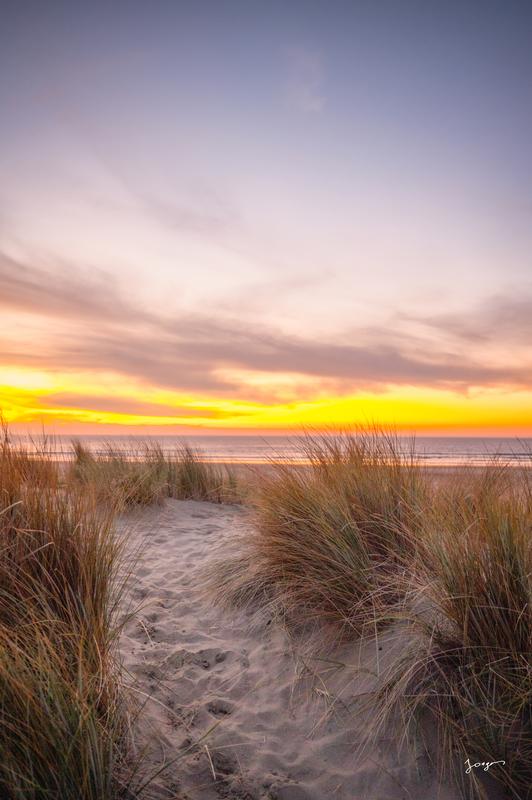
Explore the California Photography Collection →
Explore the Landscape Photography Collection →
Explore the Abstract Photography Collection →
Read About Traditional Interior Design →
Read About Contemporary Interior Design →
Eddie Jongas is a modern fine art photographer based in Las Vegas, Nevada, who photographs extensively along the California coast and Central Coast — landscapes that share the same Mediterranean light and geography that define the style. His TruLife acrylic-mounted limited edition prints are available exclusively through jongasfineartphotography.com. Free shipping to all 50 states.
