In July 1962, a 34-year-old commercial illustrator from Pittsburgh walked into the Ferus Gallery on La Cienega Boulevard in Los Angeles and changed the history of American art. He had brought with him 32 canvases, each depicting a single flavor of Campbell’s Soup, arranged along a narrow wall ledge exactly the way they would appear in a grocery store aisle. A neighboring gallery owner immediately stacked real soup cans in his window and advertised them at two for 33 cents. The mockery was the point. The point became one of the most valuable bodies of art in human history. The 32 original Campbell’s Soup Cans now hang permanently at the Museum of Modern Art in New York and are worth, conservatively, hundreds of millions of dollars.
The man was Andy Warhol. And the argument he made that summer in Los Angeles — that a soup can on a wall is no less worthy of serious contemplation than a Renaissance portrait — is still the most productive argument the art world has ever had with itself.
Pittsburgh, Illness, and the Making of an Obsession
Andrew Warhola was born in Pittsburgh, Pennsylvania, in 1928 to Slovakian immigrant parents who had arrived in America with very little and built a life in the city’s working-class neighborhoods. His father worked in construction. His mother, Julia, was a devout Byzantine Catholic who made and sold hand-crafted flowers from the family home to survive. The faith she practiced quietly and without show would stay with Andy for the rest of his life — one of many things about him that his public persona was specifically designed to conceal.
When Warhol was in third grade he contracted Sydenham’s chorea — a neurological complication of rheumatic fever that causes involuntary muscle movements and blotchy skin pigmentation. The disease left him fragile, pale, and terrified of doctors and hospitals for the rest of his life. It also left him bedridden for months. His mother, who adored him completely, spent those months at his side with coloring books, paper dolls, and movie magazines. Lying in bed in Pittsburgh, too sick to go outside, Warhol developed the obsessions that would define his entire career: celebrity imagery, commercial layout, the specific graphic language of mass-produced things. He collected photographs of movie stars the way other children collected baseball cards. He wrote fan letters. He was already, at nine years old, fully enrolled in the culture of celebrity worship that he would spend the next five decades both celebrating and dissecting.
He studied art at what is now Carnegie Mellon University and graduated in 1949 with a degree in pictorial design. Within a year he was in New York working as a commercial illustrator, and within a decade he was one of the most successful and sought-after commercial artists in the city — winning consecutive awards from the Art Directors Club and the American Institute of Graphic Arts for his shoe illustrations, album cover designs, and advertising layouts for clients including Glamour magazine, Tiffany & Co., and Columbia Records. His drawings had a distinctive quality, a kind of deliberate imperfection produced by a blotted-line technique he had developed, that made them feel simultaneously casual and precise. Clients loved them. Warhol, who wanted to be a serious fine artist more than anything else, found commercial success easy and meaningful recognition elusive.
The Ferus Gallery changed that.
The Silkscreen Revolution — How He Did It and Why It Mattered
Before Andy Warhol, the Western fine art world was built on a foundational myth: the unique original. A painting had value because one person’s hand had touched that specific canvas, and no other canvas in the world carried exactly that mark. The rarity of the original was inseparable from its meaning. Warhol decided to dismantle this myth systematically, and he chose the most deliberately anti-artistic tool available to do it: the industrial silkscreen.
Silkscreen printing was not invented by Warhol. It was a commercial manufacturing process used for printing textiles, advertising posters, and consumer packaging at industrial scale. Here is how he adapted it to create fine art canvases. He would select an existing photograph — a publicity headshot of Marilyn Monroe, a news photograph of a car crash, an advertising image of a soup can — and have a photo laboratory transfer it onto a fine mesh screen coated with light-sensitive emulsion. When exposed to intense light with the photo negative, the emulsion hardened everywhere except where the dark lines of the image fell, leaving those pores in the mesh open. On a blank canvas, Warhol or his assistants would first paint large, flat blocks of bright acrylic color by hand. The prepared screen was then laid over the painted canvas, black oil-based ink poured onto it, and a rubber blade called a squeegee dragged across the surface. The ink forced its way through the open pores, printing the photographic image on top of the vivid color field beneath.
Because it was a manual, physical process, no two prints came out exactly the same. The screen would clog, ink would smudge, the registration would shift, causing colors and photographic lines to misalign. Warhol loved these accidents. He felt they emphasized the cold, mechanical nature of the process and echoed the way identical consumer goods still carry tiny individual variations. The imperfection was the argument: if the machine introduced randomness, was the result still “original”? And if 50 prints came from the same screen, which one was the “real” one? Warhol’s answer was that all of them were, and that the question itself revealed how arbitrary the art world’s definition of originality had always been.
“I think somebody should be able to do all my paintings for me.”
He made the argument explicit in a 1963 interview that still makes curators uncomfortable. Asked about the role of his assistants in producing the work, he said: “I think somebody should be able to do all my paintings for me.” He was not being provocative for its own sake. He was making a philosophical claim: that the concept and the decision — what to depict, how to frame it, what color to place behind it — constituted the artistic act, and that the physical execution of those decisions was beside the point. This was the founding principle of Conceptual Art, stated as plainly as it has ever been stated, by a man wearing a silver wig in a tin-foil-covered loft in Midtown Manhattan.
That argument is not alien to photography. Every photographer who has ever pressed a shutter has been making the same claim: that the decision to look at something and the technical choices that surround that decision constitute art, regardless of whether the artist hand-mixed the chemicals that developed the print. The camera, like the squeegee, is a tool. The vision behind it is what matters.
The Factory — Four Addresses, One Idea
In 1963, Warhol rented the fifth floor of a former hat factory at 231 East 47th Street in Midtown Manhattan and transformed it into what he simply called The Factory. His friend and lighting designer Billy Name covered every surface — walls, ceiling, pipes, toilet — in aluminum foil and silver spray paint, creating a space that looked like the inside of a spaceship and felt like the center of the universe. In the 1960s, it was.
The Silver Factory, as it became known, was simultaneously an art production studio, a film set, a recording space, a party venue, and a philosophical provocation. Warhol produced his most important early work there while surrounding himself with a cast of characters he called his Superstars: people he plucked from the New York underground — socialites, drag queens, street poets, musicians, runaway heiresses — and simply declared famous by turning his 16mm camera on them. In doing so, he anticipated reality television and influencer culture by several decades. He was not making a prediction. He was building the prototype.
The most famous of the Superstars was Edie Sedgwick, a wealthy heiress from an old New England family who became Warhol’s greatest muse. With her cropped silver hair, dramatic eyeliner, and chandelier earrings, she became a defining 1960s fashion icon — a prototype for every “It Girl” that has come since. Warhol featured her in underground films including Poor Little Rich Girl and Chelsea Girls. Their relationship burned intensely for about a year before collapsing. She died in 1971 at 28. Ultra Violet, born Isabelle Collin Dufresne, had been a muse to Salvador Dalí before gravitating to Warhol’s orbit with her vibrant purple-dyed hair and fierce presence. Candy Darling, a trailblazing transgender actress, channeled classic Hollywood glamour and starred in Factory films including Flesh and Women in Revolt — later immortalized by Lou Reed in “Walk on the Wild Side.” Billy Name himself lived in a tiny darkroom at the back of the studio, documenting everything as the Factory’s official resident photographer, sleeping only when the parties were over.
The Factory’s most consequential musical partnership was with a gritty New York rock band called The Velvet Underground. Warhol added German model and singer Nico to their lineup, produced their debut album, and organized a traveling multimedia spectacle called the Exploding Plastic Inevitable, in which the band performed while Warhol projected his underground films directly onto them and Factory Superstars danced wildly on stage. In 1966, he brought the whole operation to Los Angeles and played a residency at The Trip on the Sunset Strip that became one of the legendary nights in American rock history. Most of the audience walked out. The band that did not exist for most of mainstream culture in 1966 is now considered one of the most influential in rock history.
The Silver Factory era ended abruptly in June 1968, when a writer named Valerie Solanas walked into the second Factory location at 33 Union Square West and shot Warhol three times at point-blank range. He was pronounced clinically dead on the operating table and was revived. He never fully recovered physically, and the Factory never recovered culturally. What had been an open creative circus became a secured, business-oriented office. The wild experiment was over. The commercial machine that replaced it was considerably more profitable.
The Factory moved twice more — to 860 Broadway from 1974 to 1984, where Warhol published Interview magazine and filmed his public-access television shows — and finally to a former electrical substation at 22 East 33rd Street, where he worked until his death in February 1987 following complications from routine gallbladder surgery. He was 58.
The Factory model — the idea that a studio could function as a manufacturing operation producing art at industrial scale — had a profound influence on how the design world thought about the relationship between production and aesthetics. You can trace a direct line from Warhol’s silver-painted loft to the converted warehouse aesthetic of industrial interior design: the exposed brick, the raw metal, the industrial materials treated as design elements rather than infrastructure. Warhol did not just make art in a factory. He made the factory itself into an aesthetic position.
Death and Disaster — The Darker Side of the Silkscreen
While the world remembers Warhol for bright colors and celebrity glamour, between 1962 and 1964 he produced a parallel body of work that is harder to look at and harder to dismiss: the Death and Disaster series, approximately 70 artworks using real archival imagery sourced from newspapers, police files, and tabloid magazines. Car crashes with victims still inside. A man leaping from a building. An empty electric chair at Sing Sing prison. The immediate aftermath of plane crashes. Tainted tuna cans that had killed their buyers.
He did not use these images to shock for its own sake. He used his mechanical silkscreen process as a precise tool to make a specific argument about how modern media desensitizes us to tragedy. In works like Silver Car Crash (Double Disaster), he did not show the gruesome image once. He created a massive grid, stamping the exact same photograph of a fatal accident over and over across an enormous canvas. He explained what he was doing with characteristic directness: “When you see a gruesome picture over and over again, it doesn’t really have any effect.”
By forcing viewers to look at a fatal accident multiplied twenty times on a single wall, he demonstrated that the horror fades. The body in the car stops looking like a person and starts looking like a pattern. He was proving that mass media turns real human suffering into a disposable consumer product — something you look at, absorb, and turn the page. The silkscreen mistakes in these works — the ink clogs, the blotches, the ghostly washed-out areas — were intentional commentary on the cold, detached nature of journalism. The smudged ink is the literal distance between the reader and the tragedy.
Many of the Disaster pieces are presented as diptychs: one panel densely packed with repeated violent imagery, the other a vast expanse of completely blank color. That empty panel acts like a moment of forced silence. It elevated cheap tabloid photographs into the register of history paintings and demanded that society actually look at what it was consuming for entertainment. In 2013, Silver Car Crash (Double Disaster) sold at Sotheby’s for $105.4 million. The car crash had become as valuable as any portrait of a duchess.
The Private Andy Warhol
Behind the silver wig, the deadpan persona, and the manufactured mystique, Warhol was a man of genuine and surprising contradictions.
He was a deeply devout Byzantine Catholic who attended Mass multiple times a week for his entire adult life. He would arrive at St. Vincent Ferrer Church in New York and sit quietly at the back, behind pillars, to avoid being recognized. He funded his nephew’s studies for the priesthood and kept a crucifix and a Bible on his bedside table. The man who built a career on celebrating superficiality and consumerism spent his private hours praying.
He was also a serious hoarder. Starting in 1974, he kept a cardboard box beside his desk into which he swept everything at the end of each day — mail, gallery invitations, half-eaten food, rare artifacts, newspaper clippings, dental work, pieces of jewelry. When the box was full, he sealed it, dated it, and started a new one. By the time he died he had accumulated 610 of these sealed Time Capsules, which now live at the Andy Warhol Museum in Pittsburgh and provide historians with one of the most complete and genuinely bizarre records of a creative mind’s daily existence ever assembled.
Warhol By The Numbers
- 32: Original Campbell’s Soup Cans shown at the Ferus Gallery in 1962, now at MoMA
- 610: Sealed Time Capsules accumulated over his lifetime, now held at the Andy Warhol Museum
- 100+: Distinct wigs in his personal collection, maintained as a deliberate artistic statement
- $195 million: Sale price of Shot Sage Blue Marilyn at Christie’s in May 2022 — most expensive American artwork ever auctioned
- $105.4 million: Sale price of Silver Car Crash (Double Disaster) at Sotheby’s in 2013
- 88,000 sq ft: Size of the Andy Warhol Museum in Pittsburgh across seven floors
- 4: Factory locations across Manhattan between 1963 and his death in 1987
In 1985, Commodore hired him to demonstrate the capabilities of their new Amiga 1000 personal computer at a public press event. Warhol used a digital flood-fill tool and a mouse to isolate and color a digitized photograph of Debbie Harry in real time, and the audience watched with polite bewilderment. In 2014, digital archivists recovered dozens of unseen digital works trapped on Warhol’s original floppy disks — digital variations of his soup cans, experimental color studies, early digital self-portraits. He was experimenting with computer-generated art three decades before it became a mainstream practice.
His famous shock of silver hair was a collection of over 100 distinct wigs. He began losing his hair in his early twenties and eventually turned the loss into a deliberate artistic statement, maintaining a specific collection of hairpieces that he wore strategically for different occasions and occasionally had trimmed while on his head as though they were naturally growing.
And while the gossip columns tracked him at Studio 54, he spent many of his holidays serving food at homeless shelters and church soup kitchens across New York City — particularly at Thanksgiving and Christmas — without ever drawing attention to it. The man who made Campbell’s Soup into high art served actual soup to people who needed it, quietly and consistently, for years.
The Market — What His Work Is Worth
The ultimate measure of how completely Warhol won his argument with the art world is the market for his work, which operates at a scale that would have seemed impossible when Irving Blum paid $1,000 for all 32 Campbell’s Soup Cans in 1962.
In May 2022, Shot Sage Blue Marilyn (1964) sold at Christie’s New York for $195 million, making it the most expensive work by an American artist ever sold at public auction and the most expensive 20th-century artwork ever sold. The painting is part of his Shot Marilyns series, which carries its name because a performance artist named Dorothy Podber walked into the Factory in 1964, pulled a revolver from her purse, and shot through a stack of the canvases. The bullet hole is part of the work.
Silver Car Crash (Double Disaster) sold for $105.4 million at Sotheby’s in 2013. Eight Elvises — a 12-foot canvas of eight overlapping silkscreened images of Elvis Presley as a Hollywood gunslinger — sold in a private transaction in 2008 for approximately $100 million, reportedly to the State of Qatar. The man who argued that art should not be the exclusive property of elites produced work that now exists at the absolute pinnacle of the global art market. The paradox would have delighted him.
Where to See His Work
Andy Warhol’s work is distributed across major permanent collections worldwide with a density that reflects both his extraordinary output and the systematic work of the Andy Warhol Foundation for the Visual Arts in ensuring his legacy reaches public institutions.
The Andy Warhol Museum in Pittsburgh, Pennsylvania, remains the definitive global home of his legacy — the largest museum in North America dedicated to a single artist, spanning 88,000 square feet across seven floors with 900 paintings, over 1,000 unique prints, 4,000 photographs, and more than 4,300 film and video works. The standard recommendation is to take the elevator to the top floor and walk down chronologically through his entire life. The museum is currently developing The Pop District, a $60 million multi-block initiative transforming the surrounding neighborhood into a creative hub including public art installations, a live music venue, and a digital media production studio called Warhol Creative. His hometown has not finished honoring him.
The Museum of Modern Art in New York houses the 32 original Campbell’s Soup Cans installed exactly as they appeared at the Ferus Gallery in 1962, alongside Gold Marilyn Monroe. The Broad in Los Angeles maintains a permanent dedicated installation including the monumental Mao (1973). The Art Institute of Chicago holds Twelve Jackies (1964) and Mona Lisa Four Times (1978). The Whitney Museum of American Art in New York displays Green Coca-Cola Bottles (1962) and Birmingham Race Riot (1964). London’s Tate Modern hosts the Marilyn Diptych and periodically stages his immersive Silver Clouds installation — the room filled with floating helium-filled metallic mylar balloons — exactly as he designed it in 1966.
In Las Vegas, Martin Lawrence Galleries inside the Forum Shops at Caesars Palace holds one of the largest authenticated collections of Warhol prints in the commercial gallery world, including hand-signed screenprints from his celebrity portrait series. If you want to stand in front of an original Warhol in Las Vegas without flying to Pittsburgh, that is where to go.
What He Changed Forever
Andy Warhol did not just make art. He redefined what art could be made of, who could make it, how many copies were too many, and whether the artist’s hand needed to touch the final object at all. Every artist who has worked with photographic source material, every designer who has used repetition as a formal strategy, every photographer who has argued that concept and execution are both valid claims to artistic authorship — all of them are working in the space he opened.
The numbered limited edition print — the idea that a finite series of identical objects, each authenticated and individually numbered, constitutes an original work rather than a reproduction — is a model Warhol did not invent but popularized at a scale that permanently legitimized it. When I produce a TruLife acrylic-mounted fine art print in a strictly controlled edition of 100, authenticated with a Certificate of Authenticity and a numbered seal, I am working within a framework of value and authenticity that Andy Warhol’s Factory helped establish as the standard language of serious fine art collecting.
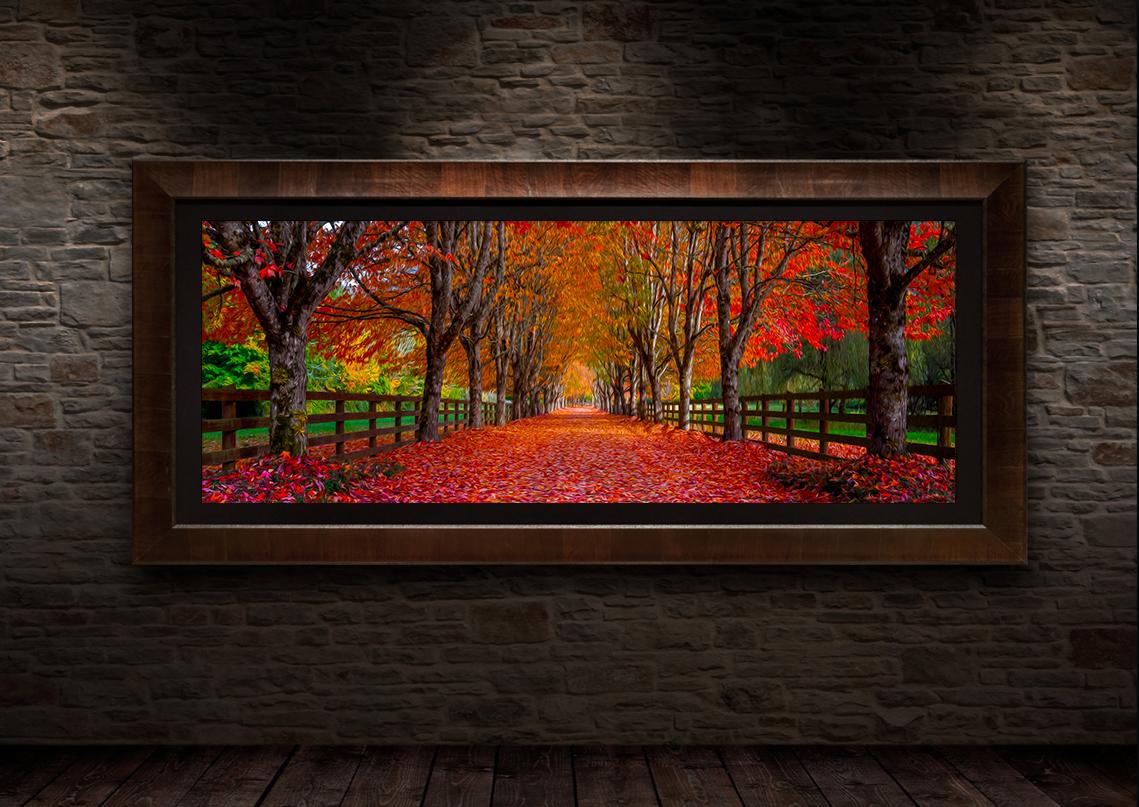
He made the argument that the concept, the vision, and the decision about what to look at are the artist’s essential contribution. Everything else is execution. That argument has never been successfully refuted. And it is as relevant to a photographer standing at the edge of the Morro Bay estuary at dawn, choosing the exact frame and the exact moment, as it was to a man in a silver wig dragging a squeegee across a silk screen in a tin-foil loft in 1963.
Explore the Jongas Abstract Photography Collection →
Industrial Interior Design and the Warhol Legacy →
Eddie Jongas is a modern fine art photographer based in Las Vegas, Nevada. His TruLife acrylic-mounted limited edition prints are available exclusively through jongasfineartphotography.com. Free shipping to all 50 states.
