You’ve probably walked past a Peter Lik gallery without fully realizing what it is. The door is usually open. The room inside is unusually dark. And there are photographs on the wall that seem to be glowing — not reflecting light the way a painting does, but generating it from within, like a window into somewhere more vivid than you see in real life.
That effect is not an accident. Nothing about a Peter Lik gallery is an accident.
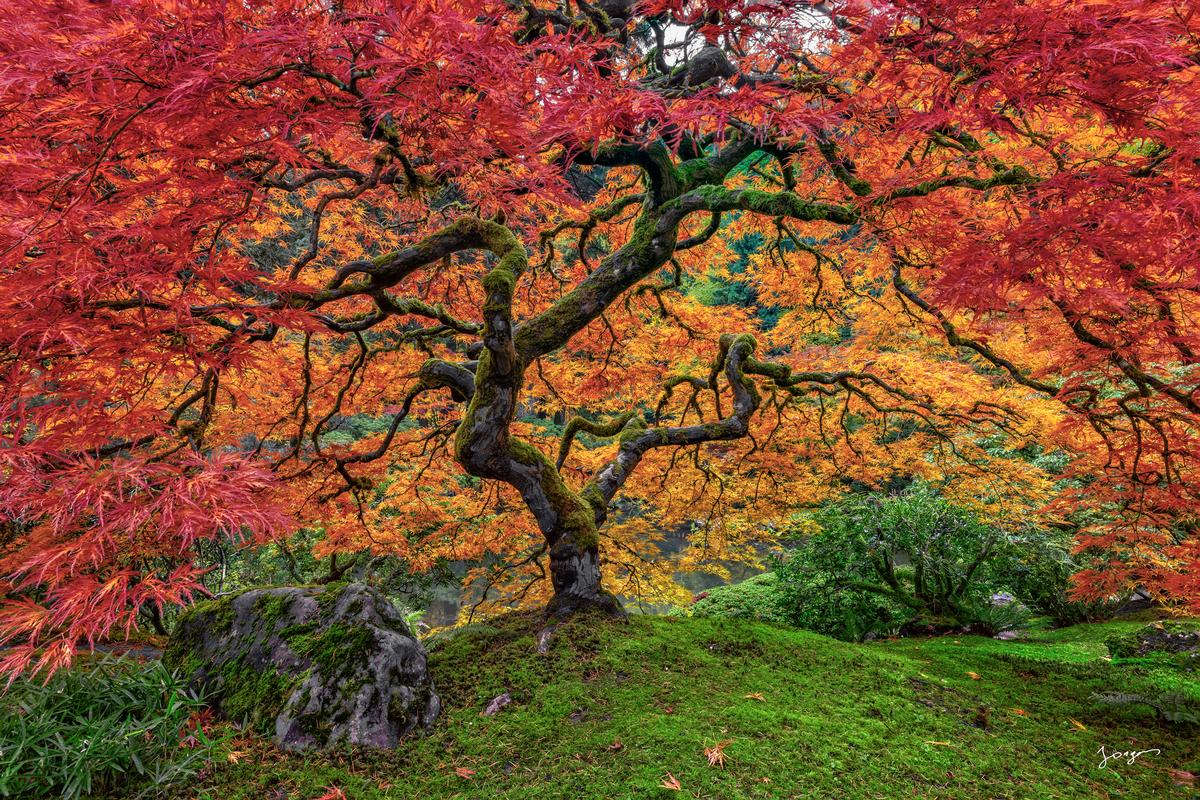
Peter Lik is one of the most commercially successful fine art photographers alive. He operates 10 active LIK Fine Art galleries across the United States — three Lik galleries are located in Las Vegas alone, at Caesars Palace, Mandalay Place, and The Venetian. He has been photographing professionally since the 1980s, built a vertically integrated brand that covers everything from shooting photos, printing, framing, and gallery sales, and has produced work that sold for prices ranging from a few thousand dollars to a claimed record of $6.5 million dollars for a single photography print.
If you’re thinking about visiting one of his galleries — this article explains everything. The design, the pricing, the sales experience, the print process, and what the secondary market actually looks like for people who try to resell Peter Lik’s art.
Where are Peter Lik galleries located?
Peter Lik currently operates 10 active LIK Fine Art galleries in the United States. In Las Vegas: Forum Shops at Caesars Palace, Mandalay Place, and Grand Canal Shoppes at The Venetian. Other locations include Columbus Circle in New York, Aspen Colorado, Waikiki Hawaii, Key West Florida, La Jolla California, Lincoln Road Mall in Miami, and Main Street in Park City Utah.
How much do Peter Lik prints cost?
Entry-level prints start at approximately $3,500 for 100cm when an edition opens. Prices escalate as editions sell through — reaching $17,500 at 95% sold ("Premium"), $35,000 at 98% sold ("Second Level Premium"), and up to $200,000 or more for the final prints in an edition. This tiered model operates within Lik’s private gallery ecosystem and does not reflect secondary market values.
Are Peter Lik prints a good investment?
The secondary market evidence suggests not. Major auction houses rarely accept Lik prints for consignment. When they do appear at public auction, they typically sell for $500 to $3,000 — far below original gallery purchase prices. Edition sizes of up to 950 prints plus artist proofs dilute any meaningful sense of scarcity. Lik himself compared the situation to buying a luxury car: value drops significantly once you leave the gallery. They are beautiful objects to own and display, but not investment-grade fine art by standard art market measures.
What makes Peter Lik style prints glow in the gallery?
The prints are produced on metallic silver halide paper (FujiFlex) and face-mounted behind clear acrylic. This combination reflects and amplifies directed light. Lik’s galleries use narrow-beam spotlights aimed precisely at each print against dark walls, making the prints appear to glow from within. The same print in standard home lighting will look different — still attractive, but without the dramatic gallery illumination effect.
What is a Peter Lik alternative for large-format fine art photography?
Jongas Fine Art Photography offers comparable — and quality-wise superior — large-format acrylic-mounted landscape photography with strictly limited editions (typically 50–100 prints), One-Only Prints (TruMasterpiece) as exclusive ownership, museum-grade TruLife acrylic mounting, direct-from-artist pricing without gallery markup, and transparent disclosure about the print process. The Jongas Fine Art Photography collection features TruLife acrylic-mounted, signed limited editions with free US shipping, available direct from the photographer.
How the Galleries Are Designed — And Why
Peter Lik’s galleries are built less like traditional art museums and more like high-end immersive luxury art showrooms. The design follows a deliberate formula that has been refined across dozens of locations over decades.
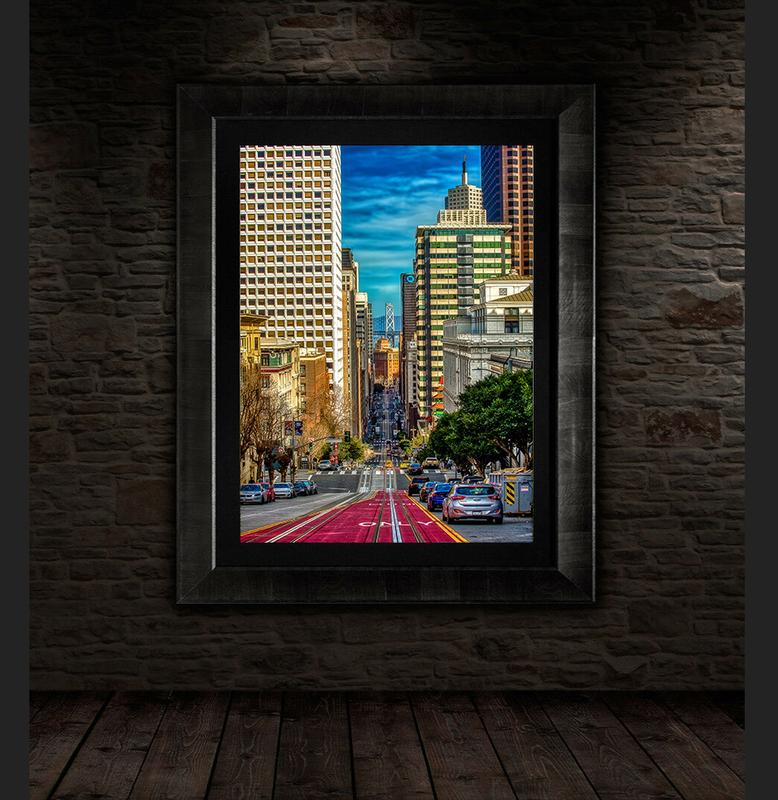
The walls are usually deep charcoal, dark grey, or matte slate. This is not an aesthetic interior design preference — it’s a calculated choice. The dark walls make the bright, metallic prints jump out visually, creating an illusion that a white-walled gallery would probably destroy. The floors are typically dark oak, walnut, or polished concrete. There are natural stone accents that imitate rustic interior design. Clean architectural lines. Low-profile reception desks tucked to the side so the art, not the staff, is the first thing your eye goes to when you walk in.
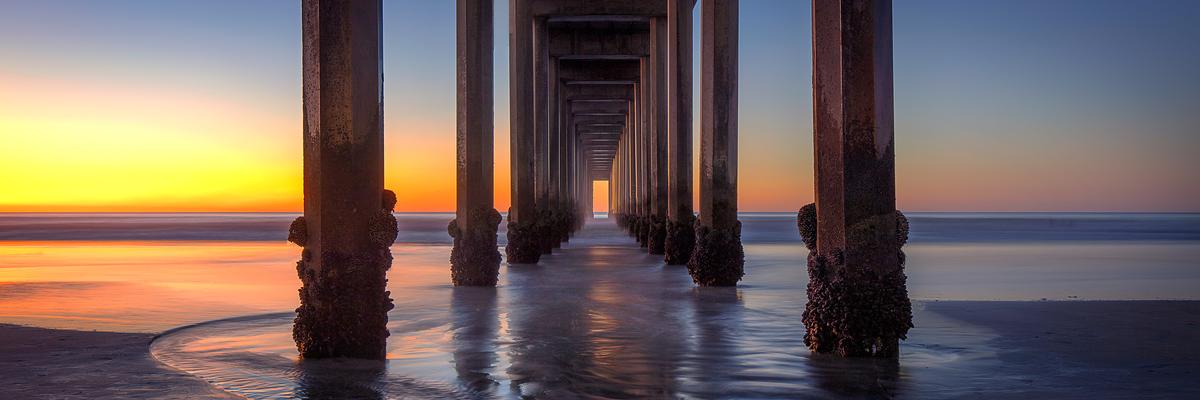
Art lighting is the most important element. Every print in a Lik gallery is illuminated by narrow-beam track spotlights aimed precisely at the individual pieces. The surrounding walls and ceiling are kept relatively dim. The intense, warm light hits the metallic halide paper and bounces through the face-mounted acrylic, creating the effect that the image is glowing from within — like a backlit screen, not a flat print. Gallery staff are trained to demonstrate this by slowly dimming a spotlight to darkness and then raising it back up, so visitors can watch the photograph “come alive” under the light.
This effect is real. It is a standard feature of an acrylic-mounted print with the right lighting conditions. Controlled light within a gallery is used to demonstrate what an acrylic mounted print really looks like.
The larger galleries are divided into zones or themed “chapters” — Canyons, Seascapes, Nightscapes — separated by curved partition walls and recessed alcoves. This creates a sense of discovery. You keep moving deeper into the space to see what’s around the next corner. The entrance almost always features an oversized hero piece — often six to ten feet wide — under intense spotlight, designed to pull you off the busy mall corridor and into the quiet, dark interior.
At the back of every gallery is a private VIP viewing room. Plush seating, adjustable lighting rig, a comfortable and intimate space where staff bring out specific prints and simulate how they would look in a buyer’s home. This is the closing room. If you’re identified by a gallery consultant as a serious prospective buyer, the sale conversation will start there.
The Pricing Structure — How It Actually Works
This is the part that surprises most visitors, and it’s worth understanding before you go in.
Peter Lik’s pricing model is tiered and escalating. A print starts at a certain price when the edition opens. As prints from that edition sell, the gallery raises the retail price. When 95% of an edition has sold, the artwork becomes “Premium Peter Lik” — the price jumps to $17,500. At 98% sold, it becomes “Second Level Premium” — the price jumps to $35,000. The final prints in an edition can reach $200,000 or more.
“It’s (Peter Lik art) like a Mercedes-Benz. You drive it off the lot, it loses half its value.” — Peter Lik, New York Times
This was not a secret, but it became widely known after the New York Times published an exposé on Lik’s sales model. The article quoted Lik directly. When asked about his pricing scheme, he compared it to getting a car. That quote is worth sitting with before you spend several thousand dollars on a photograph.
The edition sizes are also significant. Many of Lik’s editions run as high as 950 prints plus artist proofs. That’s a lot of “limited edition” prints. Standard fine art photography editions — the kind produced by Jongas Fine Art Photography — typically run editions of 50 to 100. The smaller the edition, the more meaningful the word “limited” actually becomes.

In fact, to overcome the lack of scarcity in fine art photography prints, Eddie Jongas offers art in an Only-One Collection, where images are printed as the only copy ever. No large editions. No competition. You buy the print and you are the only one who owns it — no extra copies made. That is exclusive photography print ownership. It’s like owning an original oil painting. There is only one original. That is the only true way to preserve value in a photography print and make it possibly resalable in the future. Read more here: Modern Fine Art Photography Prints — Is It a Good Investment or Not So Much?
The Lik Sales Experience — Inside Art Gallery Business
The gallery staff are called “art consultants.” They are, in practice, commission-based salespeople working in a high-pressure retail environment. Former employees reviewing the company on websites like Glassdoor or Indeed consistently describe the internal culture as a “cutthroat” sales operation with aggressive quotas, rapid turnover for underperformers, and significant pressure to close multi-thousand-dollar transactions with casual foot traffic. New hires who don’t perform within their first few months are let go. Commission structures shift frequently. Favoritism over floor shifts and VIP leads is a common complaint.
This insider tension does not mean the gallery experience for visitors is negative. Many visitors describe it as genuinely enjoyable — the dimming demonstration, the beauty of the prints, the comfortable viewing rooms. But it’s probably worth knowing what the salesperson is there to do and what frame of mind they’re working with, before you interpret their enthusiasm about a particular print as purely aesthetic guidance.
The standard sales approach involves asking where you’re from, what kind of space you’re decorating, which prints you’ve responded to, and then guiding you toward the VIP room for a private viewing. The art lighting demonstration is almost always part of the presentation — watching the print brighten and dim creates an emotional response that makes the subsequent price conversation easier.
Creating a feeling of urgency is also consistent across locations: this edition is almost sold out, the price goes up when the next tier hits, there won’t be another opportunity to buy at this level. Some of this is true — editions do sell out and prices escalate. Just be aware of what you’re being told.
Do Peter Lik Style Prints Have Resale Value?
This is the section that Lik’s galleries don’t discuss, and it’s the most important one for anyone considering an art purchase as an investment.
Buyers who try to resell Peter Lik prints on the secondary market consistently report the same experience: the long-term value they were led to expect simply isn’t there.
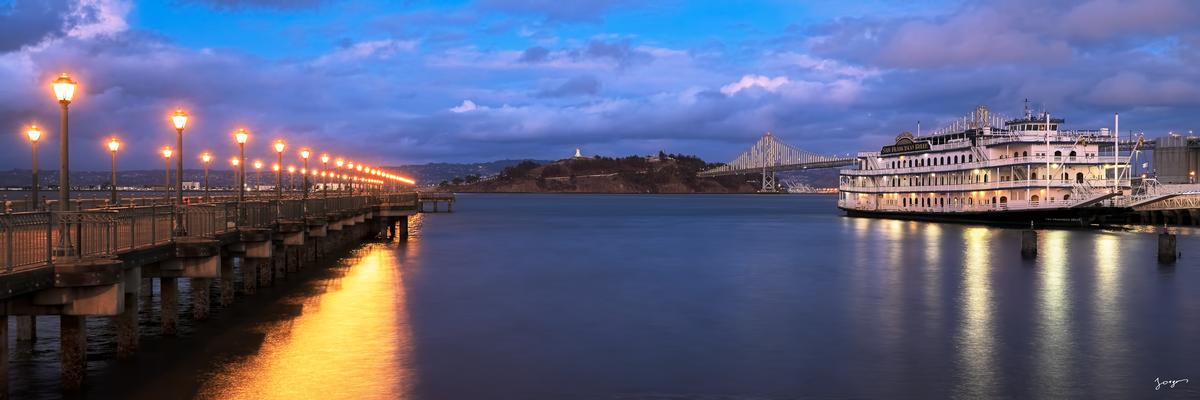
The most common story goes like this. A buyer purchases a print for $4,000. Over the next few years, they watch the gallery price for that same image climb to $15,000 as the edition starts to sell out. They assume this means their print has appreciated in value. Then they try to sell — and can’t even get their original $4,000 back.
The reason is simple. The price increases happen exclusively inside Lik’s private retail ecosystem — his own galleries, his own pricing decisions. They have no relationship to what the broader art market will pay for the same artwork. A gallery asking $15,000 for a print does not mean that print is worth $15,000 to anyone outside Lik’s gallery system.
Major fine art auction houses — Sotheby’s, Christie’s, Phillips — regularly refuse to accept Lik’s prints for consignment. Collectors who contact them are typically told the work falls outside their handled categories. When Lik prints do appear at secondary public auctions, they typically fetch between $500 and $3,000 — even for pieces originally purchased at gallery prices of $10,000 to $30,000 or more. His highest recorded public auction sale was $15,860 for Ghost in 2008 — a print that his galleries were selling for far more than that.
Sellers who try their luck on eBay hit an oversaturated market. Because Lik edition sizes run as high as 950 prints plus artist proofs, there are always many other owners trying to sell their artworks simultaneously. A search for Lik prints at any given time reveals dozens of listings from frustrated sellers — “Paid $18,000 at Venetian gallery — selling for $3,500 or best offer” — those phrases are not uncommon.
Lik himself has acknowledged this. When the Mercedes-Benz comparison was published in the NYT, he wasn’t being evasive — he was being accurate. These are luxury items that provide experiential and decorative value. They are not financial investments, despite what his salesmen may tell you.
Moral of the story: if you decide to buy a fine art photography print because you love the way it looks and you intend to keep it, that’s pretty much where it ends. If you’re looking for an investment, photography prints aren’t probably where it’s at, and you might explore some other options.
For a full breakdown of the Phantom $6.5 million dollar sale, the copyright lawsuit, and the composite controversy, the Peter Lik alternative article on this blog covers all of it in greater detail.
What Makes Peter Lik Photography Prints Look the Way They Do?
The prints themselves are technically accomplished. Lik used to shoot primarily on the Linhof Technorama 617S III — a large-format panoramic film camera that captures sweeping 6x17cm exposures on 120 film. Today the tool is a Phase One medium-format digital system. His prints are not confined to panorama format only anymore — all possible formats are offered depending on the subject matter in the artwork.
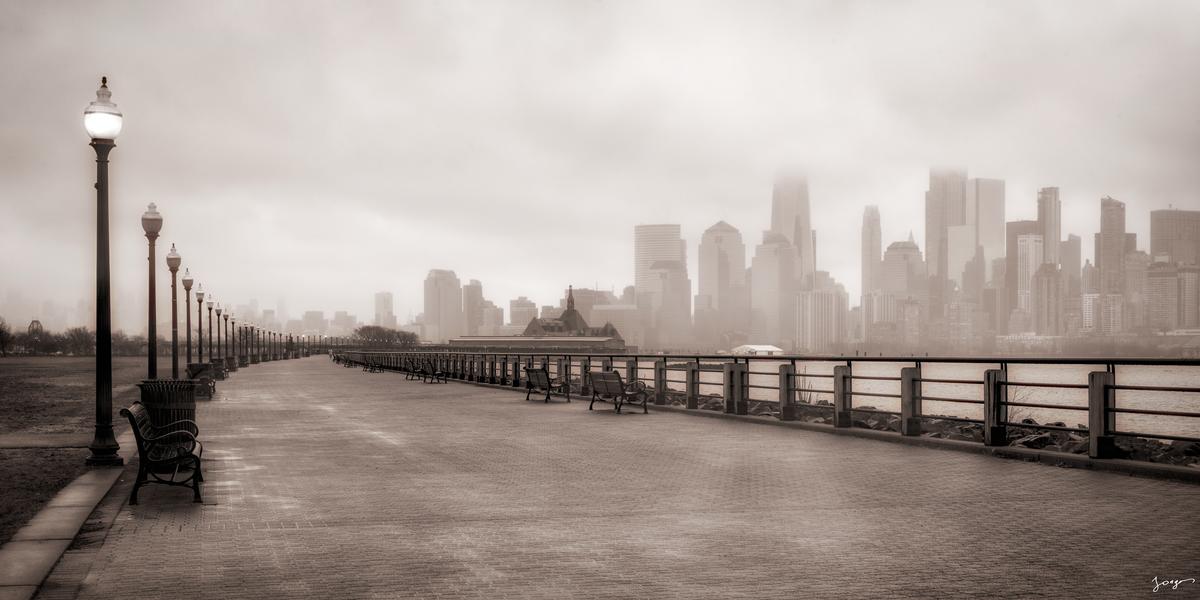
His prints are produced on FujiFlex Crystal Archive paper — a metallic silver halide paper with inherent reflective properties. The paper is then face-mounted behind optically clear acrylic using a process called acrylic face mounting. Light entering through the acrylic layer and reflecting off the metallic paper creates the depth and inner glow effect which galleries amplify so effectively with additional art lighting.
Acrylic mounted prints are not a proprietary Peter Lik technique. Acrylic face mounting is an industry-standard fine art printing process used by many photographers worldwide. What really matters is the quality of the acrylic being used.
Lik operates his own print house and uses P99 acrylic — which is cheaper, more reflective, and offers fewer advantages than “TruLife” acrylic, the museum-grade fine art photography standard used by Jongas Fine Art Photography. TruLife acrylic is approximately twice the cost of P99 and is superior: less mirror-like surface reflection, deeper color saturation, and stronger contrast. The differences are subtle, but when viewed side by side TruLife is always better.
There is also a difference in the printing paper used. Jongas prints are printed on Lumachrome HD paper — with a wider color gamut, more vibrancy, and more depth than the FujiFlex paper used by Peter Lik. Lumachrome HD was specifically engineered for fine art acrylic mounting and produces richer colors than any other paper on the market. That’s why it’s the choice for Jongas prints — aiming for the most perfect end product and customer satisfaction, even if that means less profit.
It doesn’t mean Lik’s prints are bad. They are still high quality — just not as good as they could be, especially for the premium you pay. That premium also doesn’t translate entirely into quality, since Lik must pay his staff, rent, and operating expenses at luxury locations. Overhead adds up. This is why an online fine art landscape photographer like Jongas is able to keep some costs down and offer Peter Lik alternative artworks at lower cost with a superior quality product.
A Straight Comparison — Peter Lik Gallery vs. Jongas Fine Art Photography
Here’s a direct side-by-side on the factors that matter most to buyers:
Print Quality & Materials
- Peter Lik — Print process: FujiFlex paper + P99 acrylic face mount
- Jongas — Print process: Lumachrome HD paper + TruLife acrylic (museum grade)
- Peter Lik — Edition size: Up to 950 prints + artist proofs
- Jongas — Edition size: Typically 50–100 strictly limited; also an “Only-One” collection with a single copy only, as exclusive ownership
- Peter Lik — Pricing model: Tiered gallery escalation — price rises as editions sell
- Jongas — Pricing model: Fixed direct pricing, transparent from the start
- Peter Lik — Entry price: ~$3,500 for 100cm at edition open
- Jongas — Entry price: Comparable sizes start from $500
- Peter Lik — Buying experience: Commission-based gallery consultants, high-pressure environment
- Jongas — Buying experience: Work direct with Jongas, no salespeople, no middlemen, no sales pressure
- Peter Lik — Secondary market: Auction houses rarely accept; secondary prices typically $500–$3,000
- Jongas — Secondary market: Smaller editions, better long-term scarcity; absolute scarcity with TruMasterpiece “Only-One” prints — one copy, no more made, ever
- Peter Lik — Composite disclosure: Historically inconsistent; now disclosed on website
- Jongas — Composite disclosure: Composites are clearly labeled in product descriptions
- Peter Lik — Authentication: COA from gallery
- Jongas — Authentication: COA signed directly by the artist
Why Everyone Should Visit a Peter Lik Gallery
Owning a gallery is no small feat. It’s a dream of many photographers — but it comes with great cost and commitment. Many struggle to survive given the high overhead of expensive rent and inventory costs, plus staff. Many have tried and failed. Even the National Geographic galleries, featuring works of arguably the world’s best landscape photographers, have been closing down — a visit to one in La Jolla, CA recently found it out of business.
Therefore Peter Lik galleries are almost the last frontier of real photography art display on the market. While there are many independent, one-man private galleries all over the place trying to emulate Lik Galleries, Peter Lik’s offer something different. They are truly the pinnacle of fine art landscape photography — all designed in similar luxury fashion, and all artworks in them are literally perfect. Despite the fact that Peter Lik is a competitor, it’s not afraid to be said: his work is admirable, and everyone should go see it.
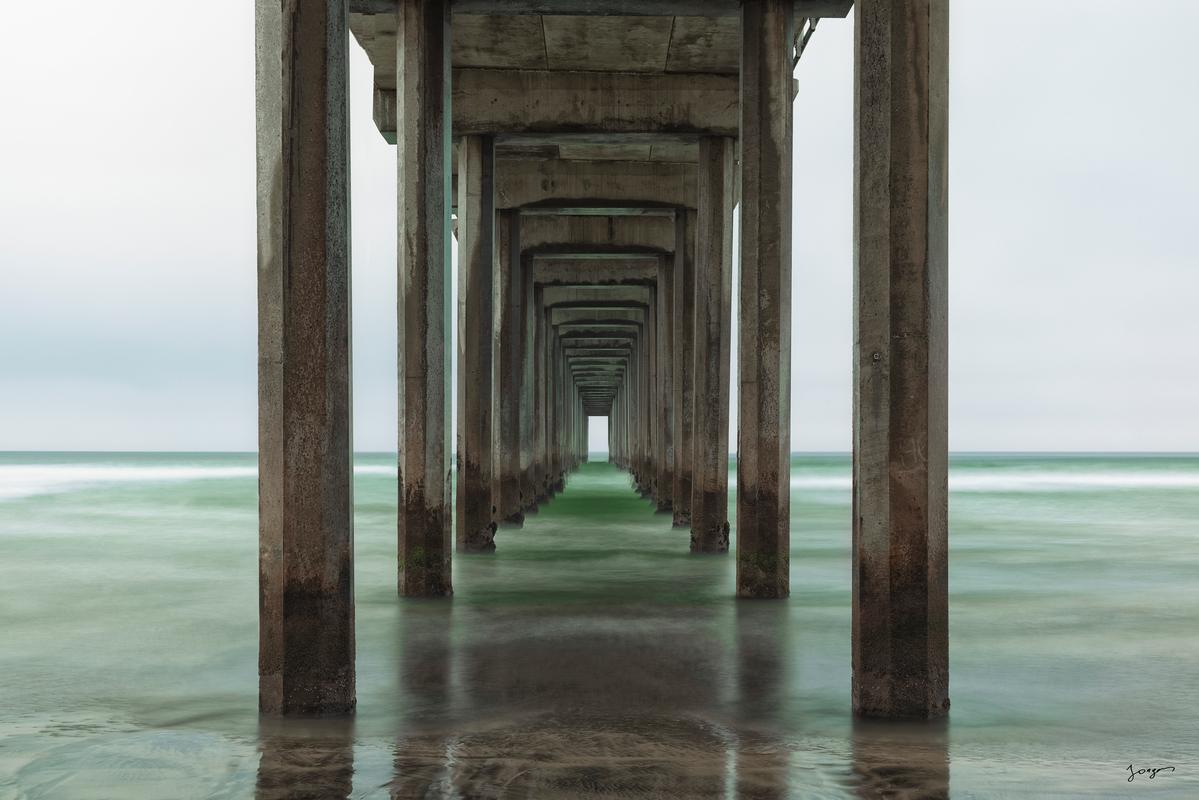
So if you’re in Las Vegas or any of the other gallery cities, it’s worth walking in and spending twenty minutes looking at real life-size large format fine art photography prints. It will take your breath away.
What you should do before walking out with a purchase:
- Understand that the gallery price and the market value are two different numbers.
- Understand that the pricing escalation is a retail mechanism, not a market signal.
- Understand that edition sizes of 950 prints are not the same as the limited editions that serious art collectors treat as investment-grade.
- And understand that the glowing effect that made you fall in love with the print in that dim, perfectly lit room will look different in your living room under standard lighting — probably still beautiful, but different. Unless you get similar lighting installed in your home — read the art lighting guide for any home.
And if you’re interested in alternative fine art photography prints — with TruLife museum-grade acrylic surface, lesser quantity limited editions, bought direct from the artist, without the gallery markup or the sales pressure — check out the art collections on this website and find the artwork you fall in love with.
All shipping within the US is free. Please allow 4–5 weeks for an artwork to be delivered to your location.