I have lived in Las Vegas long enough to know that when most people search for “art galleries near me” from a hotel room on the Strip, they are picturing something completely different from what they are actually about to find. They are imagining a city that treats art as decoration — something tasteful to hang between the roulette tables. What they find instead, if they look past the obvious, is something genuinely more interesting: a city with one of the most unusual, bifurcated art ecosystems in the country, shaped equally by extraordinary wealth and extraordinary independence.
Las Vegas has no central municipal fine art museum of the kind you find in Chicago, New York, or Los Angeles. It has never had one. What it has instead is what I would call the Las Vegas Art Paradox: a city where multi-million-dollar blue-chip Picassos and Warhols hang under casino lighting adjacent to the noise of slot machines, while twenty minutes away in the same city, local painters and printmakers work out of converted auto-body shops in the desert heat, entirely on their own terms. Both scenes are real. Both are worth knowing about. Neither one is what most visitors expect.
I am writing this as someone who has photographed this city for years, who knows the 18b Arts District on a weekday afternoon when the tourists are somewhere else, and who has spent enough time in the casino-resort galleries to understand exactly what they are selling and what they are not. This is not a tourist brochure. It is the honest version of the guide I wish someone had handed me when I first moved here.
How Las Vegas Became an Unlikely Fine Art City — A Brief History
For most of its history, Las Vegas had zero serious fine art infrastructure. The city was built on entertainment, not culture, and whatever artwork hung on casino walls in the early decades was purely functional — something to fill the space between the bar and the poker room.
That changed permanently in 1998, when Steve Wynn opened the Bellagio Resort and Casino and included within it a formal fine art gallery of museum quality. Wynn’s private collection included original Picassos, Renoirs, Matisses, and van Goghs, and he displayed them in a dedicated gallery space designed to attract a different category of wealthy traveler — one who wanted cultural prestige alongside their luxury suite. The gamble worked. The Bellagio Gallery of Fine Art became the first legitimate argument that a desert casino town could be a serious art destination. It proved that museum-grade works could act as a primary draw for affluent international visitors, and within a few years, every major resort on the Strip was taking notes.
Almost simultaneously, a completely different kind of art scene was forming a few miles south of the Strip. In 1997, photographer Wes Myles purchased a vacant industrial warehouse in a run-down neighborhood south of Fremont Street and transformed it into The Arts Factory — a shared creative space for working artists. By 2002, community organizer Cindy Funkhouser rallied local gallery owners and studio artists to launch First Friday, a monthly art walk and street festival that turned the surrounding eighteen-block radius into a living, breathing arts district. The 18b Las Vegas Arts District was born entirely without corporate backing, resort money, or tourism infrastructure. It survives today on the same terms.
The commercial revolution came shortly after. Peter Lik opened his first Las Vegas gallery inside the Forum Shops at Caesars Palace and pioneered what he called luminous acrylic photography — large-format landscape and abstract images face-mounted behind optical acrylic, displayed under precise directional spotlights to create a glowing internal luminosity. The concept was visually extraordinary and commercially explosive. Where Lik went, other high-end photography and fine art galleries followed, until the Forum Shops alone became something like the most concentrated gallery corridor in the western United States.
Today, those two parallel worlds — the resort-backed commercial flagships and the independent community-driven arts district — continue to coexist and occasionally intersect. Understanding both is the difference between leaving Las Vegas with a meaningful piece of art and leaving with a postcard.
Part One — The Public Galleries (Free, Non-Commercial, Worth Your Time)
Before the galleries where money changes hands, Las Vegas has three spaces where no money needs to change hands at all — and where the art tends to be the most rigorously curated.
The Bellagio Gallery of Fine Art is the oldest and most prestigious formal art venue on the Las Vegas Strip, tucked discreetly near the resort’s pool promenade, far enough from the casino floor to feel like a genuine sanctuary. When Steve Wynn departed and took his personal collection with him (Wynn later built his own private viewing galleries in Beverly Hills and Palm Beach, accessible only by appointment to elite collectors), the gallery pivoted brilliantly: rather than attempting to replicate Wynn’s personal taste, it became a rotating exhibition venue partnering with major global institutions. Over the years it has hosted exhibitions from The Phillips Collection, the Museum of Fine Arts in Boston, and the Museum of Contemporary Art San Diego. It has brought Yayoi Kusama’s infinity installations and Muhammad Ali photographic retrospectives and comprehensive Warhol surveys to a Strip audience that would otherwise never have accessed them. When the Guggenheim Hermitage at The Venetian closed in 2008, the Bellagio Gallery became the sole surviving formal institutional gallery on the Las Vegas Strip, a position it has occupied ever since. Small admission fee, museum-quality experience, completely incongruous with everything happening twenty feet outside its doors.
The Marjorie Barrick Museum of Art at UNLV is the intellectual soul of Southern Nevada’s art world, and most visitors never know it exists. Founded in 1967 as a natural history museum and originally housed in the campus gymnasium that once served as the home court of the Runnin’ Rebels, the museum underwent a total philosophical transformation in 2012 when it was integrated into the UNLV College of Fine Arts and converted into a dedicated contemporary art institution. The live animal specimens and natural history display cases came out. Conceptual installations, open-concept exhibition halls, and a remarkable collection including the Nevada portion of the legendary Dorothy and Herbert Vogel donation went in. The Vogel Collection — assembled by a New York postal clerk and librarian who spent decades acquiring mid-to-late 20th-century contemporary works from artists at the beginning of their careers — is one of the most significant bodies of contemporary art in the American West. The Barrick is free to the public, academically serious, and almost never crowded. It is what a city’s art scene looks like when the community builds it rather than the tourism industry.
Left of Center Art Gallery in North Las Vegas operates as a 501(c)(3) non-profit and has spent decades serving as a refuge for underrepresented contemporary voices in the valley. Monthly exhibitions here emphasize cross-cultural dialogue, raw textural media, and the kind of political and identity-driven contemporary work that simply does not appear in any Strip venue. If the Barrick is where you go to understand what the academic art world is thinking, Left of Center is where you go to understand what the city itself is thinking.
Las Vegas Public Art Venues at a Glance
- Bellagio Gallery of Fine Art: Rotating institutional exhibitions; museum-quality; small admission fee; Forum Shops, Caesars Palace corridor
- Marjorie Barrick Museum of Art (UNLV): Free; contemporary and conceptual; houses the Nevada Vogel Collection; academically rigorous
- Left of Center Art Gallery (North Las Vegas): Free; 501(c)(3) non-profit; cross-cultural and identity-driven contemporary work
Part Two — The Strip (The Most Concentrated Fine Art Corridor in the West)
The Forum Shops at Caesars Palace alone contains more significant gallery square footage than most mid-sized American cities. Walking through it with genuine attention is a different experience from walking through it as a tourist. Here is what to look for, and what to understand about each space.
Martin Lawrence Galleries occupies 27,000 square feet inside the Forum Shops — a footprint so large that it functions less like a commercial gallery and more like a museum where everything is for sale. The distinguishing feature of Martin Lawrence’s business model is unusual in the gallery world: they own their inventory outright rather than taking artwork on consignment from third-party sellers. This gives them total control over provenance, authentication, and long-term care of the pieces. The result is an institutional depth that most retail galleries simply cannot match. The Las Vegas flagship holds authenticated original works and hand-signed prints by Andy Warhol, Keith Haring, Pablo Picasso, Joan Miró, Marc Chagall, and the full Erté estate — Martin Lawrence has served as the official business representative of the legendary Art Deco master’s estate for over half a century, tracing almost every authenticated Erté sculpture or serigraph on the market back to their vaults. The gallery also acts as a major institutional lender, having sent works to the Whitney Museum of American Art, the Tate Liverpool, and the Musée Picasso in Barcelona.
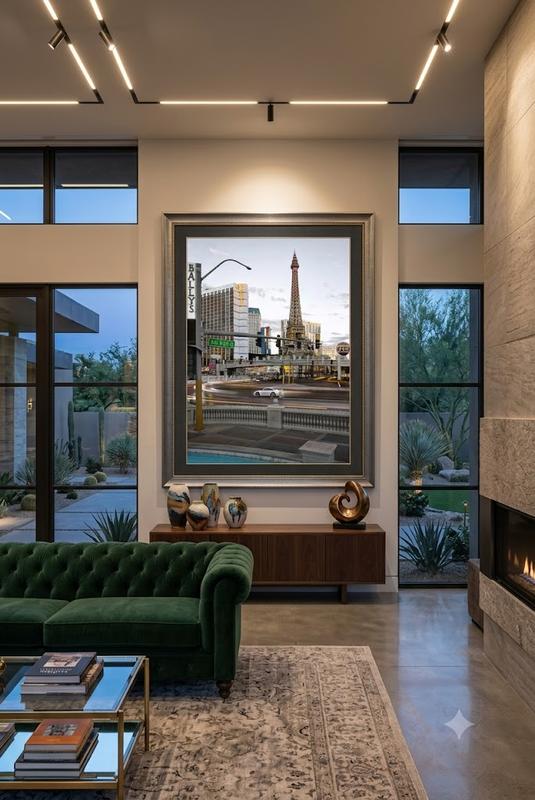
The single most dramatic element in the gallery is a permanent installation that stops visitors cold: the largest oil painting in history created by Salvador Dalí, displayed on a custom-engineered interior wall measuring 63 feet wide by 18 feet tall. The encounter with that canvas at full scale is genuinely disorienting in the way that great surrealism is supposed to be. Standing in front of 63 feet of Dalí changes your relationship to the word “large.” It also changes your relationship to what large-format art can communicate in a residential or commercial space — something I understand particularly well as a photographer who produces prints up to 120 inches wide, specifically for clients who understand that scale is not a luxury but a design principle. That principle shows up consistently across the design world: in industrial interior design, a single oversized statement print anchoring a brick or concrete wall is one of the most discussed art strategies precisely because industrial spaces handle massive scale the way the Strip handles it — with complete conviction. The same is true in holistic interior design, where large-scale fine art landscape photography functions as a literal biophilic window — the research there is specific that one expansive focal print does significantly more neurological and emotional work than a cluster of smaller frames ever could. Scale, in both contexts, is never a decorative indulgence. It is the mechanism by which art changes how a space actually feels.
Martin Lawrence is a gallery experience worth having. It is also a gallery experience where the price of admission includes navigating a highly skilled sales team whose job is to connect you to an acquisition. Know that going in and the visit is straightforward.
“Las Vegas does not apologize for combining genuine craft, genuine conviction, and genuine commerce. It never has. That combination — unapologetic, excessive, occasionally sublime — is the most honest thing about the place.”
Vladimir Kush — Kush Fine Art is one of the longest-running single-artist galleries on the Las Vegas Strip, dedicated entirely to Kush’s self-defined movement of Metaphorical Realism. Born in Moscow in 1965 and classically trained at the Surikov Moscow Art Institute, Kush spent his Soviet Army service secretly weaving fantastical elements into military murals before emigrating to the United States in 1990 and spending years drawing pastel portraits on the Santa Monica boardwalk while refining the style that would eventually make him famous. The gallery presents oil canvases, watercolor drawings, and fine jewelry where everyday physical objects morph into natural elements — butterflies becoming sailboat sails, flowers becoming faces, walnuts opening to reveal entire worlds. The Dalíesque comparison is apt but not entirely accurate: Kush’s surrealism is more romantic than confrontational, more dreamlike than disturbing. The Forum Shops location was designed to feel like a metaphorical journey, and it delivers on that intention.
Park West Fine Art Museum and Gallery, also inside the Forum Shops, is the Las Vegas branch of what is now the world’s largest art dealer — a Michigan-based operation founded in 1969 by Albert Scaglione on the principle of democratizing fine art collecting through high-volume auction events on cruise ships and at resort destinations globally. The Las Vegas flagship opened in January 2021 across 7,000 square feet, split between a free museum wing and a commercial gallery floor. The museum wing opened with one of the most comprehensive physical collections of original Pablo Picasso ceramics displayed anywhere in the world. The commercial floor holds nearly 1,000 individual works at any given time, ranging from a few hundred to over a million dollars, and the gallery actively supports local Las Vegas artists through its monthly Artist in Residency Program, which evolved from an annual competition into a continuous showcase for Southern Nevada contemporary talent.
EDEN, House of Art on the Encore Esplanade at Wynn Las Vegas opened in late 2023 as the Las Vegas outpost of a gallery network built around founder Cathia Klimovsky’s concept of Contemporary Optimism — a deliberate rejection of the sterile, clinical white-box gallery aesthetic in favor of something closer to a high-energy luxury lounge. The space launched during the inaugural Formula 1 Las Vegas Grand Prix with an event called the Artistic Grand Prix, during which Alec Monopoly — the world-famous street artist known for his graffiti commentaries on wealth, pop culture, and Monopoly board imagery — painted live inside the gallery. The roster includes Fred Allard (French sculptor who freezes luxury items inside translucent resin blocks) and Roman Feral (Parisian artist who mounts real, preserved butterflies onto iconic luxury brand sculptures). This is where high-end art meets contemporary nightlife culture in a combination that is uniquely, specifically Las Vegas.
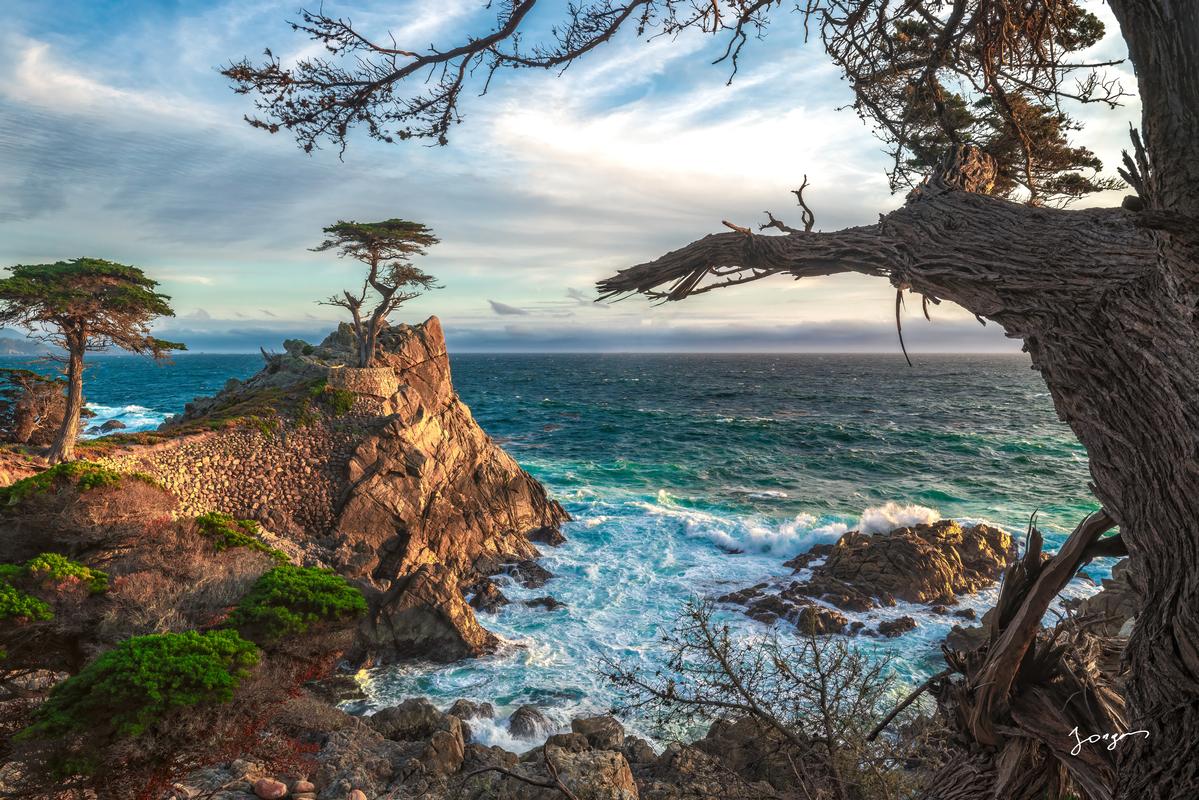
Wyland Galleries operates at multiple locations on the Strip under the Signature Galleries umbrella — most notably at Planet Hollywood and at the Grand Canal Shoppes at The Venetian. Robert Wyland’s career is one of the more remarkable stories in American art history: in 1981 he painted his first Whaling Wall — a massive, life-sized mural of a mother gray whale and her calf on a retaining wall in Laguna Beach — and subsequently spent 27 years painting 100 life-sized public whale murals across 17 countries, viewed by an estimated one billion people annually and funded entirely by the commercial gallery operation. The Wyland Foundation, established in 1993, channels gallery proceeds directly into clean water mobile science centers, mayor challenges for water conservation, and art programs that have educated over a million children on ocean stewardship. For a city built in the middle of a desert, the Wyland galleries offer something genuinely counterintuitive: an immersive underwater sanctuary, full of ocean paintings, maritime bronze sculptures, and the specific moral weight of conservation art made by someone who has spent his entire career proving that commercial success and environmental purpose are not mutually exclusive. The ocean seascape photography in the Jongas ocean collection comes from a similar place — the belief that the coastal landscapes worth photographing are the same ones worth protecting.
Centaur Art Galleries, now located just off the Strip on Dean Martin Drive, holds the distinction of being the oldest operating fine art gallery in Las Vegas — formed through the historic merger of two early Las Vegas art mainstays and operating for decades before the Bellagio Gallery existed. Their permanent collection spans Rembrandt etchings, Renoir lithographs, and Picasso ceramics alongside one of the largest public collections of LeRoy Neiman originals and serigraphs anywhere in the country. Centaur also holds significant Warhol and Steve Kaufman material — Kaufman was Warhol’s former assistant at The Factory and one of the most distinctive voices in post-Warhol American pop art. Their Five-Year Exchange Program — which allows collectors to return a piece within five years for full store credit toward any other work — is one of the most client-protective policies in the gallery world, and one that has sustained generations of collector relationships.
Inside the Grand Canal Shoppes at The Venetian, the official Thomas Kinkade Gallery occupies a dedicated space showcasing the full range of his signature work — the romantic, light-saturated cottage and landscape scenes that made him the best-selling artist in American history during his lifetime, alongside his Disney collaboration pieces and limited-edition canvas prints. The gallery is staffed by art consultants who handle framing consultations, collection building, and provenance details for specific pieces. Kinkade built an entire commercial model around the concept of “The Painter of Light” — luminous, warmly lit, emotionally accessible paintings that connected with an audience the traditional fine art world largely ignored. Whether the fine art establishment ever fully reconciled itself to his success is a longer story, and one worth reading in full.
The Royal Gallery at the Forum Shops at Caesars operates on a global sourcing model rather than representing a fixed artist roster, building its reputation around “unique objects of art from around the world” — classical fine art, dimensional bronze sculptures, and exquisite home decor pieces for high-end residential estates. The gallery enforces a strict no-photography policy inside the showroom and has built its long-term business on white-glove worldwide shipping infrastructure for international collectors. It is the destination for a buyer whose living space is already a statement and who is looking for a singular object to complete it rather than a print edition.
Elena Bulatova Fine Art at the Crystals shopping center is in a category entirely its own — a neo-pop gallery known for its giant melting lollipops, oversized metallic flower bears, and vibrant popsicle sculptures that inject humor and physical scale into collector spaces. The gallery caters to private and commercial clients seeking large-scale, tactile focal pieces for high-end home decor — the kind of work that transforms a lobby or a great room rather than complementing it. It is the most unapologetically joyful gallery in the city.
The Art of Richard MacDonald, adjacent to “O” by Cirque du Soleil at the Bellagio, offers a completely different register: master-level figurative bronze sculptures of human movement, created by an artist who spent decades working directly with Cirque du Soleil performers to understand the exact biomechanics of acrobatic theater. The museum lighting in the space is engineered specifically to enhance the dramatic shadows of physical bronze, and the result is a gallery that functions as much as a study in the physics of the human body as a commercial art space.
Part Three — Off the Strip (Where the City Actually Lives)
The real art scene of Las Vegas — the one that belongs to the people who actually live here rather than the ones who come for a weekend — exists almost entirely south of Fremont Street in a neighborhood that the tourism industry has slowly begun to notice but has not yet managed to fully domesticate.
The 18b Las Vegas Arts District is the correct starting point for any serious understanding of what this city does with art when the casino money is not involved. Eighteen blocks of converted auto-body shops, industrial warehouses, and low-slung brick buildings that have gradually been transformed into galleries, studios, and creative spaces since Wes Myles opened The Arts Factory in 1997. The neighborhood that surrounds Main Street and Charleston Boulevard now functions as a living public museum of curated graffiti murals, independent printmakers’ workshops, and galleries that operate on their own logic rather than the logic of the Strip.
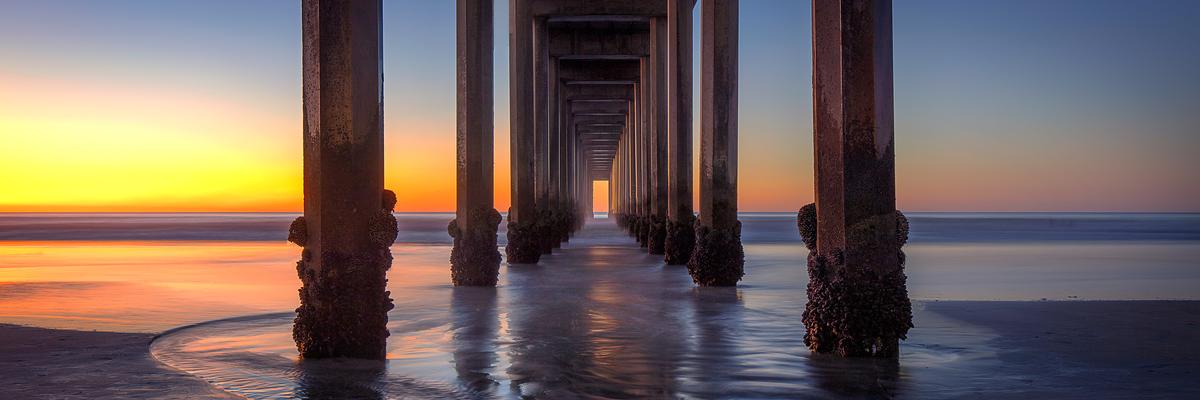
The Arts Factory and Art Square together house over thirty independent studio and gallery spaces under their roofs. Walking the labyrinthine corridors of The Arts Factory is one of the genuinely disorienting experiences available in Las Vegas — you may turn a corner and find a working printmaker pulling editions, a painter in the middle of a canvas, or a photographer editing a shoot. The Helios Fine Arts Gallery and the First Friday Foundation’s residency gallery are anchored here, showcasing an ever-evolving roster of local painters, digital sculptors, and mixed-media artists. On a quiet Tuesday afternoon, with the tourists somewhere else, this building is everything the Strip galleries are not: unglamorous, raw, completely alive.
Core Contemporary, run by artist and curator Rachel X. Hobreigh near the Arts District on Liberace Avenue, serves as the most formal and academically rigorous gallery in the neighborhood — a vital bridge between the casual street festival energy of First Friday and the serious critique of solo and group exhibitions that challenge visual convention. The work shown here tends to involve material texture, structural installation, and the kind of raw storytelling that commercial gallery economics make impossible.
Priscilla Fowler Fine Art on Main Street offers a more structured, professionally lit gallery environment for regional and national fine art, with abstract techniques, sculptural forms, and limited-edition fine art prints curated with a specific eye for serious collectors who have left the Strip behind.
Sin City Gallery, curated by Dr. Laura Henkel, is the most unapologetically avant-garde space in the district — dedicated to boundary-pushing, counter-culture work that explores uncomfortable themes with genuine artistic conviction. Known for its annual 12 Buy 12 exhibition and its dedication to underground contemporary movements, this is the gallery that exists entirely outside the economics of the art market and is better for it.
Arte Museum Las Vegas, at the 63 CityCenter complex directly on the Strip, represents the bleeding edge of where gallery and spectacle fully merge. Under the theme of “Eternal Nature,” the space uses monumental projection mapping, custom scent environments, and sophisticated soundscapes to transform classical masterworks — including reimagined works from the Musée d’Orsay — into immersive digital environments that replace canvas and sculpture with light and motion entirely.
Art in the Park in Boulder City, held annually just thirty miles southeast of the Strip, is one of the most respected juried fine art festivals in the Southwest — a completely different register from the resort galleries, where you are buying directly from independent artists who have made a living from their craft. The Art in the Park experience is worth the drive for anyone who wants to understand what the regional fine art community beyond the casino economy actually looks like.
Part Four — The Local’s Inside Edge
A few things the guides do not tell you.
Do not try to blend Strip galleries and off-Strip galleries in a single afternoon. The energy differential is real and exhausting. Spend weekend evenings on the resort esplanades — the lighting, the events, and the gallery atmospheres are genuinely designed for that time and context. Reserve a quiet Tuesday or Wednesday afternoon for the 18b Arts District and Tivoli Village, when you can step into studios and have actual conversations with working artists rather than sales staff.
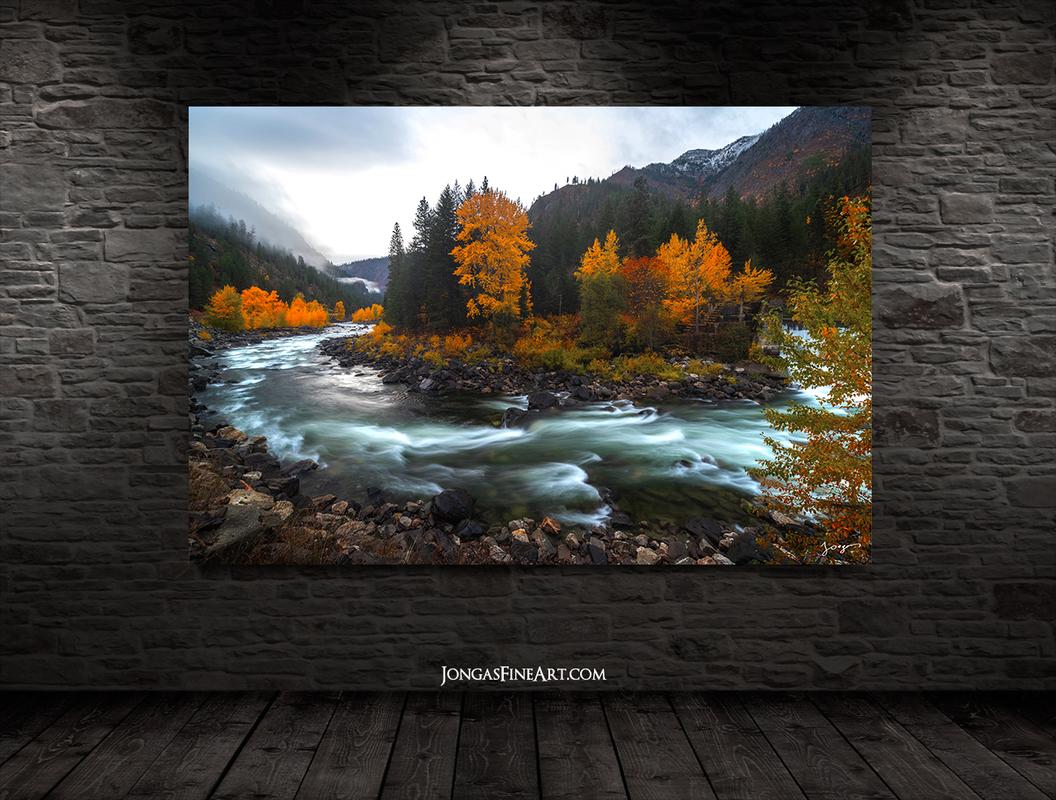
First Friday, the monthly art walk in the 18b District, runs on the first Friday evening of every month and is the best single event in the city for experiencing the full breadth of local creative culture — food trucks, live music, open galleries, street art, and the specific low-pressure energy of a neighborhood that is doing its thing for its own reasons rather than for yours. The Summerlin Festival of Arts each October is a different experience entirely — a juried gathering of high-caliber independent fine art and craft in an outdoor setting, worth attending for serious collectors looking to acquire work from regional artists at prices that have not been inflated by resort overhead.
And speaking of resort overhead: there is something nobody in the Strip galleries will tell you directly, which is the most important number in any purchase you make there. Every gallery operating inside a casino resort is paying lease rates that are among the highest commercial rates in the country. Those costs are structural, they are enormous, and they pass directly to you in the price of every piece on those walls. The Warhol print you are looking at inside the Forum Shops carries within its price tag a portion of the rent for 27,000 square feet of prime casino floor real estate. That is not a criticism of the gallery or the work. It is a number worth knowing.
When you buy from an independent fine art photographer like me, that number disappears entirely. There is no casino lease, no showroom staff commission, no corporate gallery margin built into the price. Every dollar goes directly to the artist who made the work and to the production of the print itself. That is not just a financial distinction — it is a fundamentally different relationship between the collector and the creator. You are not buying through a system designed to extract maximum value from your interest in art. You are buying from the person who was standing in the field at 5am to make the photograph. That directness shows up in the price, in the conversation, and in the work itself. Explore Jongas collections and see what that model actually looks like.
Part Five — What the Galleries Cannot Offer You
I have spent enough time in Las Vegas’s gallery ecosystem to understand it clearly, and I want to be direct about something. There is a category of art buying that the Strip galleries are not built for and do not attempt: buying directly from the artist who made the work.
The distinction worth understanding is this: there are two fundamentally different types of galleries in this city, and they operate on completely different economics. The Strip commercial flagships — the large multi-wing spaces inside casino resort shopping promenades — are retail businesses. They acquire art, add their overhead and margin, and sell it to you. For access to an authenticated Picasso lithograph or a Warhol estate screenprint, that commercial layer provides a genuine service and the price reflects it. But the further you move from that model — to the artist-run studios of the 18b Arts District, to galleries like Elena Bulatova where you are buying directly from the artist whose name is on the door, to independent fine art photographers who sell without a gallery involved at all — the more that overhead layer contracts, and the more directly your money reaches the person who made the work.
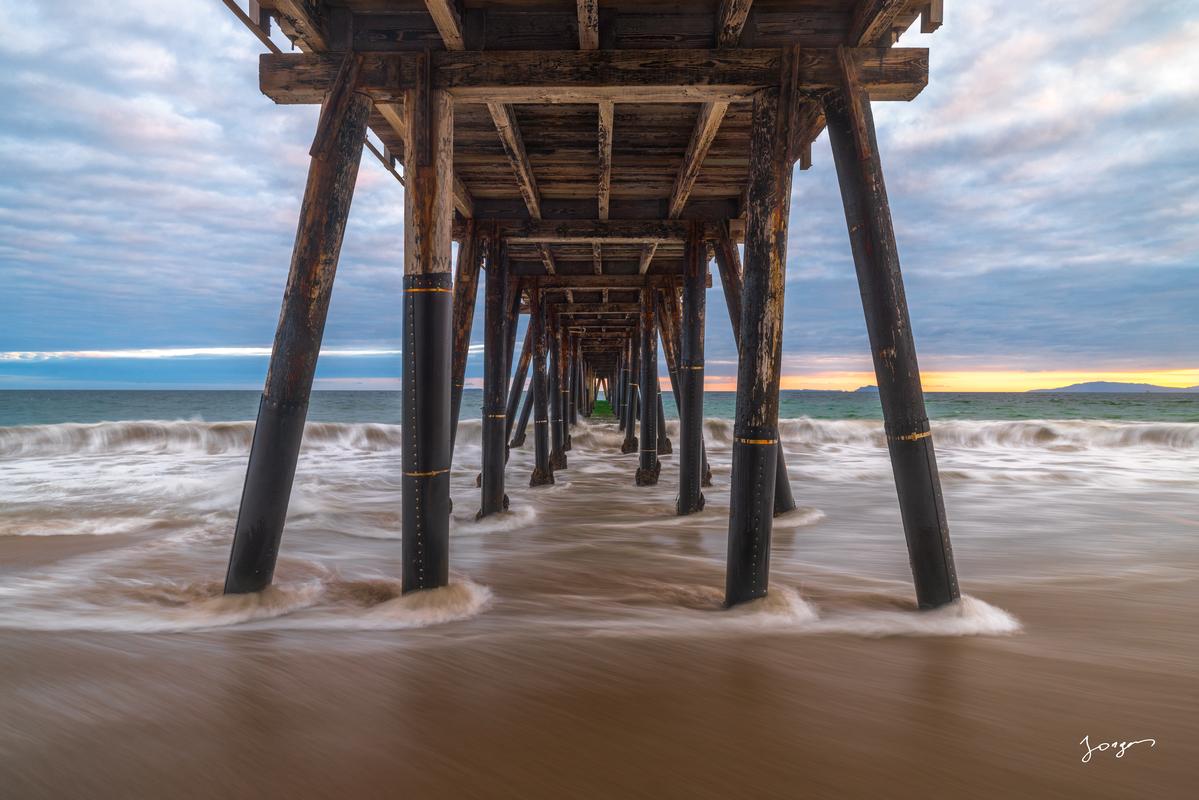
I am a Las Vegas-based fine art photographer. My work spans the landscapes of the American West — the California coastline, the Pacific Northwest, the desert Southwest, the High Sierra, and the city I photograph from the inside because I actually live in it. Every print in my catalog is available directly from me, at prices that carry none of the casino lease overhead, none of the gallery commission, and none of the pressure of a showroom designed to make you feel that a decision deferred is an opportunity lost.
My best work is produced as mounted TruLife acrylic — the same optical acrylic face-mounting process that the fine art photography galleries on the Strip use as their premium standard — in a limited edition of 100, signed by me with a Certificate of Authenticity, and available from 24 inches up to 120 inches wide for high-end home decor and commercial installation projects that require the same commanding scale you will find in the resort corridors.
My Tru Masterpiece collection represents the most exclusive tier in the catalog — single-edition prints of the finest images, each existing as one print only, permanently retired once sold. For clients whose exquisite home decor demands a work that belongs to exactly one collector in the world, this is the relevant collection.
The rest of the catalog — landscapes, cityscapes, ocean seascapes, abstract work, and the specific quality of desert light that Las Vegas produces in the early morning before anyone else is paying attention — is at the Las Vegas photography collection.
The Material Honesty of Las Vegas
The world views Las Vegas as a city of illusions — of surfaces engineered to simulate something that is not quite there. Its fine art scene is the most effective argument against that reputation. Whether you are standing in front of a 63-foot Dalí canvas in a Roman-themed shopping mall, or watching a printmaker pull an edition in a converted auto-body shop in the 18b district, or driving thirty miles to Boulder City on a Saturday morning to buy a watercolor directly from the person who painted it, what you are experiencing is genuine craft, genuine conviction, and genuine commerce. Las Vegas does not apologize for combining all three. It never has. That combination — unapologetic, excessive, occasionally sublime — is the most honest thing about the place.
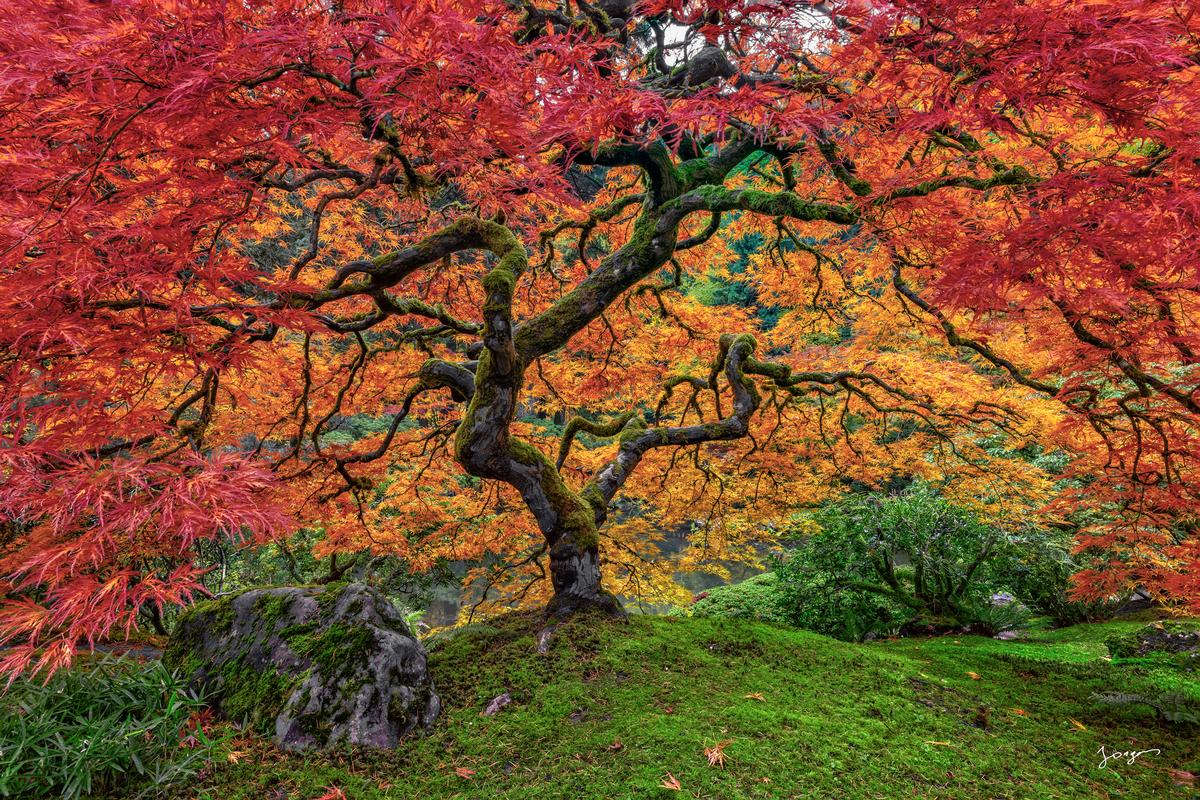
Explore the Las Vegas Photography Collection →
Explore the Tru Masterpiece Collection →
Photography Workshops with Eddie Jongas →
Eddie Jongas is a modern fine art photographer based in Las Vegas, Nevada. He photographs the American West and international locations across 48 states and 15 countries, producing TruLife acrylic-mounted limited edition prints available exclusively through jongasfineartphotography.com. Free shipping to all 50 states.
