Peter Lik is one of the most commercially successful fine art photographers alive. He has over 500 awards and professional honors to his name. His photographs have been exhibited at the Smithsonian. He built a gallery empire that stretches across ten U.S. cities. None of that is in dispute.
In dispute is his $6.5 million dollar sale that nobody outside his organization can verify. A series of photographs featuring the moon that astronomers and optical physicists proved to be physically impossible to capture in a single shot. And a resale market where buyers who paid tens of thousands of dollars for artworks in his galleries are trying to recover for a fraction of what they initially spent.
This post covers all three controversies and I will also share my own perspective as a fellow fine art photographer, about where his art stands and where its going. Some of it might surprise you.
Did Peter Lik really sell a photo for $6.5 million?
Lik’s team announced in December 2014 that Phantom sold to an anonymous private collector for $6.5 million. No independent verification exists. Major art market databases, auction house records, and provenance registries contain no documentation of the transaction. Art market analysts noted that it cannot be confirmed by any standard measure used to verify significant fine art sales. Whether the sale occurred as described remains unverifiable by anyone outside Lik’s organization.
Are Peter Lik moon photos composites?
Yes — confirmed. Following an analysis by Fstoppers and multiple astrophotography communities in 2018, which proved that images including Moonlit Dreams and Bella Luna were physically impossible as single captures, Lik’s representatives confirmed in a statement that Moonlit Dreams was a composite photograph. Both images used the same digital moon asset. The lunar orientation, depth of field, and lighting physics in the images were all identified as optically impossible in a single frame.
Do Peter Lik prints hold their value?
No, based on available secondary market evidence. Major auction houses routinely decline Lik consignments. When his prints appear at public auction they typically sell for $500 to $3,000 — well below original gallery purchase prices that often range from $4,000 to $30,000 or more. Lik himself compared the situation to buying a luxury car: value drops once you leave the gallery. Edition sizes as high as 995 prints create a saturated secondary market with many simultaneous sellers competing for few buyers.
What was the Peter Lik composite controversy about?
The controversy centered on the gap between how Lik’s galleries described his images — as single-exposure captures of authentic natural moments — and what several prominent photographs actually were: digitally composited images assembled from multiple exposures or stock assets. The problem was not the compositing technique itself, which is widely used in fine art photography, but the lack of disclosure to buyers paying significant prices based on claims of authenticity.
What is a transparent alternative to Peter Lik fine art photography?
Independent fine art photographers who disclose their print process, edition sizes, and compositing clearly offer a different buying experience. The Jongas Fine Art Photography collection uses TruLife museum-grade acrylic (superior to the P99 acrylic used by Lik), strictly limited editions of 50 to 100 prints or unique single prints, transparent direct pricing with no gallery markup, and clear labeling of the two composite images in the collection. Available direct from the photographer with free US shipping.
Who Is Peter Lik? A Quick Background
Peter Lik was born in Melbourne, Australia in 1959 to Czech refugee parents. His first camera was a Kodak Brownie box camera given to him at age eight. His first photograph was a spiderweb in his family’s garden. He never went to photography school — he taught himself through years of working across the Australian wilderness.
The turning point came in 1984 during his first trip to the United States. In Alaska, he met Allen Prier — a local photographer who introduced him to large-format panoramic cameras. He immediately understood what the format could do for landscape photography — the ability to capture the true scale of the natural world in a single frame. He returned to Australia, acquired a Linhof Technorama 617 panoramic camera, and committed himself entirely to this 3x1 photography format.
In 1989, he launched what he called the Spirit of America project — an ambition to photograph dramatic landscapes in all 50 U.S. states. Over four years, he traveled more than 50,000 miles and shot through over 1,000 rolls of film. The resulting body of work became his 2003 flagship coffee-table book and the foundation of his gallery empire. He relocated to Las Vegas, opened his first gallery, and built a direct-to-consumer model that bypassed traditional art dealers. It worked on a scale no photographer has achieved ever before.
It is worth noting that the panoramic landscape photography gallery model Lik built in America had an important Australian precedent. Ken Duncan — a Sydney-based photographer five years Lik’s senior — had already pioneered the concept of limited-edition fine art photography prints in Australia by the early 1980s, becoming one of the first photographers in the country to successfully sell photography as collectible fine art through his own gallery operations. The two photographers shared the same format, the same large-format saturated aesthetic, and the same direct-to-collector model. Whether Duncan directly influenced Lik or whether the two arrived at similar conclusions independently is a more nuanced story — one we’ll explore in a dedicated article on Ken Duncan coming soon to this blog.
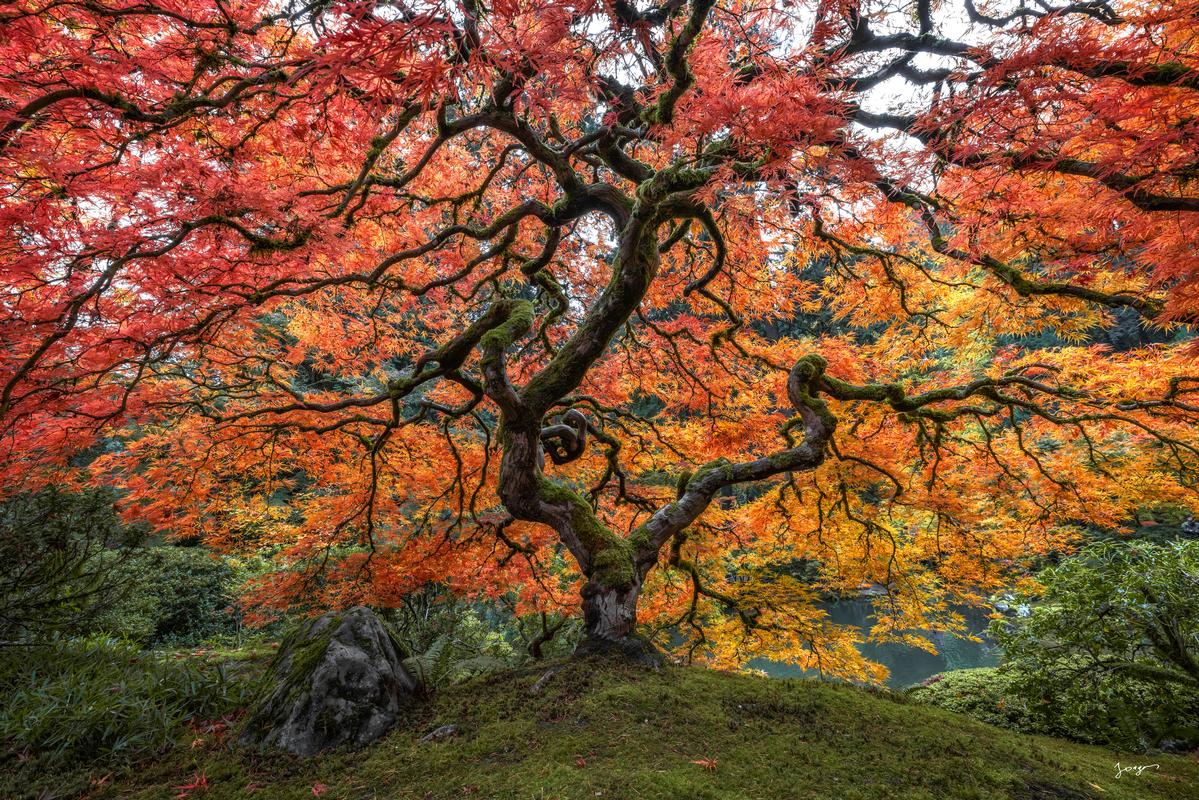
When Lik's controversies began, he had accumulated over 500 professional awards and fellowships from the Australian Institute of Professional Photography, the Royal Photographic Society, the Professional Photographers of America, and numerous international bodies. His work “Ghost” was exhibited at the Smithsonian National Museum of Natural History. The photo of famous Japanese Maple in Portland aka “Tree of Life” followed. His credentials were real, substantial, giving real weight to all drama which was about to unfold.
The $6.5 Million “Phantom” — The Sale Nobody Can Verify
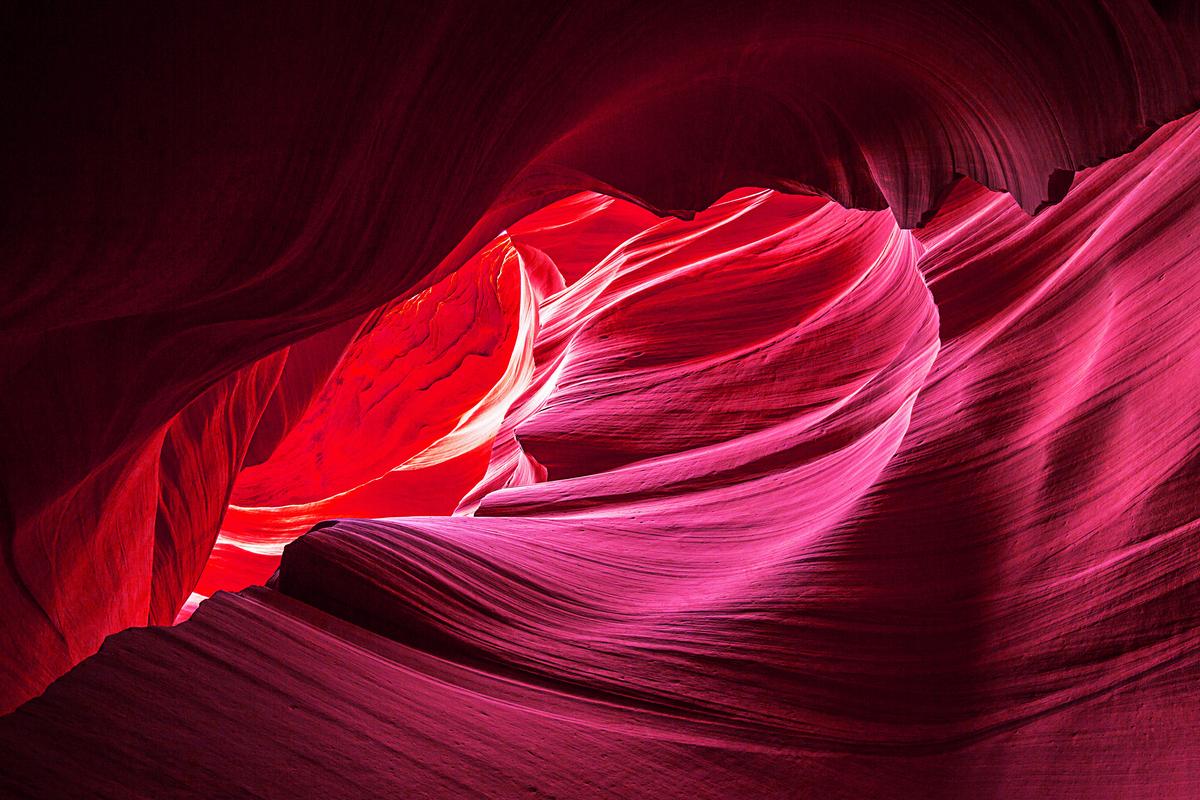
In December 2014, Peter Lik’s team announced that a photograph called Phantom — a black and white image of a ghostly light beam in Antelope Canyon, Arizona — had sold for $6.5 million USD to an anonymous private collector. The announcement was immediate and global. Headlines appeared in Forbes, CNN, the BBC, and virtually every major news outlet. It was reported as the most expensive photograph ever sold in history.
There was one problem. Nobody could verify it.
In the fine art world, significant sales are typically documented through auction house records, gallery receipts, provenance chains, and eventual re-sale history. Christie’s, Sotheby’s, and Phillips maintain public auction records for every lot they sell. Independent gallery sales can be private, but they leave paper trails — invoices, certificates of authenticity with documented buyers, insurance valuations, art registry records.
The Phantom sale had none of this. It was a private transaction with an anonymous buyer, announced exclusively by Lik’s own team, with no independent verification, no auction house documentation, no art registry record, and no subsequent appearance in any database. The anonymous buyer has never been identified. The print has never resurfaced in the secondary market. No appraisal firm, auction house, or independent art analyst has confirmed the transaction.
“Whether the sale happened as described, happened at a different price, or happened at all — nobody outside his organization knows.”
Photography critics were skeptical immediately. The three photographs that previously held the record for most expensive photograph ever sold — Andreas Gursky’s Rhein II at $4.3 million (2011), Cindy Sherman’s Untitled #96 at $3.9 million (2011), and Richard Prince’s Untitled (Cowboy) at $3.1 million (2014) — all sold at major auction houses with complete public records. The idea that a landscape photograph by a gallery-circuit photographer beat all three by over $2 million in a private sale with no verifiable trace, struck many in the industry as implausible.
Lik himself never provided any documentation either. His galleries continued using the $6.5 million claim in marketing materials for years afterward. Whether the sale happened as described, happened at a different price, or happened at all — nobody outside his organization knows. What is clear is that the claim of the sale could never be verified by anyone.
This matters for buyers because the Phantom sale became central to the investment narrative in all Peter Lik's galleries. “Peter Lik’s print sold for $6.5 million” was used — explicitly and implicitly — as evidence that his artworks have great value. Except the resale market reality, tells a bit different story.
Moonlit Dreams and Bella Luna Moon Composites — Illusions Disrupted By Math
The second major controversy broke in 2018, when photographers and astrophysicists systematically dismantled two of Lik’s most popular images: Moonlit Dreams and Bella Luna.
Both photographs featured massive, hyper-detailed full moons rising dramatically behind landscape scenes. Both had been sold in Lik’s galleries with descriptions implying they were captured in a single exposure — the result of patience, timing, and being in the right place at the right time. However, both, according to the photographers and scientists who analyzed them, were physically impossible.
The case against Moonlit Dreams was built on four independent lines of evidence, each of which was damning on its own. Together, they were conclusive.
First, the depth of field. In the photograph, both the nearby canyon trees and cliffs in the foreground and the moon — 384,000 kilometers away — are in razor-sharp focus simultaneously. This is not possible with any existing camera lens at telephoto focal lengths without blending multiple exposures focused at different distances. A single exposure cannot achieve this. The laws of optics do not allow it.
Second, the lunar orientation. Astronomers analyzed the tilt and rotation of the moon’s surface features as they appeared in Moonlit Dreams. The North Pole of the moon was tilted at an angle that is only possible at Arctic latitudes. The photograph was supposedly taken in Utah. At that latitude, at that time of year, the moon cannot appear at that rotation. It’s not a matter of camera settings or technique — it was a matter of basic celestial mechanics.
Third, the lighting contradiction. The directional light hitting the landscape in the foreground came from a direction inconsistent with the moon’s position in the sky. If the moon were the light source, the shadows would fall differently. The light on the cliffs and the light supposedly coming from the moon were physically incompatible in a single exposure.
Fourth, and most damaging: photographers compared the lunar surface detail in Moonlit Dreams with the lunar surface detail in Bella Luna, an earlier Lik image from 2012. The moon was identical. Not similar — identical. The same surface texture, the same crater positions, the same scale when adjusted for the image size. The same shot of the moon had been placed into two entirely different landscape compositions six years apart. In one image, clouds were visible behind the moon — meaning the moon would have had to exist inside Earth’s lower atmosphere.
Fstoppers and other nightscape photography communities published detailed technical analyses. The photography world’s verdict was unanimous: the images were composites marketed as single-capture exposures.
Lik’s team eventually sent a statement to industry reviewers confirming that Moonlit Dreams was a composite. The admission came only after all the evidence made any denials impossible. With “egg on it’s face”, his website was subsequently updated to disclose composite status on both images.
Other works in his catalog faced similar criticism — Lunar Veil, Night Shadow, and The Perfect Storm among them. All feature foreground landscapes that would require daylight-level exposure alongside pitch-black night skies packed with stars — a combination that requires compositing a day exposure with a night sky exposure, because no single camera setting can expose correctly for both at the same time.
The controversy was not about whether compositing is a legitimate technique. It is. Nobody denies that. Everyone uses it. The controversy was about the gap between what was being sold — rare, single-capture moments of nature requiring extraordinary skill and patience — and what was actually being delivered: digitally constructed images assembled from multiple exposures. In other words, collectors were paying $10,000, $20,000, and more for a story that wasn’t true.
Are Peter Lik Prints Worth Anything on the Resale Market?
This is the question that ties both controversies together, and the answer is the same as covered in the article about Peter Lik gallery experience on this blog: the secondary market for Lik’s prints is unfavorable to sellers.
The pattern is consistently documented across art forums, eBay listings, and collector communities. If a buyer purchases a print for $4,000 to $18,000 at a gallery. The gallery price for that same image continues to climb as editions sell through — reaching $15,000, $25,000, more. The buyer watches the gallery price rise and assumes their print has appreciated accordingly. But when they try to sell they learn something different.
Major auction houses — Christie’s, Sotheby’s, Phillips — routinely decline to handle Lik consignments. His highest documented public auction sale was $15,860 for Ghost in 2008 — a print his galleries were selling for multiples of that price. When prints do appear at secondary auctions, they typically sell between $500 and $3,000, regardless of original gallery purchase price.
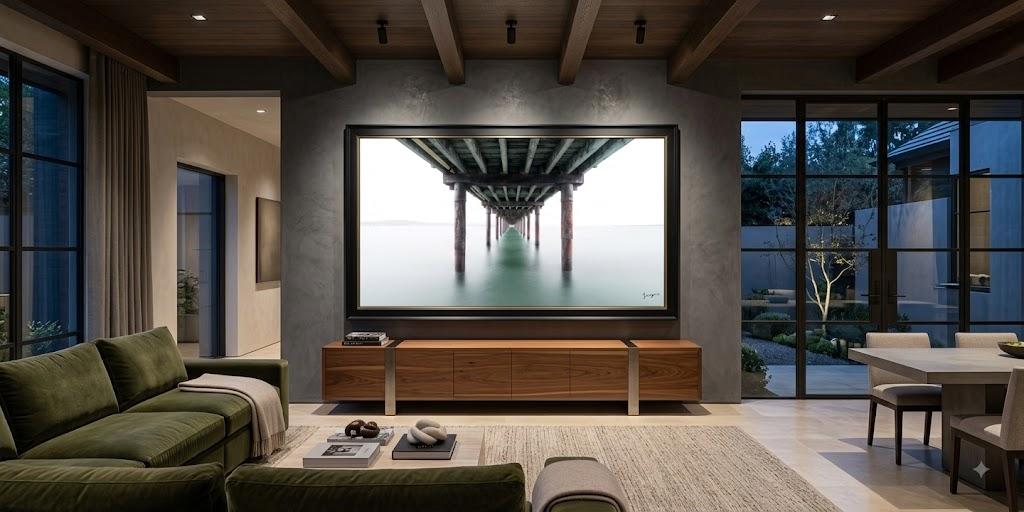
On peer-to-peer platforms like eBay, the listings tell a true story. “Paid $18,000 at Caesars Palace — selling for $3,500 or best offer” is quite common. The market is oversaturated because editions run as high as 995 prints plus artist proofs — meaning many owners of the same print are trying to sell the same image simultaneously.
When the New York Times published its investigation into Lik’s sales model, Lik compared the situation to buying a luxury car: “It’s like a Mercedes-Benz. You drive it off the lot, it loses half its value.” He wasn’t being evasive. He was actually being honest and accurate. The problem was that nobody in his galleries was delivering that message while closing sales using the Phantom’s $6.5 million sale to build value, followed by “Lik prints are a great investment” narrative.
As you can see, the resale market reality is directly connected to the composites controversy. When the truth surfaced about the moon images being composites, it further undermined the Peter Lik’s credibility and what justified his premium gallery prices. The cat was out of the bag.
My Honest Take — Where His Work Actually Stands
His early work that built his initial reputation as a famous landscape and nature photographer — the Spirit of America period, the film-era panoramas, was natural and authentic. Large-format film photography of the American West, done with rigor and patience, printed on metallic paper and face-mounted on acrylic. There was an ambitious artist desire driven craft there, and the images Lik produced, earned their place in galleries or award competitions based purely on their artistic merit.
Then digital era came around and things got more complicated. As using editing software became photographers real canvas. His images became more dramatic, more saturated, more “perfect”. He then crossed a line by being “slick” about the moon images.
But no matter the failures the real truth remains: Peter Lik is a master at his craft. No matter the controversies and no matter the “screw-ups”. One thing you can not take away from his work is the superb attention to detail, impeccable compositions, unimaginable variety of subject from locations all over the world, the perfect color balance and same youthful and ever ambitious desire to produce the best fine art photography prints possible. He never lost that and that is why all earlier mentioned “fiasco’s” never really mattered.
I was impressed by his photography the first day I saw it — that made me want to become a fine art landscape, nature and city photographer I am now. Today I’m impressed even more, because his latest images are truly perfect. Or if you want my real opinion — Lik’s images today are actually too perfect!!! (if such things exists).
Why? He takes a real life scene of a Joshua tree for example and using editing software he adds green grass and a starry sky with milky way in it — to make a photo a utopic, dreamy, ultimate perfection. Is the Joshua tree real? Yes it is. Is the milky way real? Yes it is. They were both captured from the same spot, with the same camera, hours apart. Which means the camera was left alone without movement for hours between the captures. So they can later be combined together. To me it’s real passion and dedication. It shows the ultimate vision and creativity and possibility to make that happen with today’s software tools and technology.
The art lays in the artist’s vision, technology, tools and software just help it make a reality. I personally admire it greatly. It is no different that a painter wanting to paint a Mona Lisa and using different brushes, different colors and coming back to finish a painting week after week to make minor improvements to it until its a finished artwork.
One thing to note: I have a feeling he doesn’t do the digital editing part himself, he most likely hires someone who signs NDA to keep it a secret, but whoever does it — is great at what they do and make his finished art look perfect (too perfect if you ask me). I say “too perfect” because they don’t even try to hide that images are composites nowadays and elements added to photos are obviously not a single capture moments in nature or life.
The end result? Lik’s art looks great and people love it. I love it too, I go see it every chance I get if I’m near any of Lik’s galleries. Because his art inspires me.
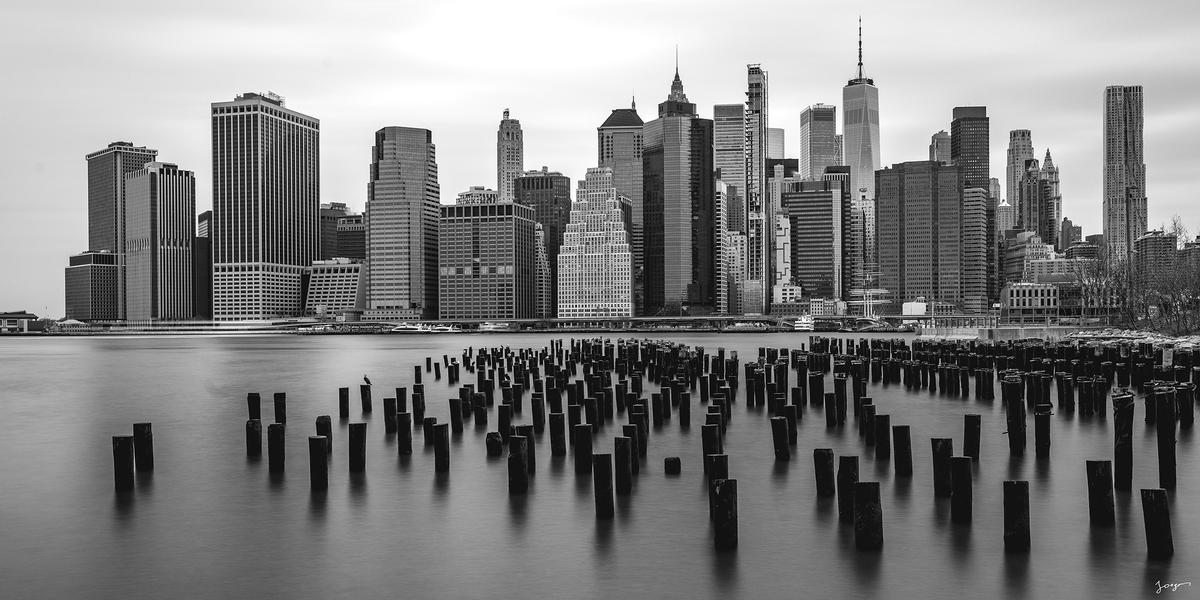
How Jongas Fine Art Photography Compares As An Alternative to Peter Lik Style Prints
As a landscape photographer, I choose to keep my images as natural as possible. But maybe one day I will start heavily enhancing mine too. But for now, I like the difficulty of chasing sunsets, clouds and other elements, so I can make my landscapes look as pure as God and Mother Nature have presented them to me — raw, authentic and dependent on all the weather drama.
Jongas vs. Peter Lik — At a Glance
- Photography approach: 95% purist, real locations, real light, real clouds — exposure blending only to recover highlights and shadows, the same technique Ansel Adams used in his darkroom.
- Print medium: TruLife acrylic exclusively — lower surface reflections, stronger color contrast, and greater depth than the P99 acrylic used by Lik.
- Edition sizes: 50 to 100 prints for standard limited editions; the Only-One collection features single unique prints — one image, one print, never reprinted.
- Pricing: Listed by size on the website. No gallery markup, no salesperson commissions, no sales pressure.
- Transparency: All composite images in the collection are clearly labeled. What you see is what you’re buying — or actually better, since screen can never match the finished print.
- Shipping: Free to all 50 U.S. states, direct from the photographer.
Natural Photography
95% of my work in Jongas collections is purist photography — real locations, real light, real clouds and real waterfall photography. In most of my images exposure blending is used (almost always) — combining two or three frames of the same scene to reduce blown highlights or recover details in shadows (darker areas of the image) — the same technique Ansel Adams used in his darkroom and pretty much all landscape photographers do on daily basis.
Superior Print Quality
Jongas fine art photography prints are made with TruLife acrylic only. While Peter Lik uses P99 acrylic — a less expensive alternative. TruLife has visibly lower surface reflections, stronger color contrast, and greater depth. The difference is visible if you put the two side by side only. Lik chooses not to use it to save cost, thus maximizing profits. I choose less profits but better quality product for you — the end customer who will be enjoying the artwork on a wall in their living room. You won’t be able to tell the difference consciously, but unconsciously, with Jongas art you will know you have superior, better quality product.
Scarcity
Jongas limited edition prints run 50 to 100 prints only. While the Only-One collection features TruMasterpiece single prints only — which means one image, one print. No additional copies printed. Ever. That’s true scarcity. I wrote about it in a blogpost — “is fine art photography a good investment”.
The price for single print is significantly higher, since it’s the only copy, same as you would buy an oil on canvas painting. You become an exclusive owner. Hence, that kind of print will always have more resale value, than any other photography print that is printed in multiple copies. Compare that to the “limited edition of 995” used by Peter Lik’s galleries. No wonder people can’t resell his work. When you have a copy that was printed 994 times more, it can only be associated with commodity, no matter how wonderful it is.
Pricing
Jongas prices are based on size of the print you order and are listed on the website. When limited edition runs out, I reserve my right to increase the price on last copies. I might not do it. But I reserve that right. Since I don’t own any retail stores and don’t have to pay any salesperson commissions, my prices are lower, for a better quality product as discussed above. Most importantly there is no sales pressure, no tactics, and especially no pretending of something that is not.
What you see is what you’re buying. Or actually it’s even better. For what you see on a computer screen will never be as good as the print you receive and that is what I always strive for in my modern fine art and landscape photography print business. To provide you with best quality art possible. So far no one was disappointed.
Browse the landscape photography collection, the fine art panoramas, the black and white collection, and the full range of Jongas Fine Art prints — TruLife acrylic, strictly limited editions, direct from the photographer, free US shipping.
Related Reading:
→ Peter Lik Alternative — The $6.5M Photo, A Lawsuit & What to Buy Instead
→ Peter Lik Galleries — What to Expect Before You Visit
→ The 10 Most Expensive Photographs Ever Sold at Auction
→ Modern Fine Art Photography Prints — Is It a Good Investment?
→ The Evolution of Fine Art Photography — From the First Camera to AI
→ AI and the Art World — Revolution, Controversy & Where Photography Stands
Eddie Jongas is a modern fine art photographer based in Las Vegas, Nevada. His TruLife acrylic-mounted limited edition prints are available exclusively through jongasfineartphotography.com, with free shipping to all 50 states.