I had a great deal of help putting this article together. A good friend of mine has lived in Seattle for 64 years and was directly involved with the World's Fair that gave the city its most famous landmark. When I asked him to share what he actually knows about the Space Needle — not the tourist-brochure version, but the real story — he gave me enough material to fill several articles. What follows is the result: the origin story, the engineering, the renovation, a piece of buried art history that most visitors never hear about, and the specific spots around the city where I have personally gone to photograph the tower and come away with something worth printing.
By Eddie Jongas · Jongas Fine Art Photography · Jongas Travels
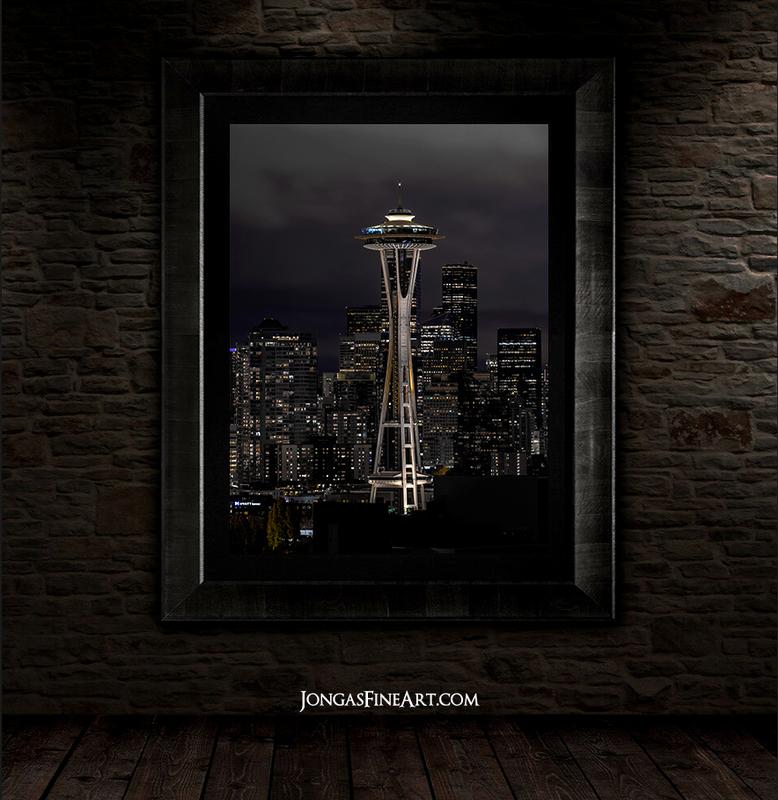
A Napkin, a Hotel Executive, and a Tower in Stuttgart
The Space Needle began, as a surprising number of great ideas do, with a doodle on a napkin in a coffee shop. In 1959, Edward E. Carlson — a Seattle hotel executive serving as chief organizer for the upcoming 1962 World's Fair, officially called the Century 21 Exposition — was trying to figure out how to give the fair a dominant central landmark. He had recently seen a broadcast tower in Stuttgart, Germany, and the image stuck with him. He sketched out the rough concept on a napkin: a tall central structure the entire fair could organize itself around.
Architects John “Jack” Graham Jr. and Victor Steinbrueck took Carlson's rough concept and refined it into something genuinely futuristic — a narrow, wasp-waisted tower topped with a flying-saucer-shaped observation deck, perfectly embodying the fair's theme: “The Age of Space.” When it opened on April 21, 1962, the tower looked considerably different from how it looks today. The legs were white, but the core was painted a color called Orbital Olive, the halo around the top house was Re-entry Red, and the sunburst roof was Galaxy Gold — a full Space Age color palette that has since been simplified for the more familiar white-and-gunmetal scheme most visitors recognize now.
The most remarkable part of the construction was the timeline. Crews built the entire 605-foot tower from foundation to spire in 400 days — a blazing, record-breaking pace that earned it the local nickname “The 400-Day Wonder” during construction. At completion, it stood as the tallest building west of the Mississippi River, a title it has since lost to taller skyscrapers in Los Angeles and San Francisco, but which it held proudly for years as the symbol of a city announcing itself to the world.
The Dancer Hidden Inside the Steel
Here is the part of the Space Needle's story that almost nobody outside Seattle knows, and it is the single best piece of trivia my friend shared with me.
In 1960, the design team at John Graham & Company was stuck. Early concepts for the tower were being criticized as too mechanical — clumsy “lollipop” designs that mimicked the broadcast towers already standing across Europe. The fair's organizers wanted something distinctive, and nothing the architects had drafted felt right.
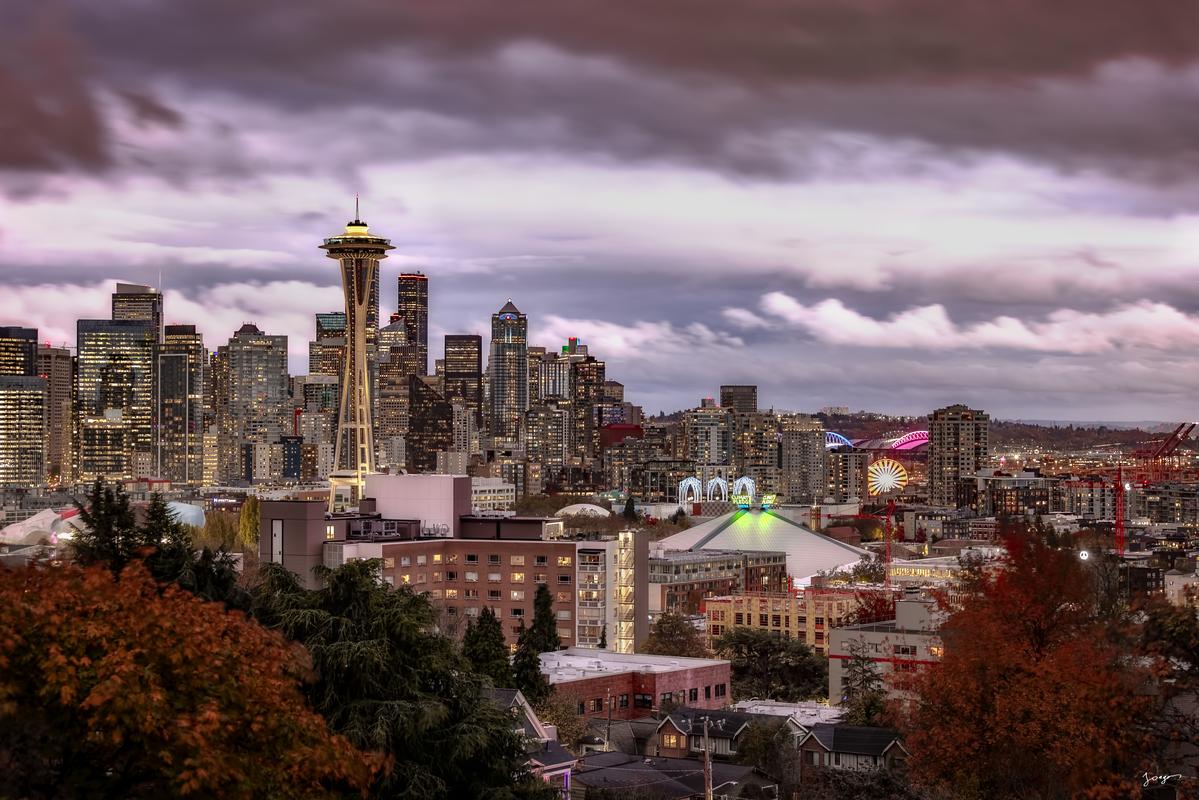
Architect Victor Steinbrueck, a University of Washington professor brought in to refine the concept, found his breakthrough by accident. Sitting in his office one day, he noticed an abstract teak sculpture belonging to his friend, local artist David Lemon. The piece was titled The Feminine One — an abstract, narrow-waisted dancer with three legs and arms stretched gracefully toward the sky.
Steinbrueck had his eureka moment looking at that sculpture. He realized a tripod structure based on that fluid, narrow-waisted human silhouette could give the tower the stability it needed while looking genuinely elegant rather than mechanical. He reportedly shouted to his wife, “I've got it, I've got it!” and sketched the preliminary design on the spot.
The connection runs deeper than a single inspired afternoon, though. A 2019 documentary short called Space Needle: A Hidden History, directed by Seattle filmmaker B.J. Bullert, traces the full lineage of that sculpture's influence back to Syvilla Fort — a pioneering Seattle-born African-American dancer and choreographer who studied at the Cornish School in the 1930s and went on to influence major figures like John Cage and Merce Cunningham. The documentary argues that the graceful, elongated lines in David Lemon's sculpture, and by extension the tapered legs and narrow waist of the Space Needle itself, carry the visual DNA of mid-century modern dance — specifically Fort's movement and influence on the Pacific Northwest art scene of that era. The film features interviews with Steinbrueck's own son Peter, a representative of the Wright family who has owned the tower since construction, and an art historian from the Cascadia Art Museum, alongside an original commissioned poem and a modern dance performance built specifically to physicalize the connection between a dancer's spine and the Needle's sweeping steel core.
Look closely at the architecture today and you can still see it: the three main legs of the tower curve inward dramatically at the 373-foot mark, replicating that narrow waist, before flaring back outward to support the observation deck above — three slender figure pairs standing back to back, legs apart, arms raised, collectively holding the top house aloft. A large-scale reproduction of David Lemon's original sculpture now stands on the Space Needle grounds, showing visitors exactly where the building's shape actually came from.
"He realized a tripod structure based on that fluid, narrow-waisted human silhouette could give the tower the stability it needed while looking genuinely elegant rather than mechanical."
Engineering Built to Survive Almost Anything
Despite its delicate, narrow-waisted silhouette, the Space Needle is engineered to an extraordinary standard. Its center of gravity sits just 5 feet above the ground, thanks to a 30-foot-deep foundation packed with 5,600 tons of concrete and anchored by 72 massive bolts, each 30 feet long. The tower was built to withstand winds up to 200 mph and earthquakes up to magnitude 9.0. When a genuine 6.5 magnitude earthquake struck Seattle in 1965, the only recorded damage to the entire structure was a single shattered bottle of champagne.
Space Needle By the Numbers
- Height: 605 feet from ground to spire tip
- Construction time: 400 days, foundation to spire
- Foundation: 30 feet deep, 5,600 tons of concrete, 72 bolts each 30 feet long
- Wind tolerance: Up to 200 mph
- Seismic tolerance: Earthquakes up to magnitude 9.0
- Steps to observation deck: 848
- Elevator speed: 10 mph; 41–43 seconds to the top
- Century Project cost: $100 million (privately funded, 2017–2018)
- Glass added in renovation: 176 tons across 10 specialized varieties; 196% more than original
- The Loupe revolving floor: 37 tons of glass; one full revolution every 45 minutes
For visitors not interested in the elevator, 848 steps run from the basement all the way to the observation deck. Most people, sensibly, take the elevator instead — a 41 to 43 second ride traveling at 10 mph that delivers you to the 520-foot observation level with a floor-to-ceiling glass view of the city shrinking beneath you the entire way up.
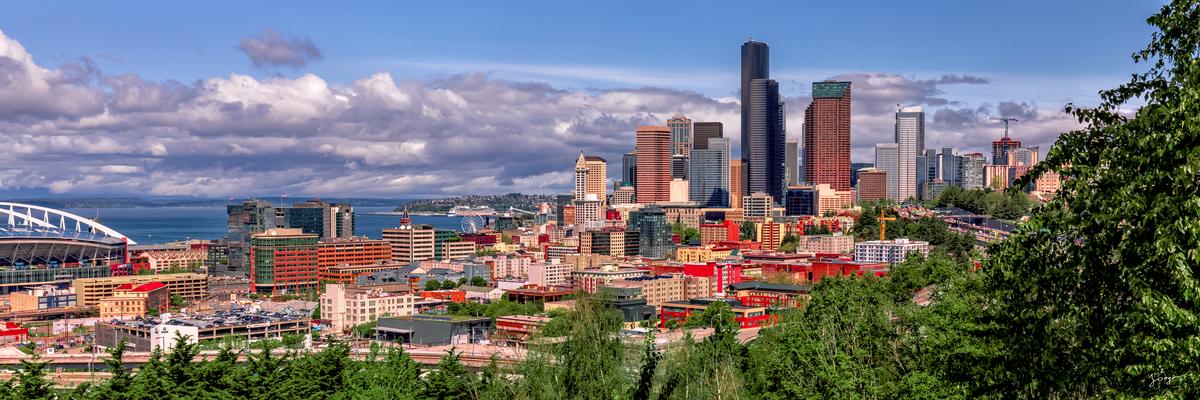
The Century Project — Turning the Tower Into a Lens
Between September 2017 and mid-2018, the Space Needle underwent a $100 million privately funded renovation called the Century Project, led by Seattle architecture firm Olson Kundig with design principal Alan Maskin. The project was deliberately subtractive rather than additive — rather than changing the tower's iconic silhouette, the renovation peeled away decades of heavy interior modifications and barriers that had accumulated since 1962, restoring the original design intent of delivering completely uninhibited 360-degree views.
The defining theme was transparency. The renovation added 196 percent more glass to the structure than it originally had — 176 tons of glass across ten different specialized varieties. The wire safety mesh that had long obstructed photographs from the outdoor observation deck was completely stripped away and replaced with frameless, triple-laminated glass walls, each panel 11 feet tall and 7 feet wide. Twenty-four canted glass benches called Skyrisers were installed along the outer wall, which leans outward at a 14-degree angle — sit on one and you can lean back with your feet dangling directly over the Seattle skyline.
The most dramatic addition was The Loupe — the world's first and only revolving glass floor, installed at the 500-foot level on the former site of the SkyCity revolving restaurant. The floor is built from ten layers of structurally engineered glass weighing 37 tons total, and because the entire mechanism is visible through the clear glass, visitors can watch the twelve internal electric motors and rolling peg gears that slowly rotate the platform — one complete revolution takes about 45 minutes. A new cantilevered spiral staircase of steel, wood, and glass connects the levels, ending at a glass-floored oculus that lets you look straight down at the tower's narrow structural core and watch the elevator cabs and counterweights pass beneath your feet.
Executing this renovation while keeping the tower open to the public required genuine engineering creativity. A temporary 100-ton, 135-foot-diameter suspended work platform called a QuikDeck was hoisted into place beneath the top house in the middle of the night, built to withstand winds up to 115 mph and serve as both a construction pad and weather barrier. Because the tower naturally expands, contracts, and twists with wind and temperature, contractors used laser scanning to achieve the razor-thin tolerances the new glass installation required.
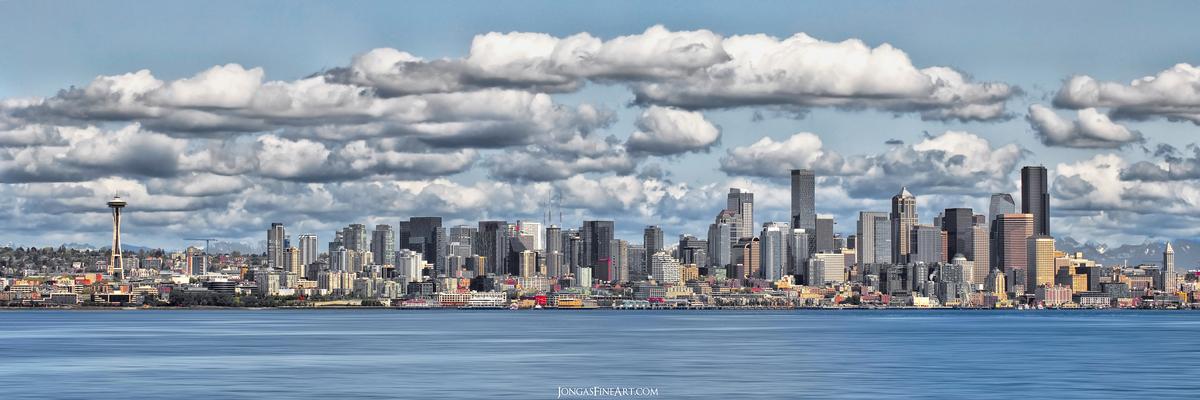
The Space Needle and the Art World
Beyond its origin in an abstract dance sculpture, the Space Needle sits at the literal and figurative center of Seattle's fine art community.
Architecturally, the tower is celebrated as a defining example of Googie architecture and mid-century Futurism — a style shaped by the Space Age, car culture, and the sleek geometry of rockets, using exposed structural steel and vast expanses of glass to express boundless optimism about technological progress. In its era it was conceived as an American West Coast counterpart to monuments like the Eiffel Tower or the Brussels Atomium — structures that bridge civil engineering and public sculpture.
The most literal intersection between the tower and fine art sits directly at its base: Chihuly Garden and Glass, opened in 2012 to showcase the career of legendary Washington-native glass artist Dale Chihuly. The centerpiece Glasshouse, a dramatic 40-foot structure housing a 100-foot vibrant sculpture in shades of red, orange, and yellow, was explicitly designed to interact with the landmark above it. Standing inside the gallery and looking up through the glass ceiling, the organic, tangled forms of Chihuly's blown glass frame the rigid geometric steel lines of the Space Needle against the sky — one of the most famous juxtapositions of industrial architecture and fine art anywhere in the country.
The surrounding 74-acre Seattle Center campus functions as a kind of open-air gallery in its own right. Down the hill on the waterfront, the Seattle Art Museum's Olympic Sculpture Park positions major works — including Alexander Calder's massive red abstract sculpture The Eagle — so that visitors can use the artwork itself to frame and recontextualize the Space Needle on the horizon. At Volunteer Park on Capitol Hill, Isamu Noguchi's ring-shaped stone sculpture Black Sun can, from the right angle, perfectly ring the distant tower — a composition local photographers have been chasing for decades.
When the Needle was built, it dropped a sharp-edged, high-tech silhouette directly into a Pacific Northwest art scene then dominated by the moody, nature-inspired “Northwest School” painters like Mark Tobey and Morris Graves. Local printmakers and lithographers seized on the contrast almost immediately, using the tower's alien geometry to set against the soft, rain-soaked, cedar-and-mountain aesthetic that had defined regional landscape art up to that point. The Century Project renovation continued this tradition in its own way — Olson Kundig approached the entire project less like construction and more like architectural restoration art, minimizing heavy geometry until the observation levels became, in their own words, a pure invisible lens turning the Pacific Northwest landscape itself into the primary artwork on display.
The Best Places to Photograph the Space Needle
I have photographed the Space Needle from most of these locations myself over the years, and they hold up. Here is where to go depending on what you are after.
Kerry Park on the south slope of Queen Anne Hill is the single most famous viewpoint in the city, and it earns the reputation. From this elevated spot, the Needle frames the center of the downtown skyline and reads taller than it actually is relative to the surrounding towers, with Mount Rainier standing directly behind the city on a clear day for one of the most recognizable compositions in American landscape photography. It is also the most popular sunset location in Seattle — because the park faces south, the setting sun lights the skyline and the tower in rich golden-hour color, and on a clear evening the real magic happens just after sunset, when Mount Rainier turns pink and purple behind the city. Expect real crowds on any nice weekend and very limited street parking.
Bhy Kracke Park, on the eastern slope of the same hill, is the quieter alternative when Kerry Park is too crowded. The terraced paths and sloping greenery let you frame the Needle through trees and foliage, and the angle here often catches the sun glinting directly off the metallic curves of the Seattle Center buildings at the tower's base.
Olympic Sculpture Park, run by the Seattle Art Museum on the Elliott Bay waterfront, gives a lower-elevation perspective that lets you compose the Needle alongside major contemporary sculpture — positioning yourself on the lower path to frame Calder's red Eagle sculpture with the tower rising directly behind it is a classic and rewarding shot.
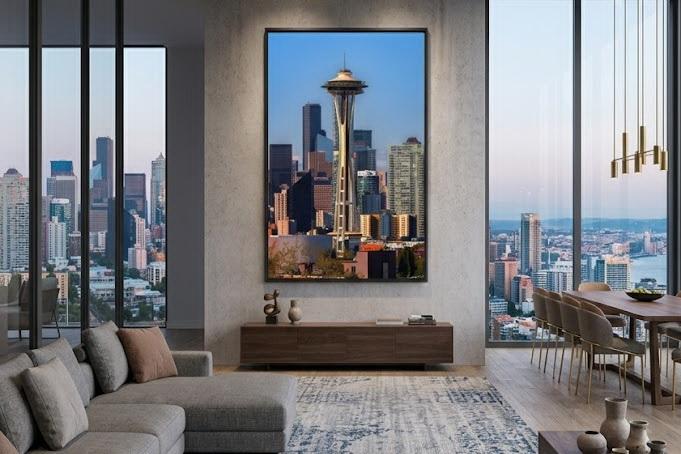
Gas Works Park on the north shore of Lake Union delivers a wide, distant view of the entire skyline across the water, with the old industrial ironwork of the former coal gasification plant still standing throughout the park. The distance lets you capture the Needle and the city lights reflecting across Lake Union, and because you are looking south toward downtown, sunset paints dramatic color to the west of the tower — the rusted steampunk infrastructure makes excellent silhouette material against that sky.
Hamilton Viewpoint Park in West Seattle, just above Alki Beach, gives an entirely different angle — looking east back across Elliott Bay, aligning the Needle with the active shipping docks and ferry lanes. Watching a Washington State Ferry glide across the bay with the skyline and the tower behind it makes for a strong long-lens composition, and the crowds here are noticeably thinner than the parks closer to downtown.
Alki Beach Park and Seacrest Park, both across the water in West Seattle, reverse the sunset perspective entirely — the sun sets behind you here, lighting the downtown skyline and the Needle directly with the last rays of the day while the eastern sky behind the tower goes dark. Alki has the full beach atmosphere with fire pits and sand; Seacrest is slightly closer and more directly aligned, with ferry crossings adding motion to the frame and a restaurant right on the pier if you want dinner with the view.
For a completely different angle, walk the plazas at the Needle's own base inside Seattle Center, where a wide-angle lens pointed straight up emphasizes the full dramatic 605-foot height. Near the Museum of Pop Culture, the Seattle Monorail track reflects off the building's sweeping metallic walls with the tower looming directly overhead — one of the more unusual and underused compositions in the city.
A Few More Things Worth Knowing
The tower has carried a surprising amount of strange and memorable history. During the original World's Fair, a 40-foot natural-gas torch burned at the top of the roof mast as a futuristic beacon — reportedly consuming as much fuel as 125 homes — before being permanently extinguished after the fair ended. Early blueprints actually called for a permanent stork's nest with imported live storks on the roof, an idea scrapped once someone pointed out that storks require warm climates and would simply fly away from Seattle's drizzle. In 1989, a local sketch comedy show aired a mock news report claiming the Needle had collapsed; the special effects were convincing enough to trigger a genuine regional panic and an emergency statement from the mayor's office. When the Beatles visited Seattle at the height of Beatlemania in 1964, all four of them refused to go up — John Lennon admitted he was terrified of heights, and George Harrison dryly noted it “looks better from the ground anyway.”
The tower is, despite feeling like a public monument, entirely privately owned by the local Wright family, whose construction company originally built it. The small plot of land its foundation sits on is private property completely surrounded by the 74 public acres of Seattle Center around it.
Right now, if you look at the Seattle skyline, the tower looks different than it has in decades — the entire flying-saucer roof has been transformed into a massive, photorealistic soccer ball for the 2026 FIFA World Cup, with Seattle serving as one of the host cities welcoming international fans for the summer matches.
From Las Vegas to Seattle to San Francisco
I photograph city skylines across the West Coast because each one has a completely different personality. Seattle builds vertically into mist and water, with the Needle and Mount Rainier defining a skyline unlike anything else in the country. Las Vegas builds horizontally into desert light, all neon and movement against open sky. San Francisco does something else entirely — hills, fog, and bay water producing a skyline that changes character by the hour. Photographing all three over the years has taught me that a city's defining landmark is rarely just architecture. It carries the specific story of how that city decided to announce itself to the world, and the Space Needle's story — a hotel executive's napkin sketch, an architect's eureka moment in front of a dancer's sculpture, 400 days of construction — is one of the best of these stories on the entire coast.
Explore the Jongas City Photography Collection →
Explore the Las Vegas Photography Collection →
Explore the San Francisco Photography Collection →
Eddie Jongas is a modern fine art photographer based in Las Vegas, Nevada, who has photographed major city skylines across the American West, including Seattle, Las Vegas, and San Francisco. His TruLife acrylic-mounted limited edition prints are available exclusively through jongasfineartphotography.com. Free shipping to all 50 states.
