A Vincent van Gogh landscape that has remained largely out of public view for approximately half a century is heading to auction — and it could become the most expensive Van Gogh painting ever sold at auction.
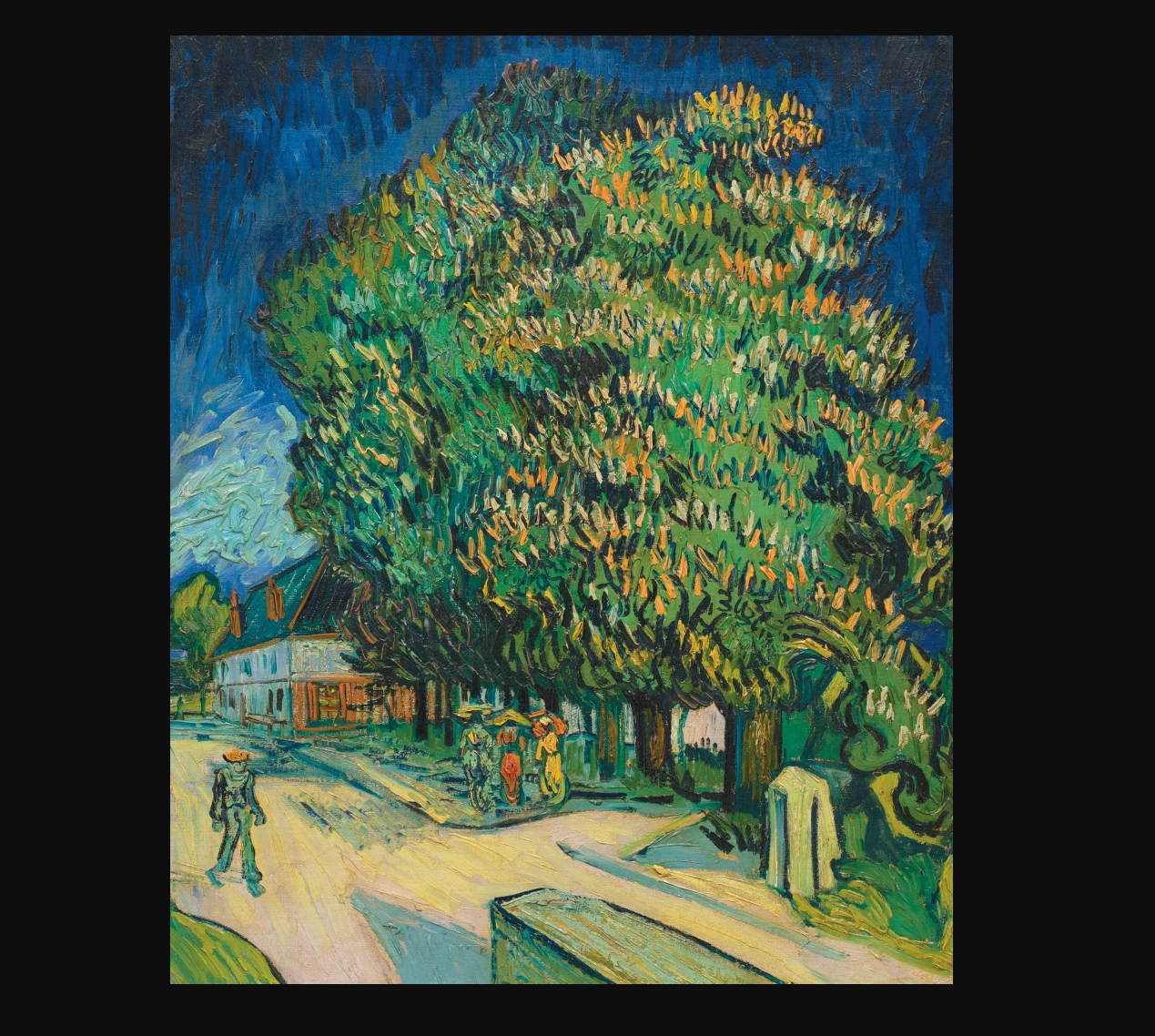
On November 18, 2026, Sotheby's New York will offer Châtaigniers en fleurs (Chestnut Trees in Blossom), painted by Vincent van Gogh in 1890 during the final months of his life.
The painting is part of the extraordinary Blaquier-Arrieta Collection, a group of Impressionist and Post-Impressionist masterpieces expected to generate hundreds of millions of dollars when it comes to auction.
What is Châtaigniers en fleurs and why is it significant?
Châtaigniers en fleurs (Chestnut Trees in Blossom) is a landscape by Vincent van Gogh painted in Auvers-sur-Oise, France, in May 1890 — during the final months of his life. It is one of only a small number of Van Gogh's Auvers-period landscapes remaining in private hands, making it exceptionally rare on the auction market.
What is the expected sale price for the Van Gogh at the November 2026 Sotheby's auction?
Published reports have placed expectations for the painting at around $180 million. Sotheby's has listed it with an estimate upon request rather than a traditional published estimate. No sale price exists until the hammer falls on November 18, 2026.
What is Van Gogh's current public auction record?
Van Gogh's current public auction record is approximately $117.2 million, set in November 2022 when Verger avec cyprès (Orchard with Cypresses) sold at Christie's from the collection of Microsoft co-founder Paul Allen.
What is the Blaquier-Arrieta Collection?
The Blaquier-Arrieta Collection is a group of 12 Impressionist and Post-Impressionist masterpieces assembled by collectors Beatriz Blaquier and Carlos Pedro Blaquier beginning in the 1970s. The full collection is expected to bring approximately $450 million at Sotheby's New York in November 2026.
Could the Van Gogh become one of the most expensive artworks ever sold?
At around $180 million, Châtaigniers en fleurs would approach the current boundary of our ranking of the world's most expensive artworks ever sold, which includes both major public-auction results and widely reported private sales. A final price significantly above $180 million could potentially earn the Van Gogh a place on that list.
Why do major Van Gogh paintings rarely come to auction?
Museums and major institutions have steadily absorbed many of Van Gogh's most important works. Once a painting enters an institutional collection, it may never return to the commercial market. The Blaquier family held their Van Gogh privately for decades, which is why its auction appearance is being treated as a rare and potentially once-in-a-generation event.
Among works by Claude Monet, Paul Cézanne, Edgar Degas, Pierre-Auguste Renoir, Paul Gauguin and others, the Van Gogh is attracting particular attention.
Published reports have placed expectations for the painting at around $180 million.
If bidding reaches that level, Châtaigniers en fleurs would easily surpass Van Gogh's existing public-auction record and enter the increasingly exclusive world of artworks selling for more than $100 million.
But there is an important distinction: $180 million is not yet a sale price.
Until the hammer falls in November, the art market gets to ask a much more interesting question:
Could This Become the Most Expensive Van Gogh Ever Sold?
Vincent van Gogh painted Châtaigniers en fleurs in Auvers-sur-Oise, France, in May 1890.
That date alone makes the work particularly significant.
Van Gogh arrived in Auvers-sur-Oise on May 20, 1890, after leaving the asylum at Saint-Rémy-de-Provence. He would spend only a little more than two months there before his death in July.
Yet those final weeks became one of the most productive periods of his career.
Van Gogh painted the countryside around Auvers obsessively: wheat fields, gardens, village buildings, trees and the constantly changing landscape surrounding him.
Châtaigniers en fleurs depicts blossoming chestnut trees filling the composition with twisting branches and dense foliage.
Rather than presenting a distant panoramic landscape, Van Gogh moves directly into the vegetation. Branches, leaves and blossoms dominate the canvas, producing the kind of energetic surface associated with his late work.
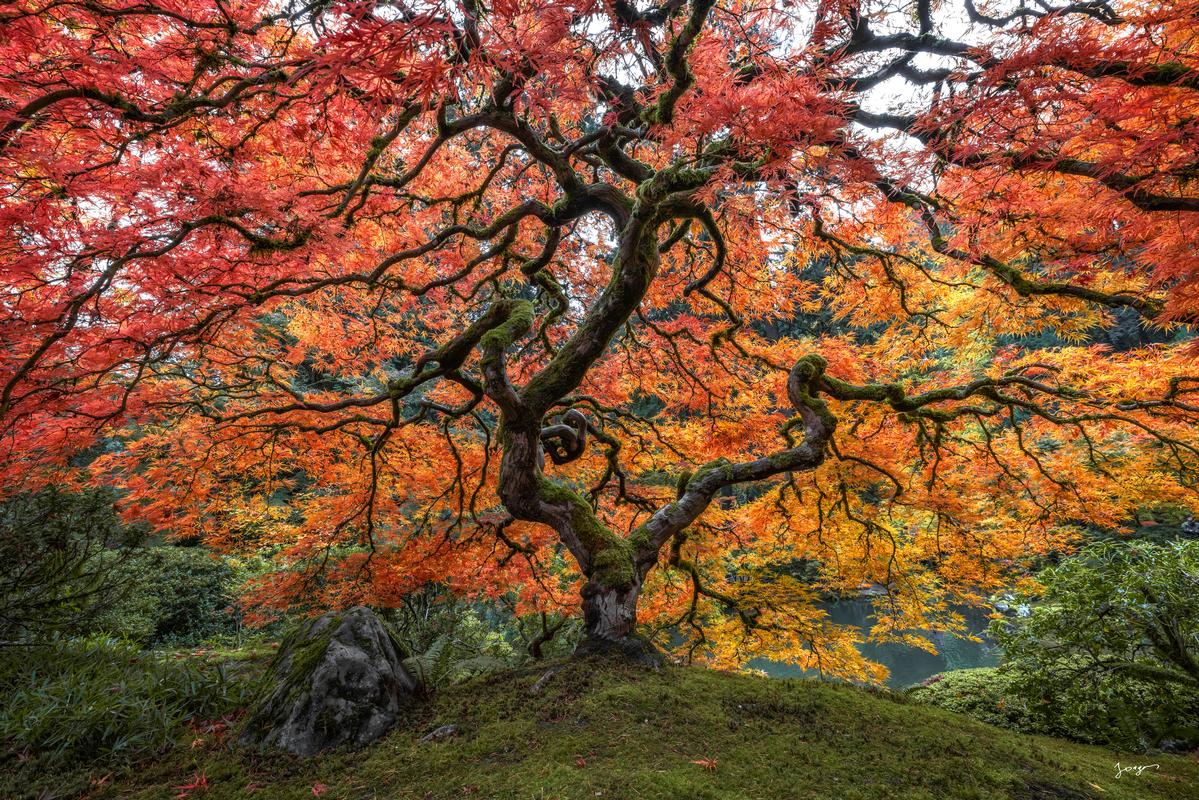
For anyone interested in how artists interpret the natural world across different mediums, you can also explore the Landscape Photography Collection by Jongas and the Tree Photography Collection.
According to Sotheby's, the painting is one of only a small number of Van Gogh's Auvers landscapes remaining in private hands.
That scarcity is enormously important when paintings of this caliber reach the market.
Museums already control many of Van Gogh's greatest works. Once a major painting enters a museum collection, it may effectively disappear from the commercial art market permanently.
Collectors therefore aren't simply competing for a Van Gogh.
They are competing for one of the relatively few museum-quality Van Gogh paintings they may ever have an opportunity to own.
Why Has This Van Gogh Been Out of Public View for So Long?
One of the most fascinating parts of the story is that Châtaigniers en fleurs has spent decades in the same private collection.
The painting belongs to the Blaquier-Arrieta Collection, assembled by collectors Beatriz Blaquier and Carlos Pedro Blaquier.
The couple began acquiring important Impressionist and Post-Impressionist works during the 1970s.
Rather than continually trading paintings as investments, the family held many of them for decades.
As a result, some works in the collection have rarely been seen publicly.
For the art market, this creates something particularly powerful: scarcity combined with rediscovery.
A famous masterpiece appearing at auction every few years is still valuable. But a major work by one of the world's most famous artists emerging after generations in a private collection creates a different kind of event.
Potential buyers know that another opportunity may not appear for decades.
"A major work by one of the world's most famous artists emerging after generations in a private collection creates a different kind of event."
What Is the Most Expensive Van Gogh Painting Ever Sold?
Van Gogh paintings have produced enormous prices for decades, but the artist's current public-auction record was established relatively recently.
In November 2022, Verger avec cyprès (Orchard with Cypresses) sold at Christie's for approximately $117.2 million including fees.
The painting came from the collection of Microsoft co-founder Paul Allen.
That sale pushed Van Gogh firmly into the modern $100-million auction club.
Other important Van Gogh auction sales have included works such as Portrait of Dr. Gachet, Laboureur dans un champ, L'Allée des Alyscamps and Portrait de l'artiste sans barbe.
Some of these prices become even more remarkable when adjusted for inflation.
But auction rankings can also be misleading.
Many of the world's greatest Van Gogh paintings haven't been available for purchase for generations. They belong to museums and other major institutions.
Private sales aren't always publicly disclosed either.
So the phrase "most expensive Van Gogh" usually refers to the highest publicly documented auction result — not necessarily the highest price anyone has ever privately paid for a Van Gogh painting.
For a much broader look at the extraordinary prices paid at the very top of the art market, see The 10 Most Expensive Artworks Ever Sold — And the Wild Stories Behind Them.
Could Châtaigniers en fleurs Reach $180 Million?
That is the question the auction market will answer on November 18.
Sotheby's has listed the painting with an estimate upon request, rather than publishing a traditional estimate beside the lot.
However, reports surrounding the sale have placed expectations at approximately $180 million.
If the painting sells anywhere near that figure, it would comfortably surpass the $117.2 million auction record established by Verger avec cyprès.
A $180 million result would represent an increase of more than $60 million over Van Gogh's existing auction record.
But auction estimates and expectations are not guarantees.
At the highest end of the art market, the difference between two determined bidders and one determined bidder can be tens of millions of dollars.
A masterpiece may dramatically exceed expectations. It may sell within expectations. It may sell below them.
And occasionally, even an extraordinary painting can fail to sell if bidding does not reach the reserve.
If you're interested in how those estimates, reserves, buyer's premiums and bidding systems actually work, read Art Auction Houses: How Christie's, Sotheby's & the Art Auction Market Work.
The Painting Has Something Money Cannot Create: Scarcity
There are plenty of expensive objects in the world.
There are very few major Van Gogh paintings available to buy.
That distinction helps explain why prices at the highest levels of the art market can become so extreme.
Vincent van Gogh died in 1890.
No additional Van Gogh paintings can ever be created.
Meanwhile, museums and foundations have steadily absorbed important examples of his work.
Every museum-quality Van Gogh that enters an institutional collection potentially reduces the future supply available to private collectors.
Demand, however, has become global.
Today's potential bidders can include collectors from the United States, Europe, Asia, the Middle East and elsewhere.
That creates an unusual economic situation: The supply is permanently limited while the number of people capable of competing for the best works can grow.
For truly exceptional artworks, scarcity isn't marketing. It is structural.
The $450 Million Blaquier-Arrieta Collection
The Van Gogh isn't appearing by itself.
It is the centerpiece of one of the most important private collections to reach the auction market in recent years.
Sotheby's will offer 12 works from the Blaquier-Arrieta Collection, with the group reportedly expected to bring approximately $450 million.
Artists Represented in the Blaquier-Arrieta Collection
- Vincent van Gogh
- Paul Cézanne
- Claude Monet
- Edgar Degas
- Pierre-Auguste Renoir
- Camille Pissarro
- Paul Gauguin
- Alfred Sisley
- André Derain
- Maurice de Vlaminck
For a collection of only 12 works to approach half a billion dollars demonstrates the extraordinary concentration of quality involved.
But Van Gogh isn't the only artist capable of producing a nine-figure result.
Cézanne's Arlequin Could Also Sell for Around $120 Million
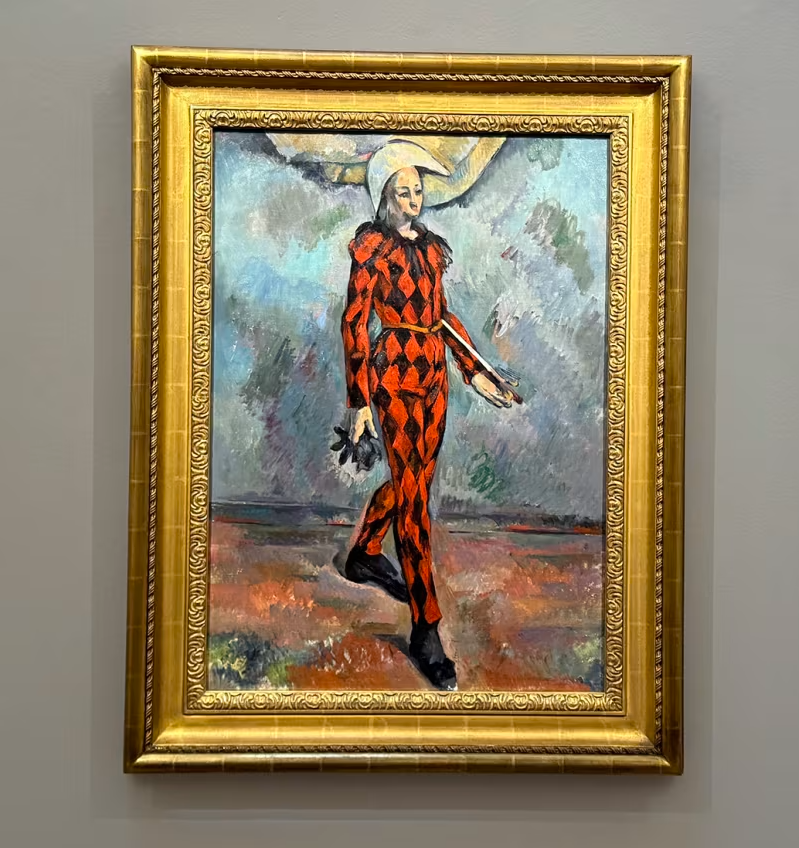
Another major attraction is Paul Cézanne's Arlequin, painted around 1888–1890.
Reports have placed expectations for the Cézanne at approximately $120 million.
That means two paintings from one private collection could potentially generate roughly $300 million combined.
Cézanne occupies a particularly important position in the history of modern art.
His experiments with form, perspective and geometry profoundly influenced later artists, particularly Pablo Picasso and Georges Braque and the development of Cubism.
That historical importance, combined with the rarity of major Cézanne works remaining available to private collectors, helps explain why exceptional examples can command extraordinary prices.
Cézanne already appears among the works discussed in the Jongas guide to the most expensive artworks ever sold.
Why Can One Painting Be Worth $180 Million?
To someone outside the art market, the obvious question is: How can a canvas covered with paint possibly be worth $180 million?
The physical materials obviously aren't worth anything remotely close to that amount.
Instead, collectors are paying for a combination of factors that cannot easily be reproduced.
Van Gogh occupies an unusual position where art history and popular culture intersect. People who know very little about art recognize his name — that global recognition dramatically expands the potential collector base. A painting created during Van Gogh's final months isn't merely decorative; it is a physical object produced during one of the most intensely studied periods in Western art history. Major Van Gogh paintings simply don't come to market frequently, and the Blaquier family's decades-long ownership adds another chapter to the painting's documented provenance. Not every painting by a famous artist is equally important — collectors distinguish between minor works and paintings that represent significant periods or developments in an artist's career. And at this level, price can be determined by what two extremely wealthy collectors are willing to pay against each other. If both decide that this may be their only opportunity to acquire a particular masterpiece, conventional ideas about price can quickly disappear.
Where Would a $180 Million Van Gogh Rank Among the World's Most Expensive Artworks?
A $180 million sale would be extraordinary even by the standards of the international art market.
But it wouldn't make Châtaigniers en fleurs the most expensive artwork ever sold.
That distinction becomes complicated because there are two different markets to consider: public auctions and private sales.
Public auction prices can generally be documented. Private transactions are much less transparent. Prices may be reported by journalists or people familiar with a transaction without every detail becoming public.
Some masterpieces have reportedly changed hands privately for hundreds of millions of dollars.
For the complete ranking and the remarkable stories behind the sales, read The 10 Most Expensive Artworks Ever Sold.
At approximately $180 million, the Van Gogh would be knocking on the door of that list. The current No. 10 position is occupied by Rembrandt's Pendant Portraits of Maerten Soolmans and Oopjen Coppit, which sold privately for approximately $180 million.
The Van Gogh auction therefore gives us another potential candidate to watch.
If Châtaigniers en fleurs reaches or exceeds expectations, the list — and Van Gogh's position within the highest levels of the art market — may need updating.
Paintings vs. Photography at the Top of the Art Market
The prices achieved by Van Gogh, Cézanne, Leonardo da Vinci, Rembrandt and other legendary painters also reveal how different the upper end of the painting market remains from photography.
The current verified auction record for a photograph is measured in the tens of millions rather than hundreds of millions.
That doesn't make photography less capable of being fine art. Photography simply has a much shorter collecting history, and unlike a unique painting, a photograph can exist as more than one authorized print.
Edition size, provenance, print process and authentication therefore become especially important.
For comparison, see The 10 Most Expensive Photographs Ever Sold at Auction.
You can also read Are Fine Art Photography Prints a Good Investment? for a closer look at editions, scarcity, provenance and the realities of collecting photography.
Why Paintings Like This Rarely Come to Auction
The highest end of the art market behaves very differently from the market most people experience.
You can't simply decide you want a museum-quality Van Gogh and choose from dozens of examples.
You have to wait. Sometimes for years. Sometimes for decades.
Many masterpieces move from private collectors into museums through purchases or donations. Once that happens, they may never return to the commercial market.
Other paintings remain inside families for generations.
That is why major estate and collection sales can become global art-market events.
The auction isn't merely offering an object. It is offering access to something that was previously unavailable.
And once the auction ends, that opportunity disappears again.
From a $180 Million Van Gogh to Collecting Art Yourself
Very few people will ever participate in a nine-figure Sotheby's auction, but the principles behind serious art collecting aren't exclusive to billionaires.
Collectors at every level still consider the artist, the work itself, authenticity, provenance, scarcity and whether they actually want to live with the artwork.
There are also far more ways to acquire art than there were a generation ago — from traditional galleries and auction houses to online marketplaces and buying directly from artists.
I've broken those options down in Where to Buy Art in 2026 — Online, Galleries, Auctions & Direct.
For collectors interested specifically in contemporary fine art photography, you can also explore the Jongas Fine Art Photography Collection, featuring signed and numbered limited-edition photography prints.
What Happens on November 18?
The Blaquier-Arrieta Collection will be offered by Sotheby's in New York on November 18, 2026.
Attention will understandably focus on Châtaigniers en fleurs.
If bidding passes $117.2 million, Van Gogh will have a new public-auction record.
If bidding approaches $180 million, the painting will enter an exceptionally small group of artworks capable of achieving that level.
And if several determined collectors decide they must own it, the final price could produce one of the major auction stories of 2026.
But until the auctioneer brings down the hammer, nobody knows.
That's one of the enduring attractions of the auction room.
A painting can have an estimate. Experts can analyze previous sales. Auction houses can study potential bidders. Collectors can quietly express interest.
But ultimately, the value isn't decided by an article, an estimate or an algorithm.
For a few minutes on November 18, it will be decided by the people willing to raise their paddles.
And somewhere among twelve paintings collected by one family over decades, a Van Gogh painted during the final months of his life may rewrite the artist's auction record.
Editor's Note: This article will be updated following the November 18, 2026 Sotheby's auction with the final sale price of Châtaigniers en fleurs, whether it establishes a new Van Gogh auction record, and where the sale ranks among the world's most expensive artworks.
Related reading: The 10 Most Expensive Artworks Ever Sold | The 10 Most Expensive Photographs Ever Sold at Auction | How Art Auction Houses Work | Where to Buy Art in 2026