Yosemite National Park is one of the most photographed places on Earth — and yet it consistently rewards the photographer who goes beyond the obvious shots. The iconic views are iconic for a reason: they are genuinely extraordinary. But Yosemite also has locations that most visitors walk past, angles that most photographers miss, and conditions — light, season, weather — that transform familiar scenes into something completely new. This guide covers the best photography locations in the park, the waterfalls worth prioritizing, and the hiking trails that get you there. For the full story of Yosemite's history, indigenous heritage, and legendary rock climbing culture, see the complete Yosemite guide here.
By Eddie Jongas · Jongas Fine Art Photography · Jongas Travels
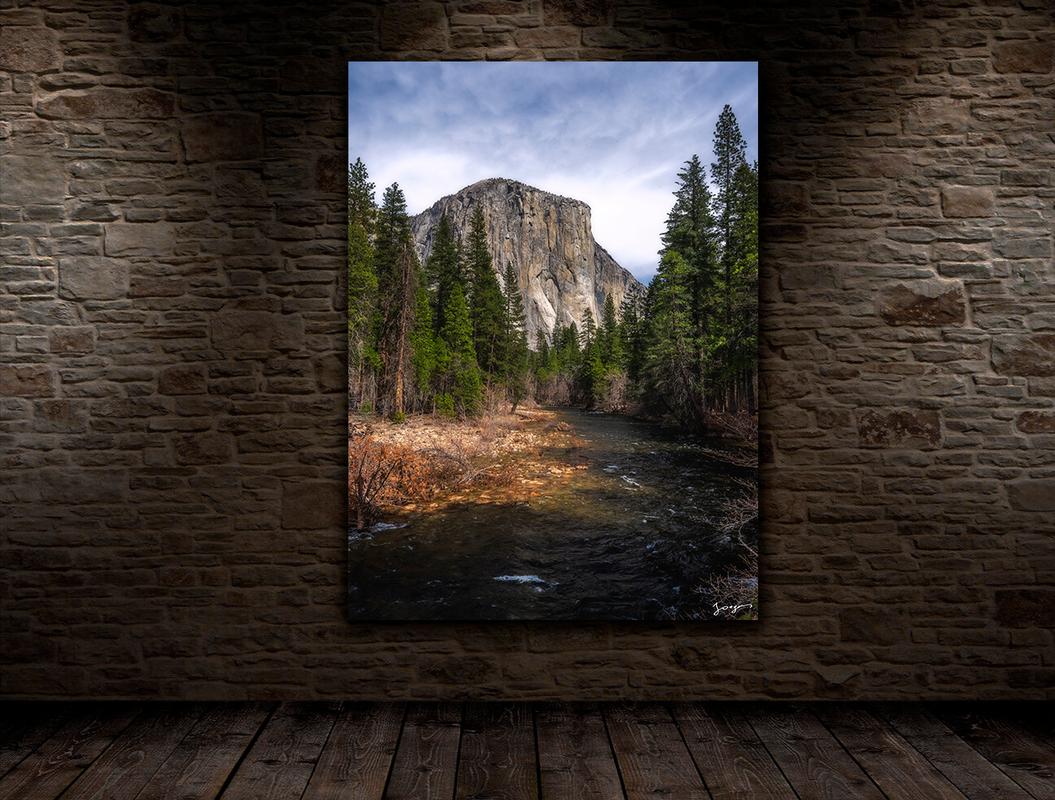
Best Photography Locations in Yosemite
Tunnel View — The Classic Introduction
At the eastern end of the Wawona Tunnel, the road emerges onto a pullout that presents the entire Yosemite Valley in a single frame: El Capitan on the left, Bridalveil Fall on the right, Half Dome centered in the distance, the valley floor stretching away between them. It is, by most measures, the most reproduced landscape view in California and one of the most recognizable natural vistas in American photography.
This is also where Ansel Adams made some of his most celebrated valley images, including the famous "Valley Thunderstorm" — a shot that captures the entire valley in the dramatic light of a breaking storm, the sky moving and violent, the granite walls catching the last light before the clouds closed in. Standing at Tunnel View and looking at the same composition, the same proportions, the same relationship between sky and stone, it is easy to understand why Adams returned here repeatedly across his career. The view is not a cliché. It is a proving ground — a composition so strong that it tests rather than simplifies the photographer standing in front of it.
Best light: Sunrise in spring, when the valley fog fills the floor and the first light catches the upper walls. Late afternoon in winter produces dramatic low-angle shadows across El Capitan that are worth making a dedicated trip for.
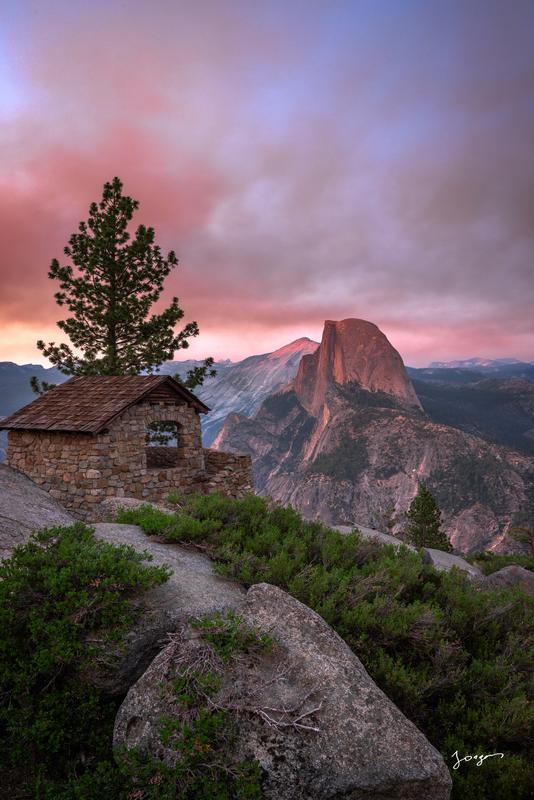
Glacier Point — The High Perspective
Accessible by road from late May through November (and by a strenuous 4.8-mile trail year-round from the valley), Glacier Point sits 3,214 feet directly above the Yosemite Valley floor and delivers what is probably the single most comprehensive view in the park: Half Dome at eye level, Yosemite Falls in full profile, Nevada and Vernal Falls visible in their respective gorges, and the High Sierra spreading east to the horizon.
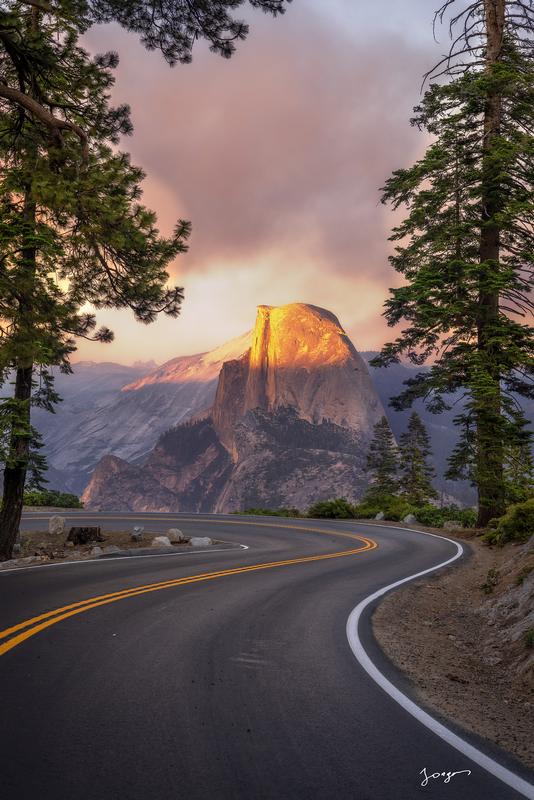
The Half Dome view from Glacier Point is the reverse of what most visitors see from the valley floor — here you are looking at the domed face from above and to the west, seeing the full rounded profile rather than the vertical cliff. In late spring when both Nevada and Vernal Falls are at maximum volume, the sound of the water carries up to the point on still mornings.
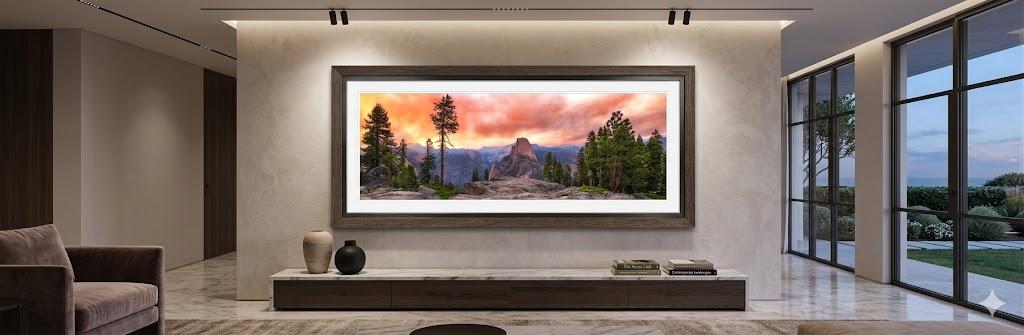
Best light: Sunrise and sunset both work here, but the combination of alpenglow on Half Dome at dusk and the last light turning the granite pink and orange is particularly worth waiting for. The evening stargazing events hosted at Glacier Point in summer make this a viable night photography location as well.
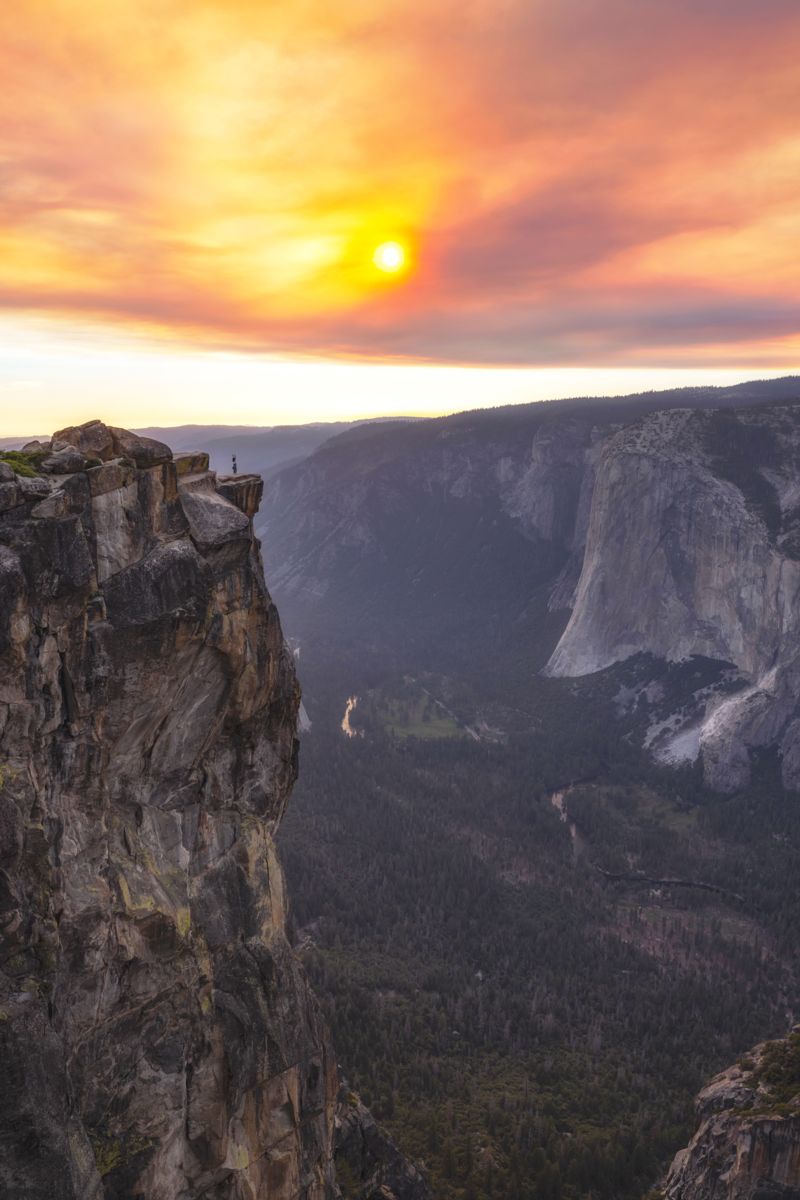
Taft Point — The Edge
The trail to Taft Point is 2.2 miles round trip from the Taft Point/Sentinel Dome trailhead — short, relatively flat, and accessible enough that it can be combined with Sentinel Dome in the same morning. What awaits at the end is a dramatically overhanging granite promontory with no railing, a direct view down a 3,500-foot drop into the valley below, and one of the best profile views of El Capitan available in the park.
The fissures near the edge of Taft Point — deep cracks in the granite that drop hundreds of feet — create natural framing for compositions looking toward the valley. The combination of the vertical drop, the fissures, and the scale of El Capitan in the background produces images that are difficult to make anywhere else in the park.
Best light: Late afternoon and early evening, when the low sun catches the fissures and the valley below goes warm while the granite walls hold the last light. Not a sunrise location unless you are prepared to hike the trail in the dark.
Olmsted Point — The Overlooked Perspective
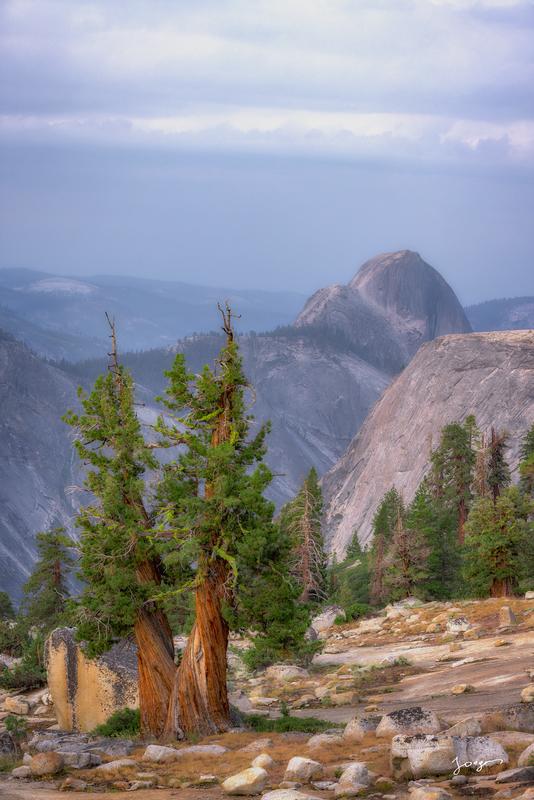
Most visitors to Yosemite enter through the valley and photograph it from the valley floor or from the southern rim. Olmsted Point, on the Tioga Road corridor above the valley, offers something different: a view looking west down the Tenaya Canyon toward Half Dome from an angle that most valley-floor visitors never see. The dome appears as a rounded, almost complete form from this perspective — the vertical cliff face hidden, the full mass of the granite visible.
The fractured granite of Olmsted Point itself — all glacial polish and erratic boulders — is as interesting as the view, and the foreground possibilities for compositions are considerably richer than at Tunnel View or Glacier Point. Olmsted Point is also quieter than the main valley locations, particularly on weekdays.
Best light: Morning, when the sun is behind the photographer and the Half Dome profile catches direct light. Note that Tioga Road is seasonal — typically closed from November through late May depending on snowpack.
"Yosemite has locations that most visitors walk past, angles that most photographers miss, and conditions that transform familiar scenes into something completely new."
Cook Meadow — The Reflection Shot
Cook Meadow, on the valley floor south of Yosemite Village, is the location for the classic Half Dome reflection shot — the dome perfectly mirrored in the still surface of the Merced River when conditions are right. Early morning in late spring, before the day's first breeze breaks the surface, is the window. It can be narrow — sometimes only twenty or thirty minutes before the reflection dissolves — but when the light is right and the surface holds, the image is one of the most directly rewarding compositions available in the park.
The meadow also attracts mule deer and, less frequently, black bears in the early morning before visitors arrive in volume. The combination of the wildlife possibility and the reflection shot makes Cook Meadow worth arriving for well before dawn.
Best light: The window immediately after first light in calm conditions. Arrive before sunrise and wait.
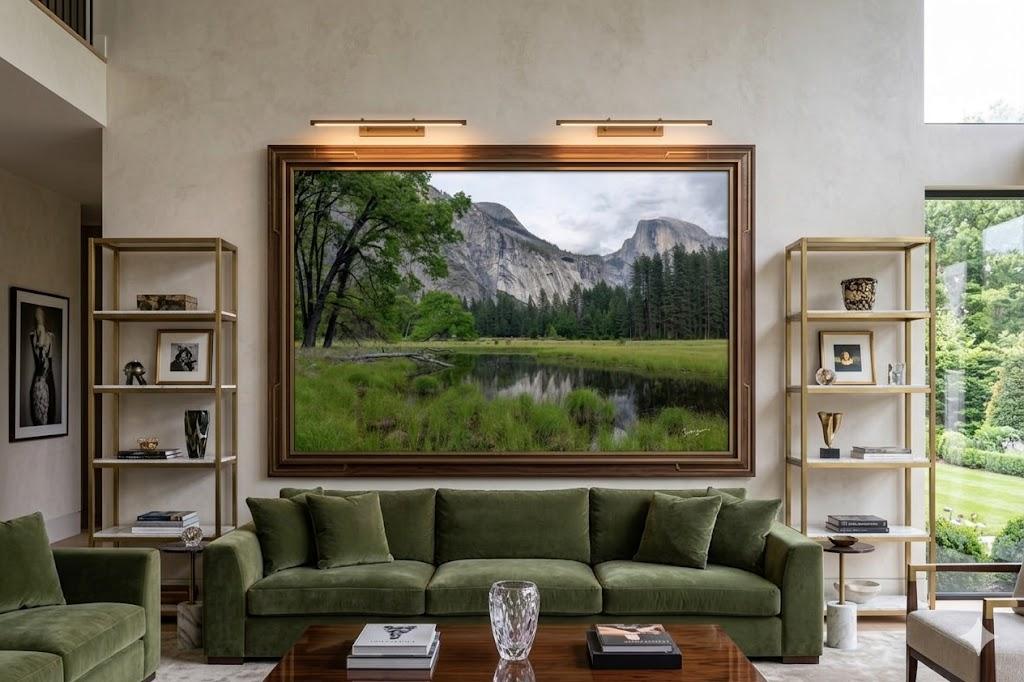
Yosemite Valley Chapel — The Hidden Gem
The Yosemite Valley Chapel, built in 1879 and still in use today, is one of the most photographed non-geological subjects in the park — and one of the most underrated. The small white wooden church sits beneath towering pines near the valley floor, with Cathedral Rocks and Bridalveil Fall visible in the background. In summer it is a charming and historic structure. In winter, after a fresh snowfall, it is something else entirely.
The combination of fresh snow on the chapel roof, the dark pine trunks against the white ground, the mountains rising behind, and the specific quality of flat winter light in the valley produces images that consistently outperform what most photographers expect when they find this location. Winter in Yosemite Valley sees far fewer visitors than summer, and the chapel is frequently available as a photography subject without crowds. Many photographers who discover it in winter conditions consider it one of the genuinely unexpected finds the park offers beyond its famous landmarks.
Best light: Overcast winter days are ideal — the flat, diffused light eliminates the harsh shadows that direct sun creates on the white exterior. Immediately after snowfall, before footprints track through the scene.
Valley View — The Quiet Alternative
Located near the western entrance of the valley, Valley View (also called Gates of the Valley) offers a composition similar in spirit to Tunnel View but from the opposite direction — looking east into the valley with the Merced River in the foreground. Far fewer visitors stop here than at Tunnel View, and the foreground water element adds a dimension that the Tunnel View pullout cannot provide. Bridalveil Fall appears in profile from this location, and El Capitan's full west face is visible in a way that is partially obscured from the Tunnel View angle.
Yosemite's Major Waterfalls
Yosemite has more significant waterfalls concentrated in a single valley than almost any comparable area in North America. Timing is everything: nearly all of them are snowmelt-dependent and peak in late spring, with some drying to a trickle or disappearing entirely by late summer. Plan accordingly.
Waterfall Quick Reference
- Yosemite Falls: 2,425 ft total drop — tallest in North America. Peak flow April–May.
- Bridalveil Fall: 617 ft. First waterfall most visitors encounter. Mist effect year-round in high flow.
- Vernal Fall: 317 ft. Reached via the famous Mist Trail. Rainbow in mist on sunny mornings.
- Nevada Fall: 594 ft. Above Vernal Fall on the upper Merced. Adds ~3 miles and 1,900 ft of gain.
- Horsetail Fall: Seasonal, east face of El Capitan. Natural "Firefall" phenomenon mid-to-late February.
- Ribbon Fall: 1,612 ft single drop — tallest single-plunge fall in North America. Runs April–early June only.
At 2,425 feet total vertical drop, Yosemite Falls is the tallest waterfall in North America and one of the tallest free-falling waterfalls in the world. It drops in three sections: Upper Yosemite Fall at 1,430 feet, a middle cascade section, and Lower Yosemite Fall at 320 feet. The lower fall is accessible via a short, flat trail from the valley floor. The upper fall requires the full Yosemite Falls Trail — 7.2 miles round trip with 2,700 feet of elevation gain. Both are worth doing; they are two completely different experiences of the same waterfall. Peak flow: April and May. By late July in a dry year, the upper fall may be absent entirely — a thin streak on the granite face where the water was.
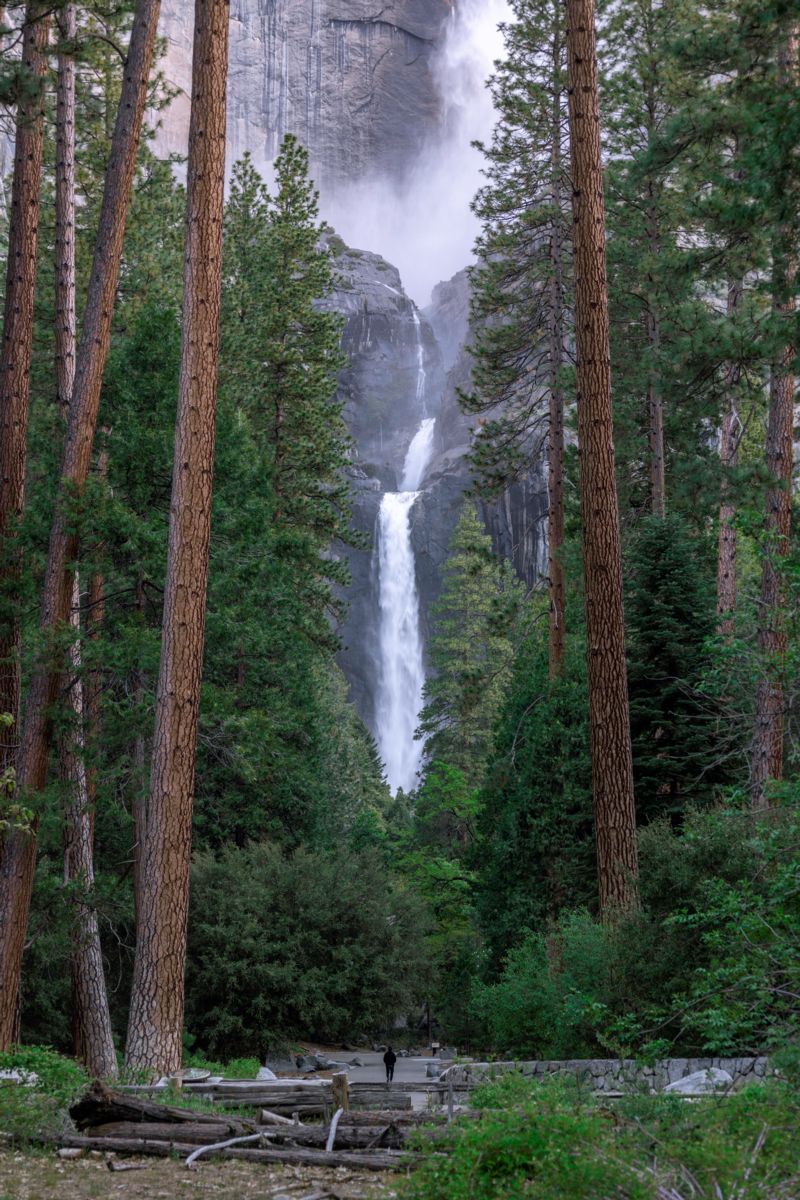
The 617-foot Bridalveil Fall, visible from Tunnel View and reachable by a short paved trail from its own parking area, is the first major waterfall most visitors encounter when entering the valley. It earns its name: in any wind the fall breaks into a spray that disperses into mist before reaching the base, creating the veil effect that gives it its common name. In high flow spring conditions the mist reaches visitors standing at the base viewing area and the noise of the water is considerable. In summer the flow reduces to a narrow thread, though the cliff face remains impressive.
Vernal Fall drops 317 feet into the Merced River Gorge and is reached via the famous Mist Trail — one of the most popular and most rewarding hikes in the park. At high flow in spring, the spray from Vernal Fall soaks anyone on the Mist Trail above the footbridge, which is part of the appeal. The rainbow that forms in the mist on sunny mornings is a legitimate photographic subject in its own right, requiring a wide lens and a dry front element. Bring a waterproof jacket and accept that your gear will get wet.
Nevada Fall, at 594 feet, sits above Vernal Fall on the upper Merced and is reached by continuing up the Mist Trail or via the John Muir Trail from the Happy Isles trailhead. The fall drops over a wide granite lip into a narrow gorge, and the view from the footbridge below — looking up at the fall with the granite walls rising on both sides — is one of the most dramatically scaled compositions in the park. Reaching Nevada Fall adds approximately 3 miles and 1,900 feet of additional elevation to the Vernal Fall hike.
Horsetail Fall is a seasonal waterfall that flows down the east face of El Capitan only in late winter when sufficient snowmelt is present. For approximately two weeks in mid-to-late February, under specific clear-sky conditions, the setting sun strikes the fall at an angle that turns the water luminous orange and red — appearing to glow like flowing lava or the historic "Yosemite Firefall" that was staged from Glacier Point for decades in the 20th century. The natural firefall phenomenon now draws photographers from across the country in February, making it one of the most attended photography events in the park system. Arrive early. Very early.
Ribbon Fall, at 1,612 feet, is the tallest single-drop free-falling waterfall in North America — higher even than Upper Yosemite Fall as a single plunge. Most visitors never see it at full flow because it is entirely snowmelt-dependent and typically runs only from April through early June in a normal snow year. It appears above El Capitan Meadow on the north side of the valley. In a high snow year, at peak flow, it is extraordinary. In a dry year it may not run at all.
Best Hiking Trails
Trail Quick Reference
- Mist Trail to Vernal & Nevada Falls: 5.4 mi round trip · Strenuous · 1,900 ft gain
- Half Dome Trail: 14–16 mi round trip · Very strenuous · Permit required for cables section
- Yosemite Falls Trail: 7.2 mi round trip · Strenuous · 2,700 ft gain
- Taft Point & Sentinel Dome Loop: 5 mi combined · Moderate · 500 ft elevation change
- Valley Loop Trail: 13 mi · Easy · Minimal elevation change
The Mist Trail to Vernal and Nevada Falls — 5.4 miles round trip to Nevada Fall, strenuous, with 1,900 feet of elevation gain — is the most popular trail in Yosemite and among the most popular in the entire National Park system. The stone staircase above Vernal Fall is steep and relentlessly wet in spring — the spray from the fall soaks everything. Worth every step. The view from the top of Nevada Fall, looking back down the gorge with the valley visible in the distance, is among the most rewarding payoffs for effort in the park.
The Half Dome Trail runs 14–16 miles round trip and is very strenuous; a permit is required for the cables section. The cables section on Half Dome's final 400-foot approach operates seasonally, typically from late May through mid-October, and requires a permit obtained by lottery months in advance. The trail without the cables is a serious hike on its own. The cables section is genuinely vertical — gloves are not optional, they are essential. The summit view encompasses the entire eastern Sierra and is worth every step and every lottery attempt it takes to get there.
The Yosemite Falls Trail is 7.2 miles round trip and strenuous, with 2,700 feet of elevation gain — the most demanding trail in the valley proper. The view from the top, looking straight down the fall and across the valley to Glacier Point, is one Yosemite does not advertise as heavily as its more photogenic ground-level views, which makes it one of the better-kept secrets the park offers for photographers willing to put in the elevation gain.
The Taft Point and Sentinel Dome Loop covers 5 miles combined at a moderate difficulty, with only 500 feet of elevation change. Combining Taft Point and Sentinel Dome in a single loop from the shared trailhead gives two of the park's most distinctive high-country perspectives in one outing. Sentinel Dome, at 8,122 feet, provides a 360-degree panoramic view of the High Sierra that few other locations in the park can match. The loop connects them via a trail through open granite terrain. Best done in late afternoon through sunset.
The Valley Loop Trail covers 13 miles at an easy pace with minimal elevation change. The full Valley Loop is the most complete ground-level experience of Yosemite Valley available on foot, passing Cook Meadow, the Chapel, Mirror Lake, Valley View, and virtually every significant valley-floor subject along the way. Much of it is paved and accessible. For photographers it serves as a systematic survey of the valley's ground-level composition possibilities — useful for planning more focused return visits to specific locations.
The Yosemite photography collection at Jongas Fine Art Photography includes prints from several of the locations covered in this guide — shot in the specific light conditions and seasons that this landscape demands. See also the waterfall photography collection and landscape photography prints for related fine art work.
Eddie Jongas is a modern fine art photographer based in Las Vegas, Nevada, who has photographed Yosemite National Park across all seasons and from virtually every major photography location in the park. His TruLife acrylic-mounted limited edition prints are available exclusively through jongasfineartphotography.com. Free shipping to all 50 states.
