I have lost count of how many times I have been to Yosemite. Somewhere north of twenty, probably closer to thirty times. I go at least twice a year — once in spring when the waterfalls are at maximum volume from the snowmelt and the valley floor is still cold enough in the mornings that your breath shows, and once in summer when my main agenda, beyond photography, is getting into the Merced River on a sufficiently hot afternoon and letting the snowmelt current wake up every nerve ending I have in my body. There isn’t better reminder that you are alive than submerging yourself in water that was snow about forty-eight hours ago.
I have hiked to every major waterfall in the park. I have hiked to the top of Half Dome — which, for anyone who hasn’t done it, involves a full day, roughly 14 to 16 miles round trip, and a final section where you pull yourself up a near-vertical granite face using fixed cables. On a busy summer weekend, this final cable section has a line of people waiting to go up and another line waiting to come down, everyone trying not to look at the drop on either side.
I have photographed the valley from Taft Point, Glacier Point, the Merced River overlook, Tunnel View, Olmsted Point, and Cook Meadow — each of which are listed and described in my Yosemite action guide on hiking trails, waterfalls and popular photographer's locations.

I have also woken up at 5 a.m. to the sound of something going on at our campsite, which turned out to be a big brown bear eating the marinated chicken out of a cooler that my friend forgot to put into a bear box before going to bed. The bear, to his credit, was thorough. The chicken was gone. The cooler was not destroyed and we ended up having great memories about it!
But I am getting ahead of myself. Because before you can understand what Yosemite is today — the parking nightmares, the Instagram crowds at Tunnel View, the incredible food at the Ahwahnee, the specific quality of morning light on Half Dome at sunset — it helps to understand what it was before any of us showed up with our cameras and reservation confirmations. And that story is considerably older, considerably more complicated, and considerably more interesting than any of the postcard versions suggest.
A Name That Came from Fear — The Ahwahneechee and The Early Times
The word “Yosemite” is not, as many people assume, a Native American word for something beautiful. It is, in fact, a linguistic accident rooted in fear and violence, and the actual name of the people who lived in the valley for thousands of years before European contact is Ahwahneechee — meaning “the people of Ahwahnee,” which was their name for the valley itself: a word meaning “place of the gaping mouth.” If you look at the valley from the air, the name makes immediate visual sense.
The Ahwahneechee were a distinct tribe of the Southern Sierra Miwok with extensive trade networks stretching across the Sierra crest and into the Great Basin. They had lived in this valley for at least three thousand years — probably longer — and in that time had developed a relationship with the land that was anything but passive. The valley floor that most visitors today assume is pristine wilderness was, in fact, a carefully managed cultural landscape.
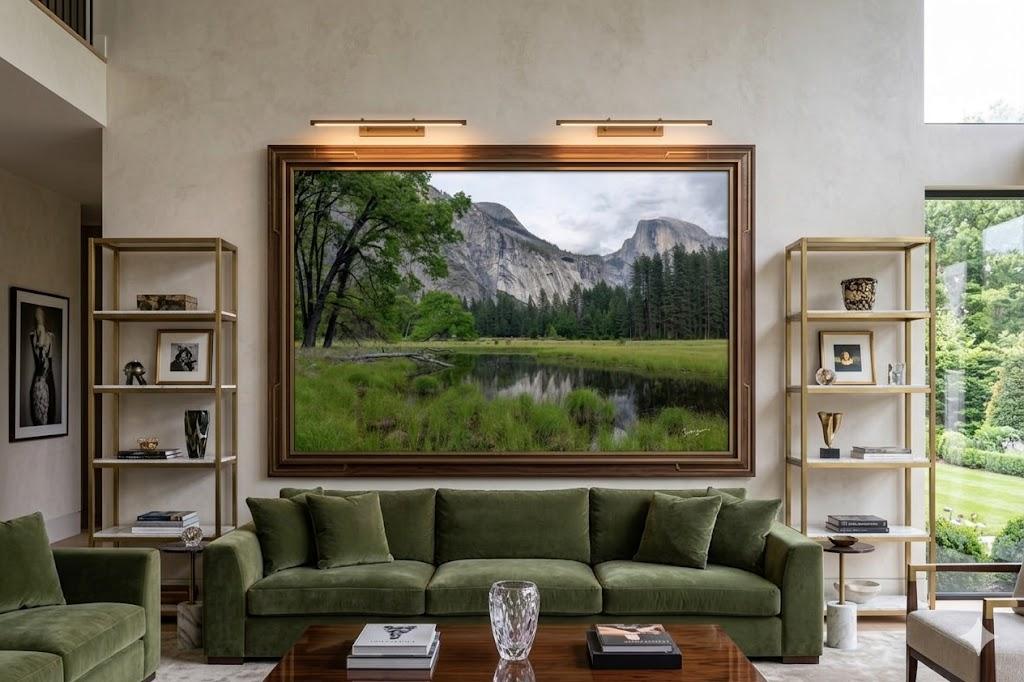
The Ahwahneechee practiced deliberate, controlled burning — low-intensity fires set seasonally to clear undergrowth, maintain the Black Oak groves that provided their primary food source, and keep the valley floor open in ways that made hunting and movement practical. The parklike quality of the valley floor that so enchanted early European visitors — the open meadows, the groves of mature oaks, the clear sightlines — was not the product of untouched wilderness. It was the product of thousands of years of active, intentional land stewardship. The “untouched wilderness” narrative was a fiction that erased the people who made it look that way.
The acorn was the foundation of Ahwahneechee life in a literal nutritional sense and in a deeper cultural one. Black Oak acorns were harvested in autumn, dried, ground into flour, and stored in elevated granaries called chucks — structures designed to keep the food supply dry and safe through the winter. The processing of acorns required community, coordination, and detailed ecological knowledge: which trees produced the best harvest, when to gather, how to leach the tannins from the flour to make it edible. This was not a subsistence economy by the pejorative meaning of that phrase. It was a sophisticated food system that supported a thriving community in one of the most spectacular landscapes on Earth.
Then the disruption came quickly and violently. The Gold Rush of 1848 sent tens of thousands of miners into the Sierra Nevada foothills, and the conflicts that followed were brutal. In 1850 and 1851, the state of California sponsored the Mariposa Battalion — a volunteer militia — to remove the Ahwahneechee and other Sierra tribes from lands that miners wanted to access. Villages were burned. Chief Tenaya’s people were captured at the lake that now bears his name, and the surviving Ahwahneechee were marched to reservation camps in the Central Valley.
Yosemite valley got its European name during this period through a mistake. A battalion doctor, attempting to record names of the indigenous people who lived there, misheard a neighboring tribe’s fearful phrase about the Ahwahneechee — “Yos.s.e'meti,” meaning approximately “those who kill” — as the name of the valley itself. The word stuck. Today’s park carries a name that originated as a description of the people who lived there as spoken by their enemies, recorded by a military doctor who didn’t understand what he was hearing. These things happen in history. It doesn’t make them less worth knowing.
Chief Tenaya eventually petitioned successfully to return to the valley, leading a small group back in 1851. Subsequent conflicts with miners in 1852 led to further violence and Tenaya’s eventual death. Today, seven federally recognized tribes maintain cultural and historical ties to the Yosemite region and work actively with the National Park Service to reintroduce traditional ecological practices — including the cultural burning that maintained the valley floor’s distinctive character for millennia.
The People Who Kept It — Guardians, Scientists, and Preservers
After the Mariposa Battalion came the tourists. And after the tourists came the people who looked at what was happening to the valley and decided someone had to protect it.
Galen Clark arrived in Yosemite in 1856, a man in his thirties who had been told by his doctor that he was dying of a lung condition and had perhaps six months to live. He went to Yosemite to spend his remaining time in the place he found most beautiful. He lived there for another fifty-two years. He discovered the Mariposa Grove of giant sequoias, became the first officially appointed Guardian of Yosemite when the valley was placed under California state protection in 1864, and spent decades advocating for the preservation of the park’s resources against the various private interests that wanted to exploit them. He dug his own grave in the Yosemite Valley Cemetery before he died, at ninety-six, in 1910.
James Mason Hutchings arrived in the early 1850s with a different agenda: publicity. His Hutchings’ Illustrated California Magazine published some of the first widely circulated descriptions and images of Yosemite Valley, effectively putting it on the national map for a generation of Americans who had never heard of it. Hutchings also filed private land claims in the valley, leading to a decade of legal battles that ultimately helped force the federal government’s hand in establishing proper protection for the area. He was, in other words, simultaneously the valley’s best promoter and one of its more persistent legal headaches — a combination that is not as uncommon in conservation history as it should be.
“The parklike quality of the valley floor that so enchanted early European visitors was not the product of untouched wilderness. It was the product of thousands of years of active, intentional land stewardship.”
Maggie Howard, known by her Miwok name Ta-bu-ce, worked at the Yosemite Museum in the early 20th century preserving the ecological knowledge, basket weaving traditions, and cultural practices of the Paiute and Miwok peoples at a time when deliberate federal policy was aimed at erasing Native American cultural identity. She did this quietly, persistently, and against considerable institutional indifference. The traditional knowledge she helped preserve is the foundation of the cultural revitalization work the affiliated tribes are doing today.
Enid Michael became Yosemite’s first female ranger-naturalist in the 1920s, cataloguing over 2,200 botanical specimens and establishing the park’s early nature education programs at a time when the National Park Service was not exactly a welcoming institution for women in professional roles. She spent decades doing the patient, unglamorous scientific work that makes parks function as something other than scenery.
John Muir — The Man Who Turned Mountains into Arguments
John Muir first saw Yosemite in 1868, walked into the valley, and never fully left. Not in the sense that he stayed permanently — he traveled extensively, wrote prolifically, and spent years in San Francisco fighting political battles — but in the sense that Yosemite became the emotional and intellectual center of everything he did for the rest of his life.
Muir was the first person to convincingly argue, to a mass audience and to Congress, that wild places deserved legal protection not because of their economic value or their potential for tourism revenue, but because of what they did to the human soul that stood inside them. The mountains, he wrote, were “fountains of life.” The experience of being genuinely small in front of genuinely large things was, in his view, one of the few experiences that consistently made people better rather than worse. He was not wrong. I know this because I have stood at the base of El Capitan and watched something happen to every single person who does it for the first time: a very specific silence settles over them as the scale registers. Whatever they were worried about an hour earlier becomes briefly and mercifully irrelevant.
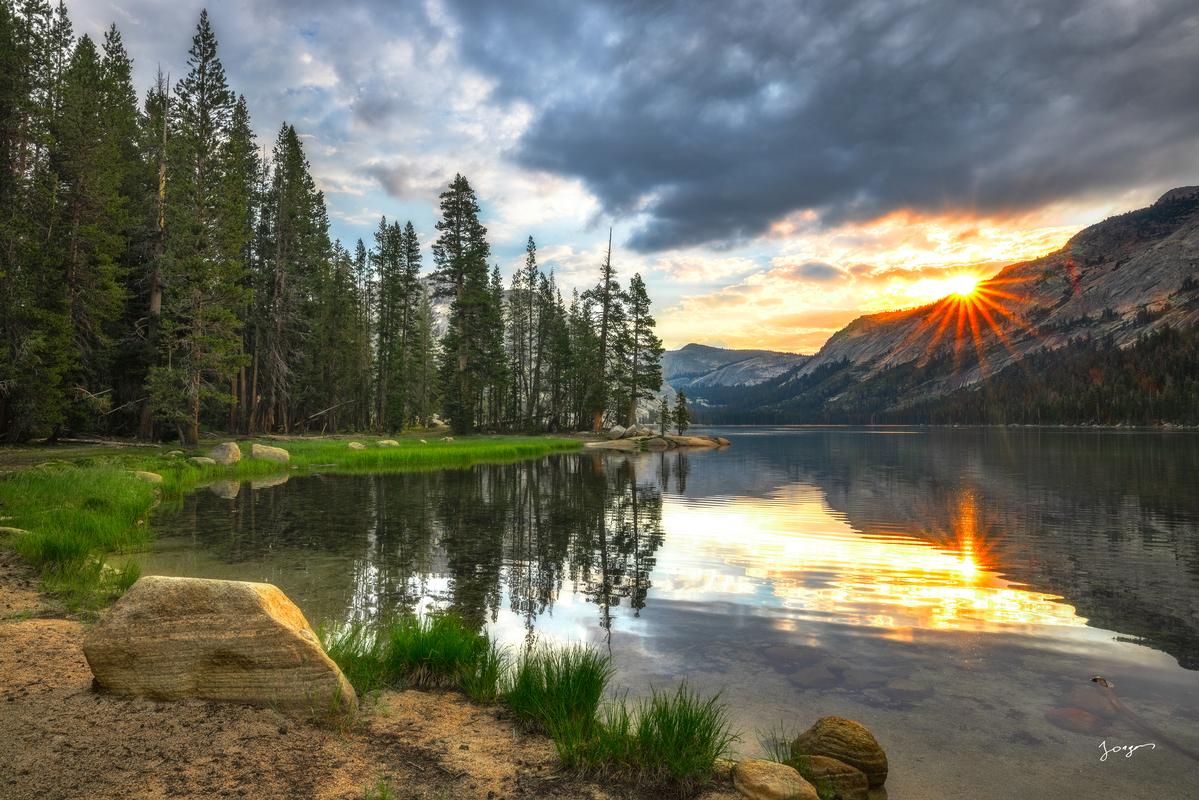
Muir co-founded the Sierra Club in 1892 and spent the last decade of his life fighting the damming of the Hetch Hetchy Valley — a battle he lost in 1913, a year before his death. The dam was built. The valley was flooded. It remains flooded today, and the question of whether to drain it and restore Hetch Hetchy is still occasionally argued in California politics. Muir lost the fight, but the fight itself produced the modern American conservation movement. The loss was generative.
Muir’s footprint in the Sierra Nevada extends well beyond the Yosemite boundary. The Eastern Sierra — the rugged, rain-shadowed eastern flank of the range that forms the backdrop to Bishop, Mammoth Lakes, and the Owens Valley — was his beloved alpine workspace and the subject of much of his most important geological writing. The John Muir Wilderness covers 580,000 acres of the Eastern Sierra and provides protected access to some of the most spectacular backcountry terrain in the American West. Mount Muir, a 14,058-foot peak adjacent to Mount Whitney, bears his name. Mono Lake — the ancient, otherworldly alkaline lake featuring tufas (calcium carbonate or limestone formations), east of the Sierra crest that Muir wrote about extensively — was a subject he returned to repeatedly in his journals.
Bloody Canyon and Mono Pass, the route the Ahwahneechee used to cross the Sierra crest for trade, was a corridor Muir walked and documented. And the John Muir Trail, 211 miles from Yosemite Valley to Mount Whitney, remains the most celebrated long-distance hiking route in the state — a footpath that traces the range he devoted his life to understanding and protecting.
The Art of the Valley — Best’s Studio, Ansel Adams, and the Fine Art Tradition
In 1902, a landscape painter named Harry Cassie Best set up a tent studio in the Old Yosemite Village and began selling his paintings to visitors. It was a modest commercial operation — a painter making a living in a beautiful place, which grew over the following decades into a permanent gallery structure. In 1928, Ansel Adams married Harry’s daughter Virginia, and in doing so became formally connected to the gallery operation that would eventually bear his name.
The story of how Best’s Studio became the Ansel Adams Gallery — renamed in 1971 after Adams’ death — is inseparable from the story of how Adams became the defining photographer of the American landscape. The gallery was the place where his master prints sold, where he taught photography workshops, and where, for decades, visitors to Yosemite had their first encounter with the possibility that a photograph could do something that a painting could do: convey not just the appearance of a landscape but its weight and spirit.
I have written at length about Ansel Adams and his work elsewhere on this blog, and I won’t repeat everything here. What I want to say in the context of Yosemite specifically is this: every time I walk into that gallery in the village, I stand in front of his prints and feel the pull to go back outside and find the spots where he stood. That is what great landscape photography does. It does not replace the landscape — it deepens your relationship to it. A print of Yosemite on your wall is not a substitute for being in Yosemite. It is an invitation.
The gallery tradition that Adams established — serious, museum-quality fine art photography sold in the context of the landscape that produced it — is the tradition that I view my own Yosemite photography as. I photograph the same valley, the same granite, the same play of morning light on the same walls he photographed for over six decades. What I bring is a different era, a different instrument, and a different eye. His work is the foundation and modern fine art photographers like myself, we always strive to shoot it better and in your own unique way.
Adams’ archive — approximately 44,000 negatives along with personal correspondence and memorabilia — lives at the Center for Creative Photography at the University of Arizona in Tucson. His wilderness still bears his name: the Ansel Adams Wilderness, a 228,500-acre protected area along the eastern boundary of the park.
Photographer Locations — A Brief Note
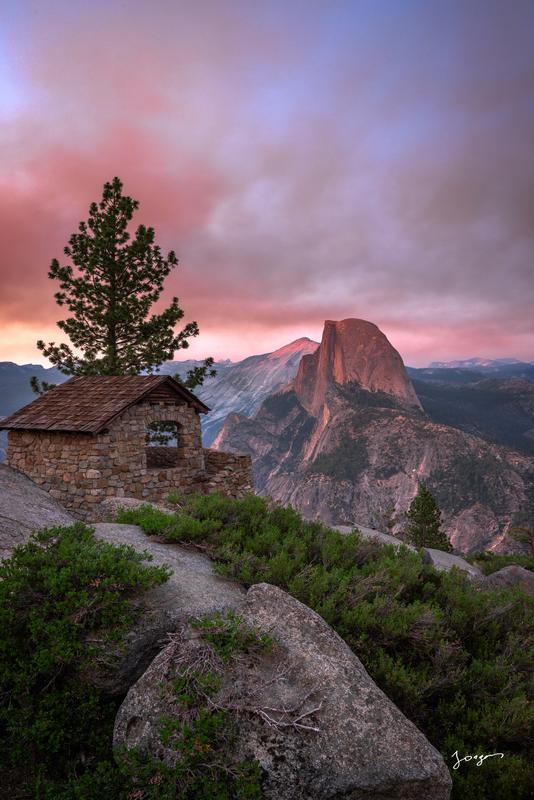
I want to mention the photography locations in this park because they deserve to be on every photographer’s “must visit” places list, but I will keep this section brief. Tunnel View at sunset and during weekdays, otherwise you won’t be able to find parking. Glacier Point at any hour but especially at dusk when the alpenglow hits Half Dome and the valley below goes purple and gold. Taft Point early in the morning before the wind picks up. Olmsted Point looking toward Half Dome from the east side. Cook Meadow for the classic Half Dome reflection shot. The Merced River overlook for the valley-floor perspective that most people miss because they are all rubbing shoulders at Tunnel View — to name a few. Each of these locations are special and give you plenty of opportunities to put your camera into action and return home with some amazing photographs.
El Capitan — The Wall That Changed Climbing
One of the things that distinguishes Yosemite from almost every other famous landscape is that it is not a passive destination. People do things here that push the limits of what human bodies and minds are capable of, and the history of those things is as interesting as the geology.
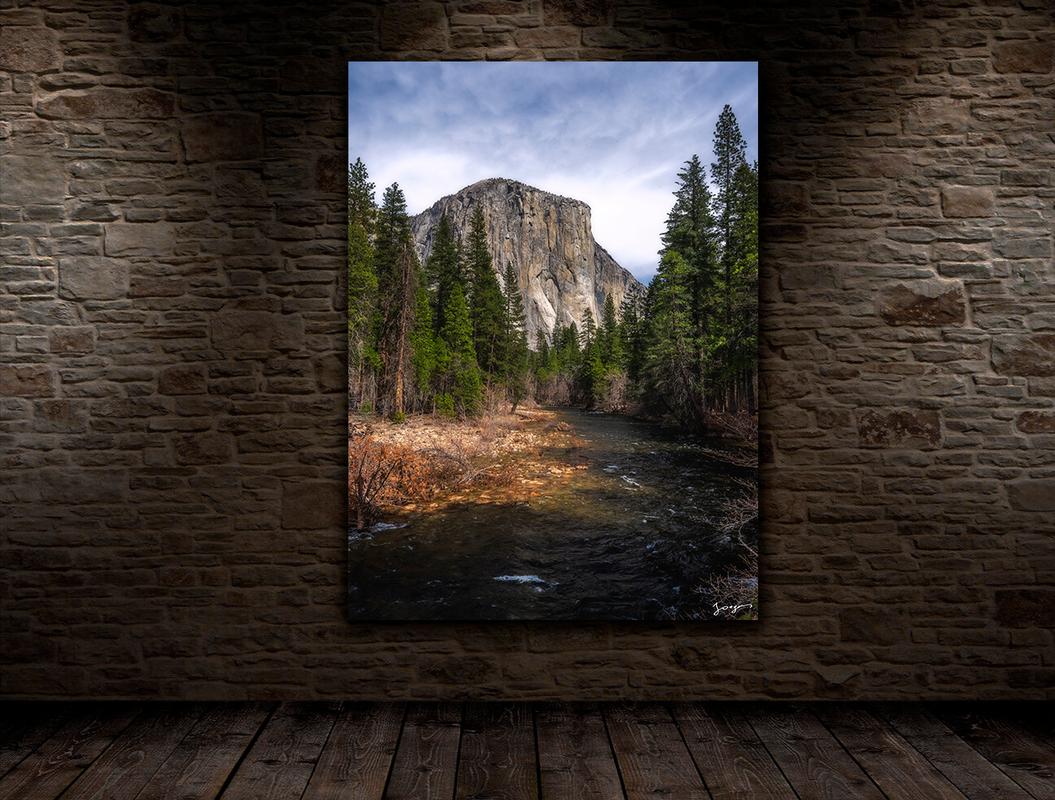
El Capitan is a 3,000-foot vertical granite wall on the north side of Yosemite Valley. It is, by most measures, the largest exposed granite monolith on Earth. Standing at the base and looking up produces the same involuntary assessment of scale that makes you feel very very little.
Warren Harding first climbed El Capitan’s most prominent route, The Nose, in 1958 — an 18-month campaign that required him to drill hundreds of bolts into the rock and return repeatedly in what became known as siege climbing. He reached the summit in a 14-hour final push in deteriorating weather. The climbing establishment was divided: was this legitimate alpinism or an act of mechanical vandalism against a natural surface? The argument it started was more productive than most arguments: it drove the development of clean climbing ethics — a commitment to leaving no permanent mark on the rock — that became the dominant philosophical framework for Yosemite climbing from the 1960s onward.
Landmark Ascents on El Capitan
- 1957: Royal Robbins makes the first ascent of the Northwest Face of Half Dome using minimal aid, establishing the clean climbing ethic.
- 1958: Warren Harding completes the first ascent of The Nose on El Capitan after an 18-month siege campaign.
- 1960s–70s: Camp 4 becomes the global center of climbing culture; the Stonemasters drive the transition from aid to free climbing.
- 1993: Lynn Hill becomes the first person to free climb The Nose in under 24 hours.
- 2015: Tommy Caldwell and Kevin Jorgeson complete the first free ascent of the Dawn Wall in a 19-day climb.
- 2017: Alex Honnold free solos the Freerider route — 3,000 feet, no rope — in 3 hours and 56 minutes.
Royal Robbins had already pushed the ethical standard in 1957, making the first ascent of the Northwest Face of Half Dome using minimal aid and maximum judgment. Camp 4, the climbers’ campground in the valley, became through the 1960s and 70s the center of global climbing culture — a collection of dirt-poor, obsessively skilled athletes who were collectively reinventing what rock climbing meant. The 1970s brought the Stonemasters and the transition from aid climbing to free climbing: using the rock itself, rather than equipment drilled into it, as the means of ascent.
In 1993, Lynn Hill became the first person to free climb The Nose — completing in under 24 hours a route that had previously required days of aid climbing. Her reported comment on reaching the summit — “It goes, boys” — is among the more understated things ever said in mountaineering. Tommy Caldwell spent seven years planning and attempting the Dawn Wall, a previously unclimbed section of El Capitan, finally completing it with Kevin Jorgeson in January 2015 in a 19-day ascent that became global news.
Then there is Alex Honnold. In June 2017, Honnold free soloed the Freerider route on El Capitan — 3,000 feet of vertical granite, no rope, no protection, nothing between him and the valley floor below. The climb took three hours and fifty-six minutes. The documentary Free Solo won the Academy Award for Best Documentary Feature in 2019. I watched it in a theater and found myself holding the armrests for sequences where the camera was pointing straight down 2,000 feet of granite. Honnold, in the actual footage of the actual climb, looked calm. While most people watching did not.
The Bear, the Chicken, and What the Park Service Would Like You to Know
Back to the bear.
Yosemite Valley has a resident black bear population, and the park has spent considerable resources and decades of effort educating visitors about the absolute necessity of storing all food in the designated metal bear boxes at every campsite. The bear boxes are large, sturdy, and free to use. The instructions for using them are literally posted everywhere. They are not complicated. You open the box, put your food in, close the box. That is the entire procedure.
One problem — my friend did not do this. Hence we woke at 5 a.m. to the sound of the car alarm going off. After unzipping the tent I saw a black bear, probably 200 pounds, methodically destroying a plastic cooler that contained marinated chicken. By the time we got out the chicken was gone and the bear was backing into the tree line carrying what remained of the cooler. More about bears in Yosemite.
The National Park Service estimates that black bears in Yosemite have broken into over 1,100 cars since 1998. The animals have learned that coolers, soft-sided bags, and anything in a car that smells edible are worth investigating. A bear that associates humans with food is, in the park’s terminology, a “food-conditioned bear,” and a food-conditioned bear often has to be relocated or euthanized because the conditioning cannot be reversed. Use the bear boxes. Not for yourself. For the bears.
The Merced River and Everything Else the Park Offers
I come back to Yosemite twice a year at minimum, and while photography is always part of the agenda, it is not always the main event. Sometimes the main event is cooling off in the Merced River on a day in late July when the air temperature is 95 degrees and the river water is 48. After a cold plunge like that every worry you arrived with is completely irrelevant. You get out of the river, your heart is pounding, and you start feeling good about everything.
The Merced can also be experienced more gradually — tubing, rafting, and kayaking are all available on the calmer valley sections in summer. The valley has 12 miles of paved bicycle paths that bypass the traffic completely and are genuinely the best way to cover the valley floor on a summer morning before the shuttle buses fill up. For a completely different pace, guided horse and mule treks from Wawona take you through pine forests on trails that haven’t changed in a century.
Winter brings Badger Pass, California’s oldest ski area, operating since 1935. The skiing itself is modest compared to Lake Tahoe or Mammoth — Badger Pass is not going to challenge a serious skier — but the setting is extraordinary and the crowds are a fraction of what the valley floor sees in summer. The valley in January, with snow on the valley floor and Yosemite Falls frozen into a sculpture of ice, is one of the genuinely underappreciated versions of the park. Most people do not think of Yosemite as a winter destination. This is a mistake that benefits those who know.
For people into astronomy, Glacier Point hosts evening stargazing programs in summer, and the night sky above the High Sierra — at elevation, away from valley light pollution — is as good as night sky gets in California.
The Yosemite Conservancy also runs photography workshops throughout the year including Ansel Adams camera walks that cover his historic shooting locations with guided instruction. If you want to understand how Adams used the specific light conditions in this valley, walking the same ground with someone who has studied his methods is worth the registration fee.
The Energy in the Granite
But what brings me back to Yosemite on a regular basis, beyond taking amazing mountain photography, swimming in the river, or hiking high altitude trails, is a little harder to describe than just making a list of things Yosemite has to offer. It’s actually a bit more subtle.
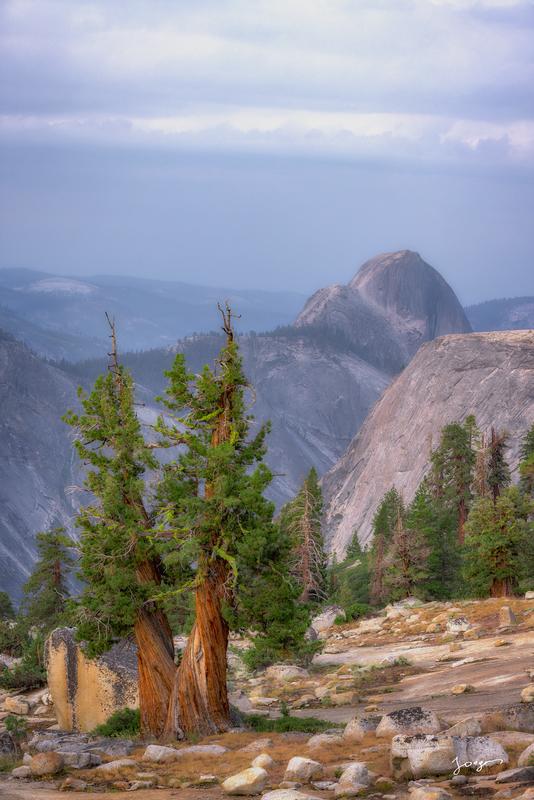
The granite walls of Yosemite Valley are between 65 and 100 million years old. Half Dome was formed when a granite dome was cleaved by glacial action roughly 800,000 years ago, leaving the vertical face we photograph today. El Capitan has been where it is, more or less, since before mammals existed. When you stand in the valley and look up at these things — really look at them — the scale becomes temporal as well as physical. You are standing in front of something as old as the earth itself.
I find it humbling in the most spiritual way and energetically filling. Each time I leave Yosemite with better judgment about my life and about what really matters. John Muir called the mountains “fountains of life.” He was describing something beyond the physical. Something we can’t connect with while living in man-made cities.
What Yosemite Actually Is
The postcard version of Yosemite is real — the waterfalls, the granite domes, the mirror-flat reflections in the Merced at Cook Meadow. Those things are genuinely spectacular and there is nothing wrong with showing up to photograph them. I photographed them dozens of times and will show up to shoot them again.
But the full version of Yosemite is a landscape that was shaped by human hands for thousands of years before it was named a park. It was the home of the Ahwahneechee, who managed it with fire and ecological knowledge across millennia. It was the obsession of Galen Clark, who came to die there and stayed to protect it. It was the philosophical foundation of John Muir, that evolved into the American conservation effort that established National Parks. Yosemite was also the subject of Ansel Adams, whose prints served as the best advertising for the park with millions of people and still hang in the Yosemite Village gallery. It was the vertical battlefield where Warren Harding, Royal Robbins, Lynn Hill, Tommy Caldwell, and Alex Honnold each pushed the definition of what human beings can do on the face of a rock.
And it is the place where a bear will remind you at 5 a.m. to put your chicken in the bear box, or the cold plunge in the Merced River will jolt you back into all your senses. But most of all Yosemite Valley is a place where you can feel one with yourself and especially with nature. It is a true natural wonder and we should feel blessed to have it and have a responsibility to preserve it.
If you haven’t been there, I hope you can go. If you have been there, go again. It never looks the same twice and you will come back with many good memories.
Explore the Jongas Yosemite Photography Collection →
Explore Landscape Photography Prints →
Explore Mountain Photography Prints →
Discover the 9 National Parks of California →
Eddie Jongas is a modern fine art photographer based in Las Vegas, Nevada, who has photographed Yosemite National Park over twenty times across all seasons. His TruLife acrylic-mounted limited edition prints — including his Yosemite photography collection — are available exclusively through jongasfineartphotography.com. Free shipping to all 50 states.
