I want to start with a confession. Before I ever thought about abstract art as a concept with a capital A and a rich philosophical history, I was already obsessed with it. I just didn't have the vocabulary for it yet.
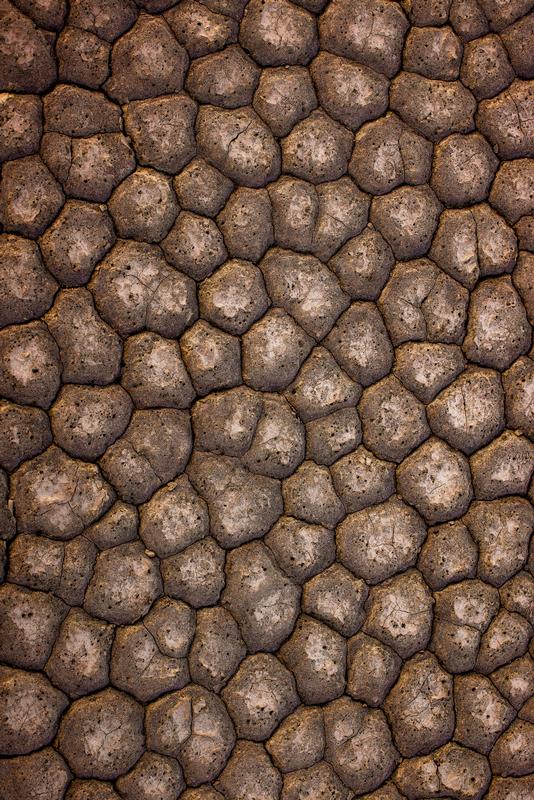
I remember crouching on a dry desert floor somewhere in the Utah backcountry, holding my breath, staring at cracked earth that looked exactly like a satellite image of a river delta. The pattern was absurd. The shapes were perfect. No painter could have planned that. Nobody did. The sun did it. The rain did it, or the lack of it. I took fifty frames of that ground and thought, this is the most beautiful thing I've shot all week — and there wasn't a mountain or a sunset anywhere in the photo.
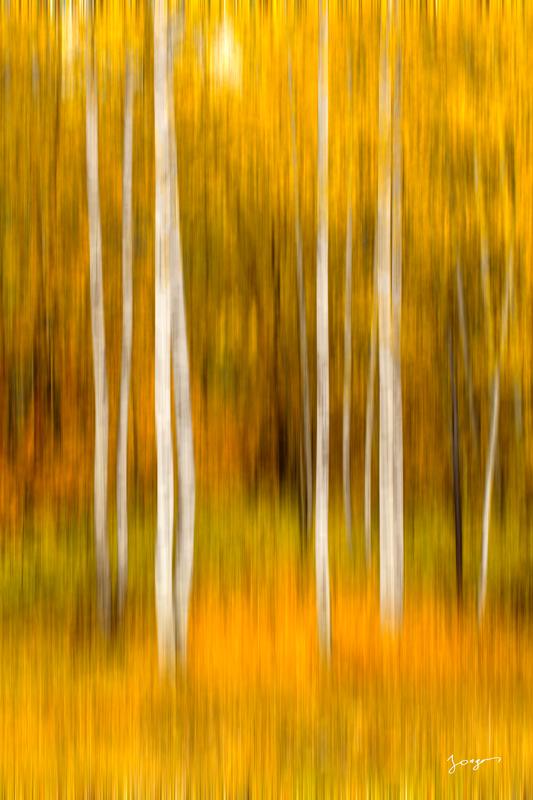
That's how it starts for me, every time. A cluster of autumn leaves on a wet rock. The geometry of frost on a car window. Shadows cast by a chain-link fence at noon. Lichen on granite that looks like a topographic map from another planet. The natural world is quietly producing abstract masterpieces all the time, completely free of charge, and most people walk right past them because they don't have a recognizable subject staring back.
But here's the thing I've come to believe after years of photographing these patterns: abstraction isn't the absence of meaning. It's the presence of meaning without a label on it. You feel it before you can name it. And that, as it turns out, is exactly what the greatest abstract artists in history were going for — it just took them a few centuries, several revolutions, and at least one extremely influential drip to get there.
So let's talk about it. Where did abstract art actually come from? Who made it famous? How does a photographer fit into any of this? And why does an untitled rectangle of color by a man named Rothko sell for more than most people's houses?
Buckle up. This is going to be a long one.
Why Abstract Art Exists: The Death of the Mirror
Here's a question nobody really asks: if you could capture reality perfectly, what would be the point of painting it?
That question became very real around 1839 when a Frenchman named Louis Daguerre introduced the daguerreotype to the world and the photograph was born. Suddenly painters were faced with a machine that could reproduce the visible world with more accuracy than any human hand ever could. The camera didn't just take pictures. It took the job.
What followed was one of the most interesting identity crises in the history of human creativity. If the camera could act as a mirror — faithfully reflecting the external world — then the artist's job was no longer to be a mirror. The artist had to become something else. A prism, maybe. Something that takes in the external world and bends it, refracts it, and pushes back out something entirely different. Not a picture of a tree. But what a tree feels like at 4 a.m. during a storm. Not a portrait of a woman. But what loneliness looks like when you can't sleep.
This shift — from representing reality to expressing inner experience — is the philosophical engine underneath all of abstract art. The technical art term for the old approach is mimesis, which is Greek for "imitation." Abstract art is, at its core, the rejection of mimesis. The refusal to imitate. The insistence that painting, photography, and any other visual medium can do something more interesting than just copy what the eye already sees.
Ironically, the medium that supposedly "killed" representational painting — photography — eventually found its own path into abstraction. More on that later.
The Spiritual Origins: Mysticism, Theosophists, and the Invisible World
Here's a detail about abstract art that surprises most people: the first abstract artists weren't making aesthetic choices. They were trying to see God. Or something God-adjacent.
The early pioneers of abstraction in the late 19th and early 20th centuries were deeply influenced by Theosophy — a philosophical movement that blended Eastern mysticism, Western esotericism, and the idea that the material world is just the surface layer of a much deeper spiritual reality invisible to ordinary perception. They believed that art could be a vehicle for making that invisible world visible.
Wassily Kandinsky, arguably the first true abstract painter, wrote extensively about this. In his 1911 book Concerning the Spiritual in Art, he argued that colors and forms had inherent spiritual vibrations — that blue was "heavenly" and yellow was aggressive, and that a painting composed with the right colors in the right relationships could literally resonate with the soul of the viewer. He was also, not coincidentally, a synesthete — a person who experiences colors as sounds and sounds as colors. When he heard music, he saw shapes. When he painted, he was essentially transcribing music into visual form.
Even less well known is Hilma af Klint, a Swedish painter who was creating large-scale abstract canvases as early as 1906 — several years before Kandinsky, Mondrian, or any of the men who get the official credit in most art history books. She was influenced by spiritualism and automatic writing, and she believed her paintings were being channeled through her from higher spiritual forces. She requested that her work not be shown publicly until at least 20 years after her death, which is why the art world largely didn't discover her until the 1980s.
The point is: abstract art did not begin as decoration. It began as a serious attempt to paint what lies beneath the surface of observable reality. It was metaphysical before it was aesthetic.
Color Theory, Synesthesia, and the Science of How Abstraction Works on You
Abstract art isn't random. That's the most common misconception, and it drives abstract artists absolutely insane. The best abstract work is the product of extreme intentionality about color, composition, and the psychological and neurological effects of both.
The Bauhaus school — founded in Germany in 1919 by Walter Gropius — was one of the first institutions to treat design and art as a science as much as a craft. Bauhaus instructor Josef Albers spent decades studying what he called "the interaction of color" — specifically how the same color looks completely different depending on what surrounds it. His famous series Homage to the Square wasn't just pretty nested squares. It was a controlled experiment in color perception, run on the human eye and brain. He was weaponizing how we see.
Synesthesia plays into this too. Neurologically, synesthesia is the condition where stimulation of one sense automatically triggers an experience in another — hearing a musical note and simultaneously seeing a flash of color, for example. Kandinsky had it. So did Franz Liszt, the composer. So, it turns out, does a surprisingly large percentage of artists and musicians — the condition appears at a higher rate in creative fields than in the general population.
What synesthesia tells us about abstract art is that the human brain is already wired to make connections between sensory inputs that logic says shouldn't be connected. When abstract art works — when it stops you and makes you feel something you can't quite articulate — it's partly because the work is activating that same cross-wiring in your brain. Good abstract art doesn't show you something. It triggers something.
"Abstraction isn't the absence of meaning. It's the presence of meaning without a label on it. You feel it before you can name it."
The Two Great Bloodlines: Geometry vs. Gesture
If you want a simple map of abstract art's entire history, here it is. Two roads diverged in the early 20th century, and they've been arguing ever since.
The Geometric Path is the road of order, mathematics, and reduction. Its patron saint is Piet Mondrian, the Dutch painter who spent his career stripping art down to horizontal lines, vertical lines, and the three primary colors. His final position — a grid of black lines on white canvas with a few rectangles of red, yellow, and blue — looks like a logo for a company that doesn't exist. It is also, depending on how you look at it, a picture of the fundamental structure of the universe, or the optimal composition of all possible compositions, or both. The Geometric Path includes Suprematism (Malevich), Minimalism, De Stijl, Constructivism, and a great deal of contemporary graphic design.
The Gestural Path goes the other direction entirely. Its central concern is not order but energy. Not the perfect composition, but the trace of the human hand — the evidence that a living, breathing, emotional creature made this mark at this exact moment, and that moment cannot be repeated. Kandinsky is the starting point. Jackson Pollock — who laid canvas on the floor and walked around it dripping, flicking, and pouring paint — is the most famous practitioner. Cy Twombly, who covered large canvases in something that looks like the handwriting of a brilliant, barely legible mind, is another. The Gestural Path includes Abstract Expressionism, Action Painting, and the ongoing tradition of work where the process is as important as the result.
Neither road is better. They just ask different questions. The Geometric Path asks: what is the absolute minimum necessary for a composition to be beautiful and complete? The Gestural Path asks: what does it look like when a human being is fully, physically alive?
As a photographer, I find myself on both roads depending on the day. Some of my abstract photographs are about geometry — the grid of a tiled floor seen from above, the parallel lines of shadows on a white wall, the perfect symmetry of a reflection. Others are about chaos — the randomness of leaves on water, the unpredictable scatter of light through tree canopy onto forest floor. The tension between those two impulses is, I think, where interesting abstract work actually lives.
Abstract Art as a Political Act
Here's the part of abstract art history that reads like a spy novel.
In 1915, a Russian artist named Kazimir Malevich painted a black square on a white canvas and called it Black Square. He meant it as a complete break from the old world — the Tsarist Russia of ornate, figurative, aristocratic art. Pure geometry. No figures, no landscapes, no history. Suprematism, he called it, because pure feeling in abstract form was supreme to any representation of the physical world. The painting was, deliberately, a political revolution disguised as an artwork.
Fast forward thirty years, and abstraction was a Cold War weapon. This is not a metaphor. The U.S. government — specifically the CIA, through a network of cultural organizations — actively promoted American Abstract Expressionism internationally during the 1950s and 60s as a propaganda tool. The pitch was elegant: look at what American artists are making — wild, free, individual, unpredictable. Now look at Soviet art — rigid, figurative, state-mandated Socialist Realism showing heroic workers and party leaders. Which society is free? Which one creates freely?
Pollock, de Kooning, Rothko — their work toured Europe in exhibitions funded, quietly, with American cultural cold war money. Abstract painting as freedom. Abstract painting as democracy. It is, to put it mildly, one of the stranger chapters in art history.
The 10 Most Famous Abstract Artists — and the Works That Made Them
Now, the people. Here are the ten artists who define what "famous abstract art" actually looks like, why they matter, and the work that made them impossible to ignore.
At a Glance — The Ten Artists
- Wassily Kandinsky (1866–1944): First true abstract painter; visual synesthete; author of Concerning the Spiritual in Art; Bauhaus faculty.
- Piet Mondrian (1872–1944): Reduced painting to primary colors and perpendicular black lines; Broadway Boogie Woogie is his most joyful work.
- Kazimir Malevich (1879–1935): Inventor of Suprematism; painted Black Square as an act of artistic and political revolution.
- Jackson Pollock (1912–1956): Action painter; floor-canvas drip method; No. 5, 1948 sold for $140 million in 2006.
- Willem de Kooning (1904–1997): Abstract Expressionist who never fully abandoned the figure; Woman I took two years to complete.
- Mark Rothko (1903–1970): Color field painter seeking tragedy, ecstasy, and doom in layered glowing rectangles; hated being called abstract.
- Georgia O'Keeffe (1887–1986): Found abstraction through extreme close-up of nature; dissolved the visible world into pure shape and color.
- Franz Kline (1910–1962): Bold black slashes on white grounds painted with house brushes; discovered his style by accident via a projector.
- Helen Frankenthaler (1928–2011): Invented soak-stain painting; Mountains and Sea founded Color Field painting at age 23.
- Agnes Martin (1912–2004): Painted hand-drawn grids as meditations on happiness and innocence; the Geometric Path taken past logic.
1. Wassily Kandinsky (1866–1944)
Most known work: Composition VIII (1923)
Widely considered the first abstract painter, Kandinsky believed art could affect the soul the way music does — directly, without needing to depict anything recognizable. A synesthete who heard colors and saw sounds, he created compositions that were essentially visual music. Composition VIII is a masterclass in controlled geometric chaos: circles, triangles, and grid lines in dynamic tension. He taught at the Bauhaus and wrote the book — literally — on the theory of abstract art.
2. Piet Mondrian (1872–1944)
Most known work: Broadway Boogie Woogie (1942–43)
Mondrian spent thirty years reducing painting to its absolute essentials. Primary colors. Horizontal and vertical black lines. White space. The result looks like a grid, but the decisions about where each line goes, how thick it is, and what proportions the resulting rectangles hold — those decisions are as demanding as any representational painting. Broadway Boogie Woogie, created in New York after he fled Europe during World War II, is his most jubilant work: a yellow-and-primary-colored grid that pulses like the jazz he loved to dance to in Manhattan.
3. Kazimir Malevich (1879–1935)
Most known work: Black Square (1915)
Malevich went further than anyone. He didn't just simplify painting — he argued that art should be freed from all reference to the world, including geometry, and become pure feeling. Black Square was the endpoint: nothing on a canvas but a black square. It's either the most radical statement in the history of art or a joke that got out of hand. Possibly both. He called this movement Suprematism, and its influence is felt in every minimalist design choice made in the last hundred years.
4. Jackson Pollock (1912–1956)
Most known work: No. 5, 1948
Pollock put the canvas on the floor and walked around it, pouring, dripping, and flicking paint with sticks and hardened brushes. He called it action painting. Critics called it a mess. Then it sold. No. 5, 1948 — a dense, layered surface of dripped black, white, yellow, and brown — sold at auction in 2006 for $140 million, which was at the time the most expensive painting ever sold. The interesting fact: he often used unconventional tools including sticks, hardened knives, and even frozen turkey basters to apply paint. The work isn't random. Look closely and you'll see a visual rhythm — a physical record of a body moving through space in a sustained state of concentration.
If you've read our articles on what is traditional art or traditional artists on this blog, you'll have met Pollock there — he's one of those figures who sits right on the boundary between abstract and expressionist, a place where categories break down and the work just takes over.
5. Willem de Kooning (1904–1997)
Most known work: Woman I (1950–52)
De Kooning never fully let go of the figure, which makes him an interesting case. Woman I is abstract in gesture and surface but unmistakably a woman — a smeared, aggressive, barely-there female figure that took two years and dozens of revisions to complete. He described the painting process as a kind of wrestling match. He was one of the central figures of Abstract Expressionism and, like Pollock, was championed by the U.S. cultural establishment during the Cold War for what his gestural freedom supposedly represented about American life.
6. Mark Rothko (1903–1970)
Most known work: No. 61 (Rust and Blue) (1953)
Rothko famously hated it when people called his paintings abstract. He insisted he was interested in basic human emotions — tragedy, ecstasy, doom — and that his large, glowing rectangles of layered color were simply the most direct way to put those emotions on a wall. Stand in front of a Rothko the right way — close, in a quiet room — and you'll understand why. The paintings are not images of feeling. They are the feeling itself, scaled to fill your peripheral vision. No. 61 (Rust and Blue) is a classic example: two color fields, luminous, hovering, breathing. If you've read about traditional art and the post-war New York art scene on this blog, you'll have encountered Rothko as a figure who upended what "serious art" was supposed to look like.
7. Georgia O'Keeffe (1887–1986)
Most known work: Music, Pink and Blue No. 2 (1918)
O'Keeffe is usually described as a painter of flowers, which is a little like describing a jazz musician as someone who plays scales. She was a master of abstraction who found it not in geometric theory or gestural chaos but in extreme close-up observation of the natural world. She zoomed in so far on flowers, bones, and landscape forms that they dissolved into pure shape and color. Music, Pink and Blue No. 2 — sweeping forms in pink and blue that suggest both flower petals and waves of sound — captures exactly what she was doing: taking something from the visible world and pushing it until it crossed the line into something purely felt.
O'Keeffe is another figure who appears in our articles on the history of fine art photography and traditional artists — she's one of those artists who makes categories collapse in the most interesting possible way.
8. Franz Kline (1910–1962)
Most known work: Mahoning (1956)
Kline painted with house-painting brushes on large canvases, producing bold, slashing black marks on white grounds that look like fragments of enormous Japanese calligraphy or structural beams seen in close-up. He discovered his style accidentally, when he enlarged a small sketch with a Bell-Optikon projector and realized that the magnified brushstrokes, divorced from their original context, had a power and presence they completely lacked at small scale. Mahoning, named after the Pennsylvania steel country where he grew up, is about forty years before brutalist architecture decided the same thing.
9. Helen Frankenthaler (1928–2011)
Most known work: Mountains and Sea (1952)
Frankenthaler invented a technique she called "soak-stain" — pouring thinned paint directly onto raw, unprimed canvas so it soaked into the fabric and became part of it rather than sitting on the surface. The resulting works have a luminosity and lightness that no other method achieves. Mountains and Sea, created when she was 23, is considered the founding work of Color Field painting. It looks like a watercolor the size of a wall. It inspired a generation of painters including Morris Louis and Kenneth Noland to pursue color as the primary subject, not form.
10. Agnes Martin (1912–2004)
Most known work: Untitled #5 (1994)
Martin painted grids. That's it. Soft, hand-drawn pencil grids on white or pale canvas, sometimes with subtle washes of color. She said her work was about happiness, innocence, and the beauty of life — and that the grid was the closest she could get to those feelings in visual form. She sounds like a punchline until you see the paintings in person, at which point they're strangely devastating. Her work is the Geometric Path taken to its logical conclusion and then taken past logic into something close to meditation. The grid as sacred geometry. The emptiness as the point.
The "Viewer Completes the Work" Effect — and Why Your Brain Loves This
There's a neurological phenomenon called pareidolia — the tendency of the human brain to find familiar patterns in random or ambiguous visual information. It's why you see faces in clouds, why the surface of the Moon has a "man" in it, why you can't look at a wood grain without eventually finding a face.
Abstract art is, among other things, a very deliberate activation of pareidolia. When you stand in front of a Pollock drip painting and start seeing rivers, or star maps, or aerial views of forests — you're not wrong about what you're seeing. You're not misunderstanding the painting. You're completing it. Abstract art puts the viewer in the unusual position of being a collaborator. Traditional representational painting tells you what to see. Abstract art gives you something to respond to, and what you bring to it — your memories, your associations, your emotional state in that exact moment — becomes part of the work.
This is why two people can stand in front of the same abstract painting and have completely opposite experiences, both of them valid. The work is finished differently by every viewer. That's not a bug. That's the whole design.
How I Make Abstract Photography — Camera, Software, and Controlled Chaos
This is where I should confess that as a photographer, my relationship to abstraction is a little different from a painter's. I can't start with a blank canvas and invent shapes from nothing. I have to find them. The natural world has to cooperate. And then, in the editing room, the real conversation begins.
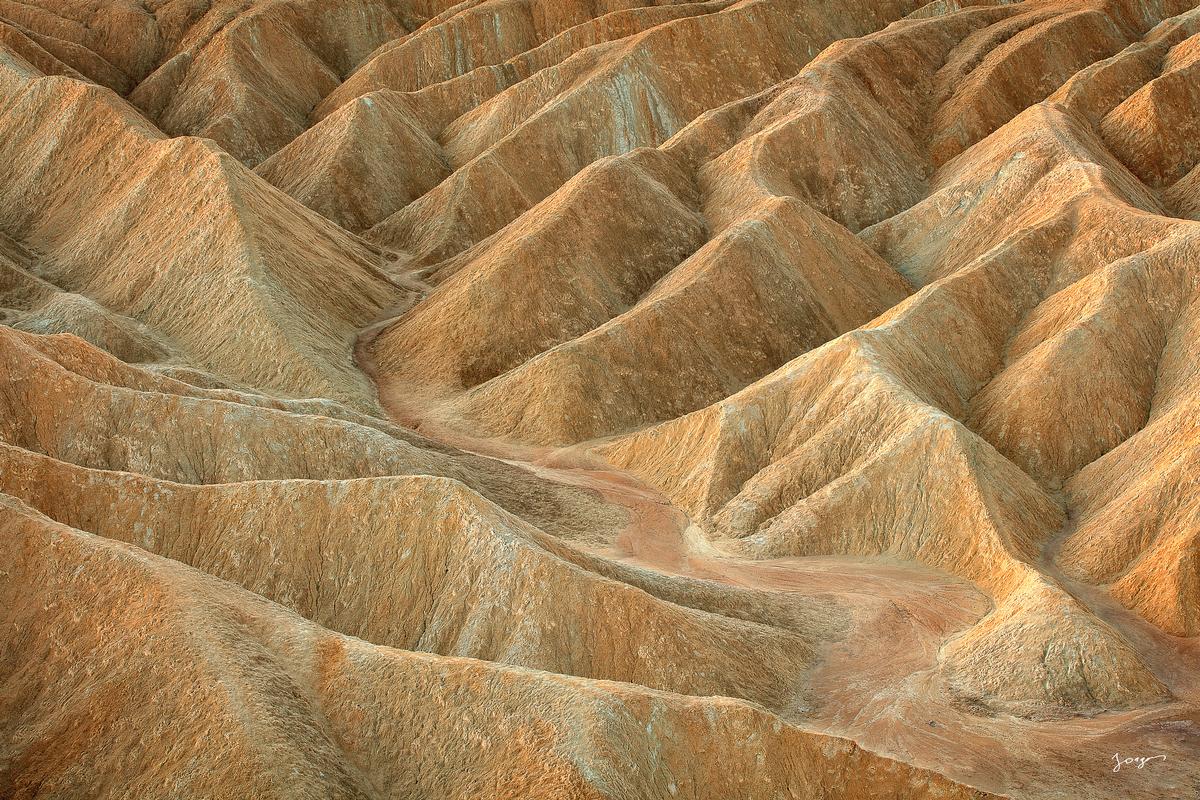
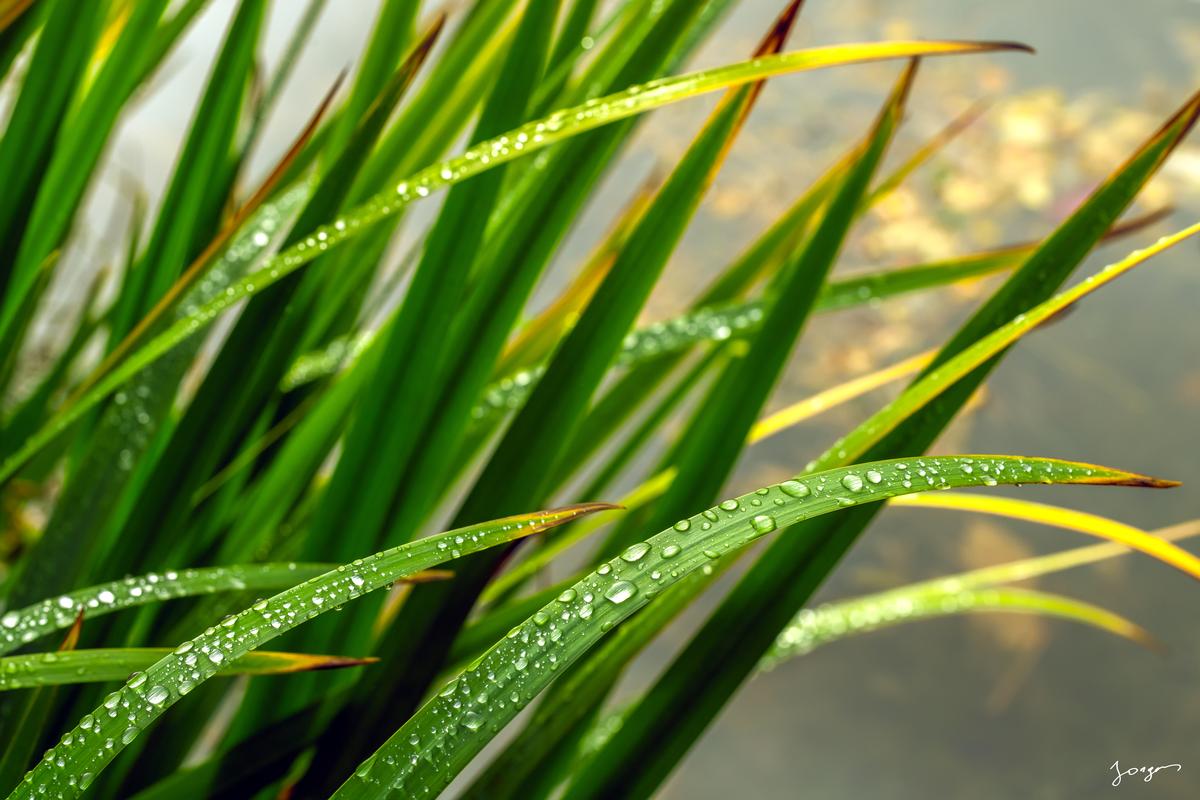
My abstract photographs come from two sources. The first is pure discovery — the cracked desert floor I mentioned at the top, the leaves on wet rocks, the frost patterns, the lichen geometry. I don't manufacture those. I just have to be paying attention and have the camera ready. This is actually the hardest part. Training your eye to see abstraction in the real world requires unlearning the habit of looking for obvious subjects. You have to slow way down, get low, get close, and stop expecting things to look like things.
The second source is deliberate camera technique. Long exposures in low light that turn moving water into silk. Intentional camera movement during exposure — panning, tilting, or rotating — that transforms a stand of trees into vertical streaks of color. Multiple exposures layered in-camera. Focus pulled during a long exposure. These are not accidents. They're techniques for making the camera produce something that exists in between photography and painting — images that are entirely photographic in origin but completely non-representational in result.
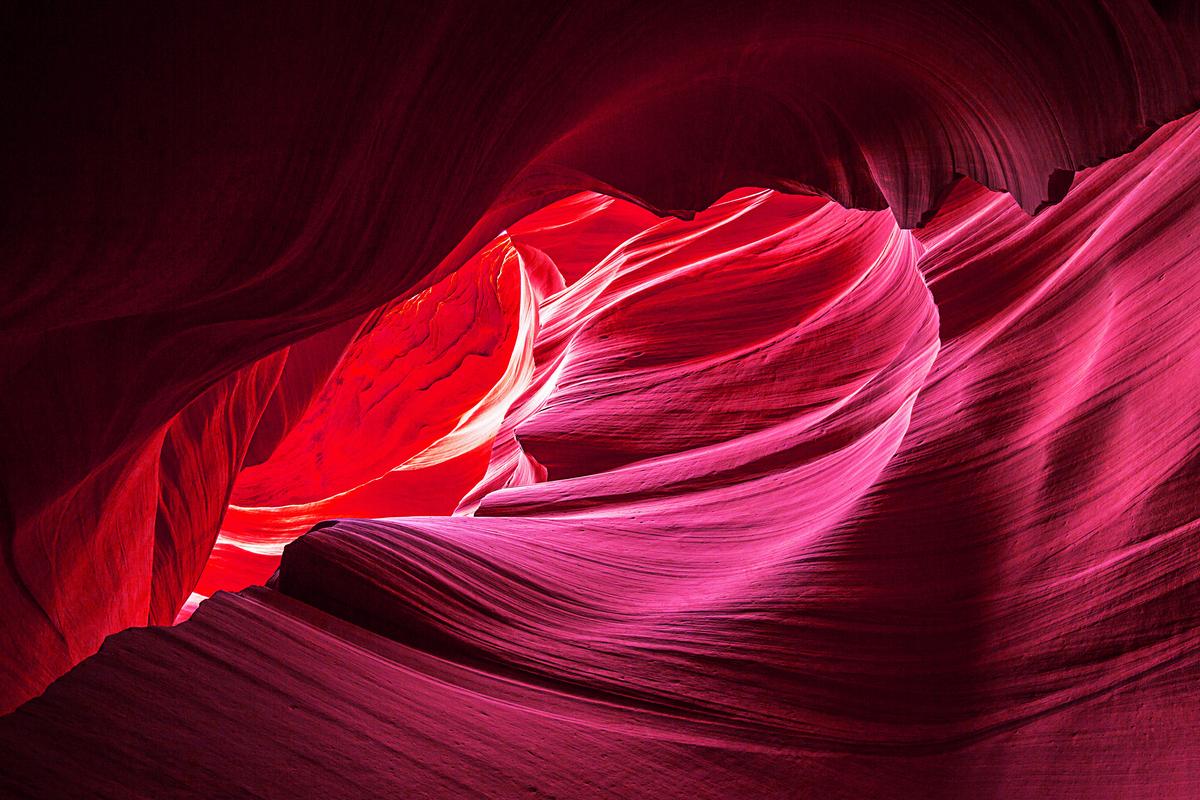
Then there's the editing. I use Lightroom and Photoshop the way a printmaker uses the press — not to "fix" an image toward realism, but to push it further into abstraction. Color shifts that take autumn leaves from orange-gold into something colder and stranger. Contrast adjustments that flatten a three-dimensional scene into graphic shapes. Selective dodging and burning that removes the middle tones and leaves only the brightest highlights and deepest shadows. The software is an instrument. The image coming out of the camera is just the starting material.
People sometimes ask if that's "cheating." It is not. Ansel Adams spent as much time in his darkroom as he did in the field — and he considered the darkroom part of the creative process, not a correction of it. The digital tools I use are the direct descendants of the dodging, burning, and chemical manipulations he was doing by hand in the 1940s. The only difference is that I can undo my mistakes.
The abstract collection at jongasfineartphotography.com/collections/abstract-photography/ is the fullest expression of this process. Some of those prints took three minutes in the field and three hours in post. Some took three hours in the field and five minutes in post. The result is what matters, not the ratio.
Technology, AI, and What Abstraction Looks Like When the Artist Isn't There
The contemporary definition of abstract art is expanding in ways that would have been unimaginable to Kandinsky. Digital tools, generative AI, algorithmic art systems, large-scale light installations — these are producing work that is abstract in every meaningful sense, sometimes without a human hand involved in the actual mark-making at all.
This raises genuinely interesting questions. If an AI generates a visually compelling abstract image by training on thousands of existing paintings and recombining their elements — is that abstract art? Is the computer the artist? The programmer? The person who typed the prompt?
My honest answer: I don't know, and I'm suspicious of anyone who says they do. The same arguments were made about photography when it was invented. "Can a machine make art?" People settled that question in the affirmative around 1860, and most of us stopped relitigating it. The question with AI art is probably going to resolve the same way — not as a yes-or-no but as a "it depends on what the human contributed and what they intended."
What I do know is that my use of editing software to transform a photograph into something abstract isn't AI generation — it's craft. Every decision in the process is mine. The camera position, the light I waited for, the exposure choices, the sequence of adjustments in post. The software is a tool, not a co-author. There's a meaningful difference between using a tool thoughtfully and outsourcing the creative decision-making entirely. Where exactly that line falls in the era of generative AI is a conversation the art world is going to be having for a long time.
Why Abstract Art Dominates Interior Design (And Corporate Collections)
There's a practical reality to abstract art that has nothing to do with philosophy: it is the most versatile type of art for interior spaces, and the people who buy and specify art for a living know it.
The reason is exactly what you'd expect: abstract art doesn't fight the room. A figurative painting of a specific place, person, or scene carries meaning that may or may not match the vibe of a living room or a hotel lobby. Abstract art — particularly work anchored by color rather than subject — functions as a visual anchor without imposing a specific narrative. It can be powerful without being domineering. It can be calm without being boring.
There's a certain irony here. The artists who created abstract work as a spiritual or political act — who were trying to make art that stripped away the decorative and went straight for the transcendent — produced work that became the most popular choice for decorating expensive apartments and corporate headquarters. Rothko, who wanted his paintings to produce quasi-religious emotional experiences, now lives in conference rooms.
He was apparently upset about this when it happened to him. But the market is the market.
For collectors interested in abstract fine art photography, the same principle applies: the work functions beautifully in contemporary, minimalist, and luxury interior spaces precisely because it doesn't compete with the architecture. It complements it. You can browse the abstract collection at jongasfineartphotography.com/collections/abstract-photography/ — or the broader fine art collection at jongasfineartphotography.com/collections/ — to see how abstract photography in particular sits in a room.
Where Abstract Art Goes Next
In 1915, Malevich painted a black square. In 2019, Maurizio Cattelan taped a banana to a wall, titled it Comedian, sold it for $120,000, and then watched a performance artist eat it at Art Basel — which was, I suppose, the most abstract possible commentary on all of the above.
If you take the Geometric Path to its logical endpoint, you get Malevich's black square — the ultimate reduction. Where do you go from there? The answer, it turns out, is: you reverse course. Contemporary artists are moving toward Neo-Expressionism and Post-Minimalism — a return to the human mark, to raw material, to the body in the work. Artists like Jean-Michel Basquiat, who covered large canvases in layered paint, text, and symbol, were rebelling against the pristine emptiness of Minimalism before they were 25 years old. Julian Schnabel painted on broken crockery. Anselm Kiefer used lead, straw, and ash. They were answering Malevich's reduction with complexity. With mess. With history.
The digital era is adding another dimension to this. Generative art, NFTs (however their value has evolved since their 2021 peak), site-specific digital installations — abstraction is moving off the canvas and into the environment, onto screens, into light itself. The Tate Modern maintains a useful overview of abstract art's ongoing evolution for anyone who wants to follow where the movement is going institutionally.
Where does photography fit in all this? Exactly where it always has — somewhere in the middle of all the arguments, doing its own thing, trying to find the images that earn a second look. The interesting thing about abstract photography specifically is that it occupies a unique position: it is rooted in the real world (the camera doesn't invent, it records) but it produces images that function as pure abstraction. The source is reality. The result is feeling. That, as it turns out, is a pretty good description of what the whole art movement has been trying to do since 1839.
One Last Thing
If you take nothing else from this piece, take this: the next time you're walking somewhere and you notice a pattern on the ground — cracked asphalt, fallen leaves in water, shadows on concrete, frost on glass — stop and actually look at it. I mean really stop. Get your phone out if you have to. Look at it the way you'd look at a painting.
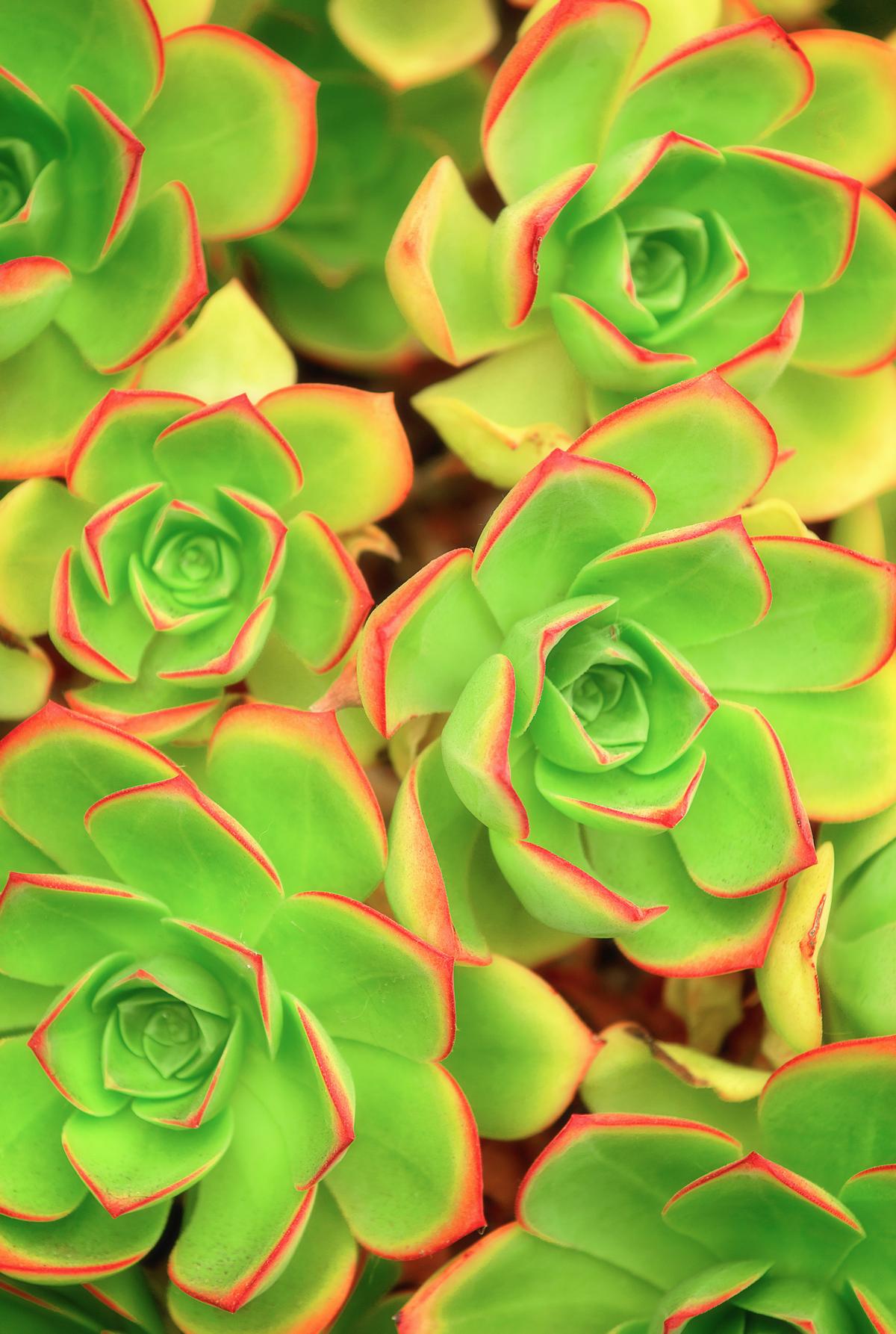
Because here's what I've found, after years of doing exactly that: the natural world is producing abstract art constantly. It has been since before there were humans to look at it. We didn't invent abstraction. We just learned to see it.
That, more than any art history or theory I can give you, is what abstract art is about.
— Eddie Jongas
Browse Abstract Photography Prints by Eddie Jongas:
Abstract Photography Collection
Explore All Fine Art Collections
About Eddie Jongas
Eddie Jongas is a modern fine art photographer based in Las Vegas, Nevada. He has photographed in 48 states and 15 countries, covering more than 700,000 miles in pursuit of images that earn a second look. All prints are signed limited editions on TruLife acrylic-mounted surfaces, produced with museum-grade processes, and shipped free to all 50 states.
