Something interesting has been happening in American homes over the past few years. After a decade of bare white walls, gray everything, and furniture that looks like it was designed by someone who had never sat in a chair before, people are quietly and decisively moving in the opposite direction. The design industry has a name for it — the death of all-gray — and what is replacing it is something that felt unfashionable not long ago and now feels like the most natural thing in the world: warmth, history, symmetry, and rooms that look like someone actually lives in them.

That shift is traditional interior design having a genuine cultural moment. Not a retro revival or a nostalgia trip, but a real reckoning with the limits of minimalism and what people actually want from the spaces they come home to every day. This guide covers the full story — what traditional interior design is, how it has evolved, which generation is drawn to which version of it, what art works best in it, and why the abstract photograph hanging over a mahogany fireplace is one of the most powerful design moves you can make right now.
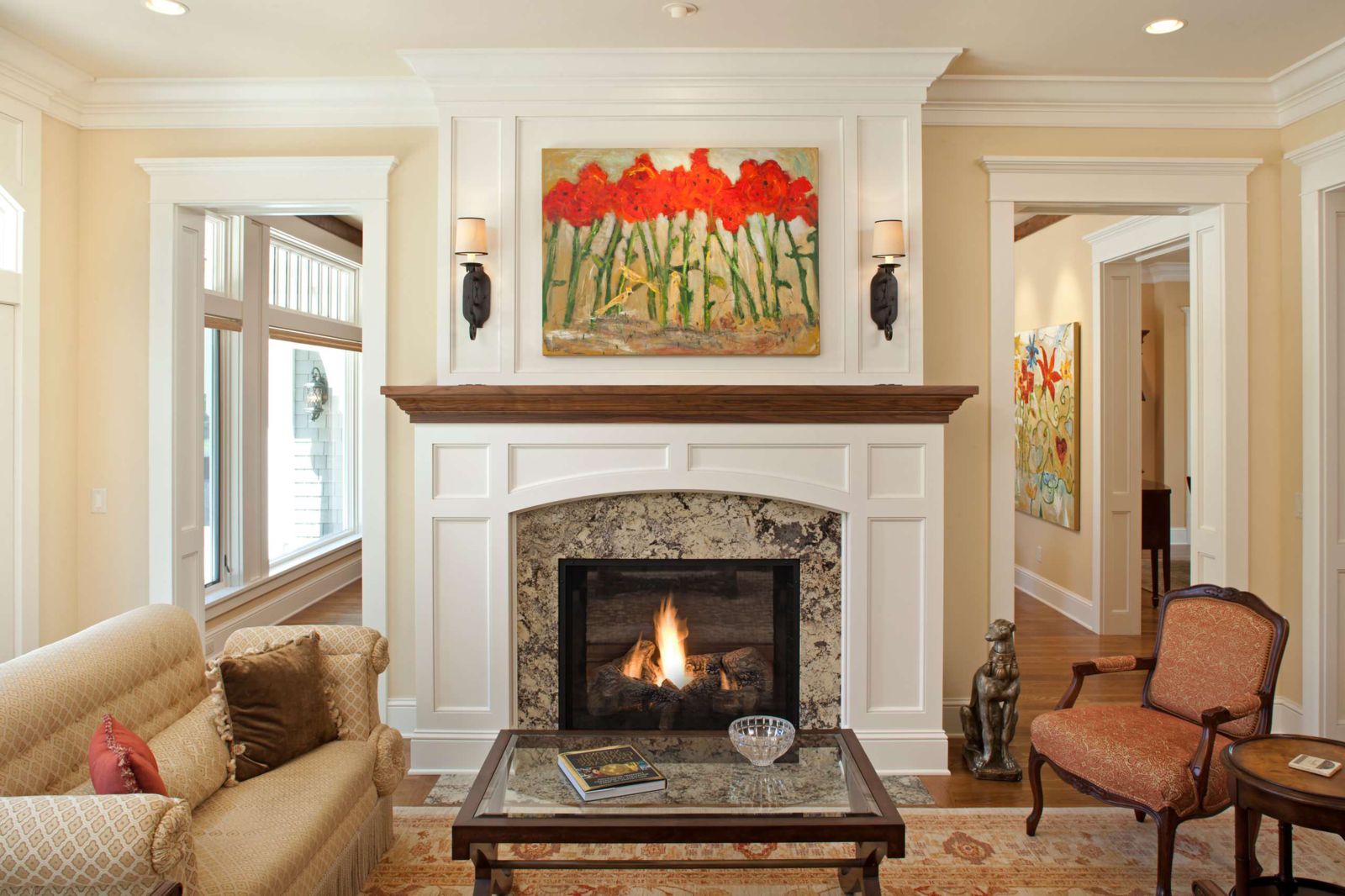
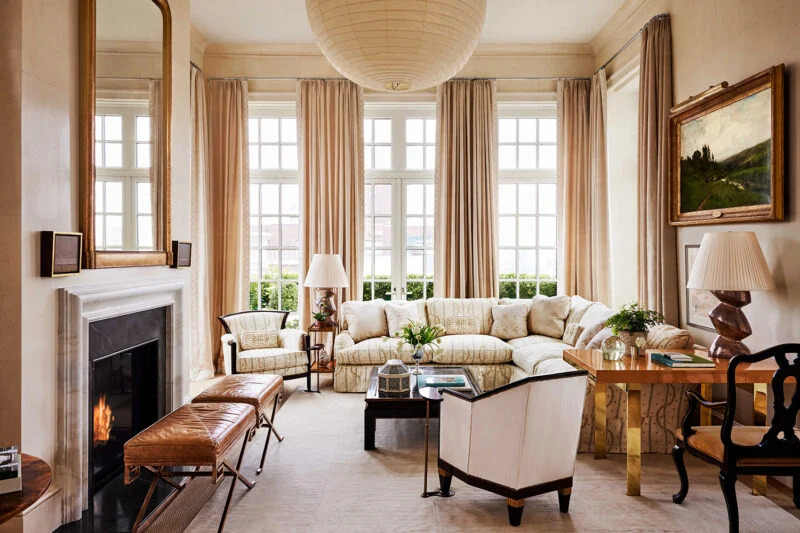
What is traditional interior design?
Traditional interior design is rooted in 18th- and 19th-century European aesthetics — particularly French, English, and neoclassical styles. It prioritizes symmetry, rich color palettes, ornate craftsmanship, and a sense of permanence. It treats the home as a place that should communicate history, taste, and collected experience rather than serving as a neutral backdrop.
What is the difference between traditional and transitional interior design?
Traditional design commits fully to formal elegance: jewel-tone palettes, dark wood finishes, ornate curved furniture, and elaborate ornamentation. Transitional design lands at the midpoint between traditional and modern — it keeps balanced layouts and classic architectural lines but strips away formality, opting for neutral palettes and cleaner furniture profiles.
What are the core elements of traditional interior design?
The four pillars are architectural symmetry and order, rich deep color palettes (warm neutrals layered with jewel-tone accents), architectural details and craftsmanship (crown molding, wainscoting, coffered ceilings, formal drapery), and ornate furniture with substantial textiles like velvet, damask, and brocade.
What art works best in a traditional interior?
Fine art landscape photography and oil paintings with atmospheric depth are the core staples. Structured botanical or architectural gallery grids, large-scale abstract art used as a counterpoint to heavy architectural bones, and carefully framed classical figure drawings or etchings all work well. Scale matters enormously — art should span roughly two-thirds to three-quarters the width of the furniture below it.
What is Grandmillennial design?
Grandmillennial (also called Grandma Chic) is a Gen Z-driven expression of traditional design that leans unapologetically into nostalgic, feminine details: skirted upholstery, classic floral wallpaper, pleated lampshades, and antique wood furniture. It is characterized by spaces that look collected rather than purchased, driven largely by thrifting and vintage sourcing.
Why is traditional interior design making a comeback?
Two forces are driving the revival: widespread fatigue with the all-gray aesthetic that dominated renovated American homes for a decade, and a generational rejection of cheap fast furniture that deteriorates within a few years. Traditional design offers warmth, longevity, and spaces that communicate genuine personality — the direct opposite of what minimalism delivered.
What Traditional Interior Design Actually Is
Traditional interior design is rooted in heritage, symmetry, and a timeless, cohesive aesthetic. It draws heavily from 18th- and 19th-century European design — particularly French, English, and neoclassical styles — and prioritizes comfort, elegance, and a sense of deliberate order over minimalism or trend-chasing. Where a modern or contemporary space might feel spare and forward-leaning, a traditional space feels settled. Balanced. Like it has been accumulating its character over decades rather than being assembled over a weekend.
At the deepest level, traditional design is a philosophy about permanence. It chooses materials that age beautifully rather than materials that photograph well and deteriorate quickly. It values craftsmanship over novelty. And it treats the home as a place that should communicate something about the person living in it — their history, their taste, their collected experience — rather than as a neutral backdrop that appeals to the widest possible demographic.
That philosophy connects directly to how traditional art functions in culture more broadly: the same commitment to craft, to established technique, to objects that carry genuine weight rather than following the current trend. A traditional artist and a traditional interior designer are operating from the same underlying set of values, just in different media.
The Four Core Pillars Of Traditional Interior Design
1. Architectural Symmetry and Order is the structural foundation of everything in traditional design. Spaces are arranged around a clear focal point — a fireplace, a substantial bank of windows, a statement piece of furniture — and everything else in the room is organized in relationship to it. Furniture appears in pairs: matching armchairs facing each other across a coffee table, identical lamps on both ends of a console, framed artwork hung in balanced arrangements. This is not accidental repetition. It is a deliberate visual language that creates a sense of calm authority in a room. When you walk into a well-executed traditional space, you feel settled before you understand why.
2. Rich, Deep Color Palettes are one of the most immediately recognizable elements of the style and one of the primary ways it differs from the modern and contemporary spaces that dominated interior design for most of the last decade. Traditional design works with warm base neutrals — cream, ivory, warm beige, soft taupe — and layers in deep jewel-tone accents: emerald green, ruby, sapphire blue, rich burgundy. Dark wood tones run throughout — mahogany, walnut, cherry, and oak — anchoring the architecture with warmth rather than floating above it in the pale, light-everything approach that became ubiquitous in renovated homes of the 2010s.
3. Architectural Details and Craftsmanship distinguish traditional spaces from almost everything built or renovated in the era of fast construction and cost-cutting. The walls are not just painted surfaces. Crown molding, wainscoting, and substantial baseboards add physical depth and shadow to every vertical plane. Coffered or tray ceilings create structure overhead. Classic window treatments — floor-length pinch-pleat drapes with elegant hardware — acknowledge that a window is not just a hole in the wall but a genuine architectural feature worth dressing. All of these details take time, skill, and money to execute correctly. Their presence in a space says something about how much the person cares about where they live.
4. Ornate Furniture and Textiles complete the picture. Traditional furniture has soft, curved silhouettes rather than the sharp, geometric profiles of modern design. You see tufted upholstery, rolled arms, and carved wooden details like cabriole legs — the slightly curved, tapered leg that is one of the most recognizable signatures of period European furniture. The fabrics are substantial: damask, silk, velvet, linen, brocade, often featuring historic patterns like plaids, subtle florals, or classic stripes. Underfoot, rooms are typically anchored by intricate woven vintage or oriental-style area rugs that tie the entire color palette together.
Traditional vs. Transitional — Where the Line Actually Falls
One of the most common sources of confusion in interior design is the difference between traditional and transitional. They share significant DNA, and many of the best contemporary spaces land somewhere between the two, so the distinction is worth understanding clearly.
Traditional design looks back to the formal elegance of 18th- and 19th-century Europe. Its color palette runs to rich jewel tones and dark wood finishes. Its furniture is ornate, curved, and heavy, with features like rolled arms, tufting, and carved details. Its fabrics are heavy, rich, and patterned — velvet, damask, brocade, formal florals. Its ornamentation is elaborate: intricate crown molding, heavy drapery with tassels, layered decorative accessories that communicate a fully committed aesthetic position.
Transitional design sits at the exact midpoint between traditional and modern. It keeps the balanced, symmetrical furniture layouts and the classic architectural lines of traditional style but strips away the formality and fussiness. Color palettes go highly monochromatic and neutral — whites, soft grays, taupes, muted blues — with high-contrast accents rather than saturated jewel tones. Furniture profiles become clean and streamlined while remaining plush and comfortable. Wood finishes mix freely between natural oak, bleached woods, and dark espresso rather than committing to one dark tone throughout. The result is a space that feels structured and cohesive without feeling like a period room.
The simplest way to understand the difference: a traditional living room is a commitment. A transitional living room is a negotiation. Both are beautiful. They serve different personalities and different homes.
The Two Modern Iterations — Modern Heritage and Grandmillennial
Traditional design in 2026 is not a single monolithic style. It has evolved into two distinct expressions that are shaping the design conversation right now, and understanding them helps explain why the style is simultaneously being embraced by 25-year-olds on TikTok and 65-year-olds upgrading their forever homes.
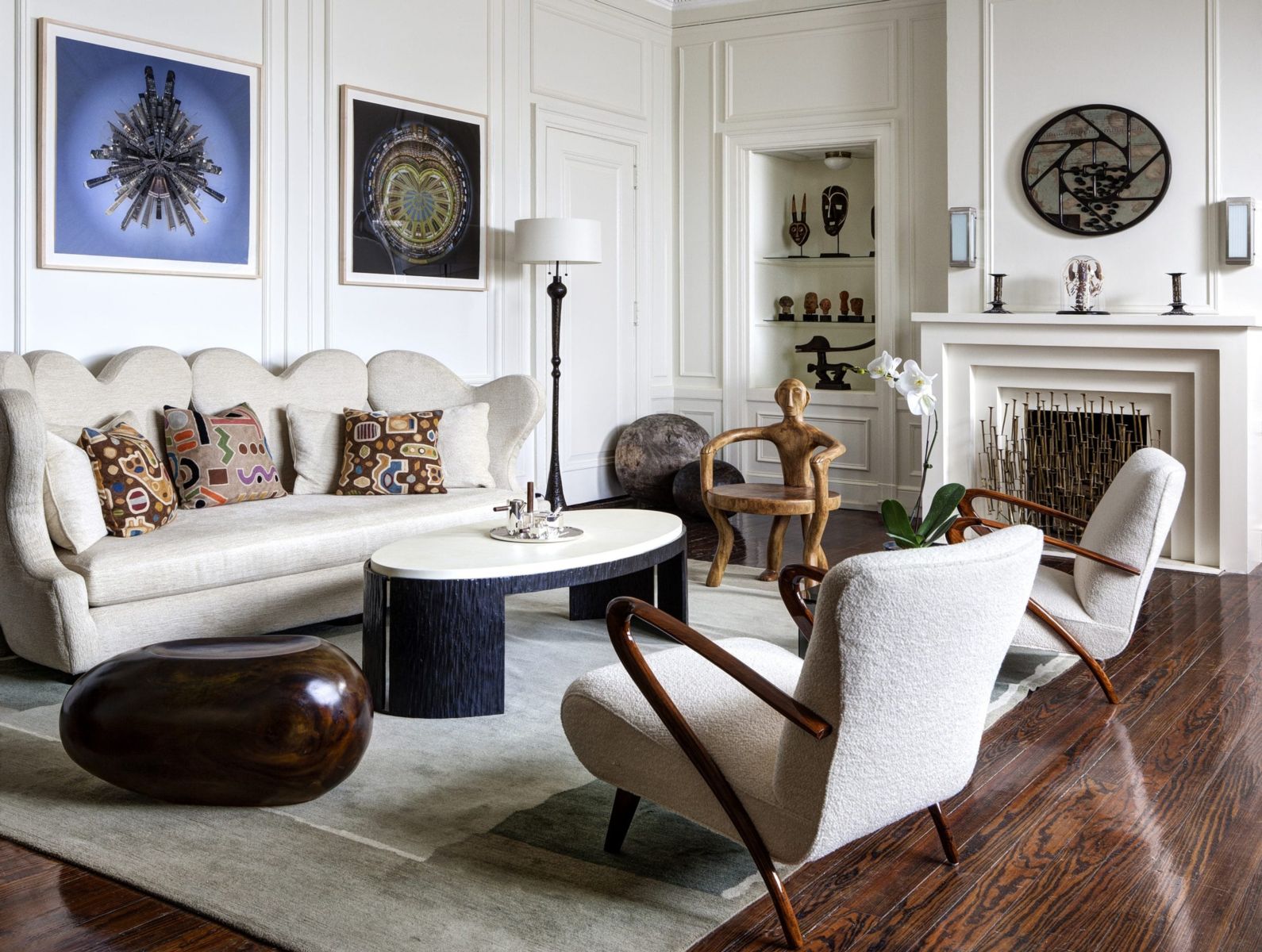
Modern Heritage (also called New Traditional) is the more widespread of the two. It takes the architectural bones and formal elements of classic traditionalism — intricate crown moldings, herringbone dark wood floors, traditional inset cabinetry, coffered ceilings — and pairs them with contemporary, sculptural light fixtures, clean-lined modern sofas, and bold abstract art. The vibe is a high-end estate that has been thoughtfully updated for contemporary life. It celebrates the duality of old and new rather than committing entirely to either. A Modern Heritage dining room might have original 1920s picture rail molding, a walnut farmhouse table, sculptural matte-black pendant lights, and a large-scale contemporary landscape photograph on the wall. All four elements come from completely different eras. Together they feel more alive than any one of them would alone.
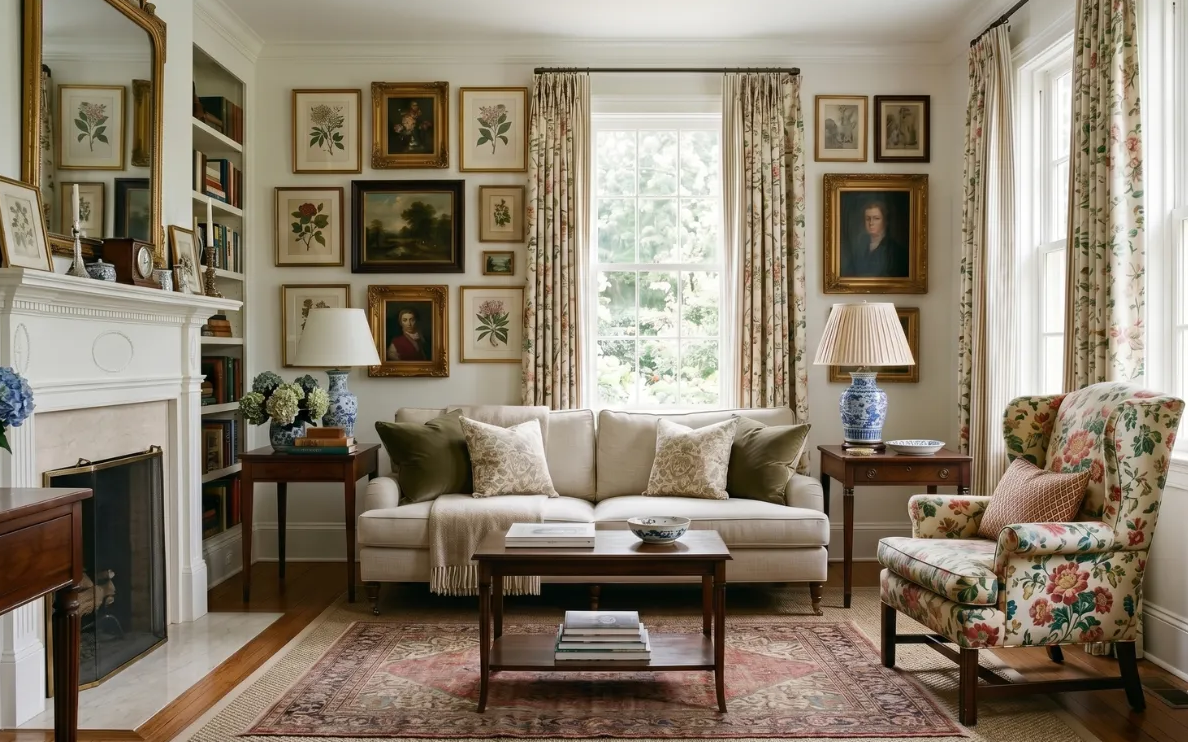
Grandmillennial (also known as Grandma Chic) leans unapologetically into the nostalgic, feminine details of 19th-century traditionalism. Skirted or ruffled upholstery, classic floral wallpaper, pleated fabric lampshades, and detailed wood antiques. This trend is driven primarily by Gen Z — the generation that grew up surrounded by gray rental apartments and Instagram-perfect minimalism, and is now responding to both by running straight in the opposite direction. For Grandmillennial devotees, traditional elements are a form of self-expression: the cozy, safe, layered feeling of a grandparent’s home, styled with modern wit and genuine affection rather than irony. The aesthetic relies heavily on sourcing authentic vintage and antique pieces rather than buying mass-produced furniture, which gives Grandmillennial spaces their most distinctive quality — they look collected rather than purchased.
"A traditional living room is a commitment. A transitional living room is a negotiation. Both are beautiful. They serve different personalities and different homes."
Why It’s Making a Comeback Right Now
The design industry does not make trends happen. It follows what people actually want. And what people actually want right now is a direct reaction to two things that defined the aesthetic of the 2010s: the death of all-gray, and the rejection of fast furniture.
Homeowners are officially tired of what the design industry calls “flipper’s gray” — that particular shade of blue-gray that showed up on virtually every renovated wall in America for about a decade because it was inoffensive enough to appeal to the widest possible buyer pool. It looked fine. It looked like nothing. It communicated nothing about the people living in it. And after years of it, people are over it. The shift has been rapid and significant: rich chocolate browns, burgundy, ruddier terracotta reds, and deep forest greens are appearing everywhere in high-end residential design right now. All of them are pulled straight from the traditional design playbook.
The rejection of fast furniture is equally driving the shift. A generation of people who bought inexpensive flat-pack furniture from global retail chains in their twenties and watched it disintegrate in five years is now at the age of making different choices. Traditional design champions materials that age beautifully: solid dark wood tones, natural stone slabs, rich tactile fabrics. Pieces that develop a patina over time rather than showing their age through delamination and wobble. The design world is prioritizing longevity, sustainability, and personal character over novelty — and traditional design is the original version of all three of those values.
Which Generation Is Drawn to Which Style — Including the Boomer Furniture Question
The generational breakdown of who is attracted to traditional design and why is one of the more genuinely interesting sociological stories running through the current design moment.
Generational Design Preferences at a Glance
- Gen Z (roughly 14–29): Driving the Grandmillennial surge — thrifting, layering textures, embracing wallpaper and vintage antiques for their cozy, collected feeling.
- Core Millennials (roughly 30–46): Gravitating toward Modern Heritage and Transitional — "buy less, buy better," solid wood, natural stone, unlacquered brass that develops a patina.
- Gen X (roughly 47–61): Classic Traditional blended with Transitional — symmetry and formality kept current with tailored linen panels and seamlessly integrated technology.
- Baby Boomers: Classic Traditional as a lifetime aesthetic — right-sizing into ergonomic comfort wrapped in heritage style, buying for durability and expecting pieces to last a lifetime.
Gen Z (roughly 14-29) is driving the Grandmillennial surge. These are people who grew up in the era of sleek gray minimalism and rental-friendly plainness, who view blank white walls as sterile and devoid of personality. They obsessively thrift and collect vintage objects, they layer textures and colors, they embrace wallpaper and botanical prints and pleated lampshades. For Gen Z, traditional elements are entirely aesthetic choices made for their own reasons — they love the cozy, safe feeling of a grandparent’s home, and they are completely comfortable mixing an antique oil painting next to a piece of neon abstract art. They are not decorating for permanence. They are decorating for feeling.
Core Millennials (roughly 30-46) are gravitating toward Modern Heritage and Transitional design as they settle into homeownership and start families. Having lived through the era of cheap fast furniture that breaks in a few years, they are shifting toward a “buy less, buy better” mentality. They are investing in high-quality solid wood antique dining tables, natural stone surfaces, unlacquered brass hardware that will develop a patina over time. They want spaces that feel sophisticated and grounded without feeling cold or sterile. Modern Heritage gives them architectural depth and historical character without the formality that traditional design can sometimes carry.
Gen X (roughly 47-61) tends toward Classic Traditional blended with Transitional elements. They appreciate symmetry, order, and formality, and they have the peak earning years to invest in high-end architectural trim, deep wood tones, and formal window treatments. But they keep the space feeling current by swapping heavy floral drapes for crisp tailored linen panels and integrating technology seamlessly into classic cabinetry rather than letting it disrupt the aesthetic.
Baby Boomers are the generation for whom Classic Traditional is not a revival trend but a lifetime aesthetic — and here is where the genuinely funny design industry story comes in. The running joke right now is the absolute flood of “brown furniture” hitting Facebook Marketplace and thrift stores because Boomers are downsizing and their children emphatically do not want the giant multi-piece dining sets or heavy china hutches. Gen Z and Millennials are running to thrift stores to buy up exactly the heavy ornate furniture that Boomers are getting rid of. One generation’s downsizing is the other’s Grandmillennial treasure hunt.
But do Boomers actually still buy new furniture? Absolutely — just differently. As they right-size into smaller homes or upgrade their forever homes, they prioritize ergonomics and physical comfort wrapped in a traditional aesthetic: high-end recliners and motion furniture with classic upholstery, solid bench-made wood pieces chosen for their durability rather than their price. The biggest differentiator is that Boomers will physically go to a furniture showroom, sit in the chair, test the cushion density, look at the wood joinery, and grill the sales representative on warranties before buying. They expect a piece to last the rest of their lives. That is a completely different relationship with furniture than anyone younger currently has.
The Best Art for Traditional Interior Design
Art in traditional interior design is never treated as a final decorative layer applied to a finished room. It functions as an architectural anchor — integrated directly into the physical layout of the space, dictating furniture placement, lighting design, and spatial proportions. Understanding this changes how you think about what to hang and where.
Fine art landscape photography and oil paintings are the core traditional art staple. Atmospheric, majestic landscapes — especially scenes capturing the American West, moody European countrysides, or dramatic coastal cliffs — are natural companions to rooms filled with dark wood furniture and warm textiles. Rich greens, deep earth tones, and warm golden-hour light speak the same color language as mahogany paneling and velvet upholstery. The landscape photography collection at Jongas Fine Art Photography includes work from across the American West that translates directly into this design context — images with the atmospheric depth and tonal richness that traditional spaces demand from their art.
Architectural and botanical studies in structured gallery grids are another signature element. Traditional design loves a perfectly executed gallery arrangement: a 2x3 or 3x4 grid of identical high-quality mats and frames, featuring botanical prints, architectural sketches, or uniform charcoal studies. The critical word is “identical” — the frames, mats, and spacing must all match exactly. The difference between an impeccably executed traditional gallery wall and a casual modern one is military precision in the spacing. One and a half to two and a half inches between frames throughout, no exceptions.


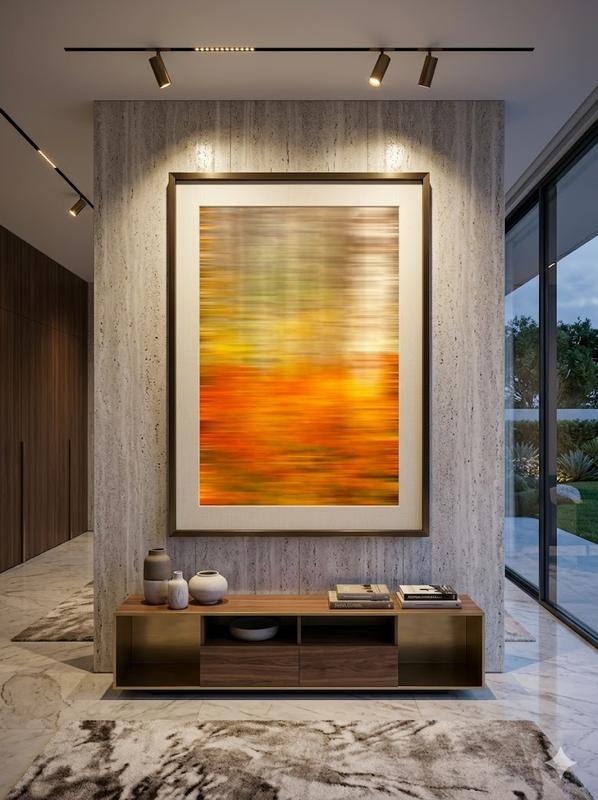
Abstract art as a counterpoint is perhaps the most powerful and currently discussed move in traditional interior design, and it deserves its own explanation because it is counterintuitive until you understand why it works. Placing a large-scale, expressive abstract painting directly inside a room with heavy traditional bones — dark wood paneling, wainscoting, coffered ceilings, formal moldings — creates a visual tension that makes both the architecture and the art more powerful than either would be alone. The abstract piece acts as what designers call a visual palate cleanser: it breaks up the rigid symmetry and tells the viewer that while the space respects its architectural history, it lives in the present.
The golden rule for making this work is pulling the abstract piece’s color palette directly from the room’s existing textiles. An indigo blue from a vintage Persian rug, an olive tone from velvet accent pillows, a burgundy from the drapes — if the abstract work shares even one significant color with the room’s existing palette, it belongs there visually regardless of how different its style is from everything around it. See the abstract photography collection at Jongas Fine Art for large-format abstract photographic work that brings this exact quality to traditional spaces — the kind of piece that stops a room from looking like a museum and makes it feel genuinely alive.
Art for Modern Heritage Specifically
The Modern Heritage aesthetic operates by a slightly different set of art rules than Classic Traditional, because the goal is to create productive tension between old-world depth and clean contemporary restraint rather than a unified historic statement.
Moody, large-scale landscapes are the primary anchor piece in Modern Heritage spaces. Where classic traditionalism might cluster several smaller paintings on a wall, Modern Heritage blows up the scale. One massive statement landscape above a mantel or sofa, framed in a deep canvas float frame or a substantial heavy gilded frame, commands the entire wall and grounds the room with natural warmth and historical soul. The image should carry real atmospheric weight — not a decorative travel photograph but a fine art landscape with genuine tonal depth and a specific sense of place.
Expressive abstract art placed against traditional architectural elements is the quintessential Modern Heritage strategy. A fluid contemporary abstract painting hung directly over picture-frame molding, wainscoting, or dark wood paneling is the image that shows up in every high-end design publication right now. It works because the contrast is intentional and sophisticated rather than accidental — the historic architecture provides the structure and permanence, the abstract piece provides the modernity and movement.
High-contrast charcoal sketches and classical figure drawings occupy a fascinating middle ground in this aesthetic: historic subject matter with a graphic, modern execution. Float-mounted in an extra-wide archival white mat, paired with an ultra-thin matte black metal frame, a classical gesture drawing or architectural copperplate etching cuts through warm wood tones and patterned wallpapers with a clean precision that neither a busy oil painting nor a pure abstract could achieve.
The secret weapon of the Modern Heritage aesthetic is the frame swap: deliberately crossing eras in how you frame your art. Take a vintage oil landscape and put it in an ultra-sleek minimalist gallery frame. Take a highly contemporary minimal abstract and house it inside a heavily carved antique gold frame. This intentional pairing creates the environment that feels “collected over time” rather than purchased from a single source in a single afternoon — which is exactly what distinguishes a genuinely sophisticated traditional space from one that is merely trying to look like one.
Art as Architecture — The Structural Role
The most important principle of art in traditional design, and the one most commonly misunderstood, is the scale rule. A classic mistake in contemporary decorating is hanging art that is too small for the wall. Traditional design treats art as an architectural extension of the wall molding and mantel symmetry — a piece hung above a sofa should span roughly two-thirds to three-quarters the width of the furniture below it. Anything smaller floats in the space like a postage stamp and undermines the entire effect.
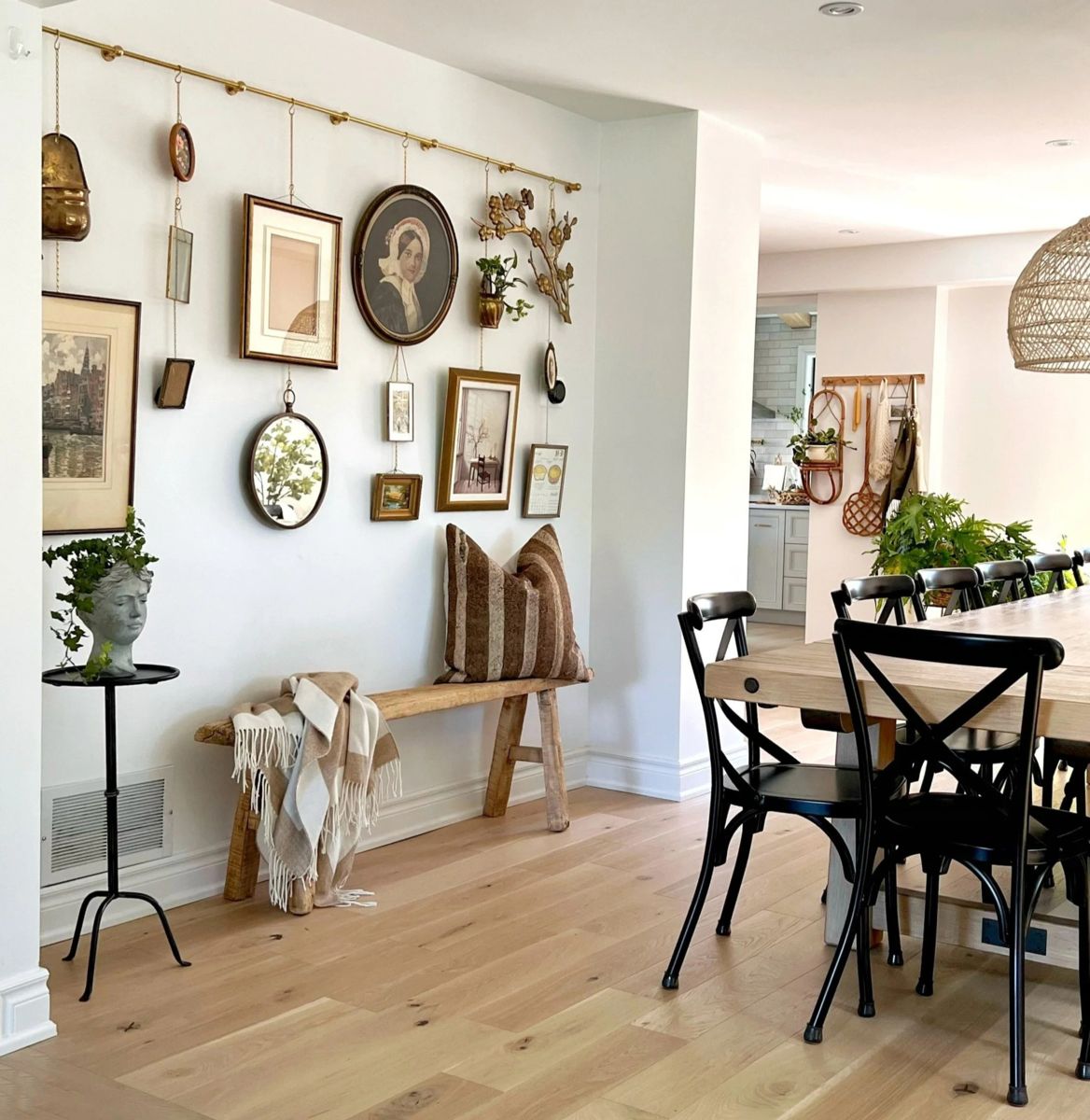
Traditional designers also use picture rails — a piece of horizontal molding running near the ceiling, fitted with brass or bronze chains and hooks — to hang paintings and photographs in a way that honors the historic method used in 19th-century English estates. Multiple works hang vertically stacked down the wall, adjustable without drilling new holes in plaster. If you are working with a historic home or investing in genuine traditional architectural finishes, picture rails are worth adding. They solve the art-hanging problem and reinforce the period character of the space simultaneously.
Finally, lighting. Traditional rooms illuminate their art as a deliberate design priority. Hardwired picture lights — slim brass or antiqued bronze bar lights mounted directly to the top of a frame or the wall just above it — cast a focused, warm, intimate glow over the artwork that no amount of recessed ceiling spotlighting can replicate. Because traditional rooms feature layered ambient light from table lamps and picture fixtures, art prints in this context are typically framed with non-reflective museum glass, preventing harsh glare from obscuring the image from across the room.
Related Styles Worth Knowing
Traditional design is the trunk of a tree with several significant branches, each sharing the core DNA of heritage, symmetry, and craftsmanship while expressing it differently.
English Country House style takes classic American traditionalism and loosens it considerably. It relies on the same historic architecture, antique furniture, fine art landscapes, and substantial textiles — but it embraces a deliberate lack of perfection. Mismatched fabrics sitting alongside each other (plaid next to chintz floral), overflowing bookshelves, slightly faded slipcovers, layers of collected objects. It feels like an estate that has been lived in by the same artistic family for generations, accumulating character rather than being decorated. This is perhaps the purest expression of what traditional design is actually trying to achieve at its core. Read full guide on English Country House Interior Design by Eddie Jongas
European Farmhouse and French Country style takes the romance of traditional French and Mediterranean design and makes it more casual and textural. It keeps curved furniture silhouettes, exposed ceiling beams, and stone fireplaces, but trades polished mahogany and shiny brass for lime-washed oak, wrought iron, tumbled limestone, and linen fabrics. The palette comes from nature directly: sage green, soft cream, terracotta. It is traditional design for people who want warmth and history without formality.
Hollywood Regency takes traditional neoclassical forms and amplifies the drama. It keeps the strict symmetry, architectural moldings, and classic furniture shapes, then adds bold high-contrast colors (black and white stripes paired with emerald green), lacquered furniture finishes, mirrored surfaces, velvet upholstery, and polished gold and crystal accents. It is traditional design as theater.
Popular Television Shows to Watch
Saving the Manor (HGTV/Max) follows architect Dean Poulton and designer Borja de Maqua restoring an 18th-century English estate — an absolute masterclass in strict heritage restoration, crown moldings, stone fireplaces, and the balance of preserving architecture while filling it with elegant traditional furnishings. Dream Home Makeover (Netflix) with Studio McGee is the best showcase for transitional and Modern Heritage work at high volume: architectural symmetry, classic built-ins, vintage objects blended with clean-lined contemporary furniture. Home Town (HGTV/Max) with Ben and Erin Napier focuses on historic Mississippi homes, with design that leans into moody paint colors, patterned wallpapers, and rich dark wood tones. And for the English country house aesthetic specifically, Saving Country Houses with Penelope Keith is a genuine education in original 18th- and 19th-century architecture, historical wallpaper preservation, and traditional upholstery.
The Coherent Interior
What traditional interior design ultimately offers is coherence. Not the coherence of a matching furniture set selected from a single catalogue, but the deeper coherence of a space where every element — the architecture, the furniture, the textiles, the art — is speaking the same language about what matters. Permanence. Craft. The accumulation of objects that mean something. A room that looks like it has been lived in and thought about and slowly made better over time.
In a fast-moving digital world where most things are disposable, that is not a small thing to offer. It is the design world’s version of what limited edition fine art photography offers in its own field: the opposite of mass production, the declaration that this specific thing was made with care and was meant to last.
See the abstract photography collection at Jongas Fine Art Photography for work that brings the modern counterpoint angle to traditional spaces — large-format abstract images with the tonal depth and visual energy that make traditional architecture come alive. And the landscape photography collection for work that speaks directly to the heritage and atmospheric depth that classic traditional interiors have always demanded from their art.
More on the design styles that connect to this world: What Is Contemporary Interior Design — the style that most directly inherits and modernizes what traditional design established. And Industrial Interior Design for the aesthetic that goes furthest in the opposite direction, and why the two are increasingly being combined in the most interesting spaces being built right now.



Eddie Jongas is a modern fine art photographer based in Las Vegas, Nevada. His TruLife acrylic-mounted limited edition prints are available exclusively through jongasfineartphotography.com. Free shipping to all 50 states.
