There is something in the human brain that responds to a single, solitary tree the way it responds to very little else in the natural world. Not a forest — a forest is overwhelming, diffuse, impossible to hold in the mind at once. A single tree, standing alone in a landscape, is comprehensible. It has a shape, a personality, a life story written in its silhouette. It stands against something — wind, time, gravity, the vast indifference of the sky — and it wins, at least for now. That's why the trees on this list have accumulated millions of photographs between them. They're not just beautiful. They're legible. They mean something.
Tree photography is one of the most rewarding and most technically demanding forms of nature photography. A great tree photograph is never just a picture of a tree. It's a portrait of time, of persistence, of the relationship between a living organism and the environment it has shaped — and that shaped it. Here are the most iconic tree subjects in the world, what makes them extraordinary, and how to photograph them at their best.

Trees as Sacred Beings — The Mythical Bond Between Humans and Trees
Before the camera, before the painting, before writing itself, trees were objects of worship. Nearly every ancient civilization built its cosmology around a sacred tree. The Norse had Yggdrasil — the World Tree, a colossal ash whose roots and branches connected the nine realms of existence, from the underworld to the heavens. The ancient Celts believed that particular trees held the spirits of their ancestors, and cutting one down uninvited was an act of spiritual violence. The Bodhi tree under which the Buddha achieved enlightenment is still alive — still growing in Bodh Gaya, India — and still venerated by millions.
The Tree of Life appears in nearly every major religious and mythological tradition on earth — as the source of immortality in the Book of Genesis, as the pillar of the world in Mesoamerican cosmology, as the sacred fig tree of Hinduism's Ashvattha. In James Cameron's Avatar — arguably the most commercially successful film ever made — the world of Pandora is organized around Hometree, a vast living organism through which all living things on the planet are neurologically connected. Cameron didn't invent that idea. He drew it from ten thousand years of human mythology that understood, long before ecology, that trees are the infrastructure of life itself.
Trees produce oxygen. They hold soil in place. They regulate watersheds. They moderate temperature. They provide food, medicine, shelter, fuel. For most of human history, a world without trees was literally unimaginable — it was death. So humans did what humans do with things they depend upon and cannot fully understand: they made them sacred. The oldest trees on earth were not just old — they were gods. Which is, perhaps, why photographing them still feels like something more than a creative exercise. It's also why famous art inspired by nature has, from the earliest cave paintings to contemporary fine art photography, returned again and again to the tree as its central subject — because no other form in nature carries as much accumulated meaning.
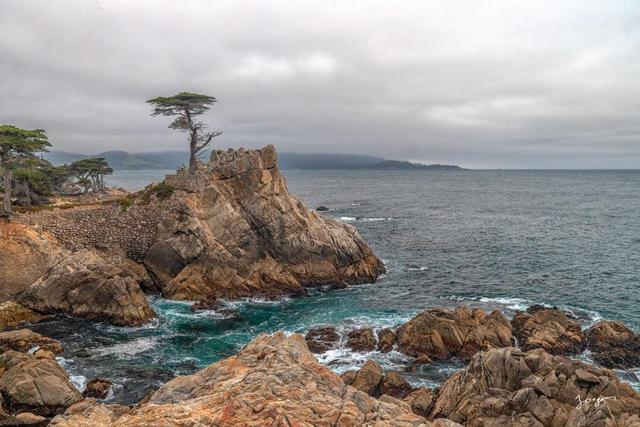
1. The Lone Cypress — Pebble Beach, California
The Lone Cypress is among the most photographed trees in North America — a single Monterey cypress standing on a granite headland above Carmel Bay, its roots gripping rock where there is almost no soil, its wind-flattened canopy shaped by a lifetime of Pacific gales. The tree is estimated to be around 250 years old, which means it was a sapling during the American Revolution. For the last 65 years, cables have held it in place — not to keep it from falling, but to protect the branches from breaking in winter storms.
In mythology, the cypress has been associated with death and immortality across Mediterranean and Persian cultures for millennia — a tree planted at graves not as a symbol of sorrow but as a bridge between worlds, its evergreen nature suggesting that life continues beyond death. The Lone Cypress, standing alone above the Pacific with centuries of wind behind it, earns that mythology.
Photographer's Field Notes — Lone Cypress
- Best time: Close to sunset — warm, soft light; crowds thin; fall and spring offer clearest skies
- Weather tip: Catch the fog that occasionally wraps the headland for a mythic atmosphere
- Access: Entrance fee for the 17-Mile Drive at Pebble Beach required
- Important restriction: Photography only from the viewing platform — approaching the tree is not permitted
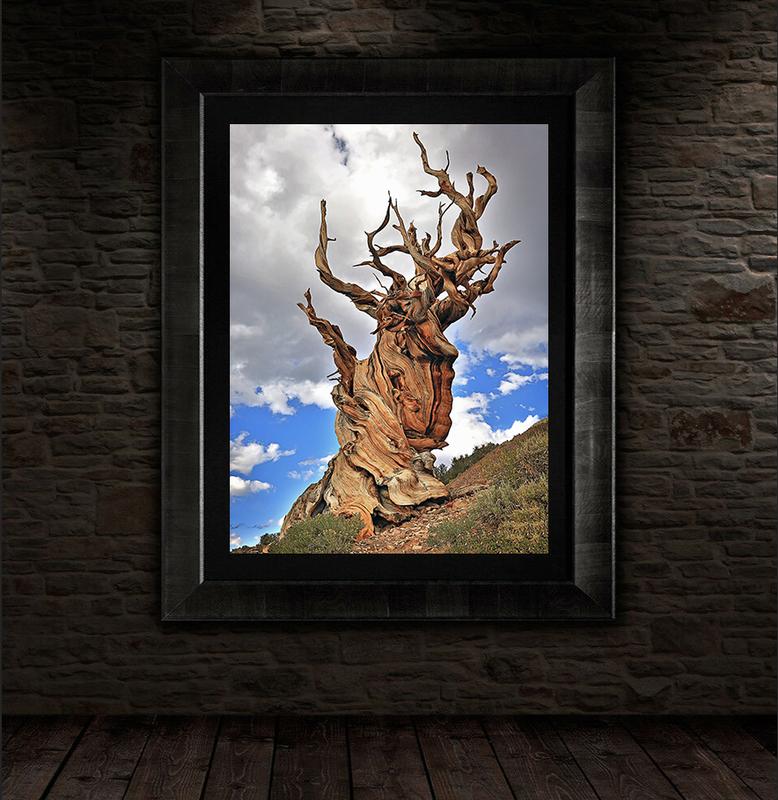
2. The Bristlecone Pines — Ancient Bristlecone Pine Forest, California
In the Ancient Bristlecone Pine Forest, located in the White Mountains of Inyo National Forest, lives what is likely the oldest tree in the world. The Methuselah tree in the Schulman Grove is estimated to be 4,858 years old — born before the pyramids at Giza were completed, before the Trojan War, before the rise and fall of the entire Roman Empire. Edmund Schulman, the dendrochronologist who discovered Methuselah in the 1950s, named it after the biblical patriarch who, according to the Book of Genesis, lived for 969 years — a lifespan Methuselah the tree has already exceeded five times over.
The most photographed individual in the forest is not Methuselah — whose location is deliberately unmarked for preservation. The most photogenic tree is The Sentinel, a dead bristlecone that sprouted some 3,500 years ago, its amber, wind-polished wood catching light at sunset like carved sculpture. Dead trees are often the most beautiful subjects in this forest — the wood preserved for thousands of years by cold, dry altitude, twisted into forms that no living sculptor could replicate.
Photographer's Field Notes — Bristlecone Pines
- Season: Generally accessible Memorial Day through end of October; closed rest of year
- Elevation: Above 9,500 feet in the White Mountains of eastern California — bring warm layers regardless of season
- Best light: Golden hour — sunrise and sunset paint the dead wood amber and orange against the high desert sky
- Night photography: Altitude and remoteness deliver some of California's darkest skies — ancient gnarled forms against the Milky Way
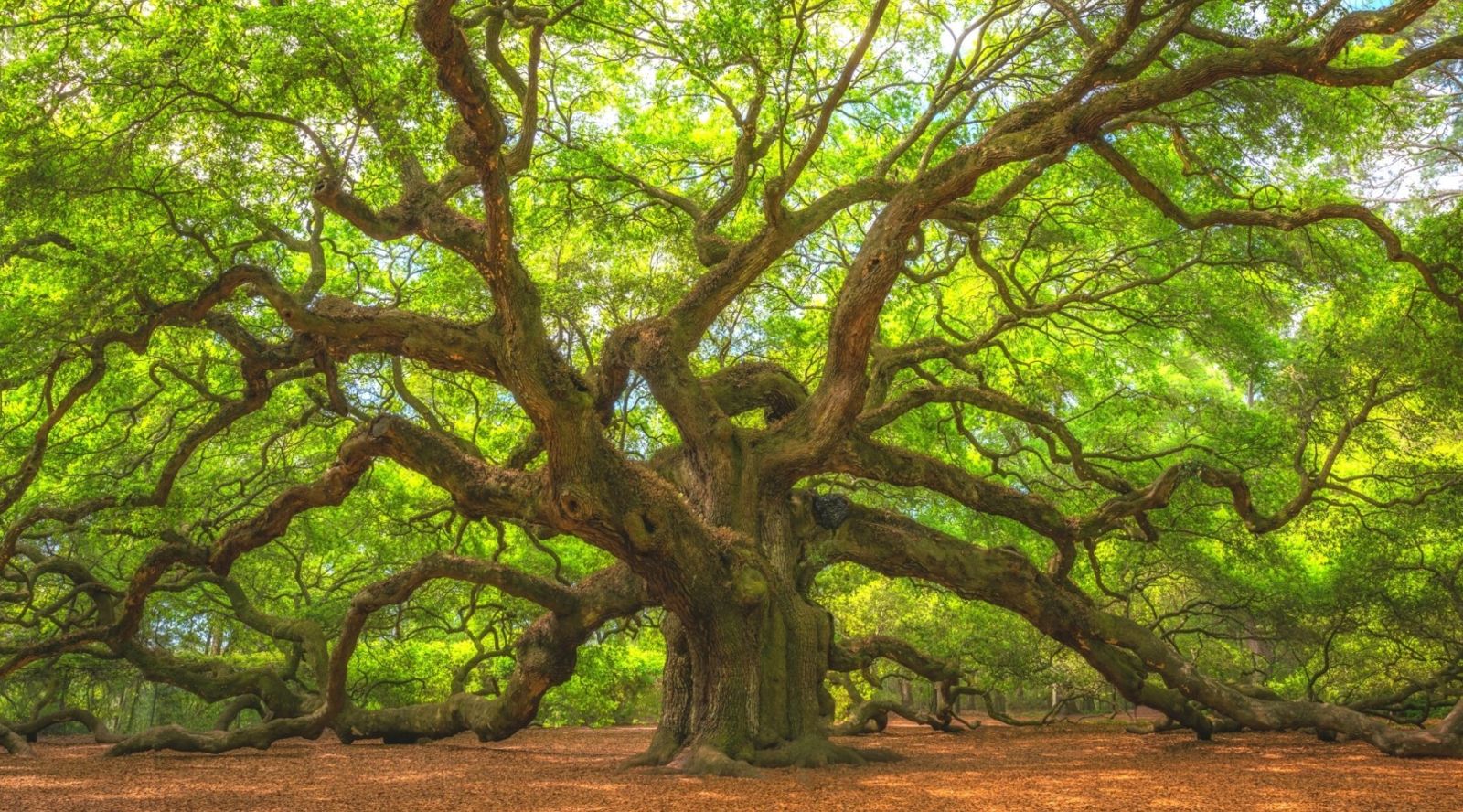
3. The Angel Oak — Johns Island, South Carolina
The Angel Oak on Johns Island, South Carolina, is estimated to be between 400 and 500 years old — one of the oldest living organisms east of the Mississippi River. Its trunk is over 25 feet in circumference. Its branches spread across more than 17,000 square feet of shade. Several individual branches are so long they have grown down to the ground and taken root, creating a canopy so complex that standing beneath it feels less like standing under a tree and more like standing inside a living cathedral.
The Gullah people of the South Carolina Sea Islands — descendants of enslaved West Africans — have long regarded the Angel Oak as a sacred site, a place where the spirits of ancestors gather. The name itself is a subject of some debate: some attribute it to the Justin Angel family who once owned the land; others maintain that the "angels" are the spirits who hover around the ancient limbs. Whatever the truth, the tree produces in most visitors a silence that feels very much like reverence.
Photographer's Field Notes — Angel Oak
- Location: 3688 Angel Oak Road, Johns Island — free public park, open most of the year
- Best time: Early morning — soft directional light through canopy gaps before crowds arrive
- Weather tip: Overcast days reduce harsh contrast between dark canopy interior and bright sky
- Seasons: Spring brings wildflowers around the base; fall brings dramatic color to the surrounding oak canopy
"A great tree photograph is never just a picture of a tree. It's a portrait of time, of persistence, of the relationship between a living organism and the environment it has shaped — and that shaped it."
4. The Japanese Maple — Portland Japanese Garden, Oregon
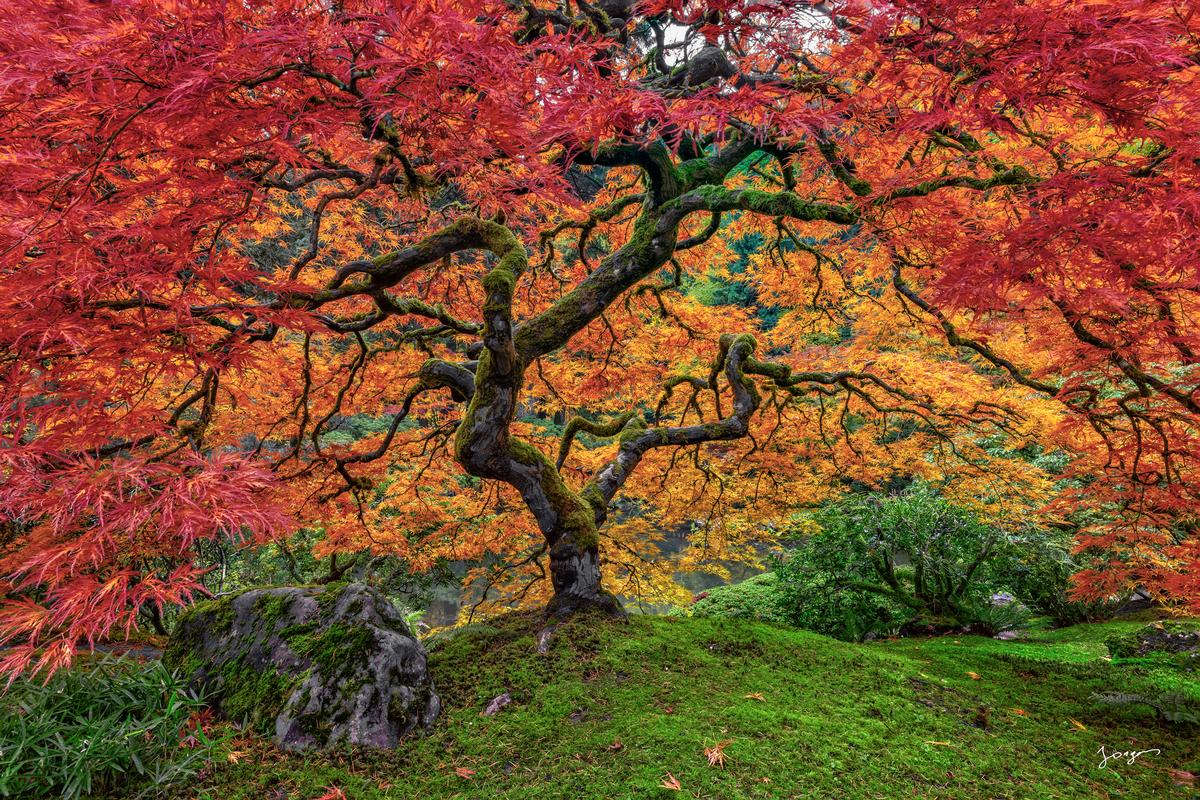
The Japanese Maple in the Portland Japanese Garden is one of the most famous trees in fine art photography — it became a defining subject for panoramic landscape photography when Peter Lik's image of it sold for extraordinary sums and introduced millions of people to the visual drama of a single Japanese maple in fall color. The image — a lone, crimson-leafed tree reflected in still water — is the perfect expression of what Japanese garden philosophy has always understood: that a single element in the right relationship to its surroundings is more powerful than any amount of visual complexity.
In Japanese culture the maple — specifically the practice of momiji-gari, or maple-leaf viewing in autumn — carries the same cultural weight as cherry blossom viewing in spring. The ephemeral quality of the fall color, lasting perhaps two to three weeks before the leaves drop, makes each autumn viewing a small ceremony of appreciation for things that don't last. That impermanence is the emotional core of the best Japanese maple photography.
Photographer's Field Notes — Portland Japanese Maple
- Peak color: Late October to mid-November — check local reporting for exact window, which varies by year
- Timing: Arrive early; garden opens at 10am and crowds arrive by 11
- Key condition: Still water requires calm, windless mornings — overcast skies and light fog bring out the red without harsh shadows
- Important note: Garden has restrictions on commercial photography — always check current guidelines before a professional shoot
5. That Wanaka Tree — Lake Wanaka, New Zealand
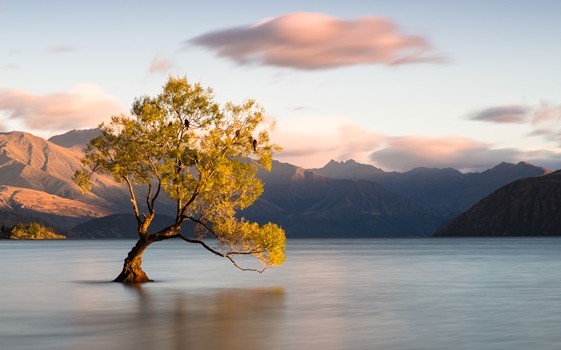
The Wanaka Tree — also known as "That Wanaka Tree" — has its delicately curved trunk seemingly growing directly out of the pristine waters of Lake Wanaka. Its story is almost impossibly humble: the tree started its life as a branch acting as a farmer's fence post over 80 years ago. The branch took root, grew into a willow tree, and the lake level rose around it. A photographer from Christchurch named Dennis Radermacher took a photo of the tree on a misty June day that went on to win the 2014 New Zealand Geographic Photograph of the Year. From that single image, the tree became a global phenomenon.
Photographer's Field Notes — Wanaka Tree
- Best season: Autumn — golden leaves against the water; mid to late April in New Zealand's Southern Hemisphere calendar
- Winter option: Bare branches appear almost sculptural against snowy peaks
- Access: Short walk from the Wanaka Watersports carpark — arrive before sunrise for best light and to beat morning crowds
- Technique: Wide-angle lens to incorporate the Southern Alps; long exposure at dawn smooths the lake to mirror-like stillness
6. Pando — Fishlake National Forest, Utah
Pando — Latin for "I spread" — is technically not a tree. It is 47,000 individual trees that are in fact a single organism, all connected by one massive underground root system. The entire grove shares identical DNA. At approximately 80,000 years old and 13 million pounds in total mass, Pando is considered one of the largest and oldest living organisms on Earth — the embodiment of the Tree of Life mythology made biologically literal.
Indigenous Ute peoples understood the Fishlake area as sacred ground long before Pando was scientifically identified — the trembling aspen groves that cover this plateau have always carried a particular spiritual quality, the constant movement of their leaves in even the slightest breeze creating an impression of a forest that is always quietly conversing with itself. In the oldest human stories, trees that talked were trees that held divine power.
Photographer's Field Notes — Pando
- Location: Fishlake National Forest, central Utah, near the town of Richfield
- Best season: Fall — aspen leaves turn gold in late September to early October
- Scale: A single organism covering 106 acres in color — unlike any aspen grove experience anywhere
- Comparison: Colorado aspens offer comparable fall color in the Rockies, but nothing matches the scale and significance of Pando
7. General Sherman Tree — Sequoia National Park, California
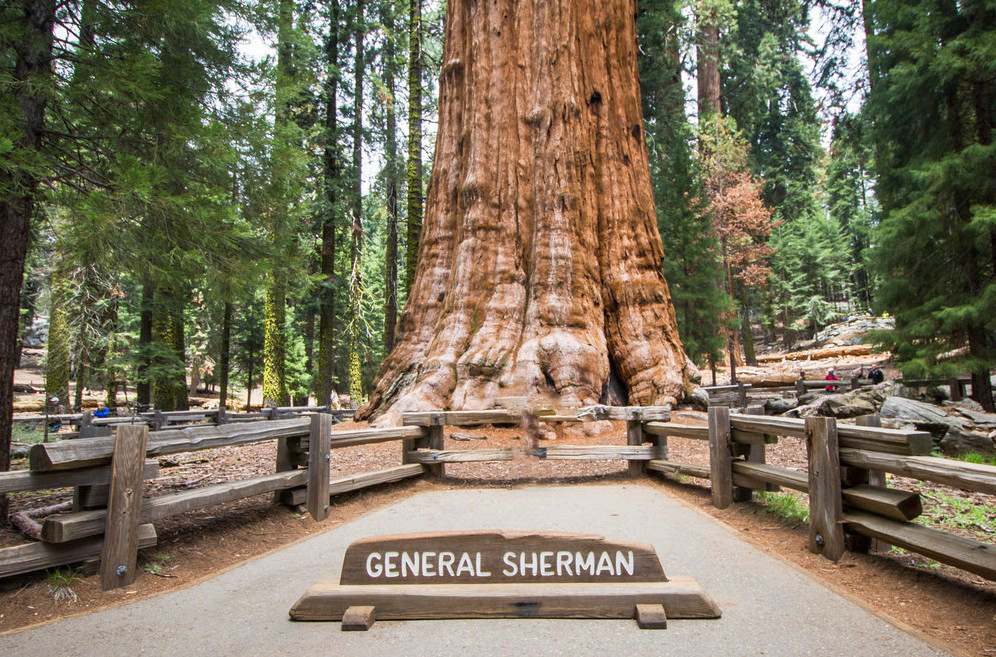
The General Sherman Tree in Sequoia National Park is the largest living thing on Earth by volume — 52,500 cubic feet of wood in a single organism. It is approximately 2,200 years old, 275 feet tall, and its base diameter is over 36 feet. It is not the oldest tree — the bristlecone pines have it by several thousand years — and it is not the tallest tree — the coastal redwoods hold that record. But in terms of sheer mass, there is nothing on Earth that comes close.
Sequoias were sacred to the indigenous Mono people of the Sierra Nevada, who lived alongside them for thousands of years. The Mono knew the groves as places of power and protection — places where the boundary between the human world and the spirit world was thinner than elsewhere. Entering a sequoia grove still produces in most visitors a reaction that is difficult to describe as anything other than spiritual.
Photographer's Field Notes — General Sherman Tree
- Access: Year-round via paved trail from the Wolverton Road parking area
- Lens recommendation: Ultra-wide (14–24mm) shot very close to the base — standard focal lengths fail to communicate scale
- Best light: Early morning light filters through the canopy in ways late afternoon light doesn't
- Condition note: Interior of a sequoia grove requires patience with low-light conditions — treat it like a cathedral
8. Giant Redwoods — Humboldt Redwood State Park, California
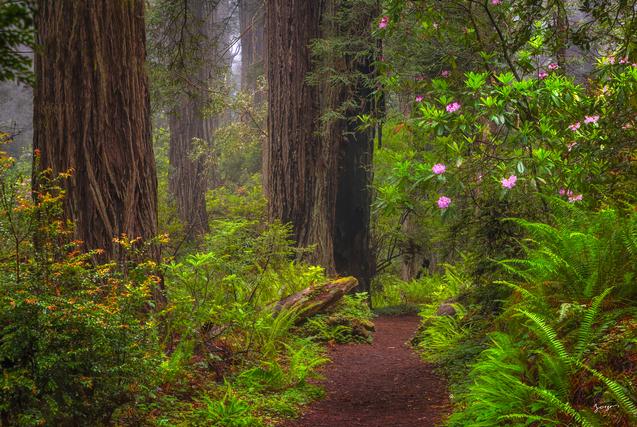
The coastal redwoods of Humboldt Redwood State Park in Northern California are the tallest trees on Earth. The tallest known individual — Hyperion, discovered in 2006 — stands 380 feet tall. Walking among them produces a silence that has no equivalent in any other environment. The scale is incomprehensible to the human nervous system, which didn't evolve to process organisms this large, and the mind eventually stops trying to categorize what it's seeing and simply receives it.
Redwood tree art is among the most powerful subjects in fine art photography — the combination of scale, age, filtered forest light, and the luminous quality of the coastal fog produces conditions that feel almost designed for photography. Eddie Jongas has photographed the Humboldt groves multiple times and considers them among the most emotionally affecting subjects he's encountered in over a decade of landscape photography.
Photographer's Field Notes — Humboldt Redwoods
- Defining condition: Morning fog in spring and early summer — creates depth, mystery, and diffused light that warms the red-brown bark
- Classic route: Avenue of the Giants — iconic and accessible
- Hidden gem: Rockefeller Forest — largest remaining old-growth redwood forest in the world, with fewer crowds and extraordinary images
9. Colorado Aspens in Fall — Rocky Mountain High
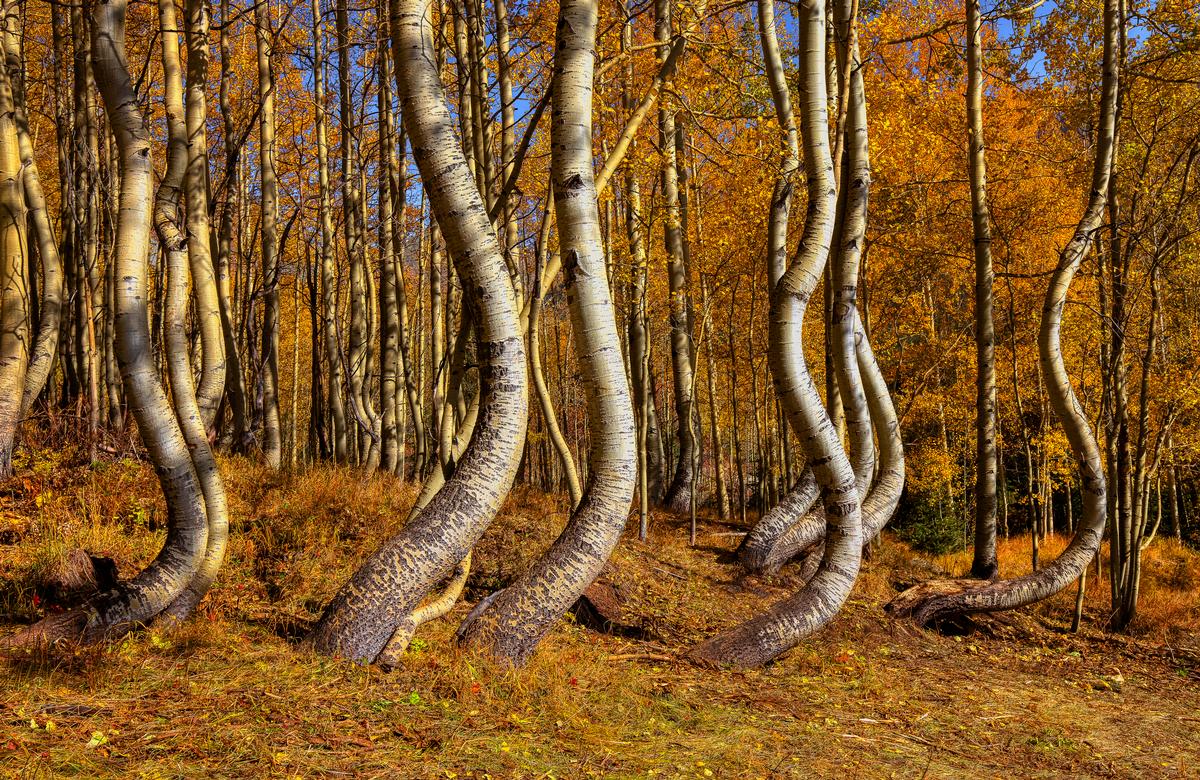
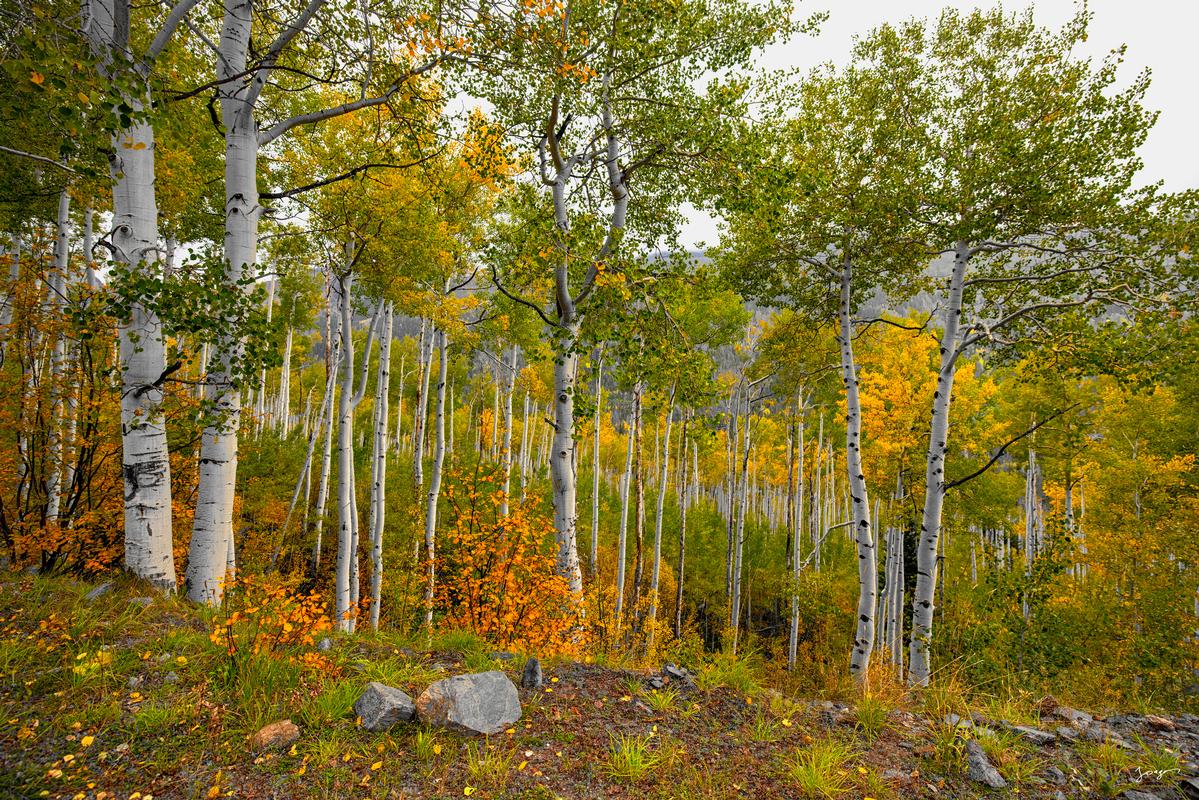
No autumn in North America rivals the aspens of Colorado for photographic drama. Aspen trees in Colorado turn gold between late September and mid-October — a window of two to four weeks that draws photographers from around the world to the Rockies. Aspen groves are clonal organisms, like Pando — each grove is typically a single organism sharing one root system, which means all trees in a grove change color simultaneously, producing the solid, unbroken walls of gold and orange that make Colorado fall famous.
The classic locations — Maroon Bells outside Aspen, the Dallas Divide near Ridgway, the San Juan Mountains — have produced iconic aspen photography that has appeared in everything from calendars to gallery walls. A common question is aspen vs birch — both have white bark and fall color, but aspens have round, trembling leaves and grow in high-altitude clonal groves, while birches have more triangular leaves and typically grow as individual trees at lower elevations.
Photographer's Field Notes — Colorado Aspens
- Peak color: Late September above 10,000 feet; mid-October in the valleys
- Best light: Cloudy days with occasional sunshine — prevents blown-out highlights in golden foliage
- Maroon Bells note: Most photographed location but most crowded — shuttle buses required in peak season
- Hidden gem: Kebler Pass road near Crested Butte — one of Colorado's largest aspen groves with a fraction of the crowds
The Fine Art of Tree Photography
The trees on this list are famous for the same reason any great fine art landscape photography subject is famous — they tell a story that requires no explanation. Famous landscape photographers from Ansel Adams to Galen Rowell to Peter Lik have returned to these subjects repeatedly, each finding something new in the relationship between a living tree and the light that defines it. You don't need to know the mythology of the Lone Cypress to feel something when you see it clinging to its granite ledge above the Pacific. You don't need to understand clonal biology to be moved by a mountain slope turning entirely gold in a single October week.
What you need is to be there in the right light — and then to bring the image home in a form worthy of what you witnessed. Beautiful tree photos printed on TruLife acrylic-mounted surfaces carry a luminous quality that connects the viewer to the original scene in a way that no screen can match. The depth, the color, the sense of being present in that light — that's what a fine art print is for.
Eddie Jongas's Tree Photography collection gathers his finest tree photography from California, the Pacific Northwest, and beyond — all available as signed, limited edition tree wall art on TruLife acrylic-mounted surfaces. Browse the collection
Eddie Jongas is a fine art landscape photographer based in Las Vegas, Nevada. His tree photography prints are available as TruLife acrylic-mounted limited editions, signed with Certificate of Authenticity and shipped free across the USA. Meet the artist
