In November 2024, Italian artist Maurizio Cattelan brought a piece called Comedian to a Sotheby's auction in New York. The piece consisted of a single ripe banana duct-taped to a wall. A crypto entrepreneur named Justin Sun paid $6.2 million for it. At the press conference, he ate the banana, announced that he would buy a new one from a grocery store to replace it, and went home. He had paid $6.2 million for a certificate of authenticity and a 14-page instruction manual explaining the precise height and angle at which to tape a fresh banana to a wall.
The internet reacted with predictable outrage. The art world reacted with predictable seriousness. Both reactions were exactly what the work was designed to produce. And the fact that you are reading this sentence means that a piece of grocery-store produce made you curious enough to seek out an explanation. That is conceptual art doing precisely what conceptual art has always done.

What Conceptual Art Actually Is
Conceptual art is art in which the idea or concept behind the work is more important than the finished physical object. In some cases there is no physical object at all. The sculpture, the painting, the photograph — these are just vehicles for delivering an idea. When the vehicle is a banana and the idea is a $6.2 million commentary on the absurdity of the art market, the vehicle is intentionally cheap.
Sol LeWitt, the American artist who helped define the movement in the 1960s, stated it as simply as it has ever been stated: "The idea becomes a machine that makes the art." If the idea is the machine, then everything else — the canvas, the marble, the photograph, the banana — is just the output. Whether that output is beautiful is beside the point. Whether it makes you think is the only point.
The three characteristics that most consistently define a conceptual work are dematerialization (the physical object is minimal, temporary, or entirely absent), institutional critique (the work actively questions the authority of museums, galleries, and the commercial art market), and use of text (words often replace images, because if the goal is to communicate an idea, language is the most direct tool available). A conceptual work might be a typed sheet of paper. It might be a performance that leaves nothing behind. It might be a set of instructions for a thing that nobody ever builds. As long as the idea is doing more work than the object, it qualifies.
The History — How One Upturned Urinal Started Everything
Conceptual art did not begin in the 1960s. It began in 1917 in a New York gallery submission, when a French artist named Marcel Duchamp signed a porcelain urinal with a fake name — "R. Mutt" — turned it upside down, and titled it Fountain. He forced a gallery to look at a plumbing fixture as art and, in doing so, shifted the entire question of what art could be from "Is this object beautiful?" to "Can an artist simply declare something to be art?" The gallery rejected it. The question never went away.
Duchamp called his approach "Readymades" — the act of selecting an existing mass-produced object, removing it from its functional context, and placing it in an art space. The object itself changed nothing. The context changed everything. A urinal in a bathroom is plumbing. A urinal on a gallery pedestal, signed and titled, is a philosophical provocation about the nature of artistic authorship. That argument took fifty years to fully explode, but when it did in the 1960s, it did so at scale.
By the late 1960s, a generation of artists felt trapped by the commercialized, object-obsessed art market. They did not want to make beautiful paintings for wealthy collectors to hang over their sofas. They wanted to dismantle the system that had made the sofa the final destination for all serious art. Joseph Kosuth's One and Three Chairs (1965) placed a real wooden chair, a photograph of that chair, and a printed dictionary definition of the word "chair" side by side, asking viewers to decide which element most accurately represented the thing itself. Yoko Ono published Grapefruit (1964), a book of text-based instructions for artworks that existed only in the reader's mind: "Listen to the sound of the earth turning." John Baldessari, after spending over a decade making conventional paintings, collected every canvas he had made between 1953 and 1966, had them cremated, baked the ashes into cookies, and called the whole process The Cremation Project — a literal act of destroying his artistic past to make a point about commercial value, artistic rebirth, and what an artist actually owes the market.
The Artists Who Built Entire Careers on Ideas
Sol LeWitt dedicated his life to the proposition that the artist's role is to write the score, not to play the instrument. His Wall Drawings — vast geometric murals covering entire museum walls in vibrant color — were never drawn by LeWitt himself. He wrote precise sets of instructions, and local teams of assistants executed them on-site. When a museum "buys" a LeWitt, they receive a signed certificate and a set of instructions. The drawing goes up for the exhibition and is painted over when the show closes. A fresh team executes it again at the next institution. The art is the instruction, not the wall.
Jenny Holzer built her career entirely out of language, moving it off gallery walls and into public space. Her Truisms — short, punchy, deliberately contradictory statements like "Abuse of power comes as no surprise" and "Protect me from what I want" — have appeared on massive LED billboards in Times Square, carved into stone park benches, projected onto the faces of famous buildings at night. She placed the art where people who would never visit a gallery would encounter it anyway, on their way to work, on lunch break, walking home. The message reaches the audience rather than waiting for the audience to come to the message.
Damien Hirst is the most financially successful living conceptual artist in the world, and he openly admits that he rarely physically makes anything himself. The Physical Impossibility of Death in the Mind of Someone Living (1991) — a 14-foot tiger shark suspended in a glass-paneled tank of formaldehyde — was assembled by taxidermists. For the Love of God (2007), a platinum cast of an 18th-century human skull encrusted with 8,601 flawless diamonds and a pear-shaped pink diamond at its center, was fabricated by jewelers. His ongoing Spot Paintings series — grids of perfectly uniform multi-colored circles, each named after a pharmaceutical compound — have been produced by his studio team for decades. Hirst's contribution is the idea, the provocation, the title, the conceptual frame. Everything else is execution, and he has never pretended otherwise.
Ai Weiwei uses conceptual art as political weaponry. For Dropping a Han Dynasty Urn (1995), he photographed himself in three successive frames: holding a 2,000-year-old cultural artifact, releasing it, watching it shatter on the floor. By documenting the destruction of a genuinely irreplaceable ancient object, he made a statement about how political regimes assign and destroy cultural value, and about what it means for an artist to have the audacity to make that decision. The Chinese government had him imprisoned. The photographs are now in museum collections worldwide.
Tino Sehgal has pushed dematerialization to its absolute logical extreme and built an internationally successful career doing it. He creates what he calls "constructed situations" — live encounters between museum visitors and gallery performers who might break into song, engage a visitor in a philosophical conversation, or skip through the room. He refuses to allow any photographs, videos, written press releases, or printed exhibition catalogues of his work. When a museum acquires a Sehgal piece, the contract is entirely oral, sealed with a handshake in the presence of a notary. There is no paper, no record, no object. Just the memory of the encounter and the legal fact that it occurred.
"The idea becomes a machine that makes the art."
Andy Warhol and the Conceptual Dimension of Pop Art
Andy Warhol is officially the king of Pop Art, but you cannot fully understand his genius without understanding how deeply his practice overlaps with conceptual art. The difference is that while pure conceptual artists abandoned the physical object, Warhol turned the creation of the physical object itself into the conceptual statement.
Before Warhol, the art world placed supreme value on the unique mark of the artist's hand — van Gogh's impasto brushstrokes, Pollock's drips, the specific trace of a specific human being in physical contact with a specific surface. Warhol adopted industrial silkscreen printing, a commercial mass-production technique, and removed his own hand from the work entirely. He told an interviewer: "I want to be a machine." He named his studio The Factory. He hired assistants to produce work under his direction and called the results Warhols. The conceptual argument was explicit: the value of the art lies in the choice of subject and the execution of the idea. Not in the artist's hand. Not in the uniqueness of the object.
When Warhol exhibited his Brillo Boxes in 1964 — wooden replicas painted to look exactly like commercial grocery store shipping cartons — the philosopher Arthur Danto realized that Warhol had proved something fundamental: the only thing separating a Brillo box in a grocery store from a Brillo box in a museum was the conceptual framework around it. The object was identical. The context was everything. Duchamp had argued this with a urinal in 1917. Warhol proved it with a Brillo box in 1964. The banana proved it again in 2024. The argument keeps winning.
The Most Expensive Conceptual Art Ever Sold
Because conceptual art is based entirely on ideas, the prices it commands at auction have always provoked the most extreme reactions the art world produces. They reveal, more clearly than anything, how the market assigns value to things that have no inherent material worth.
Record Conceptual Art Sales
- Comedian (Cattelan, 2024): $6.2 million — a banana duct-taped to a wall, sold with a certificate of authenticity and installation instructions.
- America (Cattelan, 2025): $12.1 million — a fully functional 18-karat solid gold toilet, previously installed at the Guggenheim and later stolen from Blenheim Palace.
- The Golden Calf (Hirst): $16.5 million — a real bull calf preserved in formaldehyde with hooves and horns cast in solid gold.
- For the Love of God (Hirst, 2007): ~$100 million (reported private sale) — a platinum skull encrusted with 8,601 flawless diamonds.
- Io Sono (Garau, 2021): €15,000 — a completely invisible, immaterial sculpture sold with a certificate and installation instructions for an empty 5×5 ft space.
And then there is the banana. Justin Sun's $6.2 million grocery store banana puts a number beside something that most people assume cannot be priced. To put that number in context: it is comparable to the price of the most expensive photograph ever sold at public auction, which achieved $6.5 million. That photograph was the product of decades of technical mastery, equipment, travel, and a specific unrepeatable moment of light. Cattelan's banana was a piece of fruit and a roll of duct tape. Both sold for essentially the same amount. The conceptual art world considers that equivalence to be the entire point. The photography world considers it an outrage. Neither reaction is wrong.
The Invisible Sculpture — When Nothing Becomes Something
The logical endpoint of dematerialization arrived in May 2021, when Italian conceptual artist Salvatore Garau auctioned off Io Sono ("I Am") — a completely invisible, entirely immaterial sculpture — for €15,000 (approximately $18,300). The winning bidder received two things: a Certificate of Authenticity signed and stamped by the artist, and a set of strict installation instructions. The invisible sculpture had to be placed in a private home, within an unobstructed empty space measuring exactly five feet by five feet.
Garau's defense against the inevitable charge of fraud was philosophical rather than apologetic. He argued that the space was not empty at all. Drawing on quantum physics and the Heisenberg uncertainty principle, he maintained that a vacuum is full of energy, that "nothing" has measurable weight, and that the sculpture exists as "immaterial" rather than "invisible" — made of air and spirit, residing in the imagination of the viewer. The Certificate of Authenticity, in this framework, is not proof that a thing exists. It is the thing itself: a legal document transferring the conceptual ownership of an idea from the artist to the buyer.
Whether or not you find that argument convincing, it is structurally identical to the argument that a signed instruction set for a Sol LeWitt Wall Drawing is more "real" than the paint on the museum wall. The invisible sculpture simply removed the last remaining physical component from the transaction.

How Conceptual Art Translates into Photography
Photography seems, at first, to be the medium most naturally opposed to conceptual art. A camera records the world. It captures what is in front of it. The skill lies in being in the right place at the right time with the right technical command — precisely the kind of direct craft that conceptual art was built to question. Yet conceptual photography is now one of the most important and recognized genres in the medium, and several photographers have built museum-level careers by treating the camera not as a recording device but as a tool for constructing visual arguments.
Cindy Sherman is arguably the most famous living conceptual photographer. For her landmark Untitled Film Stills series (1977–1980), she photographed herself in 69 different guises — costumes, wigs, makeup, staged settings — each image appearing to be a frame from a 1950s Hollywood B-movie. The career girl, the vulnerable ingenue, the lonely housewife, the femme fatale. She never played herself. She played the female characters that cinema had built from clichés, and in doing so made a photographic argument that these archetypes were not reflections of real women but constructions of a male-dominated film industry. Every image in the series is a staged lie that tells a structural truth. The series is held in major museum collections worldwide and defined the concept of identity-based photography for a generation.
Bernd and Hilla Becher took the opposite approach — typologies and systems. They spent decades traveling across Europe and North America photographing industrial structures: water towers, cooling towers, coal bunkers, gas tanks. Every photograph was shot under the same overcast sky, from the same straight-on angle, with the same flat, shadowless light. They then arranged the images in strict grids, identical in scale and framing, allowing viewers to compare the subtle variations in form across dozens of examples of the same utilitarian object. By removing all photography's usual tools — dramatic light, strong angle, emotional storytelling — they forced the viewer to engage with the structures purely as forms. The industrial architecture became sculpture. The Bechers essentially founded what is now called the Dusseldorf School of Photography, whose graduates include Andreas Gursky and Thomas Struth, two of the most valuable living photographers in the world.
Thomas Demand creates photographs that appear to document real spaces until you notice that something is wrong. There are no textures. No dust. No organic imperfections. That is because Demand begins with a politically or historically significant photograph from the news media — a crime scene, a famous person's private space, the aftermath of a disaster — and meticulously recreates the entire scene by hand in his studio, out of colored paper and cardboard, at a one-to-one scale. He photographs the paper model with a large-format camera and then destroys the model. The photograph you see in the museum is a picture of a paper replica of a media image of a real event. It is three levels removed from reality, and every level is part of the conceptual argument about how photographic media shapes our understanding of historical events.
Hiroshi Sugimoto uses long exposure as philosophical meditation. For his Theaters series, he sets up his large-format camera inside a historic movie theater, opens the shutter as the film begins, and leaves it open until the movie ends — often two hours or more. The projected light from the entire film over-exposes the center of the frame into a glowing rectangle of pure white. The theater fills the surrounding darkness. The resulting image shows an empty glowing screen inside a dark room, compressing an entire story and two hours of time into one perfectly still moment. He has been exploring permutations of this approach — how photography relates to time, memory, and perception — for over four decades.
Richard Prince built a legendary and legally controversial career by not taking photographs at all. His Cowboys series consisted of actual Marlboro cigarette advertisements, cropped to remove the text and logo, re-photographed from the magazine page, and blown up to large-format fine art prints. By isolating the imagery from its commercial context, Prince forced viewers to see what the imagery was actually doing — constructing and selling a myth of American masculine identity. The photographs were not his. The idea that they needed to be removed from their context to be visible as ideology was entirely his. The Museum of Modern Art owns one. The legal battles over copyright ran for years.
Famous Examples — What Conceptual Photography Actually Looks Like
To understand how conceptual photography functions in practice, it helps to look at specific series where the idea driving the work is as visible as the image itself. In each of these examples, the technical act of pressing the shutter is secondary to the system, the staging, or the philosophical framework the artist constructed before the camera was ever pointed at anything.
John Baldessari — Throwing Three Balls in the Air to Get a Straight Line (1973) is one of the purest distillations of conceptual photography ever made. Baldessari stood in front of a camera and threw three orange balls into the air repeatedly, attempting to capture a single frame in which they aligned in a perfectly straight horizontal line. The resulting 36-photograph series documents his attempts. Some frames come close. None achieve the goal. The series is a direct parody of the academic pursuit of perfect composition in traditional art — demonstrating, with deadpan humor, that the rigid application of compositional rules to a random physical event produces only documentation of failure. The concept is the work. The photographs are the evidence.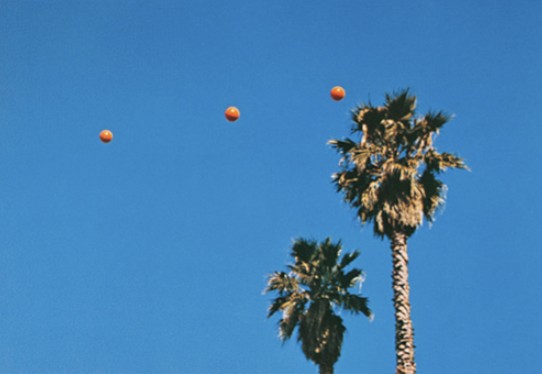
Jeff Wall — A Sudden Gust of Wind (after Hokusai) (1993) is one of the most technically elaborate conceptual photographs ever produced. Wall spent over a year planning a meticulous recreation of Katsushika Hokusai's famous 19th-century Japanese woodblock print Travellers Caught in a Sudden Breeze at Ejiri. He hired actors, scouted a flat plain in British Columbia, and photographed individual elements across multiple shooting days before compositing dozens of separate images into one seamless large-format transparency displayed on an illuminated lightbox. The scattered papers appear frozen in mid-air in a moment that never existed in real time. What looks spontaneous is entirely constructed. Wall's conceptual argument is about photography's fundamental relationship to truth — specifically, its ability to fabricate a "decisive moment" that was never actually decided by anything except the artist's deliberate planning.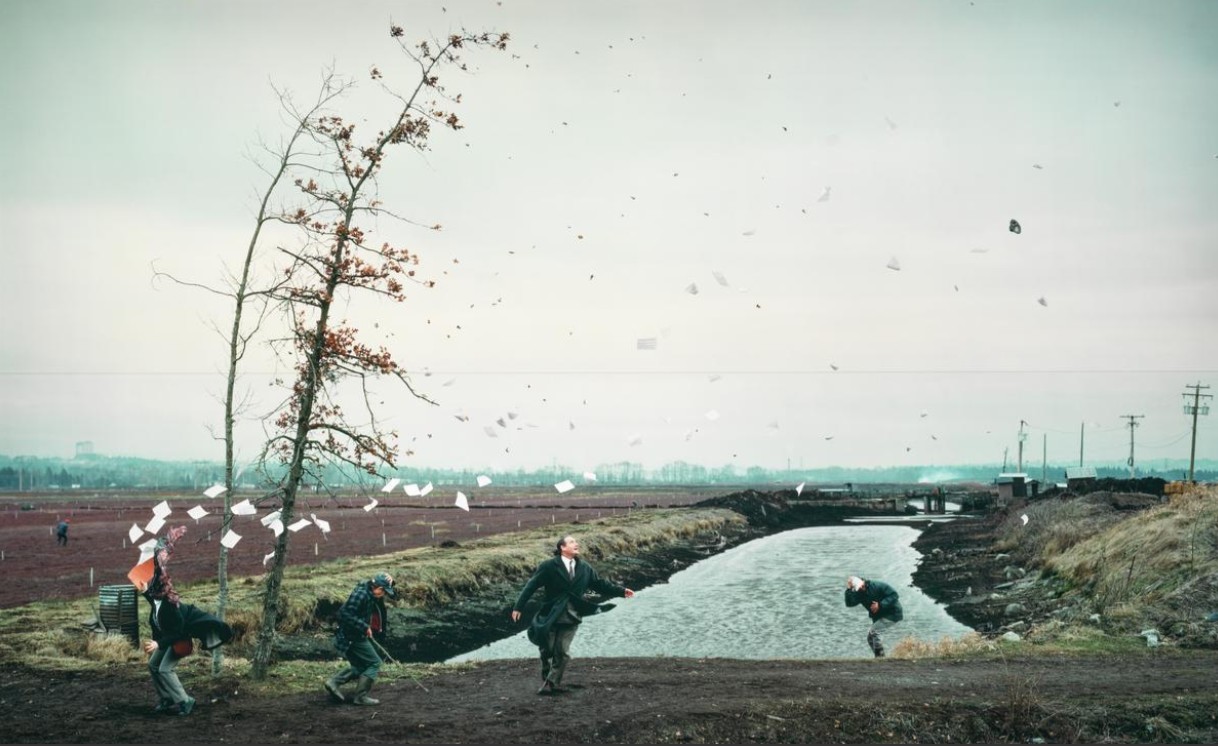
Sophie Calle — The Hotel (1981) combines conceptual photography with investigative journalism and ethical provocation. Calle obtained a job as a chambermaid at a hotel in Venice, Italy. For three weeks, while cleaning guest rooms, she photographed unmade beds, the personal objects left out by guests, the contents of open suitcases, and read the private diaries people had left on their nightstands. The final piece pairs stark black-and-white photographs of these intimate, private details with her own written diary entries describing the guests she observed but never met. The work reconstructs strangers' identities entirely from the physical evidence of their presence. It is a conceptual investigation of privacy, voyeurism, and what the objects we live among reveal about who we are — and a pointed question about whether a photograph of a person's belongings constitutes a portrait of that person.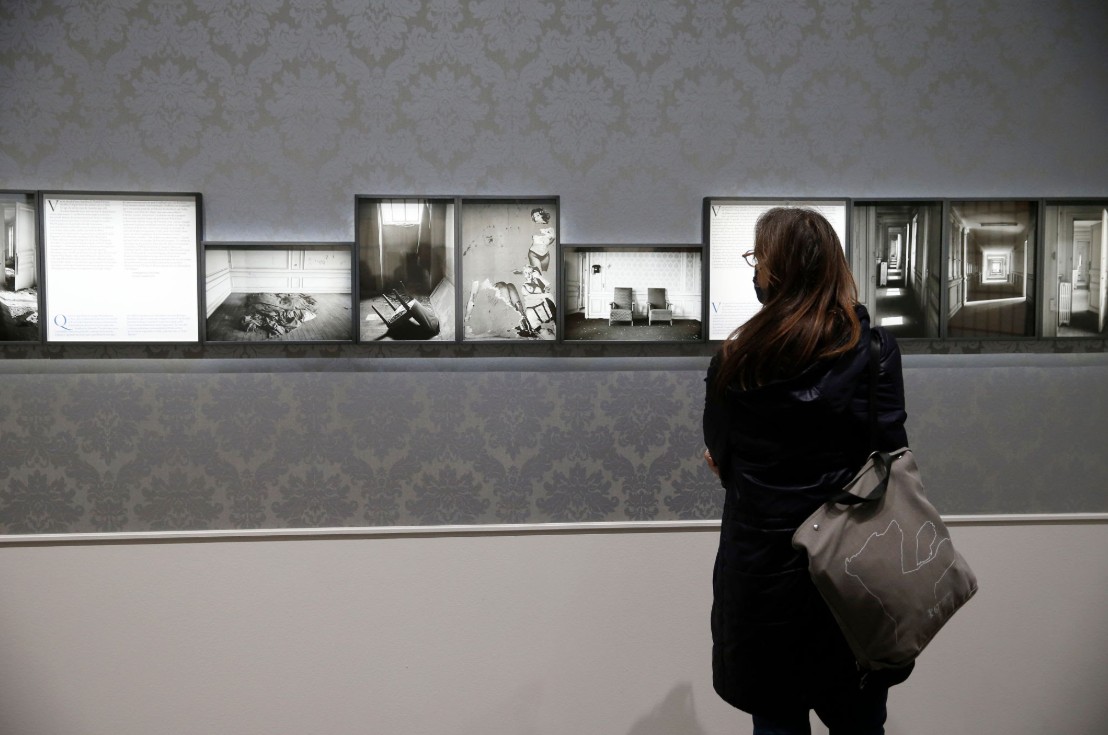
William Wegman — Man Ray Portfolio (1970s) used his Weimaraner dog — named Man Ray after the Surrealist photographer — as a completely cooperative, entirely neutral performer in a sustained series of conceptual visual puns. Rather than sentimental pet photography, Wegman placed his dog in elegant human clothing, arranged him in geometric poses, and photographed him in formats that mimicked high-fashion portraiture, corporate headshots, and Surrealist paintings. By projecting human identities, professional roles, and social expressions onto an animal with no investment in any of them, Wegman made a sustained argument about how much of human dignity and identity is performative rather than inherent. The dog is indifferent. The human roles he occupies are the joke. The joke is also the point.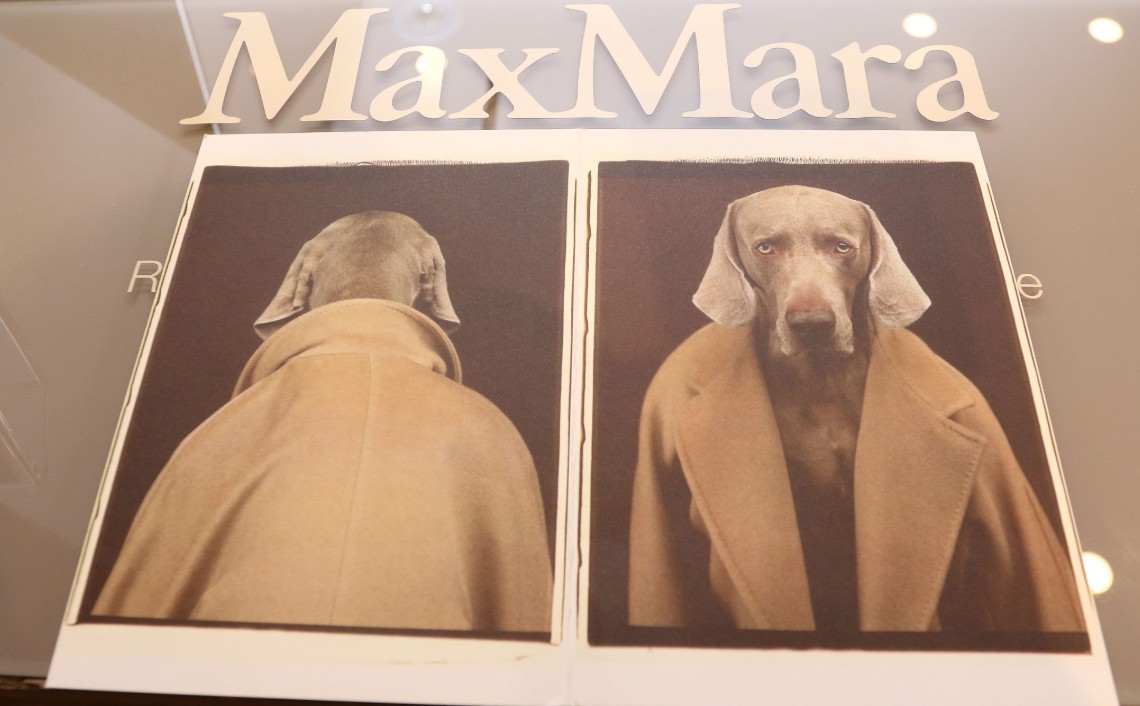
The Museums That House Nothing
The closest the world ever came to a dedicated conceptual art museum was the Museum of Conceptual Art (MOCA) in San Francisco, founded in 1970 by artist Tom Marioni on the second floor of a building directly above a dive bar. It did not own a permanent collection of objects. Its most famous recurring exhibition was a weekly Wednesday night gathering where artists drank free beer and talked. Marioni declared the social act of drinking beer with friends a "social sculpture" and ran this exhibition program for fourteen years before the museum closed in 1984. It was the purest conceptual art institution in history: a museum whose primary artwork was the fact of being a museum.
Today, the major contemporary art institutions have had to completely reinvent how they operate to accommodate conceptual work. The Guggenheim in New York famously installed Cattelan's solid gold toilet in a working restroom and watched 100,000 people queue to use it. The Tate Modern in London dedicates its vast Turbine Hall exclusively to monumental conceptual installations. MoMA holds the original documentation of early Sol LeWitt works, the instructions and certificates that are the actual artworks rather than the walls they were drawn on. The Museum Boijmans Van Beuningen in Rotterdam regularly executes Wim T. Schippers' Peanut Butter Floor, in which museum staff use plastering tools to spread over 800 pounds of smooth peanut butter evenly across a gallery floor according to the late artist's strict instructions. These institutions don't just hang things. They act as executors of ideas, running the machine that the art demands be run.
Conceptual Art's Current Crisis — What Happens When AI Can Generate Ideas Instantly
Conceptual art is currently experiencing the most significant philosophical crisis in its 60-year history, and the cause is artificial intelligence. The movement was built on a single foundational claim: the idea is the art. The concept is more valuable than the craft. But now anyone can type a prompt into a generative AI system and receive in seconds a complex, multi-layered visual or conceptual framework that would previously have required months of research, thought, and artistic development.
If anyone can generate a sophisticated idea in two seconds, what is left of an art form built on the primacy of the idea? This question has produced a visible and significant shift in what collectors and galleries are rewarding. After decades of conceptual art's dominance, the market is swinging back toward physical craft, deliberate process, the visible trace of the human hand. Paintings with raw texture. Prints that show the mark of the maker. Limited edition photographs produced with the technical mastery and physical presence that digital fabrication cannot replicate. The pendulum has swung before. It will swing again. But the current moment is one in which the art world is actively reconsidering what it means for something to be made rather than generated.
For fine art photography specifically, this is a validating moment. The discipline was built on the argument that a camera in skilled hands, in the right place, at the right moment, can produce an image of genuine and lasting value — one that is specific to a place, a quality of light, a split second of the world existing in a particular way that it will never exist in again. That specificity is what generative AI cannot reproduce. It can generate any image of any landscape. It cannot be standing at the edge of the Morro Bay estuary at 5am when the light does something that has never happened exactly that way before and will never happen exactly that way again. The idea is the machine, as LeWitt said. But sometimes the machine needs to be standing in the cold with a camera.
What Conceptual Art Changed Forever
Conceptual art succeeded so completely that it became invisible. The water the contemporary art world swims in. When you look at modern advertising's use of irony and self-reference, internet memes that derive their entire meaning from context rather than content, streetwear fashion releases where a logo on a blank t-shirt sells for hundreds of dollars primarily because of the idea of who made it — you are looking at concepts that were directly borrowed from the conceptual art revolution of the 1960s. The separation of value from material was not an art world eccentricity. It turned out to be a description of how the entire modern economy works.
The Certificate of Authenticity — that piece of paper that came with the invisible sculpture, with the banana, with every Sol LeWitt instruction set — is also the piece of paper that comes with every limited edition Jongas fine art photography print. Not because photography is conceptual art, but because both inhabit the same framework that Duchamp initiated in 1917: the idea that the value of an artwork is not inherent in the physical object but is assigned by a combination of artistic intention, institutional recognition, and the legal document that ties a specific authenticated object to a specific authenticated artist.
A banana duct-taped to a wall at the right angle, with the right certificate signed by the right artist, sold for $6.2 million. A landscape photograph of a place that exists in a particular light for forty minutes at dawn, in a strictly controlled edition of 100, signed and authenticated, is worth something specific and real for the same underlying reason: someone with an idea and a credential decided what this object is, and the market agreed. The mechanism is identical. The beauty in one case is optional.
Read the Andy Warhol article — how Pop Art and Conceptual Art converged →
Read about Cindy Sherman — the most famous conceptual photographer →
Explore the Jongas Abstract Photography Collection →
Eddie Jongas is a modern fine art photographer based in Las Vegas, Nevada. His TruLife acrylic-mounted limited edition prints are available exclusively through jongasfineartphotography.com. Free shipping to all 50 states.
