When the first film camera arrived the painters panicked. When the internet arrived the retail stores panicked. When Uber came on the scene, taxis thought it was the end of their world… And rightfully so.
Every new breakthrough in technology produces the same reaction: excitement from some people, existential dread from others, and a period of genuine uncertainty about what the rules are and who gets to make them.
Artificial intelligence arriving in the art world isn't much different from those disruptions mentioned earlier. The only way it dwarfs them is in speed and scale. AI image generation went from a novelty to a serious creative and commercial force in roughly three years. It is now selling at Sotheby's for over a million dollars, winning fine art competitions, and generating lawsuits from artists whose work was used to train it without express permission or compensation.
The art world, however is using the same argument it always used when something new shows up — is this art or not really? — but this time the argument has considerably higher stakes and considerably less time to resolve itself.
With AI rapidly advancing and people having existential fears about it on one side, while many rejoice by it's arrival on the other. It is best I address this subject and how it relates to the world of arts from my humble artist's point of view! Here it is:
Has AI-generated art sold at major auction houses?
Yes. Edmond de Belamy by the collective Obvious sold at Christie's in 2018 for $432,500 — far exceeding its $10,000 estimate. In 2024, a portrait of Alan Turing created by the AI robot Ai-Da sold at Sotheby's for $1.08 million, setting the record for the highest price paid for a work made by an AI-powered robot.
Have AI-generated images won photography competitions?
Yes. In 2023, photographer Boris Eldagsen won the Sony World Photography Awards Creative Open category with an AI-generated image, then publicly declined the prize to expose the issue. In 2022, an AI-generated image won first place in the Digital Arts category at the Colorado State Fair Fine Arts Competition. Both incidents prompted major rule changes across the photography competition world.
Is AI art the same as fine art photography?
No — they are fundamentally different processes. Fine art photography begins with light physically captured by a lens onto a sensor, with human creative decisions shaping every stage from composition to processing. AI image generation synthesizes pixels from text prompts using neural networks, without any optical capture of real light. The results may look similar, but the process and authorship are entirely different.
Does Jongas Fine Art Photography use AI?
Approximately 95% of the Jongas collection is purist photography — real locations, real light, manual RAW processing with no AI generation or enhancement. Two images in the collection are digital composites and are clearly labeled as such in their descriptions. No AI-generated imagery is sold as photography without disclosure.
Are cameras already using AI?
Modern smartphones use AI-assisted processing — multi-frame stacking, semantic segmentation, neural denoising — to produce their JPEG outputs. Traditional cameras use computational demosaicing even without deep learning. The accepted distinction is between reconstruction (interpreting real light from a sensor) and invention (generating pixels that were never in front of a lens). Fine art photographers typically shoot in RAW to retain full manual control over all processing decisions.
Real Impact of AI to the Art World
When most people hear "AI art" they picture a person typing a description into a box and getting a finished image on the computer screen. That's one version of it — and one that creates most of the controversy on the subject. But AI is also being used across the full spectrum of creative work in ways that range from genuinely revolutionary to simply useful and even necessary.
At the useful and necessary end: AI tools are helping artists streamline repetitive tasks — color correction, image cleanup, or removing unwanted elements from a photo. Style transfer tools allow artists apply the visual language of one art era to new, creating new aesthetic combinations faster than any manual process. AI is being used to restore damaged paintings — analyzing deteriorated surfaces and reconstructing missing detail based on patterns in the surrounding area of the image. It's being used to authenticate artworks by analyzing brushstroke patterns too subtle for the human eye to compare reliably across thousands of works.
At the revolutionary end: generative AI tools — Midjourney, DALL-E, Stable Diffusion, Adobe Firefly — can produce fully realized, photorealistic or stylized images from a text description in seconds. No camera. No brush. No studio. A person types "baroque portrait of a woman holding a quantum computer in a Renaissance chapel, golden hour light, oil painting style" and thirty seconds later has something that would have taken a skilled painter weeks to get done. These images are going to auction houses, winning competitions, and triggering a complete change of definition of what the word "artist" really means.
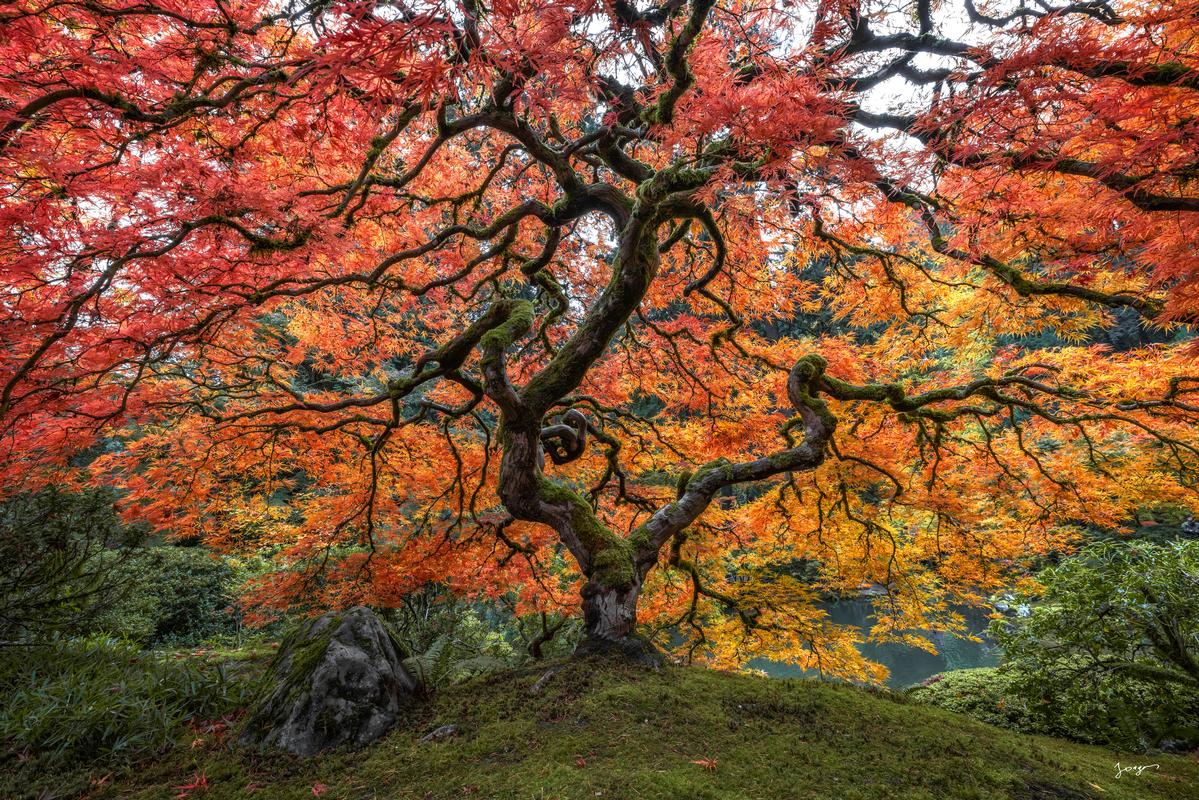
AI Art at Auction — The Sales That Changed Everything
The moment "AI Art" conversation shifted from theoretical to financial was October 2018, when Christie's auctioned a painting called Edmond de Belamy. It was a blurry, slightly unsettling portrait of a fictional man — no one specific, no historical reference, just a face the algorithm generated after being trained on 15,000 portraits painted between the fourteenth and twentieth centuries. The French art collective that made it, called Obvious, estimated it might sell for $7,000 to $10,000. Instead, it sold for a hefty $432,500!
After the shock was over, the art world had a collective moment of recalibration… A machine — or more precisely, a group of people who trained and prompted a machine — had produced something that a major auction house sold for nearly half a million dollars. The questions that followed were uncomfortable and remain unresolved: Who is the artist? Is it the people who wrote the code? Is it the people who trained the data set? Or the algorithm itself? And does any of that matter if someone is willing to pay $432,500 for the artwork produced?
Then in March 2019, Sotheby's London sold "Memories of Passersby I" by German artist Mario Klingemann for $51,000. Klingemann's work is more interesting than a single portrait created by Obvious in many ways — first of all, it is not an artwork per se, it's an autonomous installation of two monitors connected to computer system that continuously generates real-time portraits of non-existent people. The portraits change constantly and never repeat. Without further human involvement the system generates faces from nothing, endlessly. And the question of authorship here is quite complex: Klingemann designed the system, but the system runs itself (produces art) without human intervention.
Then, in November 2024, came the sale that set AI Art record. A portrait of computer scientist Alan Turing, titled AI God: Portrait of Alan Turing, created by Ai-Da — a humanoid robot that uses AI algorithms, eye cameras, and a robotic arm to paint physical canvases — sold at Sotheby's New York for $1.08 million. It is the highest price ever paid for a work created by an AI-powered robot. The painting is a physical oil-on-canvas work. The robot made every brushstroke. A human team designed and operates the robot. The question of who made the painting is, again, complicated.
"The question of whether AI art is 'real art' will not even come up. It will be part of some genre, just like computer graphics is used today to make advertisement and movies."
Beyond the headline sales: digital artist Refik Anadol uses machine learning models trained on massive data sets — nature archives, space telescope images, decades of urban data — to create large-scale generative installations and digital tokens that routinely sell at Sotheby's and Christie's for six figures. An autonomous AI called Botto generates thousands of images weekly; a community of token holders votes on which to mint as NFTs for auction, accumulating millions in sales. Generative code art projects like Tyler Hobbs' Fidenza have seen individual pieces change hands on secondary markets for over a million dollars.
We can see that market conclusion is pretty clear: AI-generated work has commercial value. The more important question is whether it has artistic value — and that's where the arguments get heated the most.
For a broader look at how AI-Art prices compare to the history of "real" art sales, check out the most expensive artworks ever sold article I wrote on this blog earlier.
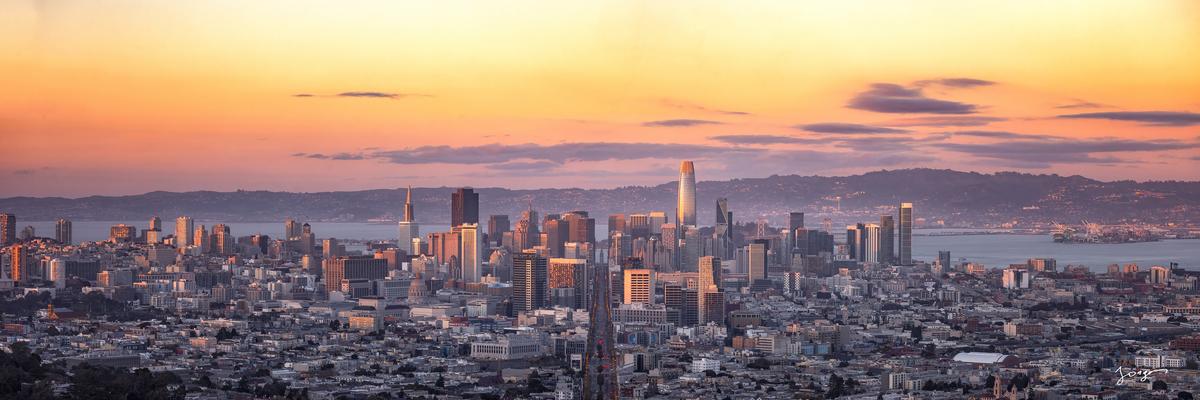
The Competition Controversies — When AI Started Winning
The most famous case: in August 2022, game designer Jason M. Allen entered a print titled Théâtre D’Opéra Spatial into the Digital Arts category at the Colorado State Fair Fine Arts Competition. The image — a retro-futuristic, Baroque-style space opera scene with elaborate architecture and dramatic lighting — was generated using Midjourney. Allen ran hundreds of prompts, upscaled the result, and did some cleanup in Photoshop before printing it. He won first place and $300. He also disclosed that it was AI-generated. The judges apparently either didn't know what that meant or didn't consider it disqualifying. The art community found out afterward and the backlash was swift and outspoken.
The photography world had its own version of AI-Art controversy in 2023. Boris Eldagsen, a German photographer, submitted an AI-generated image called Pseudomnesia to Sony World Photography Awards: The Electrician — a striking black and white image of two women that looked stylistically like a vintage photograph. It won in the Creative Open category. Then Eldagsen publicly declined the prize and revealed the image was AI-generated. His stated reason: he wanted to provoke a conversation about whether AI images belong in photography competitions. Soonafter the Sony Awards updated their rules. Most major photography competitions now have explicit AI disclosure requirements or outright bans.
A third case worth knowing: Kristina Makeeva, a photographer with a large following, submitted images to various competitions and publications. But later, the investigation suggested her images included substantial AI generation or enhancement. The cases were less clear-cut than Eldagsen's deliberate provocation — Kristina argued the images were photographic — but they sparked debate about the grey zone between AI enhancement and AI generation, and how competitions can possibly police the line between the two.
The pattern across all these cases is the same: the existing rules and categories weren't written for a world where someone can type a description and receive a convincing image. The competitions, the galleries, the auction houses, the publications — all of them are writing new rules in real time, for a technology that moves faster than institutional art process can keep up with.
AI Art Copyright Problem — Who Owns It?
Beside the general classification of AI's place in the artworld also sits a legal argument that is hard to miss: AI image generators were trained on billions of images scraped from the internet, the vast majority of them created and owned by human artists who were never asked, never compensated, and never told their work would be used to train a commercial product.
The lawsuits have started. Getty Images sued Stability AI — the company behind Stable Diffusion — for training their model on Getty's licensed image library without permission. A class action lawsuit was filed against Stability AI, Midjourney, and DeviantArt by a group of artists including Sarah Andersen, Kelly McKernan, and Karla Ortiz. Where the main legal arguments center on whether using copyrighted images for AI training constitutes copyright infringement, and whether the outputs of AI models trained on those images are themselves infringing.
The courts are still working through these questions. The outcomes will shape the entire AI creative industry — if training on copyrighted images is ruled infringement, the business models of most major AI image generators would need to change fundamentally. If it's ruled permissible, artists will need to make peace with the fact that their work can be harvested at scale without compensation.
There's also the copyright question on the other side: who owns an AI-generated image? The US Copyright Office has repeatedly ruled that AI-generated images — where the creative decisions were made by the algorithm rather than a human — are not eligible for copyright protection. Images with sufficient human creative input in the prompting or post-processing process may qualify. The line between sufficient and insufficient human input is being drawn, case by case, in an ongoing series of administrative and legal decisions.
One fact remains clear, the more naturally created by a human hand or camera held in human hand, the more protected your artwork will be. Seems like a no-brainer to me.
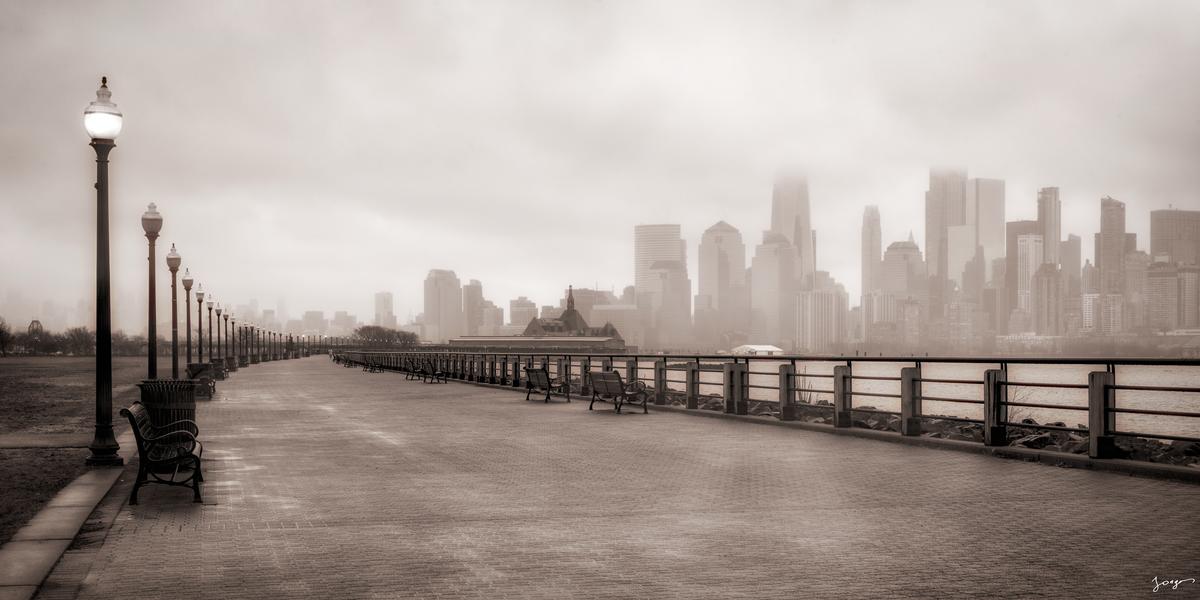
Is AI Art Actually Art? The Big Question
To answer whether AI art is real art, you first have to answer a harder question: "what is art" in the first place?
That sounds like a philosophy class question, but the answer is actually pretty practical. And understanding it helps explain why so many people feel uneasy about AI images, even when they can't quite put the feeling into words.
For most of history, people thought art was about skill. The painter who could make a face look real, the sculptor who could make marble look like skin — that kind of technical mastery was what defined what real art was. If you read my article on this blog about Classical Fine Arts you will realize that institutions in France like the Académie des Beaux-Arts not only forced people to paint in certain way, but also were literally dictating who can be accepted to become an artist — they literally tried to have monopoly on art!
With discovery of camera, which was also a very technical way to produce art, things started to change, and in the twentieth century artists like Marcel Duchamp started arguing that the idea behind a work mattered more than the skill used to make it. He famously put a factory-made urinal in an art exhibition in 1917, called it Fountain, and said it was art because he decided it was and placed it in that context. The art world argued about it for decades. But this was the beginnings of conceptual art.
Most people now agree that art is not just about physical skill — it's about intention, meaning, and what the work communicates. Hence the simplest modern definition of art is this: art is deliberate human expression that uses some kind of medium — paint, photography, sound, code, movement or performance — to share something about what it feels like to be a human. The medium of expression can be anything. What can't be removed is the human expressing themselves, and the intention behind the work being produced.
Why Are People Attracted to Art?
Now here's the real question: why do people actually care about art made by other people? Why does it matter who made it? And more importantly why are they attracted to it? (Confession: [speaking of AI] for this section seeking some help, I asked AI to give me a list of few main reasons people buy art and these are the reasons it came up with! lol)
The first reason was connection. When a piece of art genuinely moves you, what you're feeling is recognition, acceptance and synchronicity — the realization that another person experienced something the same way you would. They did it through creation and you did it through observation. And that's not just an aesthetic reaction. It's a social one. Art is one of the ways human beings connect to each other and remind that we are not alone in what we feel, how we perceive things and how we're linked on deeper level.
The second reason is intention. People don't just admire what an artwork looks like. They also think of and value the idea behind it — the fact that a specific human mind made specific choices about composition, color, subject, and it's meaning. Knowing that a person decided to make exactly this thing, in exactly this way, because it meant something to them — that knowledge changes how you experience their work. It grants the artwork a certain quality of weight behind it that a technically identical image, made by an AI program with no inner life, could never do.
The third reason is story. All art reflects the culture and the moment it originated from. Van Gogh's swirling skies mean something specific knowing he painted them while struggling enormously. Dorothea Lange's photographs of Depression-era America mean something specific because she was there, and she chose to stop her car, walk back and take a photo because she was moved by seeing the people who suffered deeply. Cindy Sherman's self-portraits, Andy Warhol's soup cans, a landscape photograph taken at 5 a.m. after a six-hour drive — all of them carry some human story behind them of how and why they created the art. Hence the story becomes part of it.
The fourth reason was rarity. A painting by a master represents years of a specific human life devoted to learning and practice. Even a photograph taken to be made as print at the right place at the right moment represents patience, skill, and technically can not be replicated by anyone. People value things that are unique and scarcely authentic. They want to own it and have it to themselves. I'd say its hard to achieve with a computer program that creates art on the computer screen and is intangible.
That being said, since fine art photography images can be reprinted in many quantities, many famous landscape and nature photographers offer their prints in limited edition sets of 50, 100 or more, depending on photographer. I do it too. Most of my images on jongasfineartphotography.com come in limited edition of 100. But I also offer prints in "Only-One" collection. Images inside it are printed only once — as a Tru Masterpiece edition. One print only, no more copies, ever. Just like any oil painting created by a painter. There is only one.
I do it, because I'm bothered by landscape photographers making it look like their prints are more valuable than they really are, when they try to maximize profits by selling 50 or 100 versions of the same image, we make it less valuable, not more. The same image printed 100 times, has less value, because 100 people have the same artwork. The value is lost. I wrote a post about whether high number edition photography prints are a good investment (hint: they're not) — you can read it here.
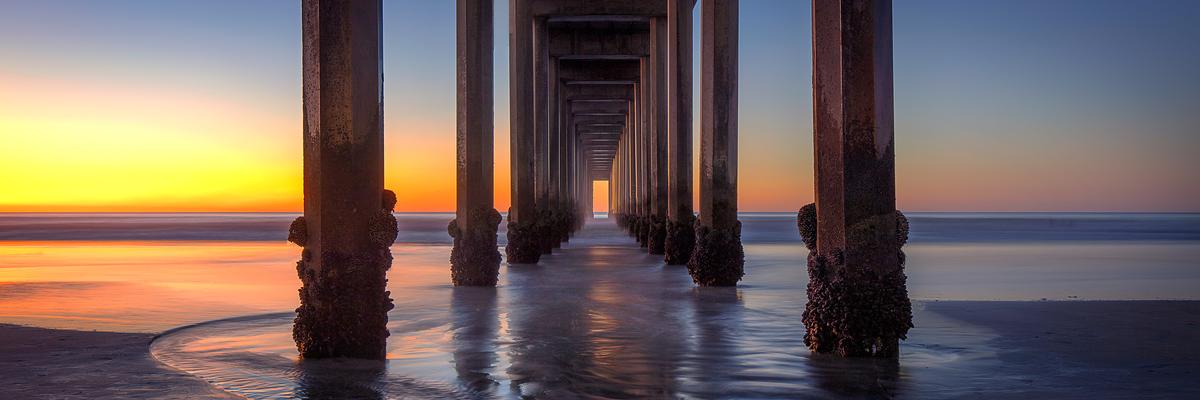
Yet Another Tool in the Toolbox
But — back to AI.
Some people say AI can't make real art because AI doesn't have feelings. But that argument has a problem: a paintbrush doesn't have feelings either. The brush in painters hand doesn't feel anything either. It just moves paint around. The feelings come from the human holding it — the human choosing where to put the brush, what color to use, which way to move it. The brush is just a tool. The art comes from the person using it.
AI works the same way. It doesn't create anything on its own. It has to be given a "prompt" (AI term for "command") — a direction, an idea, an intention that originates with a human being. The AI can't decide to make a painting about loneliness any more than a paintbrush can. A person has to decide that. The person has to choose what to ask for, select from what comes back, decide what works and what doesn't, and shape the result into something meaningful. The AI is a tool only! The human using it is the artist!
Now some people claim AI will become autonomous, take over and do whatever it wants. All I can say, it's a topic for another conversation for another day. We are not there yet and maybe never will be, who knows…
So the real question is not whether AI has feelings. It's how much human intention and creative decision-making went into using it. And it's more of a spectrum, not a direct yes or no answer. At one end: someone types a single sentence into Midjourney, takes the first image that comes out, and calls it art. With very little effort the result might look impressive, but the creative contribution is thin. Most serious art collectors and critics would treat it as decorative type, not fine art.
At the other end: if an artist spends weeks directing an AI system — writing and rewriting descriptions, making hundreds of judgment calls about what works and what doesn't, curating thousands of outputs down to one, and finishing the result into a deliberate body of work that expresses a specific idea. That's a lot of effort! The AI was the tool. The artist used it the way a painter uses a brush or a photographer uses a camera.
How the Art World Handles the Big AI Dilemma
The art world is drawing the line somewhere between those two examples. It's not a clean line and nobody fully agrees where it falls. But the distinction is not really about the AI. It's about the humans behind it — how much intention, how much creative judgment, how much of themselves does the artist put into directing the tool and shaping the desired outcome?
On the flip side — how receptive is the viewer of an artwork that was made with help of AI? Are they willing to accept a quickly AI enhanced image and consider it artwork? And better yet, pay enormous amounts of money for it? Maybe they do and maybe they don't. Only time will tell.
And this has always been the real question in the artworld from its inception, with every tool artists have ever used. When new tool entered the scene, people feared the change of status quo, people didn't want to accept of new ways of doing things. When photography was invented in 1839, painters said it would kill art. But it didn’t. It changed what art could be and how far it could go beyond being just a way to depict reality. AI will probably follow the same pattern.
The question of whether AI art is “real art” will not even come up. It will be part of some genre, just like computer graphics is used today to make advertisement and movies. Everybody knows its computer generated, but people still look at it and accept it as what it is — a computer generated graphics, not a painting, not a pencil drawing, etc. People know what it is. It's an artwork in it's own digital category.
The Purist Question — Is Your Camera Already Using AI?
Here's a conversation that photographers specifically need to have, because it involves a technical reality most people don't know about.
If you define "AI involvement" broadly — as any computational process where machine learning algorithms are making decisions about your image — then virtually every modern camera and smartphone already involves AI. Not generative AI, not text-to-image synthesis, but machine learning algorithms embedded in the hardware that are making real-time decisions about how your image is processed.
Your camera sensor doesn't capture colored pixels directly. It captures raw light measurements through a filter mosaic and then runs a mathematical process called demosaicing — essentially making an educated guess about the color of each pixel based on its neighbors. Even a traditional DSLR's JPEG output involves this computational interpretation. Modern smartphones take it substantially further: when you tap the shutter, your phone takes a burst of 5 to 15 exposures in milliseconds, uses machine learning to align and combine them, runs neural networks in real time to identify different parts of the scene — skin, sky, foliage — and applies different processing to each zone automatically. Night Mode is a trained neural network reconstructing detail from underexposed frames. Portrait Mode is AI identifying subjects and simulating depth-of-field that the lens couldn't optically produce.
The industry has settled on a practical distinction that most photographers and fine art institutions accept: the line falls between reconstruction and invention. Camera processing — even AI-assisted camera processing — is working with light that actually hit a sensor. It's interpreting and refining real optical information. Generative AI invents pixels from nothing, synthesizing imagery that was never in front of a lens. One is a sophisticated interpretation of what was there. The other is the creation of something that wasn't.
Purists who shoot in RAW bypass in-camera JPEG processing entirely, leaving all tonal and color decisions to the human photographer to process in post. That's the cleanest version of human-controlled digital photography. But even then, the RAW file is processed by software — Lightroom, Capture One, Photoshop — that includes AI-assisted features. Selecting and using those tools is a choice, and it's a choice that most working photographers, including fine art photographers, are comfortable making.
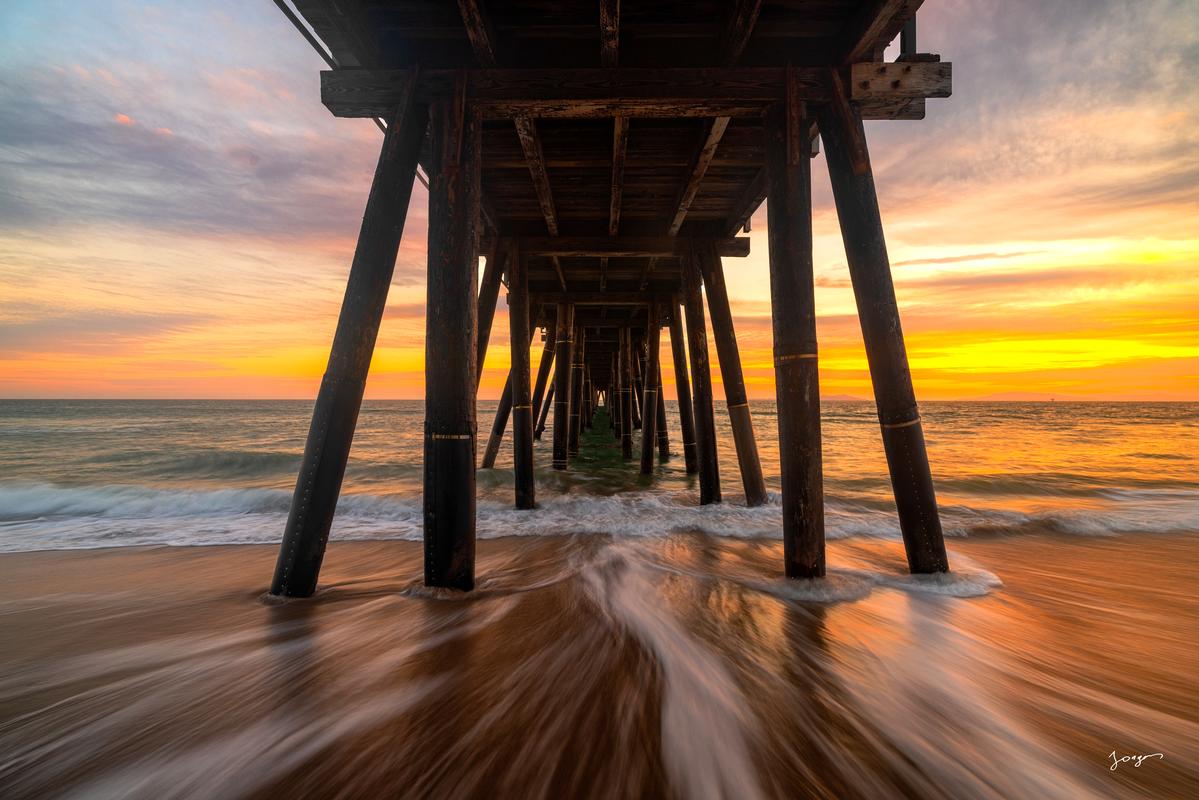
Where Jongas Fine Art Photography Stands
As of now in August 2026. The work in the Jongas Fine Art Photography collections is approximately 99% what I'd call purist photography — images where the creative decisions start with me choosing where to stand, what direction to point the camera, what time of day to be there, and how long to wait for the right light. In my view its one of the most challenging types of photography. Chasing light and landscapes is no small feat. Landscape photographers put in thousands of miles of driving just to get there and see weather change 180 degrees than what the weather app promised!
And using landscapes as your canvas means you can not move the mountain out of the way or bend the tree in a more favorable position. You work with what you have and you always look for natural things in the environment that provide for best composition possible. Many famous trees have fallen over the years, thus reducing our opportunities that you can never bring back.
So when it comes to my portfolio 99% of images are truly real. They are real photos of landscapes, cityscapes, seascapes and other things you can encounter in the world yourself if you just go to that location.
All processing of images was done by me as well and is 99% manual: RAW files, Lightroom, Photoshop, my own judgment about color, contrast, and composition applied to every image. There are some automatic AI enhancements being offered in current versions of Adobe processing apps that with help of AI adjust some of the color settings automatically when you import the image from camera to make our lives a little easier. But that doesn't distort or change the image itself, only colors and technical details that took more work to do manually before.
In digital photography we use editing software as a tool in the same way Ansel Adams used chemicals in his darkroom. Adams burned and dodged specific areas of his prints to bring out detail that the straight print couldn't show. He cropped. He adjusted contrast. He made the negative into the print he envisioned, not the print the chemistry automatically produced. That's what I do in Lightroom and Photoshop — I take the RAW (unprocessed) file and make the image I saw when I pressed the shutter, not the image the camera's automatic processing decided to produce. Every editing decision performed on an image is mine.
That's what makes this job exciting and challenging at the same time. I am dependent on seasons, winds, clouds, sunlight, and weather conditions all the time. I can not create a pink sky if the sunset was not pink. I can not make grass look green if the sun has scorched it and it looks like straw yellow. I work with what nature gives me and I make the best of it! Luck and God's will has a lot of say in it! And thus far I've been pretty lucky and grateful to be able to produce some of the most amazing photography I offer as prints in my fine art photography gallery!
Coming Clean
Some photographers like Peter Lik, have received a lot of criticism for his images being composites. His Luna Bella or Moonlit Dreams were criticized for being composites (images created from more than one or completely two separate photo captures), but mainly because he actually misrepresented them as real images that he waited many months for elements (the moon) to align, in order to capture them. It turned out to be a blatant lie, hence the criticism that forced him to start disclosing that his images were composites.
In fact, many of his new images are nothing but composites. With several separate images combined into one, to create a nearly perfect image. I have nothing against it. I admire them a lot and strive for my images to look as perfect. Hence my photos are referred to as Peter Lik Alternative.
I call them "too perfect", cause they are. The way they look, would be impossible to see in pure nature. They were intentionally created this way and that is what digital artistic expression truly is. You take what you have and you make it better by using digital tools. Some use photoshop, some use AI. It is based on the artist's prerogative and the viewers choice to accept it or not.
With that being said there are few images in my collection that were digitally manipulated to make it look into what they are. I will make a separate post about it to show you why I did it and you will see it why its justified!
Otherwise, I strive to stay as pure of a landscape and nature photographer as possible. My goal is to show the natural beauty of our world of regular places that might not be otherwise noticed by many or never be seen at all.
To end, I have no moral objection to AI art as a category. I think it's nothing but another tool we can use at our discretion. Just like any tool it can be used in both directions. Good or bad, negative or positive, constructive or destructive. The user of a tool is always in control. I don't use AI to alter my images and don't intend to in near future. Call me old school, but I will keep chasing the natural, raw, unredacted beauty of the world we live in!
And I hope you enjoy my photography and buy some prints you like the most! I put lots of sweat and tears, sleepless nights and many sets of tires into them!
Browse the landscape photography collection, the abstract photography collection, the black and white collection, or the full range of fine art prints — all photographed, processed, and printed by a human who was actually there.
Related Reading
- → The 10 Most Expensive Artworks Ever Sold
- → The 10 Most Expensive Photographs Ever Sold at Auction
- → What Is Traditional Art? Definition, Examples & 18 Artists
- → Famous Abstract Art — What It Is, Where It Came From, and Why It Still Hits
- → Modern Fine Art Photography Prints — Is It a Good Investment?
- → Classical Fine Art — History, Movements & Photography’s Disruption
- → The Evolution of Fine Art Photography — From the First Camera to AI
- → Ansel Adams — More Than a Famous Landscape Photographer
Eddie Jongas is a modern fine art photographer based in Las Vegas, Nevada. His TruLife acrylic-mounted limited edition prints are available exclusively through jongasfineartphotography.com, with free shipping to all 50 states. Every image in the collection was photographed by a human who was actually there.