I didn’t grow up in a museum. I didn’t study art history in school or spend my twenties haunting galleries in New York or Florence. I came to all of this sideways — through a camera, through landscapes, through the particular obsession of wanting to understand why some images stop you cold and others don’t. And somewhere along the way, I started paying attention to the long story of how humans have been making images of their world, and what that story actually means.
Here is what I found: the history of classical fine art is not, as it’s sometimes taught, a smooth progression of geniuses building on each other’s work until everything reached some kind of perfection. It is a story of repeated disruptions — new tools, new ideas, new audiences — each one forcing a renegotiation of what art is and who it’s for. And the biggest disruption of all wasn’t a movement or a manifesto. It was a box with a lens in it, invented by a Frenchman in 1839.
That’s the story I want to tell here. Where classical fine art came from, what it was trying to do, how a century’s worth of painters and sculptors built something extraordinary — and then how photography walked through the door and changed the terms of the entire conversation.
What is classical fine art?
Classical fine art refers to the Western European tradition of painting, sculpture, drawing, and printmaking that dominated art from the Renaissance through the late nineteenth century — roughly five hundred years of work built around technical mastery, representational accuracy, and elevated subjects including religious scenes, mythology, history, and portraiture.
What are the most famous classical fine art paintings?
The most celebrated works include Leonardo da Vinci’s Mona Lisa (c. 1503), Michelangelo’s The Creation of Adam (1511), Raphael’s The School of Athens (1511), Velázquez’s Las Menínas (1656), Rembrandt’s The Night Watch (1642), and Caravaggio’s The Calling of Saint Matthew (1600). Each one introduced a technical or compositional innovation that permanently changed the course of Western art.
How much are classical fine art paintings worth?
The most expensive classical painting ever sold is Leonardo da Vinci’s Salvator Mundi, which sold at Christie’s in 2017 for $450.3 million. Rembrandt’s The Standard Bearer sold privately in 2022 for approximately $198 million. Top-tier Old Masters are rare at auction because the majority are permanently held in major museum collections and will never be sold.
How did the camera disrupt classical fine art?
Photography’s arrival in 1839 undermined the core justification for representational painting by doing its job — accurately recording the visible world — faster and cheaper than any painter could. This forced painting to find a new purpose: not documentation but pure expression. The disruption gave rise to Impressionism, abstraction, and every major modern art movement that followed.
Is fine art photography considered classical fine art?
Fine art photography is not classical fine art in the traditional sense — it is a separate medium that emerged after the classical era ended. However, it shares the same foundational concerns: mastery of light, deliberate composition, and the intention to create images that reward sustained attention. Group f/64, led by Ansel Adams and Edward Weston in the 1930s, established fine art photography as a legitimate museum medium on its own terms.
Which interior design styles suit classical fine art best?
Classical fine art works best in Traditional and European Classic interiors, where the architectural details share the same era and aesthetic DNA as the paintings. It also suits Modern Classic, Transitional, Maximalist, and Modern Rustic spaces. Contemporary minimalist interiors are the least compatible — the ornate frames and dark tonal values of classical work tend to clash with clean, neutral modern spaces.
What Classical Fine Art Actually Was
The term “classical fine art” covers a lot of ground, and it’s worth being precise about what we mean before going further. In the broadest sense, it refers to the Western European tradition of painting, sculpture, drawing, and printmaking that dominated art from roughly the Renaissance — the fourteenth and fifteenth centuries — through the late nineteenth century. Five hundred years of accumulated technique, theory, and institutional infrastructure built around a set of shared assumptions about what art was for and how it should be made.
Those assumptions were: that the highest purpose of visual art was the representation of the visible world, idealized where necessary, with the human figure at the center of everything. That this representation required years of formal training in anatomy, perspective, color theory, and the craft of working in specific media — primarily oil paint on canvas, or marble and bronze in sculpture. That the quality of a work was judged by its technical mastery, its faithfulness to classical models from ancient Greece and Rome, and its capacity to communicate elevated subjects — religious scenes, mythological narratives, historical events, portraits of the powerful.
This is what we now call traditional art — a word that covers the full range of academically trained, representational fine art produced before the modern era. The Renaissance masters — Leonardo, Michelangelo, Raphael — are the names most people associate with this tradition, but the tradition itself extended far beyond them. Baroque painters like Rembrandt and Caravaggio pushed dramatically deeper into light and shadow. The Dutch Golden Age produced an entire genre of still-life and interior painting of extraordinary technical refinement. Neoclassicism in the eighteenth century consciously revived Greek and Roman models as a corrective to what it saw as the decadence of the Baroque. Romanticism in the early nineteenth century pushed back against Neoclassicism’s cold formality with landscape, emotion, and the sublime.
The Hudson River School — the American Romantic landscape painters of the mid-nineteenth century whose aesthetic the famous painter Bob Ross inherited and Ross in turn passed to millions of living room painters — was itself a direct descendant of this tradition. Thomas Cole, Frederic Church, Albert Bierstadt: painters who believed that the grandeur of the American landscape was a legitimate and serious subject for high art, painted in the same technical tradition as their European predecessors. When I photograph the American West — the canyon country, the national parks, the mountain ranges that these painters documented on enormous canvases — I am working in a conversation that started with them.
The Most Famous Classical Fine Art Paintings — and What Made Them Landmarks
Five centuries of classical fine art produced thousands of extraordinary works. A handful of them, though, transcended their era entirely — paintings that defined not just what was possible within the tradition but what visual art itself could be. These are the ones that still stop people cold in museum corridors, that still show up in every art history survey, that still set the terms of the conversation. Here are the six that matter most, and why.
Mona Lisa by Leonardo da Vinci (c. 1503–1519), now at the Louvre in Paris, is the most recognized painting in human history — which makes it almost impossible to see clearly anymore. Strip away the celebrity and what remains is a technical revolution. Leonardo used sfumato — the deliberate blending of tones without hard outlines, smoke-like transitions between light and shadow — to create a likeness that breathes. The landscape behind the figure uses aerial perspective to pull the eye deep into space, so the background feels genuinely distant rather than painted on a flat surface behind a head. The pyramid composition gives the figure stability and serenity simultaneously. It is a painting about the relationship between precision and mystery, and it answers that question differently from every angle you approach it.
The Creation of Adam by Michelangelo (c. 1511–1512), painted on the ceiling of the Sistine Chapel in Vatican City, is the most ambitious single-artist decorative program in the history of Western art. Michelangelo treated the human form with sculptural anatomy — the figures read as bodies in space, not flat images on a ceiling — and anchored the entire theological program of the chapel around the near-touch of two fingers. That gap between the hand of God and the hand of Adam is one of the most precisely calculated compositional decisions in the history of painting: close enough to feel electric, open enough to contain the entire concept of divine creation.
The School of Athens by Raphael (1509–1511), painted in the Apostolic Palace at the Vatican, is the pinnacle of High Renaissance fresco painting. Raphael mapped the entire composition around a single vanishing point positioned directly between Plato and Aristotle — an act of linear perspective so controlled that the painted architectural space feels genuinely three-dimensional. The painting is, among other things, a portrait of how the Renaissance thought about knowledge: ordered, harmonious, centered on human reason. It is also, technically, one of the most difficult large-scale compositions ever executed, and Raphael was twenty-six years old when he finished it.
“If you want a record of how a face looks, use a photograph. If you want to know what it feels like to stand in a field at dusk — that was still painting’s territory. The camera had liberated painting from documentation and forced it into pure expression.”
Las Menínas by Diego Velázquez (1656), at the Museo del Prado in Madrid, is arguably the most complex spatial composition in Western art history. Velázquez places himself at a massive canvas within the painting while the Spanish Royal Family appears as a mirror reflection in the background — blurring the line between painter, subject, and viewer in a way that remains conceptually disorienting three and a half centuries later. The wet-on-wet brushwork that gives his canvases their shimmering quality — abstract up close, resolved into silk and armor from a distance — is the same alla prima technique that would eventually flow through to Bob Ross and the accessible painting tradition of the twentieth century.
The Night Watch by Rembrandt van Rijn (1642), at the Rijksmuseum in Amsterdam, revolutionized the group portrait genre by refusing to paint a static group portrait. Instead of ranked figures posed for documentation, Rembrandt painted a moment of dynamic collective motion — a militia company deploying into action — using his mastery of chiaroscuro, the dramatic contrast of light against deep shadow, to pull key figures forward out of darkness and push others back into it. It is a painting about selective illumination, literally and compositionally.
The Calling of Saint Matthew by Caravaggio (1599–1600), in the Contarelli Chapel in Rome, introduced tenebrism to Western painting — extreme contrast between very dark backgrounds and sharp, directional shafts of light that function as both physical illumination and theatrical divine force. Caravaggio set the biblical scene in a contemporary Roman tavern, surrounded the apostle with ordinary people in contemporary dress, and directed a beam of light across the frame the way a photographer would direct a key light. He was, in this sense, the earliest ancestor of the aesthetic that would define fine art photography three hundred years later: the deliberate, directional use of light as the primary compositional tool.
The Academic System — How Classical Fine Art Reproduced Itself
Classical fine art didn’t just happen. It was sustained and transmitted through a specific institutional infrastructure that controlled who got to make art, what kind of art was acceptable, and who judged the difference. In France, this institution was the Académie des Beaux-Arts and its annual exhibition, the Salon, which for two centuries was the most important art event in the Western world. To be accepted to the Salon was to have a career. To be rejected was, for most artists, to be invisible.
The Académie trained artists in a strict hierarchy of subjects. History painting — scenes from classical mythology, the Bible, or documented historical events — sat at the top. Below that, in descending order of prestige: portraiture, genre scenes of everyday life, landscape, and still life. The system rewarded technical mastery of the figure, correct use of perspective, and adherence to established compositional principles. It punished experimentation, unconventional subject matter, and anything that smelled of mere personal expression rather than elevated subject.
This system produced extraordinary work. It also produced, by the mid-nineteenth century, a calcified establishment so resistant to anything new that it rejected the Impressionists — now among the most beloved and valuable paintings ever made — as incompetent daubing. Monet, Renoir, Degas, Pissarro: all rejected from the official Salon, forced to organize their own exhibitions, attacked by critics who found their loose brushwork and ordinary subjects an insult to everything the academic tradition stood for.
The Impressionists were the first major crack in the system. But the deeper rupture was already on its way, and it came from an entirely unexpected direction. Not a new style of painting. Not a new theory of composition. A machine.
What Classical Fine Art Is Worth Today — The Most Expensive Old Masters Ever Sold
The paintings described above are now priceless in the literal sense — they are in permanent museum collections and will never be offered for sale. But the broader market for Old Master paintings — the classical works that do occasionally come to auction or change hands privately — operates at a scale that makes even the most celebrated modern art look modest. The prices these works command are a direct measure of how the world still values the classical tradition five centuries after it was made.
The most expensive classical artwork ever sold is Salvator Mundi by Leonardo da Vinci, painted around 1500, which sold at Christie’s New York in November 2017 for $450.3 million — the highest price ever paid for any artwork in history. The painting depicts Christ holding a crystal orb and was purchased on behalf of the Saudi Ministry of Culture. Its attribution has been debated by scholars, and its current whereabouts remain unclear, but the price tag — nearly half a billion dollars for a single canvas — established a ceiling for what the classical tradition can command on the open market.
The second and third most expensive classical works are both by Rembrandt. The Standard Bearer, painted in 1636 when Rembrandt was just thirty years old, sold privately in February 2022 for approximately $198 million to the Dutch State — specifically so it could be permanently displayed at the Rijksmuseum in Amsterdam and returned to public access. The Pendant Portraits of Maerten Soolmans and Oopjen Coppit, a pair of full-length wedding portraits from 1634, sold privately in 2016 for approximately $180 million to the Louvre and the Rijksmuseum jointly, with the two museums alternating display of the pair. That both of these Rembrandts were acquired by public institutions rather than private collectors tells you something about the cultural weight still attached to the classical tradition — governments spent hundreds of millions of dollars to make sure these works stayed accessible.
Botticelli’s Portrait of a Young Man Holding a Roundel (c. 1480) set the record for an Old Master at public auction when it sold at Sotheby’s New York in January 2021 for $92.2 million. Peter Paul Rubens’s Massacre of the Innocents sold at Sotheby’s London in 2002 for $76.7 million — a painting that had been misattributed for decades before being authenticated as an early Rubens masterpiece and purchased by Canadian collector Kenneth Thomson, who donated it to the Art Gallery of Ontario.
These numbers matter in the context of this article because they are the market’s answer to a question the fine art world has been debating since photography arrived in 1839: does the classical tradition still hold its cultural authority? The answer, measured in hundreds of millions of dollars changing hands for five-century-old canvases, is clearly yes. Photography did not diminish the value of classical painting. If anything, by taking over the documentation function, it allowed classical painting to become purely what it always was at its best — unreproducible human expression, made by hand, in a tradition with enough depth and history behind it to justify extraordinary investment. For a broader look at how the most expensive artworks of all eras — classical and contemporary — compare in the market, the most expensive artworks ever sold article on this blog covers the full list.
Classical Fine Art at Auction — A Smaller Market Than You’d Think
There’s a common assumption that Christie’s, Sotheby’s, and the other major auction houses are primarily in the business of selling Old Masters. The headline sales — a Leonardo for $450 million, a Rembrandt for $198 million — reinforce that impression. The reality of the auction market, though, is considerably more interesting.
Global Fine Art Auction Market — Share by Category
- Post-War & Contemporary Art (1945–present): Roughly 45–50% of total market value, driven by high turnover in works by Basquiat, Warhol, Koons, and Richter.
- Impressionist & Modern Art (c. 1860s–WWII): Approximately 25–30% of total market value.
- Old Masters (Renaissance, Baroque, Neoclassical): Only 5–8% of total global fine art auction market value — the smallest of the three major segments.
Three structural reasons explain why. First, supply is extremely constrained. The vast majority of top-tier classical masterpieces reside permanently in major museums — the Louvre, the Prado, the Uffizi, the Metropolitan — and will never be sold. When an Old Master of genuine quality does appear at auction, it is a rare event, which is precisely why the prices are so extreme when it happens. Second, Old Masters carry provenance and attribution risks that contemporary art doesn’t: centuries of ownership changes, restoration history, workshop studio questions, and ongoing scholarly debate about whether a given work is by the master or by a talented assistant. Third, shifting collector aesthetics have moved away from the dark, relatively small-format oil paintings of the classical tradition toward large-scale abstract and contemporary canvases better suited to modern interiors and contemporary architecture.
The broader point is that classical fine art’s cultural authority and its market share are two different things. The Louvre’s Mona Lisa attracts six million visitors a year. The auction market, however, is driven by living collectors with contemporary taste who are buying work that matches the way they live. Those are related but separate conversations — and both tell you something true about where the classical tradition sits today.
Which Interior Design Styles Suit Classical Fine Art Best
Traditional and European Classic interiors are the natural home. French Provincial, Georgian, English Country Estate — these styles share the same era and aesthetic DNA as classical painting. The architectural details of the room itself — wainscoting, crown molding, ceiling medallions, rich hardwood floors — already speak the same visual language. Grand oil landscapes, formal portraiture, and still life compositions in ornate gold-leaf or carved wooden frames feel like they belong rather than like they’ve been placed.
Modern Classic and Neoclassical interiors blend traditional architectural elements with streamlined contemporary furniture and muted neutral palettes. Classical art provides a warm historical focal point that keeps the clean-lined spaces from feeling cold. The key is the frame choice: a figural study or architectural drawing in a slim brass or bronze frame reads as sophisticated rather than stuffy, holding the connection to the classical tradition without overwhelming the contemporary context.
Transitional design — the style that sits directly between traditional and contemporary, with neutral upholstery, mixed textures, and tailored comfort — benefits from classical art’s depth and tonal richness. Dutch Golden Age still lifes, atmospheric oil landscapes, or figurative sketches hung above a clean-lined mantle or sofa console introduce a layer of patina and history that transitional spaces often need to avoid feeling generic.
Maximalist and Eclectic interiors use classical art as an anchor in a deliberately layered room. Placing an eighteenth-century Baroque portrait next to an ultra-modern sculptural light fixture creates immediate visual tension of the best kind — the kind that makes a room feel curated rather than accidental. Salon-style gallery walls featuring antique oil portraits, dramatic chiaroscuro paintings, or large-format classical reproductions are the signature move of this approach.
Modern Rustic and French Country interiors — with their exposed wood beams, stone fireplaces, lime-washed plaster walls, and natural linen — pair well with classical art because the materials share the same quality: age, texture, and evidence of handcraft. The organic surface of aged oil paint, the craquelure of centuries-old varnish, and carved wooden frames echo the tactile weathered surfaces of the room itself. Unframed canvas landscapes or vintage botanical studies leaned against a stone mantel, rather than hung formally, work particularly well in this context.
For those exploring which interior style fits their space more broadly, the complete interior design styles guide on this blog covers the full range — from traditional through contemporary, rustic, industrial, and beyond — with notes on what kind of art works best in each.
The Camera Arrives — and Changes Everything
In 1839, Louis Daguerre introduced the daguerreotype to the world. A silver-coated copper plate, treated with iodine vapor and exposed in a camera obscura, could capture a permanent image of the visible world with a precision no human hand had ever achieved. The announcement caused immediate, widespread alarm in the painting world. The French painter Paul Delaroche reportedly said “from today, painting is dead.” He was wrong, but he wasn’t entirely wrong about what had changed.
What the camera disrupted, fundamentally, was the justification for representational painting. If the highest achievement of classical fine art was accurate representation of the visible world — a perfect likeness of a face, a geographically faithful landscape, a detailed record of a historical scene — then the camera did all of that faster, cheaper, and more accurately than any painter could. The portrait painters who had spent years mastering the human likeness suddenly had a competitor that required thirty minutes of sitting rather than weeks of sittings and cost a fraction of the price.
The long-term consequence of this disruption is the whole story of modern art. If painting no longer needed to represent the world accurately, what was it for? The answers that followed — Impressionism, Post-Impressionism, Cubism, Expressionism, abstraction — were all, in one way or another, answers to the question the camera had forced. If you want a record of how a face looks, use a photograph. If you want to know what it feels like to stand in a field at dusk, to convey the weight of grief or the energy of a city or the spiritual presence of a mountain — that was still painting’s territory. The camera had liberated painting from documentation and forced it into pure expression.
I think about this constantly, because it defines the position I occupy as a photographer. The camera did not kill fine art. It became fine art — and in doing so, it took over one of the jobs painting had previously held, while painting moved on to jobs the camera couldn’t do. Understanding that transition is understanding why landscape photography is an art form, not just documentation.
Photography’s Long Fight for Recognition — Pictorialism to Straight Photography
The camera’s arrival created an immediate status problem for photographers who wanted their work taken seriously as art. The fine art establishment had a ready answer: photography was mechanical reproduction, not artistic expression. A camera didn’t require imagination or handcraft. It just copied what was in front of it. Whatever skill was involved was technical, not artistic — and the distinction between a technician and an artist was one the academic establishment guarded carefully.
The first major response to this dismissal was Pictorialism, which dominated fine art photography from roughly the 1880s through the early 1910s. Pictorialist photographers argued that a photograph was artistic precisely because of the intervention applied to it after the exposure. They used soft-focus lenses, heavy darkroom manipulation, and specialized printing processes — gum bichromate, platinum printing, bromoil — to produce images that looked as little like sharp photographs as possible. The goal was to make a photograph look like a painting, a drawing, or an etching. To visually erase the mechanical quality of the medium and replace it with something that resembled handcraft.
The leading figures of this movement — Alfred Stieglitz, Edward Steichen, Julia Margaret Cameron — were serious, sophisticated artists. Stieglitz founded the Photo-Secession group in 1902 and opened Gallery 291 in New York, where fine art photographs were exhibited alongside paintings by Rodin, Matisse, and Picasso. He was making a deliberate argument: photography belongs in the same conversation as the most respected art of the era.
But Pictorialism eventually ran into a logical dead end. If the artistic value of a photograph came from making it look like a painting, then photography was permanently subordinate to painting — always imitating, never leading. By the 1910s, a new generation of photographers had a different answer.
Straight Photography argued the exact opposite of Pictorialism. Photography’s artistic strength, this movement insisted, lay precisely in what made it unlike painting — in its sharp focus, its precise tonal gradation, its capacity to capture the texture of the physical world with a clarity no brush could match. Stop trying to make photographs look like paintings. Make them look like the best possible version of themselves.
The decisive institutional expression of this idea was Group f/64, formed in California in 1932 by Ansel Adams, Edward Weston, and Imogen Cunningham. The name referred to the smallest aperture setting on a large-format view camera — the setting that produces maximum depth of field, so that the nearest detail and the most distant horizon are both in razor-sharp focus simultaneously. The manifesto was in the name: everything in focus, nothing hidden, no manipulation, no apology. The photograph, presented on its own terms, was art enough.
Adams’s landscapes of Yosemite and the American Southwest, Weston’s close-up studies of vegetables and rock formations, Cunningham’s botanical abstractions and portraits — all of them produced under the Group f/64 philosophy — are now in the permanent collections of the world’s major art museums. The argument, it turned out, was won.

Fine Art Photography Across the Eras — A Medium, Not a Movement
One of the most important things to understand about fine art photography is that it is a medium, not a movement. Calling all fine art photography “modern art” is like calling all painting “modern art” — the medium spans centuries and contains multitudes. Photography’s evolution into a recognized fine art happened to coincide with the Modern Art era, which is why the two are so closely associated. But the medium itself extends backward into nineteenth-century Victorian experimentation and forward into twenty-first-century digital and conceptual work.
The Pictorialist era (roughly 1880s–1910s) was photography’s first attempt to claim fine art status by imitating painting. The Modernist/Straight Photography era (1920s–1950s) rejected that imitation and established photography’s own aesthetic language: sharp focus, tonal precision, formal composition, unmanipulated clarity. The Contemporary Fine Art era (1970s–present) expanded the territory again — conceptual storytelling, large-scale museum printing, digital manipulation, mixed-media integration. Photographers like Andreas Gursky, Cindy Sherman, and Hiroshi Sugimoto made work that operates at the intersection of photography, painting, and conceptual art, and sells at auction for prices that rival the most celebrated paintings of the twentieth century.
In 1940, the Museum of Modern Art in New York established a dedicated Department of Photography — the institutional moment that cemented photography’s status as a museum art form on equal footing with painting and sculpture. It had taken exactly one hundred years from Daguerre’s announcement to get there. The machine that was supposed to kill fine art had become one of its most vital and contested forms.
What It Means to Make Fine Art Photography Today
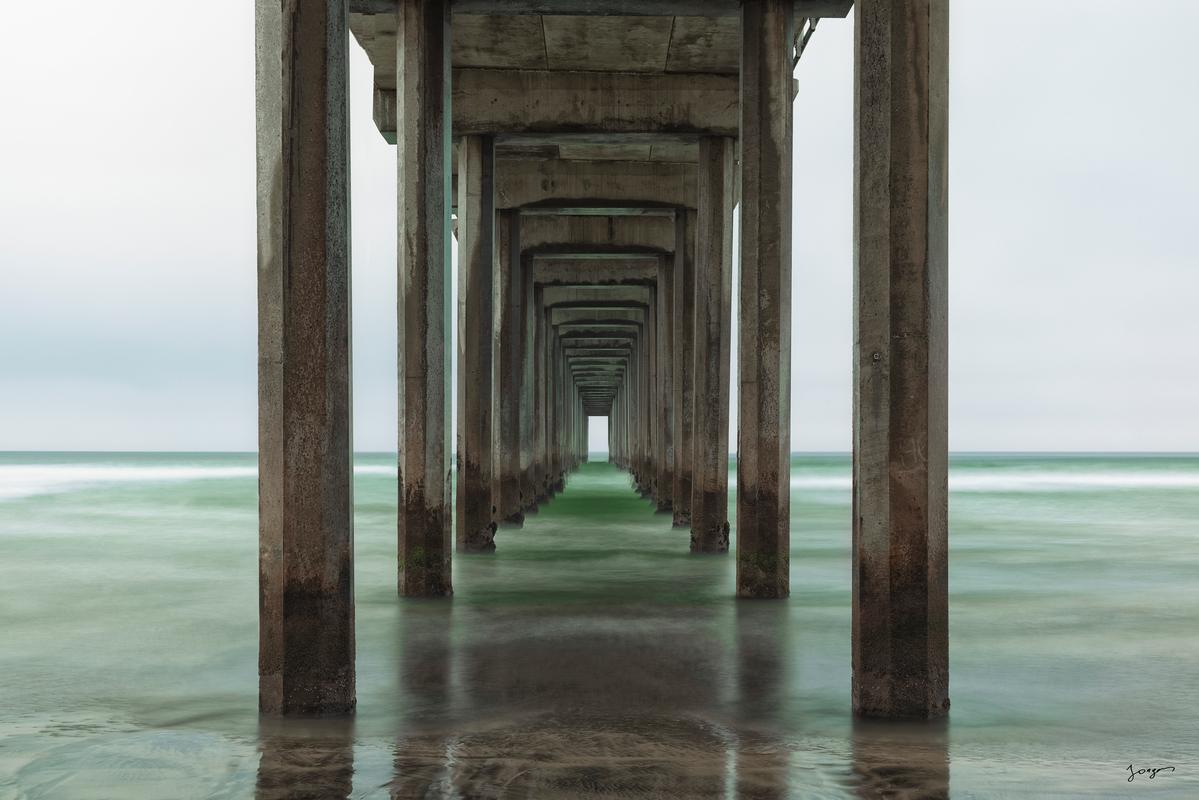
I think about the classical tradition every time I’m in the field. Not consciously, not in an academic way — but in the sense that the questions classical painters were asking are the same questions I’m asking. How do you represent the scale of a mountain in a two-dimensional frame? How do you convey the quality of light at a specific moment in a specific place? What is the difference between a record of a landscape and a portrait of it — between documentation and feeling?
The classical painters answered those questions with paint and brush and years of accumulated technique. Group f/64 answered them with large-format cameras and the philosophy of maximum clarity. I answer them with the tools of contemporary fine art photography — careful pre-visualization, patient waiting for light, precise exposure, and a printing process that takes the digital file and turns it into something that can hold a wall the way a painting holds a wall.
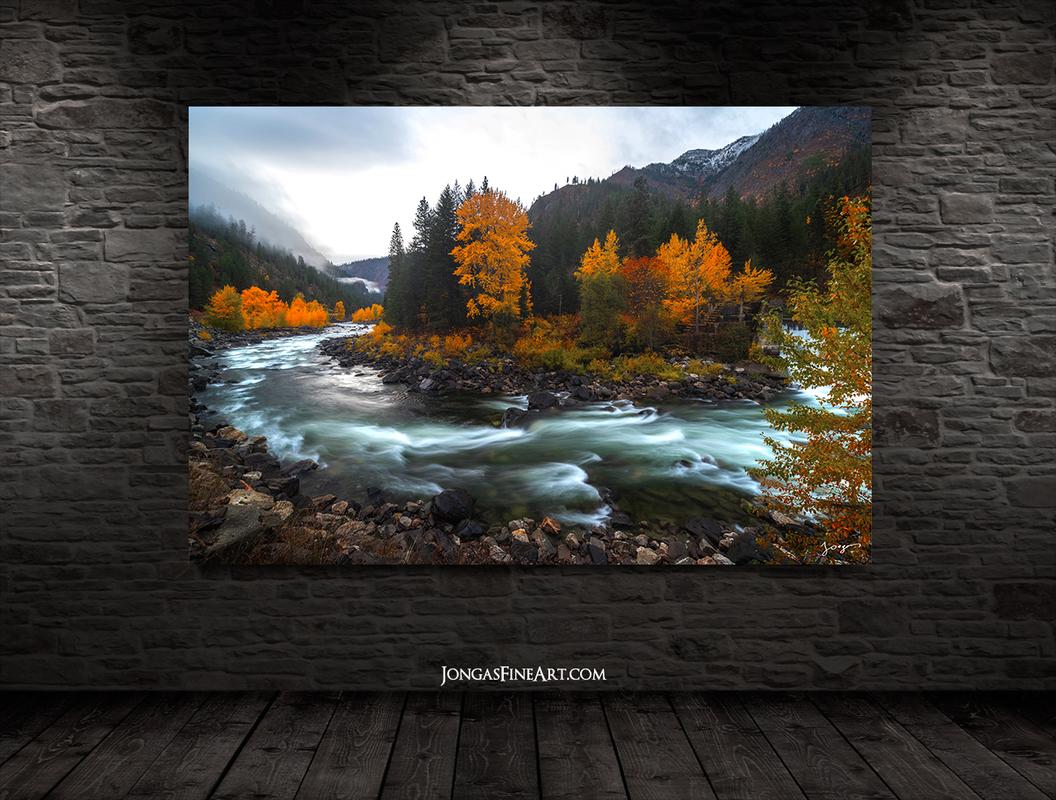
Every print I make is produced on TruLife acrylic — a face-mounted process that gives the image a depth and luminosity that neither canvas nor paper can match. The blacks go deeper, the highlights glow, the surface has a presence that you have to see in person to understand. It is, in its own way, my answer to the same question the classical painters were answering: how do you make something that earns a second look, that rewards the time spent in front of it, that deserves to be called fine art?
The tradition is long. The conversation is ongoing. Photography is, at this point, a full and legitimate participant in it — not despite the fact that it disrupted classical fine art, but because of it. The camera walked through the door in 1839 and refused to leave. It turned out to belong there all along.
You can explore the landscape photography collection, the black and white photography collection, and the full range of fine art prints at jongasfineartphotography.com — all printed in limited editions on TruLife acrylic, signed, and shipped free to all 50 states.
Related Reading:
→ What Is Traditional Art? Definition, Examples & 18 Artists
→ What Is a Traditional Artist? Famous Examples & The Photography Legacy
→ Famous Abstract Art — What It Is, Where It Came From, and Why It Still Hits
→ Ansel Adams — More Than a Famous Landscape Photographer
→ Imogen Cunningham — The American Photographer
→ What Is Landscape Photography? Definition, History & Fine Art
→ Modern Fine Art Photography Prints — Is It a Good Investment?
Eddie Jongas is a modern fine art photographer based in Las Vegas, Nevada. His work spans landscapes, seascapes, cityscapes, and abstract fine art photography across 48 states and 15 countries — continuing, in his own way, the five-century conversation about what it means to make an image worth looking at. His TruLife acrylic-mounted limited edition prints are available exclusively through jongasfineartphotography.com, with free shipping to all 50 states.