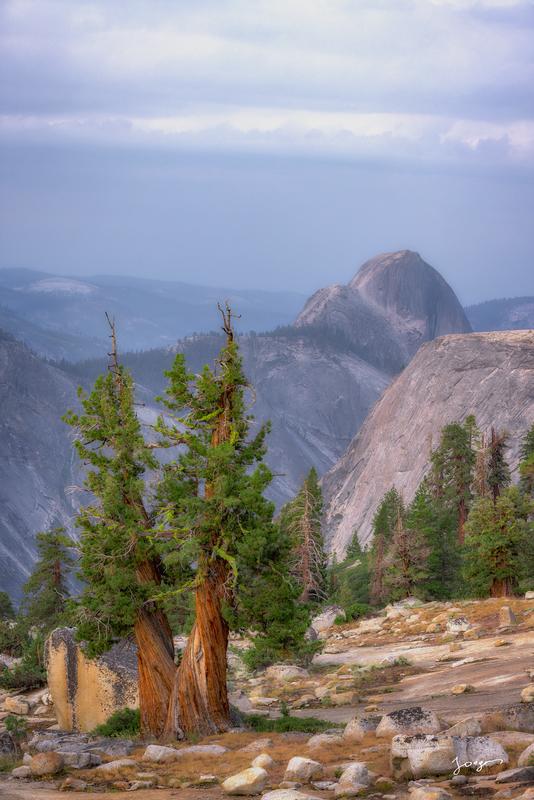
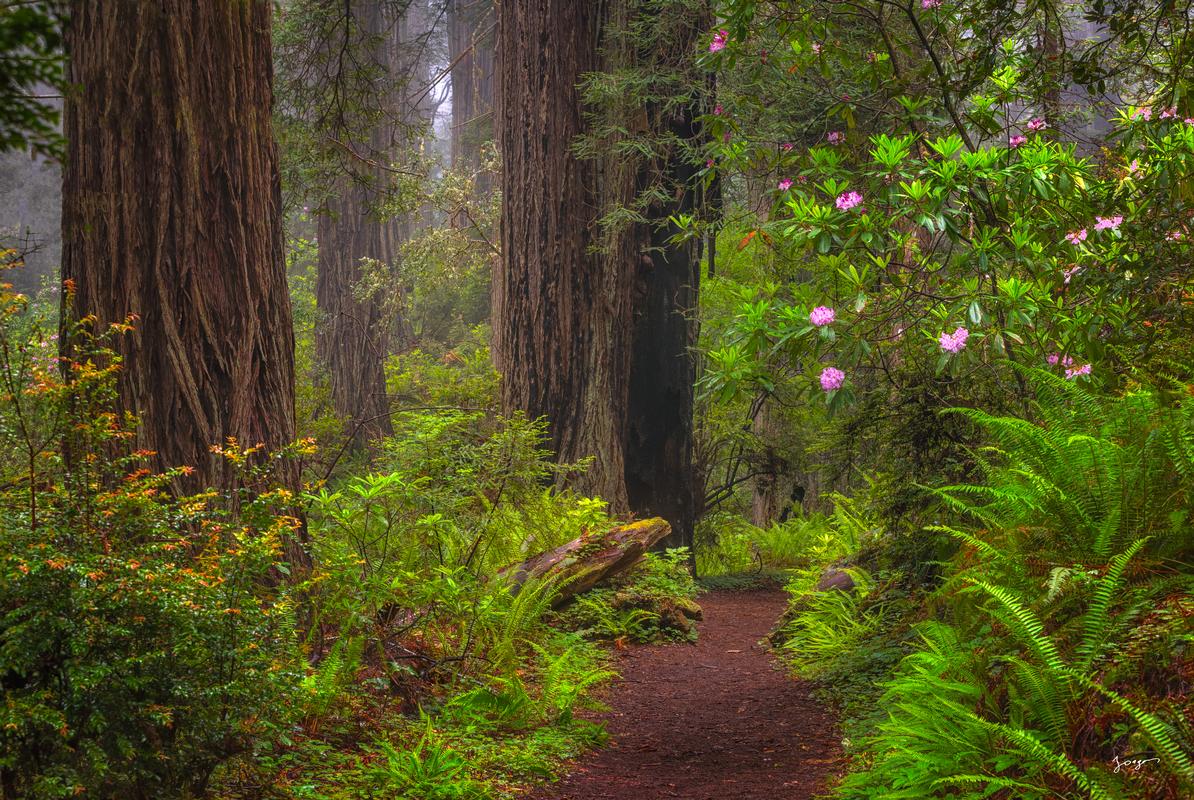
Here is a question that seems like it should have a simple answer: what is the oldest tree in the world? Pick the oldest one. Done. Except scientists have been arguing about this for years, and the argument is genuinely fascinating. There are currently two trees that each have a serious claim to the title — one in California and one in Chile — and whether either of them actually wins depends on how exactly you define the question. And once you understand how scientists figure out a tree’s age in the first place, you will discover that the same techniques used to date ancient trees are also being used right now to catch art forgeries. Stick with me. We are going to get there.
First, let’s meet the contenders.
Contender #1 — Methuselah, the Great Basin Bristlecone Pine
Hidden somewhere in the White Mountains of Eastern California, in a place called the Inyo National Forest, there is a small, ancient, twisted pine tree that has been alive since approximately 2,833 BCE. That is roughly 4,855 years ago. To put that in perspective, Methuselah was already a young tree when the ancient Egyptians started building the earliest pyramids. While the pharaohs were figuring out how to cut and haul million-pound blocks of stone, this tree was quietly growing in the mountains of California, completely indifferent to the whole situation.
Methuselah is a Great Basin Bristlecone Pine — a species that has a special trick for surviving for thousands of years. These trees grow in harsh, high-altitude environments where the soil is rocky, the winds are brutal, and the winters are long. Because conditions are so rough, the trees grow extremely slowly. Slow growth means the wood becomes incredibly dense. Dense wood is packed with natural resins that resist rot, insects, and fungi. And so while a faster-growing tree in better conditions might live a few hundred years and then fall apart, a bristlecone pine in a terrible environment just keeps going, harder and tighter and more resistant to everything trying to kill it with every passing century.
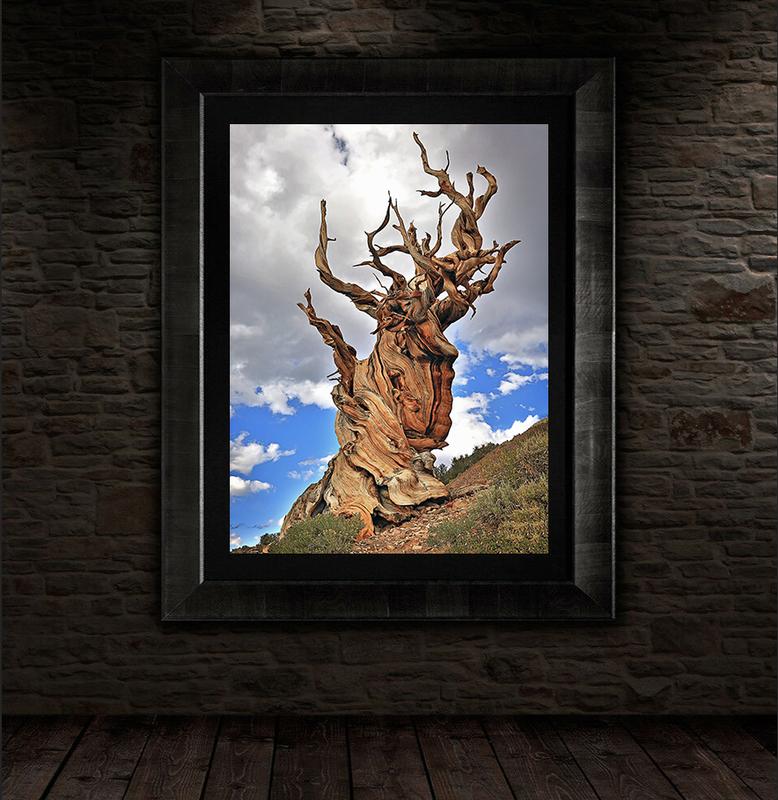
The tree gets its name from the Old Testament patriarch Methuselah, the oldest person mentioned in the Bible, who supposedly lived 969 years before the flood. The irony is that the tree has lived nearly five times longer than its biblical namesake.
Here is the part most people find a little funny: nobody will tell you exactly where Methuselah is. The U.S. Forest Service keeps the precise location of the tree a strict secret to protect it from vandalism and people walking over its root system for selfies. There is a marked hiking trail through the Schulman Grove, and multiple very old bristlecone pines along it — but none of them are labeled as Methuselah. You could walk right past it and never know. This has spawned a whole world of hiking legends about hidden government cameras watching the grove, silent rangers following off-trail wanderers, and elaborate decoy signs pointing visitors toward the wrong trees. Whether any of that is true, nobody from the Forest Service is saying.
There is also a sad backstory connected to this species. Before Methuselah was identified as the record holder, there was an even older bristlecone pine named Prometheus growing in Nevada. In 1964, a researcher cut it down. He did not realize how old it was until he sat down and actually counted the rings afterward. The tree turned out to be nearly 5,000 years old. The researcher later described it as one of the worst mistakes of his career. Prometheus was the oldest living thing any human had ever encountered, and it was gone.
While Methuselah itself stays hidden from visitors, the Schulman Grove has another remarkable bristlecone pine that you can actually find — and photograph. Right on the trail outside the Schulman Grove Visitor Center in the White Mountains, there stands a bristlecone pine known as the Sentinel Tree. It is not labeled with an age, but if I had to guess from its size and form, it is not far behind Methuselah itself. The Sentinel Tree is a genuinely spectacular subject — ancient and twisted and shaped by thousands of years of high-altitude wind into the kind of form that makes you stop walking and just stare at it. The visitor center itself has a small art gallery featuring photographs and paintings of the Sentinel Tree and the surrounding grove made by local artists. This is very much bristlecone pine country for traditional artists — painters and photographers who come specifically to capture trees like this in a medium worthy of how long the subjects have been standing there. I have pointed my own camera at bristlecone pines in these mountains more than once, and the combination of the high-altitude light, the ancient twisted wood, and the specific silence of that grove at dawn is something a photograph can hold but not fully replicate.
Contender #2 — Alerce Milenario, the Gran Abuelo
In 2020, a Chilean environmental scientist named Jonathan Barichivich went to Alerce Costero National Park in southern Chile to date an enormous Patagonian Cypress tree known locally as the Alerce Milenario — or Gran Abuelo, which means Great-Grandfather in Spanish. The indigenous Mapuche people of southern Chile call it the Lahuán, which means “the grandfather” or “the wise one.” It had been growing quietly in a cold, damp ravine deep in the temperate rainforest of the southern Andes, which is exactly why it survived while loggers cleared everything around it during the 19th and 20th centuries. The ravine was too wet and too remote to bother with, so the tree just kept growing.
Barichivich’s estimate: 5,484 years old. That would make Gran Abuelo more than 600 years older than Methuselah. If that number holds up, the Chilean tree wins and the debate is over.
Except there is a catch, and it is a significant one.

To date a tree properly, scientists drill a thin tube into the trunk and extract a core sample — a straw-like cylinder of wood that shows all the annual growth rings. Then they count the rings. Gran Abuelo’s trunk is over 13 feet wide. When Barichivich’s team tried to drill to the center, their instrument simply was not long enough. The core sample they pulled out only covered about 40 percent of the tree’s radius. To calculate the age of the remaining 60 percent, they used a statistical model — they compared the ring patterns from younger, smaller alerce trees nearby to estimate what the inner portion of Gran Abuelo’s trunk probably looks like.
The model showed an 80 percent mathematical probability that the tree is older than 5,000 years, with the best estimate landing at 5,484. But here is where it gets controversial: some scientists argue that if you cannot physically count every single ring, you cannot officially declare a world record. They point out that the inner portion of an ancient tree can behave strangely — missing rings in drought years, false rings from weird weather events — and that no statistical model can replace an actual physical ring count. Until someone develops a drill long enough to reach the center of that trunk, Methuselah keeps the official crown at most institutions.
“Both trees have a legitimate claim. The answer to which one is older is currently: Gran Abuelo probably, but we can’t prove it yet.”
The Myths Behind the Trees
Trees that have been alive for 5,000 years tend to pick up some mythology along the way.
The Mapuche people, whose ancestral territory covers the region of southern Chile where Gran Abuelo grows, believe the ancient alerce trees are sentient spirits of the forest — living guardians of the land that have been watching over the forest since before human memory. In Mapuche tradition, when the heavy Patagonian winds howl through the ravines and the branches of the alerce sway and creak, the tree is whispering the secret, unwritten history of the earth to anyone wise enough to listen. The souls of ancestors were thought to look out from the deep, wrinkled grooves of the bark. Logging an alerce was not just cutting down a tree — it was desecrating the spirits of those who came before. Given how many of these trees were cleared by 19th-century loggers who definitely were not listening, the Mapuche had good reason to feel this way.
Methuselah’s myths are mostly modern: the hidden-location conspiracy theories, the rangers-in-the-shadows folklore, the stories of hikers who think they’ve found it only to be corrected by a passing stranger who may or may not have been a federal agent. The tree’s name comes from the biblical patriarch, but beyond that there is not much ancient mythology attached to it — which makes sense, because the indigenous peoples of the White Mountains would not have known its age any more than anyone else did until dendrochronologists started counting rings in the 20th century.
The most mythology-rich ancient tree is actually not in our main competition at all. The Sarv-e Abarqu — an ancient cypress growing in Abarkuh in the Yazd Province of Iran — is estimated to be between 4,000 and 4,500 years old, making it the oldest known living individual organism in Asia. The most famous legend claims it was planted by the prophet Zoroaster, the founder of Zoroastrianism, who stopped there during his travels to spread his teachings and left the seedling as a monument to eternal truth. A second tradition bypasses Zoroaster entirely and claims the tree was planted by Japheth, the son of Noah, after the floodwaters receded. In Persian mythology, the cypress is a sacred tree whose distinctive upright silhouette is widely believed to be the origin of the Paisley design — the teardrop-shaped swirling pattern found on Persian silks — representing the Zoroastrian Tree of Life bending in humility before the divine. The tree is a protected national monument in Iran, and its trunk circumference is nearly 38 feet.
Other Ancient Trees Worth Knowing
Notable Ancient Trees Around the World
- Llangernyw Yew, North Wales: 4,000 to 5,000 years old, standing in the churchyard of a small village church. Yews are notoriously difficult to date because their centers hollow out over time, removing the inner rings entirely. This tree was a sapling during the British Bronze Age, thousands of years before the medieval church was built around it. Yew wood was the material used to make the English Longbow during the Middle Ages, and scientists discovered that toxic compounds in yew needles can block cancer cell division, leading to the development of Paclitaxel (Taxol), one of the most widely used chemotherapy drugs in the world today.
- The President, Sequoia National Park, California: About 3,200 years old and 247 feet tall. Its neighbor General Sherman is slightly younger at around 2,200 years old but holds the crown as the largest single-stem tree on Earth by pure volume. Standing at the base of either tree and looking up is a reliable way to feel very small very quickly.
- Jōmon Sugi, Yakushima Island, Japan: At least 2,170 years old, possibly much older. It grows in a UNESCO World Heritage temperate rainforest and is one of the most visited trees in Japan. Its hollow, heavily convoluted trunk makes precise dating nearly impossible — some scientists believe it could be as old as the bristlecone pines.
- Oliveira do Mouchão, Portugal: Approximately 3,350 years old, a European Olive tree that still produces olives today, just as it did when the Trojan War was being fought. The persistence of a productive olive tree across that span of time is somehow more astonishing than a pine just quietly surviving on a cold mountain.
The Clonal Giants — An Entirely Different Category
All of the trees above are individual organisms — one trunk, one root system, one genetic individual. But there is another category of ancient life that changes the whole age question dramatically, and the champion of that category lives in Utah.
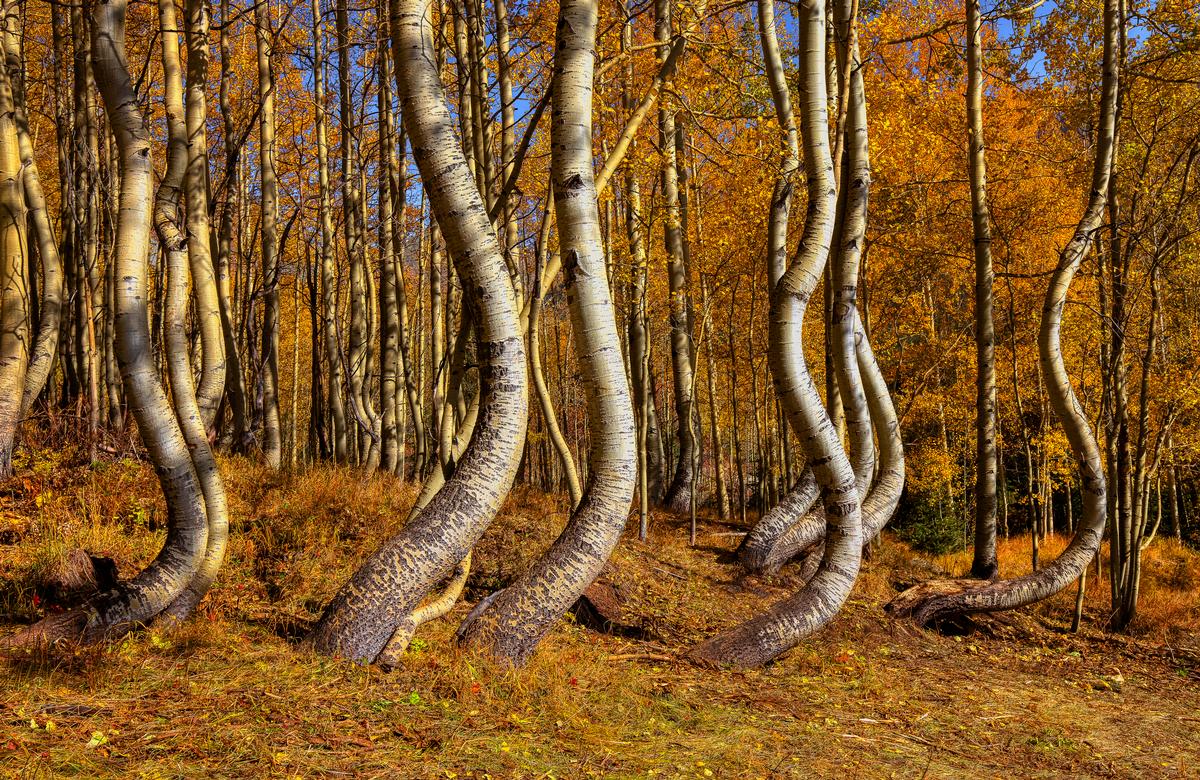
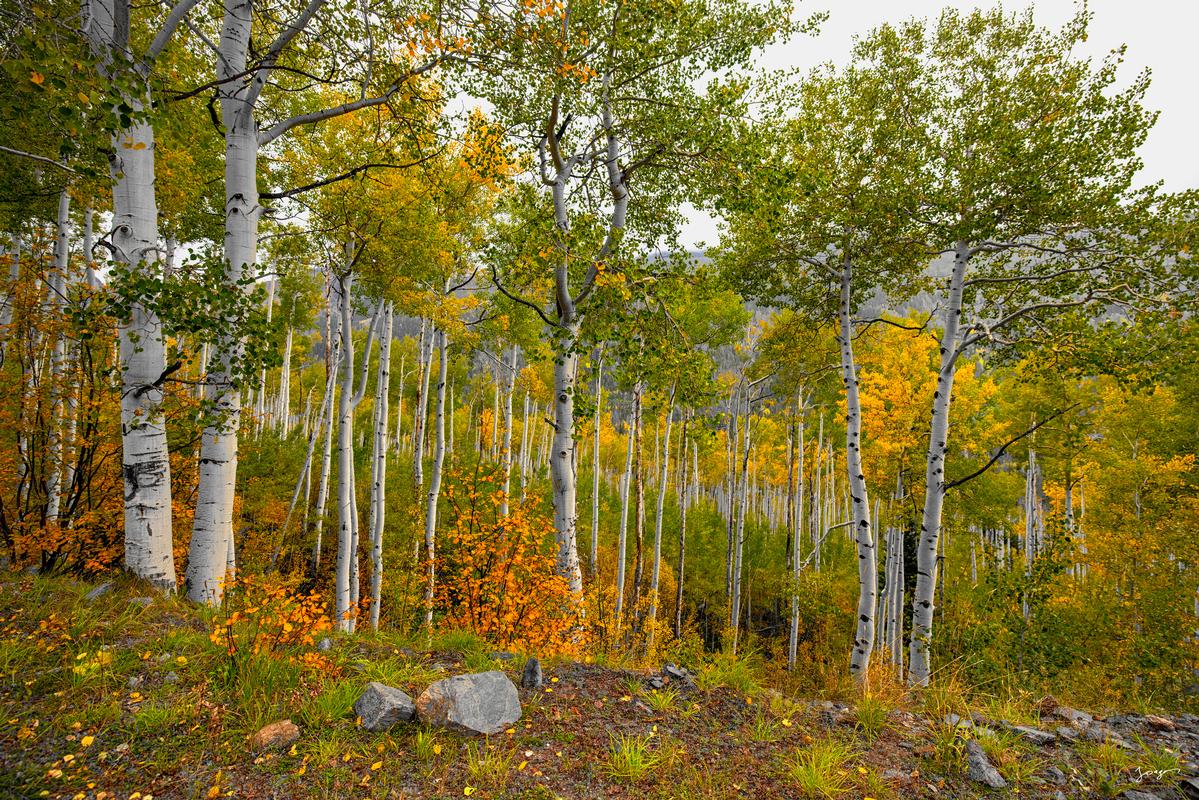
Pando — Latin for “I spread” — is a massive grove of Quaking Aspens in Fish Lake National Forest in Utah. It looks like a forest of individual trees, but it is not. Every single trunk in that 106-acre grove is connected underground to the same root system, and the entire thing is one single living organism. There are over 40,000 individual trunks, and the whole organism weighs over 6,000 metric tons, making it the heaviest known living thing on Earth. The underground root system has been cloning itself for at least 14,000 years — and some scientists estimate the organism could be up to 80,000 years old. Each individual trunk only lives for about 100 to 150 years before dying and being replaced by a new one growing from the same roots, like a living system that keeps replacing its own parts while the core never dies.
Aspens are remarkable trees for reasons beyond Pando — and if you want to understand the full difference between aspen and birch trees, two species that most people confuse with each other constantly, I wrote a full breakdown in the Aspen vs. Birch article on this blog.

Pando is not alone in the clonal category. The Jurupa Oak in Riverside County, Southern California, is a clonal colony of Palmer’s Oaks that has been resprouting from the same root system for over 13,000 years — it sprouted from an acorn at the end of the last Ice Age and has survived every warming, drying, and wildfire since by burning above-ground and regrowing from below. Scientists confirmed it is a single organism through genetic testing and also discovered something strange: the plant flowers profusely but produces entirely sterile acorns. It cannot reproduce sexually at all. It has been surviving purely through cloning for over 130 centuries.
There is also King Clone, a Creosote bush in the Mojave Desert that has been expanding outward in an elliptical ring for approximately 11,700 years. It grows about one millimeter per year and now stretches nearly 67 feet across. The Old Tjikko Norway Spruce in Sweden spent most of its 9,550-year existence as a low-lying bush hugging the ground against harsh alpine winters, only growing into its current upright tree form as the climate warmed over the last century. The Huon Pines of Mount Read in Tasmania have been regenerating from the same underground root network for at least 10,000 years. The individual trunks resist rot for centuries due to a natural oil in the wood called methyl eugenol.
Clonal organisms deserve their own dedicated article — there is a lot more to say about them, and I plan to write it. For now, the short version is: if you are counting genetic organisms rather than individual trunks, the age records get significantly more extreme than even Methuselah and Gran Abuelo.
How Scientists Actually Figure Out How Old a Tree Is
Before you can crown a winner in the oldest-tree debate, someone has to actually count the rings. Here is how they do it without destroying the tree in the process.
The main tool is called an increment borer. It is a hollow, stainless-steel drill, hand-cranked, that scientists push into the trunk of a tree aiming for the exact center. When it reaches the center, they slide a flat metal spoon into the tube and pull out a thin cylinder of wood — about as wide as a drinking straw — that shows every single annual growth ring from the outside of the tree to the very core. Does it hurt the tree? For most species, no. The hole seals itself quickly with resin. For bristlecone pines, the wood is already so dense and full of natural resins that the hole effectively plugs itself almost immediately.
Counting the rings is only the beginning, though. For ancient trees in harsh environments, there are complications. In a severely cold or dry year, a tree might not grow at all — leaving no ring for that year. In a year with unusual weather patterns, it might grow twice, leaving a false ring. To deal with this, scientists use a technique called cross-dating.
Cross-dating works by comparing ring patterns across multiple trees in the same region. Each tree’s ring pattern is like a unique barcode — wide rings in good years, narrow rings in bad ones. Scientists take core samples from multiple living trees and match their patterns. Then they go further: because bristlecone pine wood is so resistant to rot, ancient fallen logs on the forest floor have been sitting there for thousands of years without decaying. Scientists match the outer rings of a dead log with the inner rings of a living tree. Then they find an even older dead log and match its outer rings to the inner rings of the first dead log. By daisy-chaining these overlapping patterns backward through time, researchers have built an unbroken master timeline of bristlecone pine ring records stretching back over 10,000 years. It is a clock assembled from fragments, and it is extraordinarily accurate.
For trees that are too fragile to core, or too large for a conventional drill, scientists use sonic tomography — essentially an ultrasound for trees. Sensors placed around the trunk send sound waves through the wood, and because sound travels faster through solid, healthy wood than through hollow or rotten sections, a computer can generate a detailed map of the tree’s interior without touching it. High-resolution X-ray scanning of extracted core samples can also reveal microscopic rings invisible to the naked eye.
What Tree Rings Tell Us Beyond Age
A tree ring does not just tell you how old the tree is. It tells you what was happening in the world that year.
Wide rings mean a good growing season — plenty of rain and warmth. Narrow rings mean stress — drought, cold, insects, disease. Scientists call this field dendroclimatology, and using these patterns, researchers have reconstructed year-by-year records of rainfall and temperature stretching back thousands of years in regions that had no weather stations, no written records, and no other way of knowing what the climate was doing.
Volcanic eruptions leave their own specific fingerprint. When a massive volcano erupts, it can throw enough sulfur dioxide into the atmosphere to block sunlight and drop global temperatures for a year or more. Trees record this as a frost ring — a dark, distorted scar caused by an unexpected summer frost killing the cells that were actively growing. By matching frost rings across trees on different continents, scientists have pinpointed the exact year of ancient eruptions that happened thousands of years before any human wrote anything down. The catastrophic eruption of Mount Tambora in 1815 — the largest volcanic eruption in recorded history, the one that caused the “Year Without a Summer” in 1816 — left a clear frost ring visible in trees across the Northern Hemisphere.
Even massive solar flares leave their mark. When the sun unleashes an enormous burst of energy, it creates a spike of a radioactive isotope called Carbon-14 in the atmosphere. Trees breathing in carbon that year lock that exact spike into one year’s growth ring. Scientists have found matching Carbon-14 spikes in ancient trees around the world corresponding to the years 774 CE and 993 CE — events now called Miyake Events — which have helped physicists map the history of the sun’s most extreme behavior going back a thousand years.
The Part That Connects to Art — Catching Forgers With Tree Rings
Here is where the story takes a turn you probably did not see coming.
Before canvas became the standard material for oil paintings in Europe, the great Dutch and Flemish masters of the Renaissance and the Dutch Golden Age — Rembrandt, Rubens, Vermeer — painted on rigid wooden panels. And those wooden panels came from trees. Which means those panels have tree rings. Which means dendrochronologists can date them.
Art historians do not drill holes in priceless paintings. Instead, they look at the exposed edge of the wooden panel, where the end-grain of the wood is naturally visible. Because these panels were typically sliced from the center of oak trees outward like pieces of pie, the edge of the panel shows a perfect cross-section of the tree’s annual rings. A specialist cleans a small section of the edge, coats it with a tiny bit of oil to make the rings visible, photographs it under a macro lens, and uses software to measure the ring widths down to fractions of a millimeter.
When researchers first started applying this technique to Dutch paintings, something strange happened: the ring patterns did not match any local Dutch, German, or French tree chronologies. After more investigation they discovered why. By the 16th and 17th centuries, Western Europe had been heavily deforested. Dutch artists were importing their panel wood from the Baltic region — modern-day Poland, Lithuania, and Latvia — where cold, predictable winters produced slow-growing, dense, perfectly uniform Baltic oak that was resistant to warping and ideal for painting. Because of this, the master ring chronology for Dutch panel paintings is actually a Baltic timber chronology, and by matching a painting’s ring pattern to that chronology, scientists can determine exactly when the specific tree that became that panel was cut down.
This information can settle arguments that have gone on for centuries. If a painting is signed and dated “Rembrandt 1635” but the youngest growth ring in its panel was laid down in 1640, the timeline is impossible. The panel did not exist yet in 1635. The painting is either a later copy, a forgery, or dated incorrectly. Tree rings just called out a four-hundred-year-old lie.
The most powerful application is when scientists discover that two different paintings share wood cut from the exact same log. When a lumber merchant processed a Baltic oak into panels, those panels were sequential slices from the same tree. Their ring patterns are biological twins. If a disputed painting — one that experts have argued for decades might be a workshop copy or a later forgery — shares its tree with a verified Rembrandt hanging in a completely different museum, it means both panels sat in Rembrandt’s workshop at the same time. That is the strongest possible physical evidence that the disputed work is genuine.
A tree that grew in the forests of Poland in the 1600s is still, 400 years later, helping us understand what is real and what is not in the history of art. That is one of the more quietly remarkable facts I have encountered in a long time of thinking about both trees and paintings.
Why Trees Matter to Photography and Art
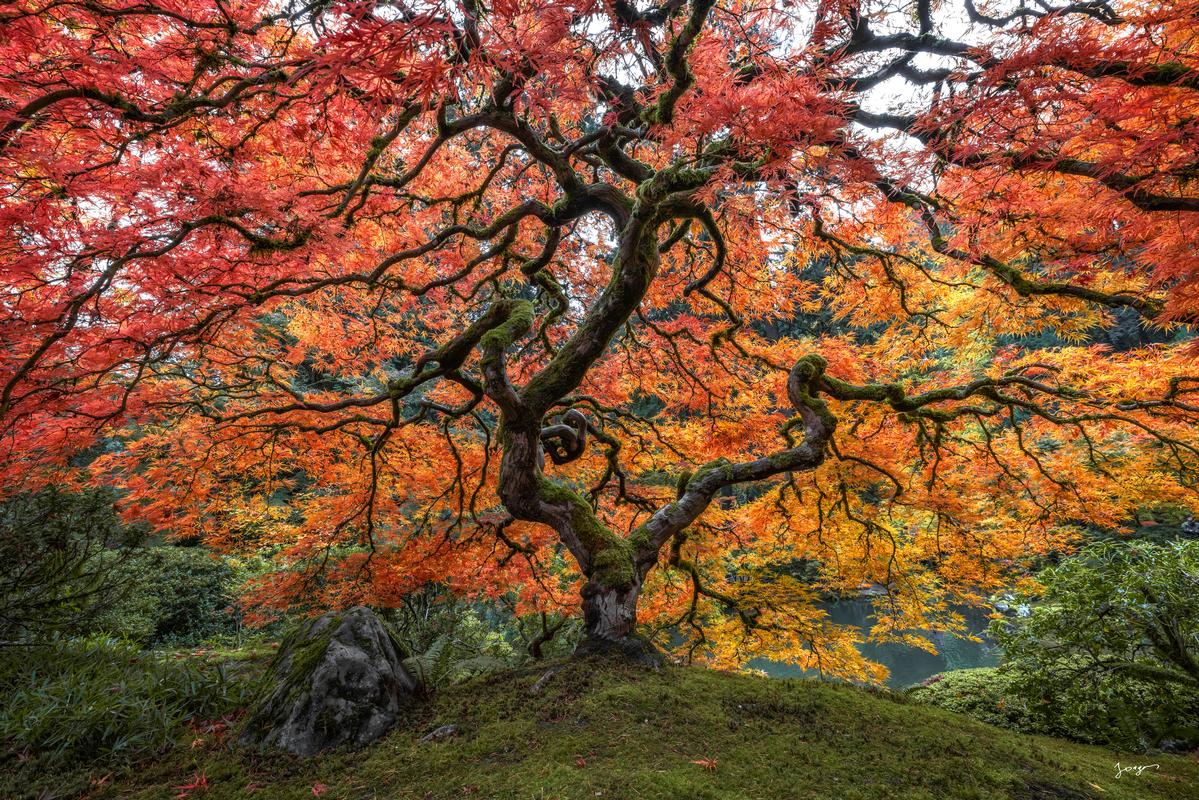
I photograph trees the same way I photograph mountains and coastlines — as things that existed long before I arrived and will exist long after. There is a specific quality to a very old tree that does not exist in any other subject. It has survived things. It has grown through ice ages and droughts and fires. The rings in its wood are a record of everything the world threw at it, and it is still there.
That persistence, that survival across time, is what makes trees one of the most compelling subjects in fine art photography. A photograph of an ancient tree is not just a record of what it looks like. It is a confrontation with a kind of patience and endurance that is genuinely foreign to human experience. We live for decades. These trees live for millennia. Standing next to one changes your sense of scale, and a great photograph of one can bring some of that feeling home with you. If you want to go deeper on trees as a photographic subject — from aspens to redwoods to the lone coastal cypress — the tree photography prints guide on this blog covers the most visually powerful tree subjects in the American West and why they work so well as large-format wall art.
The tree photography collection at Jongas Fine Art Photography includes work from across the American West — aspen groves, coastal redwoods, high-desert pines, and the specific quality of light that old trees hold differently than younger ones. Limited editions, TruLife acrylic-mounted, signed with Certificate of Authenticity.
Eddie Jongas is a modern fine art photographer based in Las Vegas, Nevada. His TruLife acrylic-mounted limited edition prints are available exclusively through jongasfineartphotography.com. Free shipping to all 50 states.