Constance Fox Talbot — Was She the First Female Photographer?
Who was the first female photographer in history? Many people immediately think of Anna Atkins, the British botanist who created the first photographically illustrated book. Others might think of Julia Margaret Cameron, whose expressive portraits helped establish photography as fine art.
But another woman deserves particular attention when discussing the earliest years of photography: Constance Fox Talbot.
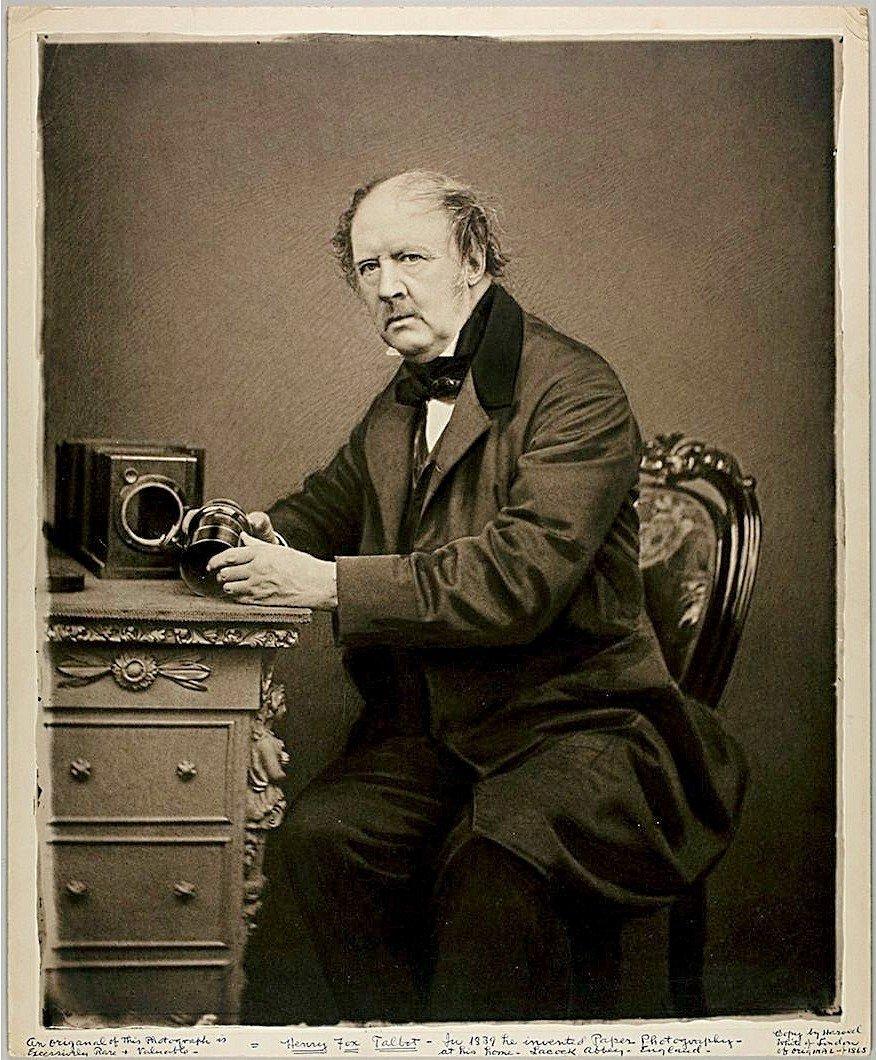
Although her name is considerably less familiar than that of her husband, William Henry Fox Talbot, Constance was experimenting with photography as early as 1839, the very year in which photography was publicly introduced to the world.
Her surviving work is remarkably limited, but her story offers a fascinating glimpse into the beginnings of photography, the overlooked contributions of women and the invention of a medium that would eventually transform the world of fine art.
Who Was Constance Fox Talbot?
Constance Fox Talbot (1811–1880), born Constance Mundy, was an English woman who became one of the earliest documented female participants in the development of photography.
In 1832, she married William Henry Fox Talbot, a scientist, mathematician and inventor whose photographic experiments would help establish the foundations of modern photography.
The couple lived at Lacock Abbey in Wiltshire, England, a historic property that became the setting for some of the most important experiments in photographic history.
It was here that William developed methods for recording images on light-sensitive paper and producing positive photographic prints from negatives.
Constance therefore had access to photography at a time when very few people had even seen a photograph, let alone attempted to create one.
But she was more than simply the wife of a famous inventor. Her surviving correspondence reveals that she personally experimented with the new medium.
The Race to Invent Photography — Talbot vs. Daguerre
To fully appreciate the historical significance of Constance Fox Talbot's photographic experiments, it is worth understanding the extraordinary circumstances surrounding the invention of photography itself.
 Buy This Print by Eddie Jongas · Limited Edition
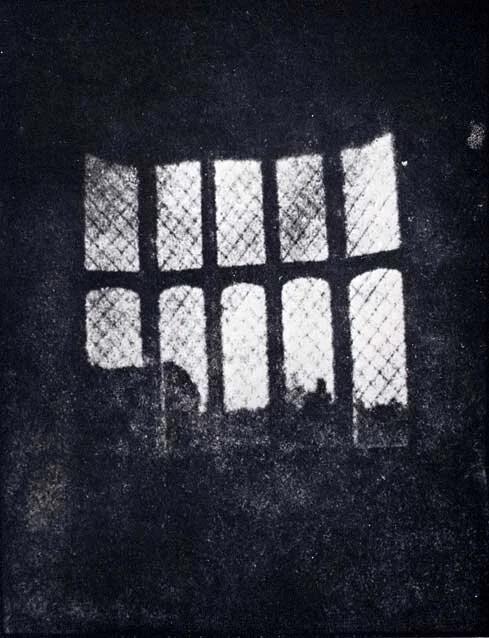
In 1834, William Henry Fox Talbot began experimenting with light-sensitive paper at Lacock Abbey. By 1835, he had successfully produced photographic negatives using small cameras, including his famous photograph of a latticed window at the Abbey.
In an 1853 letter to John Henry Bolton, Talbot recalled how he had developed his photographic process several years before Daguerre's public announcement in 1839, but had not yet formally published his discoveries.
Meanwhile, across the English Channel, French artist and inventor Louis Daguerre had been pursuing a similar ambition. Building upon earlier experiments conducted with Nicéphore Niépce, Daguerre developed an entirely different method of creating permanent photographic images.
In January 1839, news of Daguerre's invention was announced in Paris, attracting international attention. For Talbot, who had already produced photographic images several years earlier, the announcement came as an unwelcome surprise.
Talbot quickly presented his own discoveries to the Royal Society in London on January 31, 1839, establishing his independent contribution to the invention of photography.
Although the two men had been working independently, their inventions differed in one fundamental respect. Daguerre's process produced a unique photographic image on a metal plate, while Talbot's process created a photographic negative from which multiple positive prints could be made.
Daguerre's invention initially enjoyed greater commercial success, but Talbot's negative-positive process would ultimately provide the foundation for much of modern photographic printing.
It was during this remarkable period of scientific discovery and competition that Constance Fox Talbot began conducting her own photographic experiments.
In May 1839, just months after the competing photographic inventions had been announced, Constance wrote to her husband describing her own attempts at creating photographs. Her surviving correspondence provides important evidence that women were participating in photography from its earliest experimental years.
Her participation therefore places her not simply among the earliest women to practice photography, but within the very historical moment when photography was being introduced to the world.
For a broader look at how these early inventions eventually transformed photography into an artistic medium, explore the evolution of fine art photography.
Was Constance Fox Talbot the First Female Photographer?
Constance Fox Talbot is frequently identified as the first woman known to have taken a photograph. However, as with many claims concerning the earliest years of photography, the historical evidence requires careful interpretation.
 Buy This Print by Eddie Jongas · Limited Edition
In a letter to her husband dated May 21, 1839, Constance described her own photographic experiments, explaining that she had been working hard on photographs despite encountering difficulties.
Although her attempts had not been particularly successful, she recognized that the experience had helped her learn.
This correspondence is significant because it establishes that Constance was actively experimenting with photography only months after the medium's public announcement in January 1839.
Unfortunately, no photograph from these particular experiments is known to survive. Consequently, it is difficult to establish exactly what she photographed or whether another woman might have experimented with photography even earlier.
Nevertheless, the surviving evidence places Constance among the earliest documented women to practice photography and makes her one of the strongest candidates for the distinction of being the first female photographer.
What Did Constance Fox Talbot Photograph?
Perhaps the most fascinating aspect of Constance's photographic legacy is that her best-documented surviving photograph does not depict a landscape, a person or an architectural subject.
Instead, it reproduces lines from a poem.
In 1843, Constance created a photographic copy of printed lines from 'Tis the Last Rose of Summer, a poem by the Irish poet Thomas Moore.
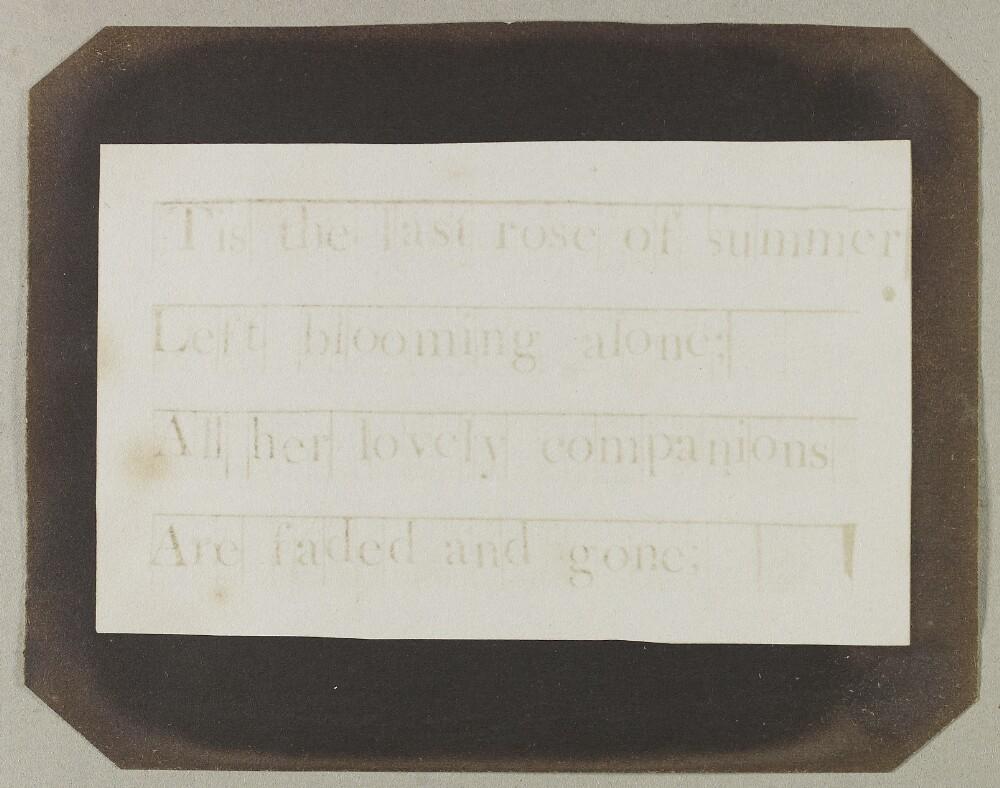
The photograph is particularly important because Constance referred to its creation in her correspondence with her husband, providing evidence of her authorship.
Another photographic reproduction of handwritten lines from a Thomas Moore poem has also been attributed to her, although that attribution is less certain.
These works may appear modest compared with the elaborate photographs produced by later nineteenth-century artists. However, they reveal one of the earliest applications of photography: the ability to reproduce existing visual information through the action of light.
At a time when reproducing written documents, illustrations or works of art often required considerable manual effort, photography offered an entirely new possibility.
 Buy This Print by Eddie Jongas · Limited Edition
A physical object could be recorded and its appearance preserved through a photographic process.
These experiments belonged to the formative years of traditional photography, when photographers were still discovering what the medium could accomplish.
Constance Fox Talbot vs. Anna Atkins — Who Was First?
Anyone researching the history of women in photography will eventually encounter the name Anna Atkins.
Atkins is frequently described as the first female photographer, a distinction that is also associated with Constance Fox Talbot.
However, the achievements of these two women were considerably different.
| Constance Fox Talbot | Anna Atkins |
|---|---|
| Documented photographic experiments in 1839. | Created botanical photographs using the cyanotype process. |
| Best-documented surviving photograph dates from 1843. | Began publishing Photographs of British Algae: Cyanotype Impressions in 1843. |
| Experimented within the photographic environment of the Talbot household. | Developed an extensive photographic project combining science and visual representation. |
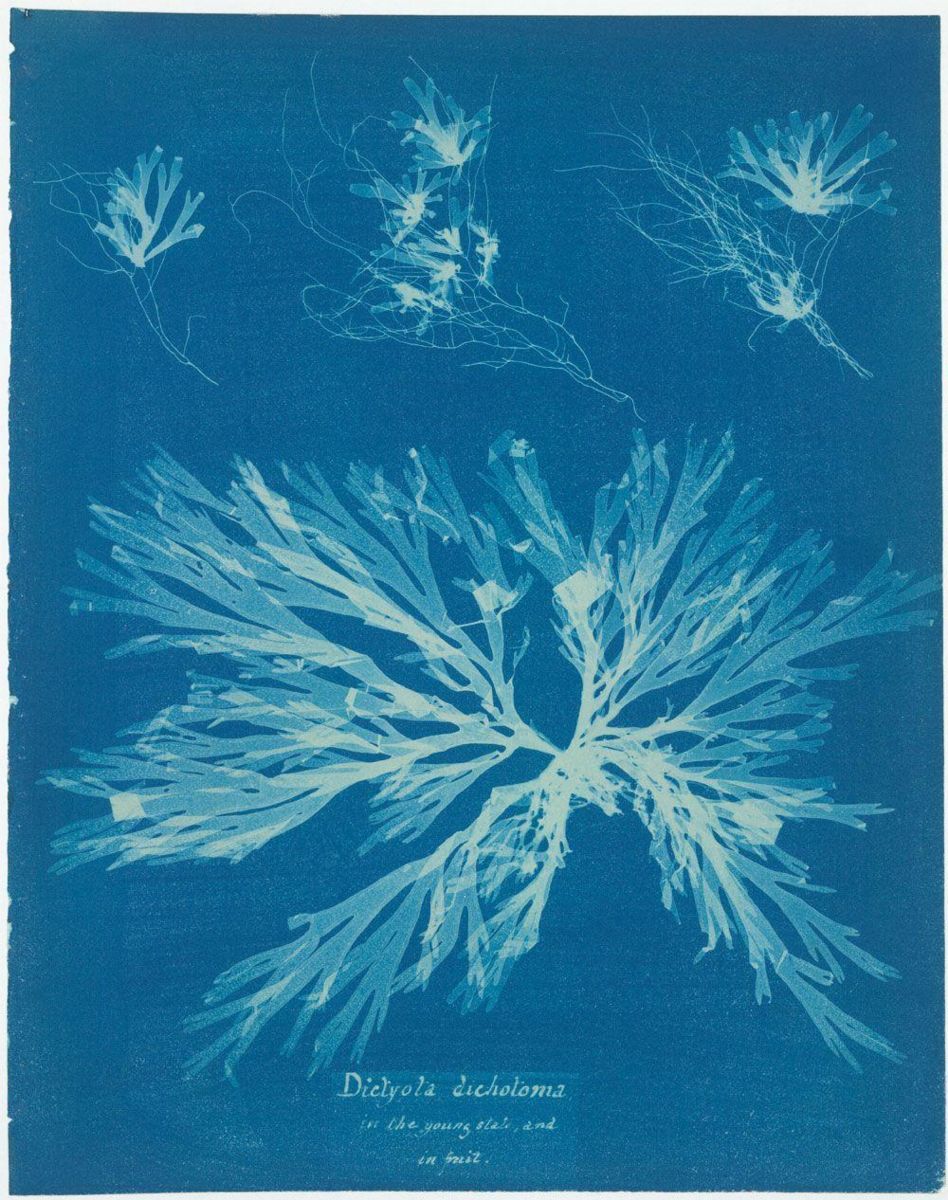
| One of the earliest documented women to practice photography. | Created the first book illustrated with photographs. |
Constance's correspondence provides evidence of photographic activity as early as 1839. Anna Atkins, meanwhile, left behind a substantial body of botanical photography that represents one of the most important achievements in early photographic publishing.
Atkins used the cyanotype process, invented by Sir John Herschel in 1842, to create detailed images of algae and other botanical specimens.
Her photographs combined scientific documentation with a remarkable visual elegance that continues to appeal to contemporary audiences.
Rather than attempting to diminish the achievements of either woman by determining which one deserves an exclusive historical title, it is more useful to recognize their different contributions.
Constance Fox Talbot represents the participation of women in photography's earliest experimental years. Anna Atkins demonstrated how photography could become the foundation of an ambitious scientific and publishing project.
Both helped establish the presence of women in photography from the very beginning.
 Buy This Print by Eddie Jongas · Limited Edition
Why Were Early Women Photographers Overlooked?
The limited surviving photographic work of Constance Fox Talbot raises an important question about the way photographic history has been recorded.
During the nineteenth century, women frequently faced restrictions in professional education, scientific institutions and artistic organizations. Their creative and intellectual activities were often documented less extensively than those of their male contemporaries.
In Constance's case, her photographic experiments took place alongside the work of a husband whose inventions would become internationally recognized.
It is therefore understandable that William Henry Fox Talbot's achievements came to dominate the historical narrative surrounding the family.
However, the survival of Constance's correspondence allows us to recognize her as an active participant in photography's earliest years rather than simply a spectator.
Later photographers such as Julia Margaret Cameron would establish much more extensively documented artistic careers, exhibiting their photographs, registering copyrights and selling original photographic prints.
Constance's story represents an earlier chapter in that history, when the possibilities of photography were still being discovered.
From Early Photographic Experiments to Collectible Fine Art Prints
As a modern fine art photographer, I find the story of the Talbot family particularly interesting because their experiments helped establish one of the most important characteristics of photographic art: the ability to reproduce a photographic image multiple times.
For a fine art photographer, this ability can be both a blessing and a curse. By producing only one print of an image, you limit your commercial opportunities. By producing hundreds or thousands of prints, you reduce the exclusivity of the artwork among collectors.
This is one of the subjects I explore in my article discussing whether fine art photography prints are a good investment.
William Henry Fox Talbot's negative-positive photographic process made it possible to produce multiple positive photographic prints from a single negative. This distinguished his approach from the daguerreotype, which generally produced a unique photographic object — an image on a silver-plated copper plate.
Nearly two centuries later, the ability to create multiple prints from a single photographic image remains fundamental to the fine art photography market.
But here is the irony. While early photographers were attempting to discover how photographs could be reproduced, modern fine art photographers sometimes deliberately restrict the number of prints produced from an image.
Limited editions allow photographers to establish a defined number of original artworks. Signatures, edition numbers and certificates of authenticity help collectors identify the individual prints they acquire.
At Jongas Fine Art Photography, I have taken this concept a step further. In my Only One Collection, I offer each TruMasterpiece™ artwork as a single gallery-quality, acrylic-mounted fine art print. No additional fine art prints of that image will ever be produced.
My goal with this collection is to offer art collectors the opportunity to own a truly exclusive photographic artwork. These are some of my favorite photographs — images I would rather offer as a single collectible print than reproduce in editions of tens or hundreds.
Think of the distinction between owning an original painting by Van Gogh or Picasso and owning a reproduction of that painting. There is only one original Mona Lisa. Its uniqueness is one of the many characteristics that distinguish it from the countless reproductions available around the world.
Photography presents a particularly interesting opportunity because the artist can deliberately establish the scarcity of an artwork, even when the underlying image could theoretically be reproduced.
That commitment to exclusivity is at the heart of my Only One Collection.
From the earliest experiments with light-sensitive paper at Lacock Abbey to today's sophisticated fine art print creation processes, photography has evolved into a medium capable of producing extraordinary detail, color and archival quality for contemporary art collectors.
 Buy This Print by Eddie Jongas · Limited Edition
Constance Fox Talbot's Legacy
Constance Fox Talbot may never achieve the widespread recognition associated with Anna Atkins, Julia Margaret Cameron or other celebrated women photographers.
Her surviving photographic work is limited, and the full extent of her involvement in early photography remains uncertain.
Nevertheless, her correspondence and surviving photographic experiments provide an important reminder that women were participating in the development of photography from its earliest days.
Her story also reminds us that the history of fine art photography is not simply a succession of famous inventions and celebrated artists. It is also the story of individuals who experimented with a new medium before anyone fully understood what it might eventually become.
Today, photography is recognized as one of the most expressive and widely collected forms of visual art.
Its remarkable evolution began with experiments such as those undertaken by the Talbot family nearly two centuries ago.
Constance Fox Talbot's experiments belong to the earliest chapter in the history of women photographers. Over the following decades, women would contribute not only to the technical development of photography but also to its recognition as an artistic and commercial medium. By the end of the nineteenth century, Gertrude Käsebier had established a successful portrait photography studio in New York and become one of the leading figures of the Pictorialist movement. Her career illustrates how far photography had evolved since Talbot's earliest experiments — from the challenge of creating a photographic image to the recognition of photography as a profession and a collectible form of fine art.
Frequently Asked Questions About Constance Fox Talbot
Who was Constance Fox Talbot?
Constance Fox Talbot was an English woman and early photography pioneer who lived from 1811 to 1880. She was married to William Henry Fox Talbot and participated in photographic experiments during the earliest years of photography.
Was Constance Fox Talbot the first female photographer?
Constance Fox Talbot is often credited as the first female photographer because her correspondence documents photographic experiments in May 1839. However, the incomplete historical record makes it difficult to establish definitively who was the first woman to take a photograph.
What was Constance Fox Talbot's first photograph?
Her earliest photographic experiments are documented in 1839, but no photographs from those experiments are known to survive. Her best-documented surviving photograph, created in 1843, reproduces printed lines from Thomas Moore's poem 'Tis the Last Rose of Summer.
Was Anna Atkins the first female photographer?
Anna Atkins is frequently described as the first female photographer, but Constance Fox Talbot's correspondence documents photographic activity as early as 1839. Atkins is more securely recognized for creating the first photographically illustrated book, beginning in 1843.
Did Constance Fox Talbot invent photography?
No. Her husband, William Henry Fox Talbot, was one of photography's principal inventors. Constance participated in early photographic experiments, but there is insufficient historical evidence to credit her with inventing a photographic process.
Sources and Further Reading
- Hundred Heroines — Constance Fox Talbot
- Europeana — The First Women of Photography
- The Metropolitan Museum of Art — Photographs of British Algae: Cyanotype Impressions
- Victoria and Albert Museum — William Henry Fox Talbot: An Introduction
- Science Museum Group — William Henry Fox Talbot
- William Henry Fox Talbot Correspondence Project — Talbot's Account of the Invention of Photography, 1853
Explore Modern Fine Art Photography Prints by Jongas
Explore how the photographic medium has evolved into contemporary collectible artwork through the Jongas Fine Art Photography Collection, featuring original limited-edition landscape, nature, city and panoramic photography prints created for private collectors and contemporary interiors.
 Buy This Print by Eddie Jongas · Limited Edition
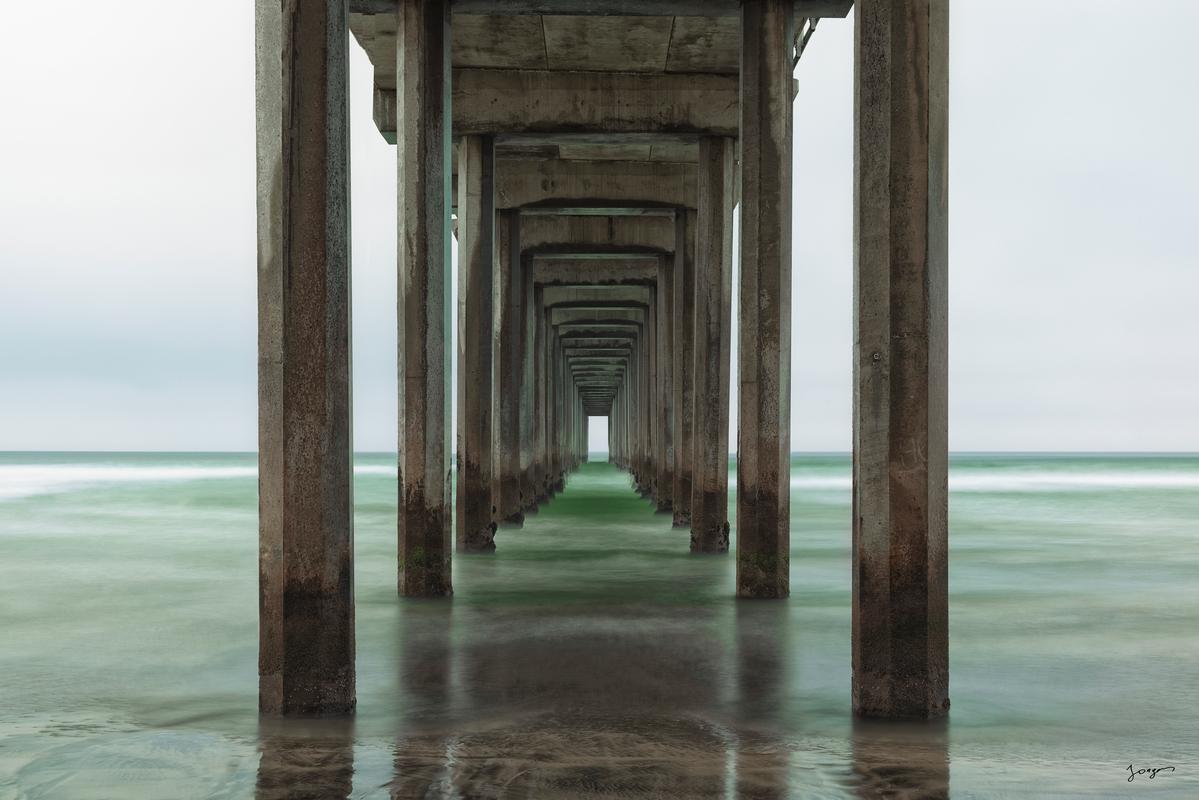 Buy This Print by Eddie Jongas · Limited Edition
 Buy This Print by Eddie Jongas · Limited Edition
