Julia Margaret Cameron — The Woman Who Helped Turn Photography Into Fine Art
If I mentioned the history of fine art photography, many people would immediately think of Ansel Adams and his iconic black-and-white photographs, perhaps imagining him deep in the Yosemite mountains, sitting on a rock and reloading his film holders inside a lightproof changing bag. But that would be selling the history of photographic art very short!
The story of photography as fine art began decades before Ansel Adams was born. Among its most fascinating chapters is the story of a remarkable woman who challenged the conventions of nineteenth-century photography, developed her own artistic language and began selling photographs as works of fine art: Julia Margaret Cameron.
When Julia Margaret Cameron received her first camera in December 1863, she was 48 years old, a mother of six, and had no formal training as a photographer. The camera was intended to provide her with an enjoyable occupation. Instead, it became the instrument through which she would challenge the conventions of photography and help establish a new form of artistic expression.
Within a remarkably short period, Cameron was creating expressive portraits, registering copyrights for her photographs, exhibiting her work and selling original photographic prints through one of London's established art dealers.
At a time when photography was still struggling to gain recognition alongside painting and sculpture, Cameron insisted that a photograph could express imagination, emotion, beauty and artistic vision.
Her photographs were not simply records of the people who stood before her camera. They were interpretations of character, spirituality and human experience.
Equally important, Cameron understood that these photographs had value as works of art. They could be exhibited, collected, purchased and associated with the identity of their creator.
For anyone interested in the evolution of fine art photography, the history of women in photography, or the origins of the photographic art market, Julia Margaret Cameron represents one of the most fascinating figures of the nineteenth century.
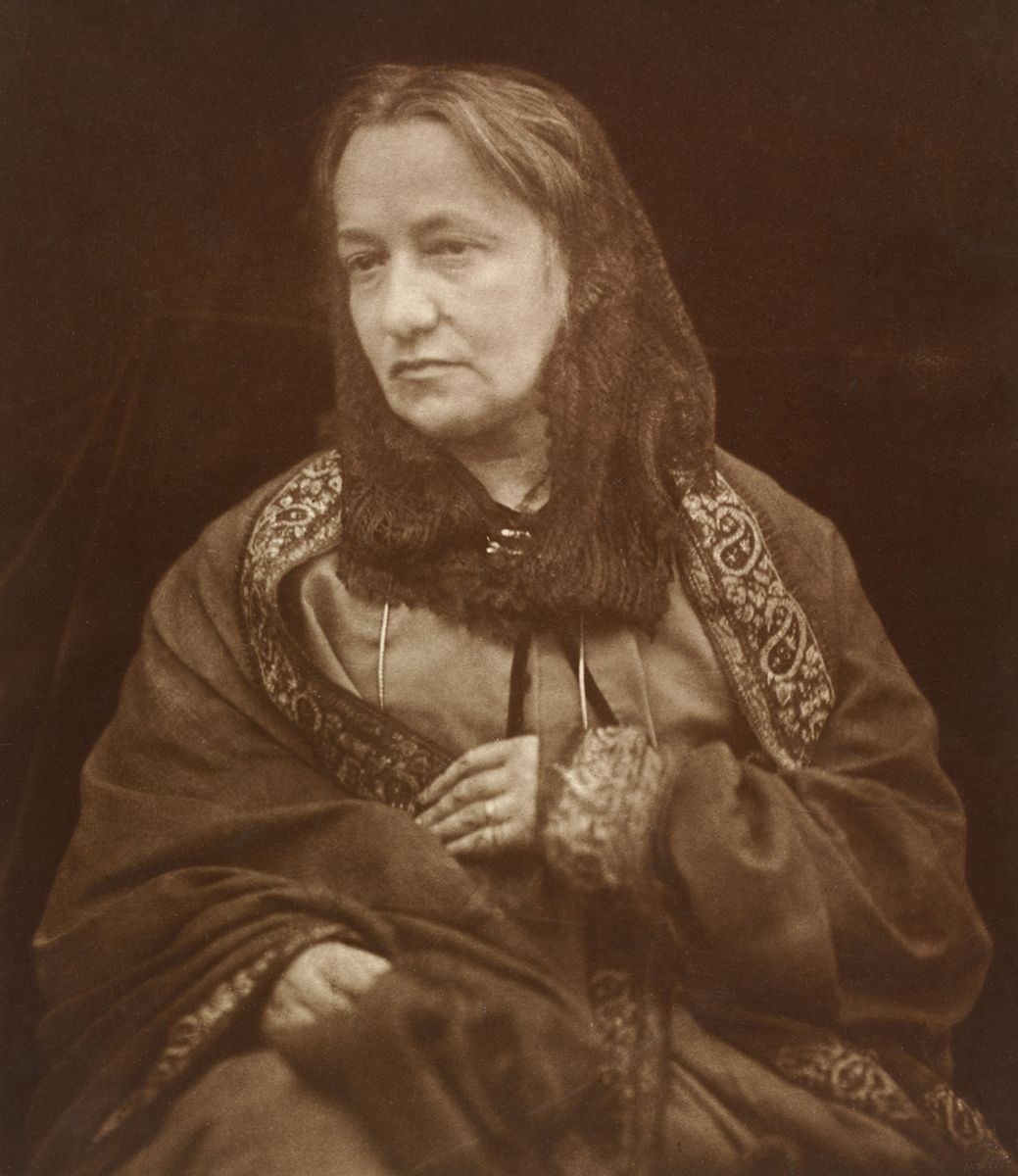
Who Was Julia Margaret Cameron?
Julia Margaret Cameron (1815–1879) was a British photographer born in Calcutta, India, during the period of British colonial rule. Originally named Julia Margaret Pattle, she grew up in a family with strong connections to British and European intellectual and artistic society.
In 1838, she married Charles Hay Cameron, a legal scholar and colonial administrator. The couple eventually moved to England and, in 1860, settled at Freshwater on the Isle of Wight.
Their home, Dimbola Lodge, became part of a remarkable artistic and intellectual environment. Among Cameron's friends and acquaintances were some of the most influential cultural figures of Victorian Britain:
- Alfred, Lord Tennyson — poet and Poet Laureate of Britain.
- Sir John Herschel — astronomer, scientist and photographic pioneer.
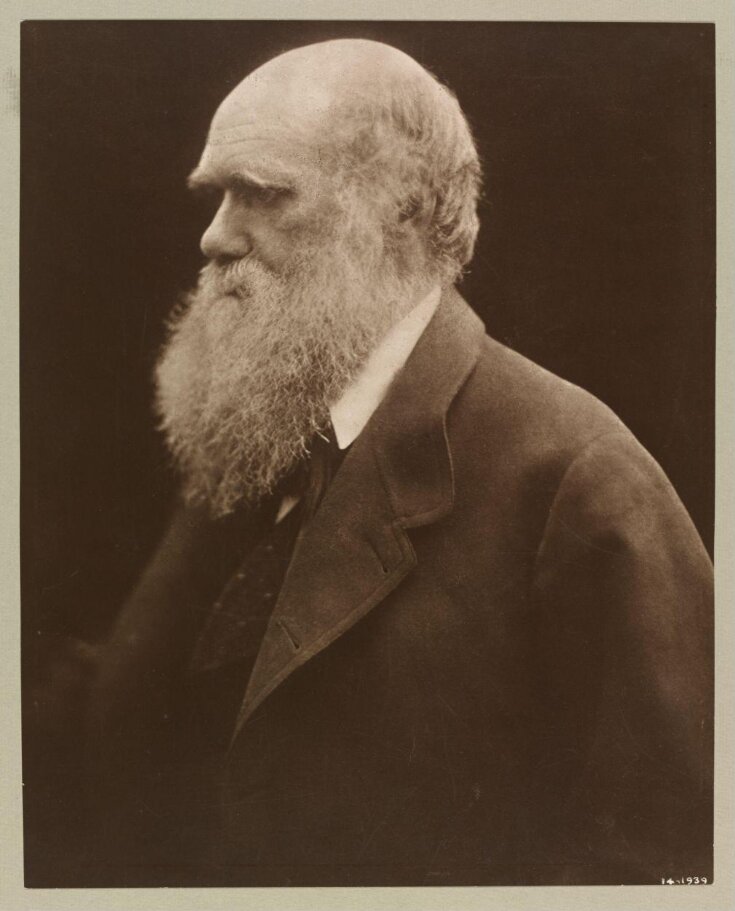
- Charles Darwin — naturalist and author of On the Origin of Species.
- George Frederic Watts — painter and sculptor.
- Thomas Carlyle — historian, philosopher and essayist.
These relationships would later provide Cameron with extraordinary photographic subjects. More importantly, they placed her within a community that valued literature, philosophy, science and the visual arts.
Photography would become her own contribution to that cultural world.
Beginning an Artistic Career at the Age of 48
In December 1863, Cameron's daughter Julia and son-in-law Charles Norman gave her a camera as a gift.
Her children were growing older, and her husband was spending time away from home attending to family business interests. Photography was suggested as a way to occupy her time.
Few could have anticipated what would follow.
Although Cameron had encountered photography before receiving her camera, she now began pursuing it with extraordinary dedication. She experimented with photographic chemistry, learned to prepare glass negatives and struggled with the practical difficulties of nineteenth-century photographic equipment.
Early photography required much more than pointing a camera at a subject and pressing a button. Photographers had to prepare light-sensitive materials, manage exposure times and develop their negatives using chemical processes that demanded patience and precision.
Cameron converted a coal storage area into a darkroom and a former henhouse into a photographic studio.
In January 1864, she produced a portrait of a young girl named Annie Philpot that she considered her first truly successful photograph.
The portrait, commonly known as Annie, marked the beginning of an artistic career that would produce some of the most celebrated photographs of the Victorian era.
There is something particularly inspiring about the circumstances of Cameron's beginning. She did not enter photography through a traditional professional apprenticeship, nor did she begin her artistic career as a young student.
She discovered her medium at an age when many people might have assumed that the opportunity to begin an entirely new creative career had already passed.
Her achievement remains a reminder that artistic identity is not determined by age, formal qualifications or the expectations of others.
Photography in the 1860s: An Art Form Still Searching for Recognition
To understand Cameron's importance, it is necessary to understand the position photography occupied in the nineteenth-century art world.
By the time she began photographing, the medium had existed publicly for approximately twenty-five years. The daguerreotype, introduced in 1839, had demonstrated photography's extraordinary ability to record detail. William Henry Fox Talbot's negative-positive processes had made it possible to produce multiple photographic prints from a single negative.
Photography was already being used for portraiture, scientific documentation, architecture, travel and the recording of historical events.
Commercial portrait studios were becoming increasingly common, and affordable photographic portraits allowed people to possess likenesses of themselves and their families in a way that had previously been available primarily through painted portraits.
Yet photography's growing popularity did not automatically establish it as fine art.
Many critics regarded photography as a mechanical or scientific process. Because a camera recorded the appearance of the world through optics and chemistry, some questioned whether the photographer possessed the same creative authority as a painter.
Could a photograph communicate an artistic vision, or was it merely a representation of something that already existed?
Could a photographer create an original artwork when the camera itself was responsible for recording the image?
These questions were central to the early debate surrounding photography's artistic legitimacy.
Julia Margaret Cameron's answer was expressed through the photographs she created.
She did not want photography to imitate the precise descriptive qualities of a scientific instrument. She wanted it to communicate something about the inner life of her subjects, the beauty of the human face and the imaginative possibilities of visual art.
Her work belonged to a broader nineteenth-century movement in which photographers increasingly explored the relationship between photographic representation and the traditions of painting.
That relationship remains important when considering the place of photography within classical fine art and its historical traditions.
Why Were Julia Margaret Cameron's Photographs Out of Focus?
One of the most distinctive characteristics of Cameron's photography is its softness.
At a time when many photographers were striving to produce increasingly sharp and technically precise images, Cameron frequently created portraits with a deliberately softened appearance.
Faces emerge from darkness. Hair and clothing dissolve into shadow. Certain features remain clearly defined while others seem to disappear into the surrounding atmosphere.
Some of her photographs also contain scratches, uneven coatings, marks or other traces of the photographic process.
These characteristics led some contemporary critics to question her technical competence.
 Buy This Print by Eddie Jongas · Limited Edition
But Cameron's approach was more complicated than simply failing to achieve a sharp photograph.
She understood that the precise rendering of every visible detail was not necessarily the most effective way to communicate the character or emotional presence of a subject.
In her autobiographical account, Annals of My Glass House, Cameron explained that she sometimes stopped adjusting the focus when the image appeared beautiful to her, rather than continuing toward the greater sharpness expected by other photographers.
For Cameron, the visual and emotional qualities of the photograph could take precedence over conventional technical standards.
Her portraits demonstrate how softness can become an expressive artistic language.
A perfectly sharp photograph might reveal every detail of a person's face. A more selective approach to focus might instead direct the viewer toward an expression, a gesture or a sense of psychological presence.
Neither approach is inherently superior. The important question is whether the photographic technique serves the artistic intention.
Does Technical Perfection Make a Photograph Better?
This question remains relevant to photographers and art collectors today.
Modern cameras can produce images with extraordinary resolution, dynamic range and technical precision. Photographic printing technologies can reproduce subtle tonal variations, complex colors and remarkable levels of detail. These technological luxuries are valuable, particularly when producing large-format photography prints.
However, technical quality alone does not determine the artistic significance of a photograph.
A photograph can be technically flawless and emotionally unremarkable. Another photograph may use movement, softness, unusual lighting or an unconventional composition to create an unforgettable visual experience.
In modern fine art landscape photography, the same principle applies. Mist can conceal details that would otherwise be visible. A long exposure can transform moving water into a soft, abstract surface. Shadows can remove information from a scene while strengthening its atmosphere.
These are not necessarily technical shortcomings. They can be deliberate artistic decisions. Today, fine art photography encompasses an extraordinary range of artistic approaches. Photographers such as Ansel Adams became renowned for their exceptional attention to detail, tonal precision and photographic craftsmanship. Others draw inspiration from Impressionist painters such as Claude Monet, using softness, movement and color to create a more painterly interpretation of the world.
Contemporary photographic artists such as Peter Lik explore another approach, combining dramatic natural subjects, meticulous detail and sophisticated image processing to create visually striking photographic artworks. These different approaches illustrate the extraordinary creative freedom available to modern fine art photographers.
For collectors, the distinction is important. A fine art photograph is not valuable simply because it was created with an expensive camera or contains an impressive number of pixels. Its significance also comes from the photographer's interpretation, originality and ability to communicate a visual experience.
The photographs in the Jongas Fine Art Photography Collection explore the relationship between technical craftsmanship and artistic interpretation of the natural world, demonstrating how the camera can become an instrument of personal expression rather than simply a device for recording the world. Because the truth is, photographing a landscape scene in Yosemite is only half the battle, the real work of creating a final image takes hours in front of the computer getting the colors right, fixing imperfections and adjusting light to end up with an artwork that you readily see.
Julia Margaret Cameron's Photographic Process
Cameron primarily worked with the wet collodion photographic process, producing negatives on glass plates and making photographic prints on albumen paper.
Introduced in 1851, the wet collodion process offered photographers the ability to produce detailed negatives that could be used to make multiple prints.
The process was considerably more demanding than modern photography.
A glass plate had to be coated with collodion, sensitized with silver nitrate, exposed in the camera and developed before the coating dried. The photographer therefore needed access to a darkroom close to the camera.
Cameron often used large glass negatives, allowing her to produce contact prints without requiring photographic enlargement.
Her albumen prints were made using paper coated with egg white and light-sensitive silver compounds. Albumen printing became one of the dominant photographic printing methods of the nineteenth century.
The process could produce delicate tonal transitions and a rich photographic surface, qualities that complemented Cameron's expressive approach to portraiture.
Long exposure times also presented difficulties. Even slight movement by a sitter could soften parts of the image. Dust, imperfections in the glass and uneven chemical coatings could introduce visible marks.
Rather than consistently eliminating every irregularity, Cameron sometimes allowed the characteristics of the process to remain visible in her finished photographs.
These physical traces are part of what makes surviving nineteenth-century photographic prints so interesting to historians and collectors. They reveal something about the circumstances in which an individual artwork was created.
Cameron's photographic methods represent an important chapter in the history of traditional photography, when the creation of a photographic artwork depended upon the photographer's mastery of light-sensitive materials, chemical development and physical printing techniques.
Modern photographic printing has advanced enormously since Cameron's lifetime, but the relationship between the image, the printing process and the physical artwork remains fundamental.
Obviously, a photograph displayed on a screen can never replace a carefully produced photographic print. Paper, tonal reproduction, surface characteristics, scale and presentation all influence how the viewer experiences the finished artwork.
To explore how modern photography images become physical works of art, see my fine art print creation process.
Julia Margaret Cameron's Most Famous Photographs
Cameron's photographic work extended beyond conventional portraiture. She organized her subjects into several broad categories, including portraits, religious compositions and imaginative scenes inspired by literature and mythology.
Her best-known photographs demonstrate the remarkable variety of her artistic ambitions.
Annie — 1864
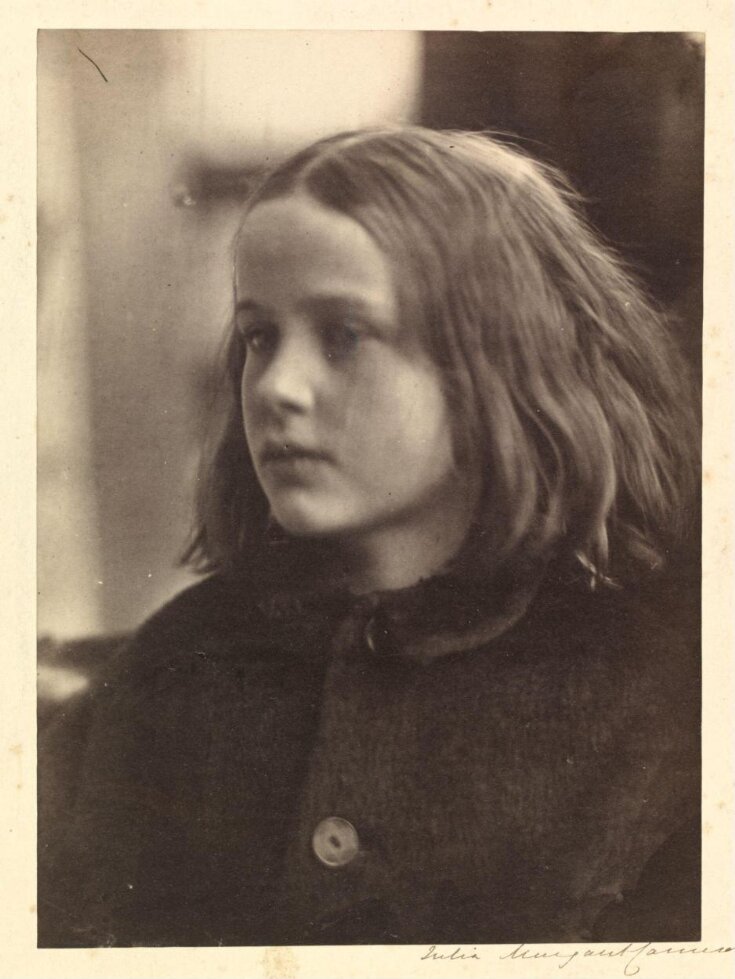
Cameron's portrait of Annie Philpot holds a special place in her photographic career because she identified it as her first successful photograph.
The image represents the moment when her early experimentation began to produce results that satisfied her artistic expectations.
Rather than presenting an elaborate studio setting, the photograph concentrates attention on the young girl's face and presence.
It offers an early indication of Cameron's interest in emotional expression and intimate portraiture.
Sir John Herschel — 1867
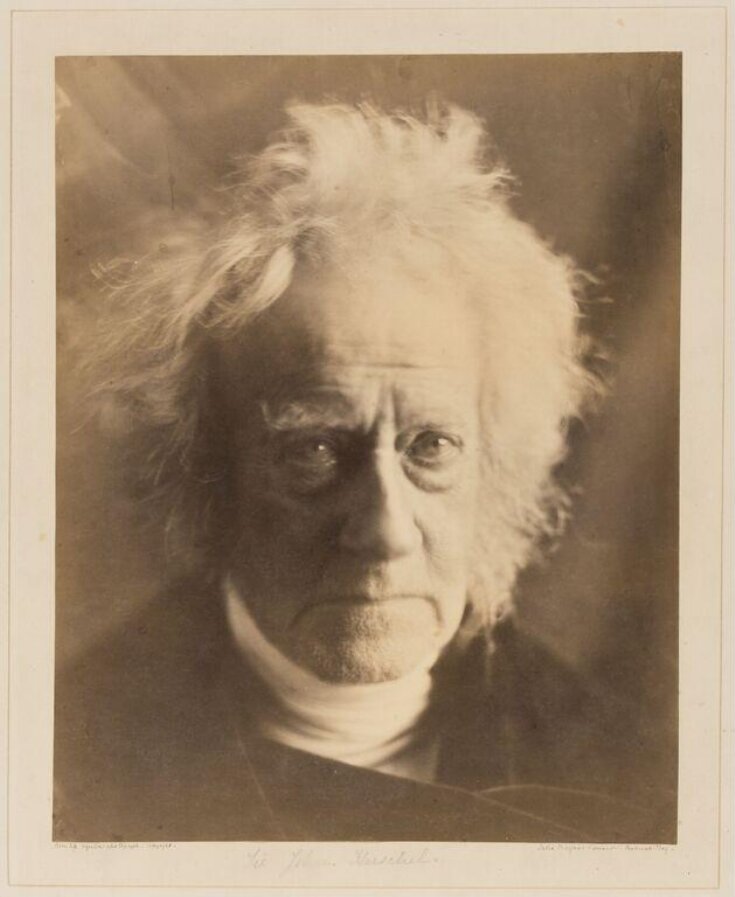
Among Cameron's most celebrated portraits is her photograph of Sir John Herschel, the astronomer and scientist who made important contributions to early photographic chemistry.
Herschel's untidy hair, deeply expressive face and direct presence create an image that feels remarkably modern despite its nineteenth-century origins.
The photograph is not simply a visual record of an important scientist. Cameron transforms Herschel into a representation of intellectual character.
Her use of lighting, close composition and selective detail gives the portrait a sense of psychological intensity.
Herschel also represents an important connection between the scientific and artistic development of photography. His invention of the cyanotype process in 1842 made possible the pioneering photographic publications of Anna Atkins.
Where Atkins used photography to document botanical specimens, Cameron used it to explore human character and artistic imagination.
Both women demonstrated that the possibilities of photography extended far beyond its initial mechanical and scientific applications.
Julia Jackson — 1867
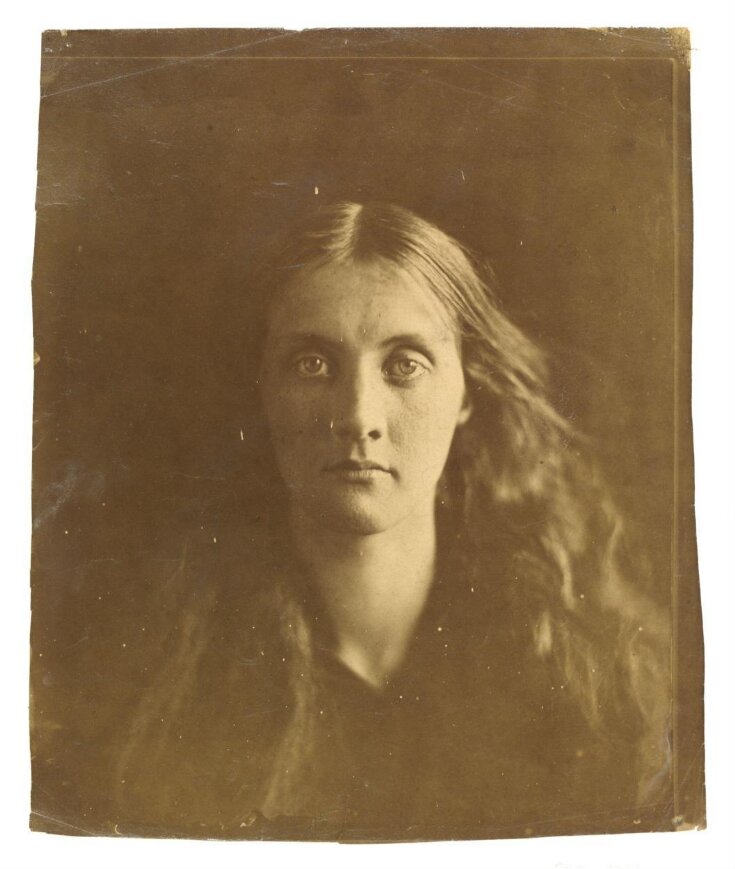
Julia Jackson, Cameron's niece and goddaughter, was one of her most frequently photographed subjects. Jackson later became the mother of the writer Virginia Woolf and the artist Vanessa Bell.
Cameron's portraits of Jackson are celebrated for their emotional depth, elegant simplicity and treatment of light.
Rather than relying on elaborate backgrounds or conventional decorative accessories, Cameron often concentrated on the face itself.
The result is an image that encourages contemplation rather than merely providing a description of physical appearance.
The Mountain Nymph, Sweet Liberty — 1866
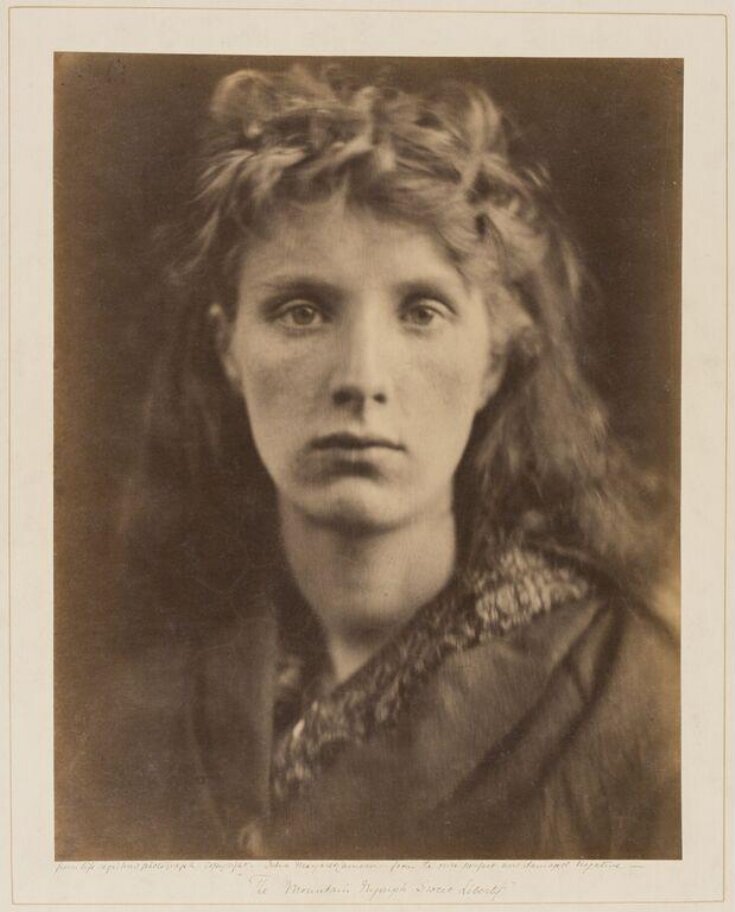
Inspired by the poetry of John Milton, The Mountain Nymph, Sweet Liberty demonstrates Cameron's ability to transform literary ideas into photographic images.
The sitter becomes more than an individual person. Through expression, costume, lighting and composition, she represents an imagined character.
This approach was closely connected to Cameron's belief that photography could unite the visible world with imagination.
It also challenged the assumption that photography could only reproduce reality as it appeared before the camera.
The Kiss of Peace — 1869
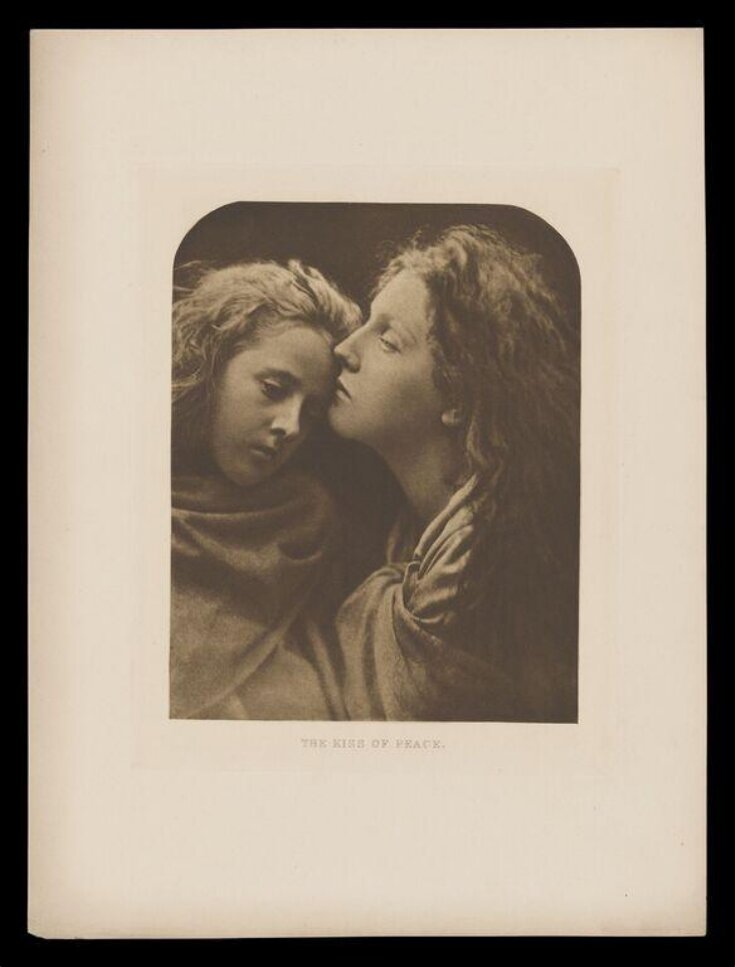
In The Kiss of Peace, Cameron explores spiritual tenderness through the arrangement of figures, their expressions and the intimate relationship between them.
The composition reflects her interest in religious imagery and the visual traditions of European painting.
Such photographs illustrate how Cameron borrowed from the established language of fine art while creating something that belonged specifically to the photographic medium.
Photography, Painting and the Victorian Imagination
Cameron's artistic ambitions were closely connected to literature, religious imagery and painting.
She admired the spiritual and visual qualities of early Italian Renaissance art and was influenced by the artistic environment surrounding the Pre-Raphaelite movement.
Rather than treating photography as a separate discipline with no relationship to earlier art forms, Cameron explored how photographic images could express ideas that had traditionally been associated with painting.
She arranged friends, relatives and members of her household into compositions inspired by biblical stories, poetry and mythology.
Her subjects might appear as angels, Madonnas, saints or literary characters.
Mary Hillier, a member of Cameron's household staff, frequently appeared in her religious and allegorical photographs.
These works were carefully constructed artistic interpretations. The camera recorded real people, but the resulting photographs represented imagined worlds.
In 1874, Cameron undertook one of her most ambitious photographic projects when she created illustrations for Alfred Tennyson's Idylls of the King, a collection of poems inspired by the legends of King Arthur.
She transformed members of her household and acquaintances into characters from Arthurian literature, demonstrating how photography could participate in the creation of narrative art.
These experiments belong to a larger historical discussion about the relationship between traditional art and photography.
Painting had long allowed artists to transform observation into imagination. Cameron demonstrated that photography could do the same, even when the figures and objects before the camera were physically real.
For contemporary fine art photographers, this remains an essential principle. A photograph can represent an actual place or subject while simultaneously expressing the artist's interpretation of it.
In landscape photography, this transformation might occur through the selection of light, weather, perspective, exposure or composition. The landscape exists independently of the photographer, but the finished artwork reflects a particular artistic vision.
Julia Margaret Cameron as a Woman in Victorian Photography
Cameron's career is especially significant when considered within the social environment of nineteenth-century Britain.
Women participated in photography from its earliest decades, working as experimenters, scientific illustrators, commercial photographers and artists.
Nevertheless, Victorian women faced considerable restrictions in professional education, financial independence and access to many established artistic institutions.
The idea of a married woman pursuing a serious artistic career, promoting her own work and negotiating with art dealers challenged conventional expectations about women's roles.
Cameron was fortunate to possess advantages that were unavailable to many women of her generation. Her family's social position gave her access to prominent artists, writers, scientists and cultural institutions.
Her domestic environment also provided space in which she could establish a photographic studio and experiment with the medium.
These circumstances should not be overlooked. Her achievements were made possible in part by social privilege and connections associated with Britain's imperial society.
But access alone does not explain the originality of her work.
Cameron used her opportunities to develop an artistic identity that was distinctly her own. She actively sought recognition, defended her unconventional techniques and pursued photography as a serious professional endeavor.
Her portraits of women are particularly important within her body of work.
Although her photographs often drew upon Victorian ideals of femininity, spirituality and beauty, many of her female subjects possess a striking individuality and psychological presence.
Women were not simply the subjects of her photographs. Through Cameron's authorship, they were also part of an artistic practice directed by a woman who insisted upon her own creative authority.
Her career challenges the familiar assumption that women entered the history of fine art photography only after its artistic foundations had already been established.
Women such as Cameron were participating in the development of those foundations themselves.
From Photographer to Fine Art Business: Selling Photography Prints in the 1860s
One of the most remarkable aspects of Cameron's career is how quickly she began treating photography as a professional artistic activity.
 Buy This Print by Eddie Jongas · Limited Edition
Her camera may have been given to her as a recreational gift, but her ambitions extended far beyond producing photographs for family albums.
Within the early years of her career, she was registering copyrights, exhibiting her work, establishing relationships with art dealers and selling photographic prints to institutions.
These activities distinguish Cameron's practice from the conventional business model of many commercial portrait studios of the period.
A typical portrait studio primarily earned money by photographing customers who commissioned portraits of themselves or their families.
Cameron pursued a different approach.
Rather than building her business around commissioned portrait sessions, she created photographs according to her own artistic interests and then sought buyers for the resulting works.
This distinction is particularly important in understanding the origins of fine art photography as a commercial activity.
She was not simply selling a photographic service. She was offering photography prints as independently created works of art.
Copyrighting Her Photographs
In 1864, Cameron began registering her photographs with the British Copyright Office.
This was an important professional decision. Copyright registration helped establish her legal claim to the photographs she created and supported her ability to control their reproduction.
Britain's Fine Arts Copyright Act of 1862 had extended copyright protection to photographs, providing photographers with a legal framework for protecting their creative work.
Cameron took advantage of that framework from the beginning of her professional career.
Her actions demonstrate that she understood the photograph as more than an image of a particular person. It was a work associated with its creator and capable of possessing intellectual and commercial value.
That principle remains central to modern fine art photography.
When a collector purchases an original photographic print, the collector acquires the physical artwork. The photographer generally retains the copyright unless those rights are explicitly transferred under a separate agreement.
Ownership of a photographic print does not automatically include the right to reproduce the image commercially, create additional prints or distribute copies.
This distinction allows photographic artists to sell their work while maintaining control over the intellectual property associated with their images.
Cameron's early commitment to copyright illustrates how closely artistic authorship and commercial independence were connected even during photography's formative years.
Selling Photographs Through Colnaghi
Cameron established a relationship with P. & D. Colnaghi, an established London art dealer and print publisher.
Colnaghi's involvement is particularly significant because it placed her photographs within an existing commercial environment associated with the sale of art and prints.
Her photographs were not limited to circulation among friends, relatives or scientific acquaintances. They could be exhibited and offered for purchase through an established art business.
In 1865, Cameron held a solo exhibition at Colnaghi's.
This represented an important step in presenting photography to an audience accustomed to purchasing and collecting works of visual art.
Her relationship with the dealer also demonstrates that the commercial possibilities of photography were beginning to extend beyond commissioned portraiture.
Photographs could be selected, displayed, marketed and sold because of their artistic qualities and the reputation of the photographer who created them.
Signatures and the Value of Photographic Prints
An especially interesting aspect of Cameron's commercial practice was her use of signatures.
According to research published by the Victoria and Albert Museum, Cameron sometimes obtained the autographs of her prominent portrait subjects to enhance the appeal and value of photographs sold through Colnaghi.
A portrait of a celebrated poet, scientist or intellectual could therefore become an object that combined photographic artistry with a personal connection to the individual represented.
For a nineteenth-century collector, such a photograph might possess artistic, historical and documentary significance.
The practice also demonstrates an early understanding of how the physical characteristics of a photographic print can influence its desirability.
Two prints may reproduce the same photographic image, yet differences in their inscriptions, signatures, condition or history of ownership can make them very different objects from a collector's perspective.
Today, signatures and documentation continue to play important roles in the photographic art market.
Contemporary fine art photographers may sign and number their prints, establish edition sizes and provide certificates of authenticity identifying the artwork and its creator.
These practices are not identical to Cameron's use of her sitters' autographs. Nevertheless, both reflect the importance of establishing a connection between a physical photographic object and the people responsible for its artistic or historical significance.
At Jongas Fine Art Photography, signed and numbered limited-edition prints are accompanied by certificates of authenticity, providing collectors with documentation of the artwork's identity and edition.
The most exclusive expression of this approach is the Only One Collection, in which each artwork is offered as a single fine art print.
When a Museum Began Collecting Her Photographs
One of the most important milestones in Cameron's career came in 1865, when the South Kensington Museum, now the Victoria and Albert Museum in London, began acquiring her photographs.
In June of that year, the museum's founding director, Sir Henry Cole, purchased a group of 63 photographic prints directly from Cameron.
Additional acquisitions followed, and the museum presented her first museum exhibition in 1865.
In 1868, Cameron was given the use of two rooms at the museum as a photographic studio.
The significance of these events extends beyond Cameron's personal success.
A major cultural institution was acquiring and exhibiting photographs by a living artist during a period when photography's place within the fine arts was still being debated.
Her photographs were being treated as objects worthy of preservation, exhibition and study.
Today, the Victoria and Albert Museum holds more than 900 photographs by Cameron, including works acquired directly from the artist and others obtained through later purchases and donations.
 Buy This Print by Eddie Jongas · Limited Edition
These early acquisitions also demonstrate the importance of provenance in the fine art photography market.
A photograph acquired directly from its creator and preserved within an institutional collection possesses a documented history that helps establish its authenticity and historical significance.
For contemporary collectors, provenance remains an important consideration when purchasing original photographic artwork.
Buying directly from a photographer can provide a clear connection between the artist, the finished print and its first owner.
Documentation, signatures and edition records help preserve that connection over time.
Was Julia Margaret Cameron the First Woman Fine Art Photographer?
Julia Margaret Cameron is frequently described as one of the earliest and most important pioneers of fine art photography.
However, identifying any single individual as the first fine art photographer is difficult.
Before Cameron began her photographic career, other photographers were already exploring the artistic possibilities of the medium.
Oscar Gustave Rejlander created elaborate photographic compositions inspired by painting, including his celebrated combination print The Two Ways of Life in 1857.
Henry Peach Robinson explored narrative photography and combination printing, producing works such as Fading Away in 1858.
Other photographers, including Gustave Le Gray, demonstrated the expressive possibilities of photographic landscapes and seascapes.
Cameron's contribution was therefore not the invention of artistic photography itself.
Her importance lies in the originality and determination with which she pursued photography as a medium of personal artistic expression.
She developed a distinctive visual language, defended it against criticism, promoted her photographs professionally and established relationships with dealers and cultural institutions.
In doing so, she helped expand the understanding of what photography could be.
Her achievements also demonstrate that women were active participants in the development of fine art photography from its earliest generations.
Julia Margaret Cameron and the Origins of Pictorialism
Cameron's work is often discussed in connection with Pictorialism, the international movement that emerged later in the nineteenth century and sought to establish photography as a recognized fine art.
Pictorialist photographers frequently used atmospheric lighting, softened detail, expressive printing techniques and compositions influenced by painting.
These characteristics helped distinguish their work from conventional documentary and commercial photography.
Cameron's photographs anticipated several of these ideas decades before Pictorialism developed into an organized international movement.
Her emphasis on mood, imagination and artistic interpretation helped demonstrate that photography did not need to be defined exclusively by sharpness or literal representation.
However, Cameron should more accurately be described as a precursor to Pictorialism rather than a member of the later movement.
She died in 1879, before many of its most important organizations and exhibitions were established.
Photographers such as Alfred Stieglitz, Edward Steichen and Gertrude Käsebier would later continue the struggle for photography's recognition within the art world.
They explored many of the same fundamental questions:
- What distinguishes an artistic photograph from a conventional photographic record?
- How much should a photographer transform the appearance of reality?
- Can photographic prints possess the same artistic significance as paintings?
- How can photographers establish recognition for their work within galleries and museums?
Edward Steichen's artistic career is especially interesting in this context. His early Pictorialist photography explored atmospheric effects and painterly qualities, while his later work increasingly embraced the clarity and directness associated with modern photography.
Cameron and Steichen pursued different artistic paths, but both demonstrated that photography's identity as fine art depended upon the creative decisions of the photographer.
The history of these changing artistic approaches is explored further in The Evolution of Fine Art Photography.
 Buy This Print by Eddie Jongas · Limited Edition
Why Original Julia Margaret Cameron Photographs Are Collectible
Today, Cameron's photography works are represented in major museum collections and are sought by collectors interested in nineteenth-century photography.
Understanding their collectibility requires looking beyond the visual image alone.
An original nineteenth-century photographic print is a physical object with a particular history. Its value may be influenced by the date it was produced, the photographer's involvement in its creation, its condition, rarity, inscriptions and provenance.
A modern reproduction of a Cameron photograph may provide an attractive way to enjoy the image, but it does not possess the same historical identity as a print produced during her lifetime.
Vintage Prints and Later Reproductions
Photography presents a distinctive challenge to art collecting because a photographic negative can potentially be used to create more than one print.
Collectors therefore distinguish between different kinds of photographic objects.
| Type of photographic print | Meaning for collectors |
|---|---|
| Vintage photographic print | A print generally produced close to the time the original negative was created. |
| Later lifetime print | A print produced later in the photographer's life, potentially using the original negative. |
| Posthumous print | A print produced after the photographer's death, sometimes from an original negative under authorized supervision. |
| Modern reproduction | A reproduction of an existing photographic image, generally without the historical identity of an original lifetime print. |
| Contemporary limited-edition print | An artwork produced within a defined edition established by the photographer or authorized publisher. |
These categories are not interchangeable, and terminology can vary between institutions and sellers.
A collector considering the purchase of a photography print should understand when the print was produced, who authorized it and what documentation accompanies it.
With historical photographers such as Cameron, the physical survival of early prints contributes to their rarity.
With contemporary fine art photography, scarcity can also be established through clearly defined and consistently maintained editions.
Although these are different forms of scarcity, both illustrate why collectors should consider the identity of the physical print rather than simply the appearance of the image.
Condition, Provenance and Artistic Significance
The value of an original Cameron photograph may be influenced by several factors:
- The historical importance of the image and its subject.
- The rarity of surviving prints.
- The date and circumstances of the print's creation.
- The condition of the photographic paper and image surface.
- Signatures, inscriptions or other identifying characteristics.
- Documented ownership and exhibition history.
- The photograph's importance within Cameron's artistic career.
These factors are also relevant to the broader photographic art market.
However, rarity alone does not guarantee financial appreciation. Artistic significance, collector demand, authenticity and market conditions all influence the value of photographic artwork.
These considerations remain relevant to contemporary collectors as well. Although purchasing original photographic artwork can offer both personal enjoyment and potential long-term value, not every limited-edition print will appreciate financially. For a closer examination of these factors, read Modern Fine Art Photography Prints — Is It a Good Investment or Not So Much?
For most collectors, the most meaningful reason to purchase a photograph remains a genuine connection to the work itself.
 Buy This Print by Eddie Jongas · Limited Edition
What Makes a Fine Art Photograph Worth Collecting?
Cameron's career offers a valuable perspective on the qualities that distinguish collectible photographic art from ordinary photographic imagery.
Her photographs are admired not simply because they are old or because they depict historically important individuals. They are admired because they reveal a distinctive artistic vision.
That distinction remains essential in contemporary fine art photography.
When considering a photographic artwork for a private collection, several qualities deserve attention.
1. Artistic Vision
Does the photograph communicate a distinctive interpretation of its subject?
An artist's choices regarding composition, lighting, timing and visual atmosphere can transform a familiar subject into a deeply personal artwork.
2. Originality
Does the photograph offer something beyond a conventional representation of a person, place or object?
Originality does not necessarily require an unusual subject. It may emerge from the way an artist sees and interprets something familiar.
3. Emotional Connection
Does the photograph create a lasting emotional or visual response?
Fine art photography can evoke tranquility, wonder, nostalgia, mystery or a sense of connection to the natural world.
These qualities often become more meaningful when the artwork is experienced repeatedly within a collector's home.
4. Print Craftsmanship
The quality of the physical print is an important part of the finished artwork.
Photographic paper, color reproduction, tonal detail, mounting and surface protection all influence the appearance and longevity of a print.
At Jongas Fine Art Photography, signature acrylic-mounted artworks are produced using Lumachrome HD photographic paper and TruLife acrylic, combining detailed photographic reproduction with a refined presentation designed for contemporary interiors.
The goal is to preserve the visual qualities of the original photograph while creating a physical artwork that can be experienced at a substantial scale.
5. Edition Integrity and Authenticity
Collectors should understand whether an artwork belongs to an open edition, a limited edition or a one-of-a-kind release.
Clear edition information and certificates of authenticity help establish the identity of an individual photographic print.
A well-defined edition also creates transparency regarding the number of prints that may be produced.
6. The Relationship Between Artwork and Space
A photographic print becomes part of the environment in which it is displayed.
Its size, color, subject and visual atmosphere can influence the character of an interior.
A large photographic landscape may create a sense of depth and openness, while an intimate botanical or abstract composition may encourage closer observation.
Choosing the right artwork therefore involves considering both its artistic qualities and the space in which it will be experienced.
For collectors considering larger photographic artwork, the Jongas See It On Your Wall service provides an opportunity to visualize how a photograph may look at different sizes within an interior.
Our guide to large landscape wall art also explores the relationship between photographic artwork, scale and interior design.
What Julia Margaret Cameron Can Teach Contemporary Fine Art Photographers
As a fine art landscape photographer, I find Cameron's career particularly interesting because it addresses a question that remains relevant to every artist working with a camera.
How much of the finished photograph belongs to the subject, and how much belongs to the vision of the photographer?
In landscape photography, the mountains, trees, oceans and rivers exist independently of the artist. Yet two photographers standing in the same location can create completely different photographs.
One may concentrate on the precise details of the landscape. Another may wait for fog to simplify the scene. A third may use a long exposure to transform moving water into an abstract visual element.
The subject may be identical, but the resulting artworks express different ways of seeing.
Cameron's photography reminds us that the artist's role is not simply to reproduce the appearance of reality.
It is to make decisions about what to reveal, what to conceal, what to emphasize and what emotional experience the finished image should communicate.
Her professional career offers an equally important lesson.
Creating meaningful photographic art is only one part of being a working artist. Protecting the work, producing finished prints, establishing relationships with collectors and presenting photographs in a way that communicates their artistic value are also important responsibilities.
Cameron understood this relationship between artistic expression and professional independence during photography's formative years.
Contemporary fine art photographers continue to navigate many of the same challenges, even though photographic technology and the commercial art market have changed dramatically.
Julia Margaret Cameron's Legacy
 Buy This Print by Eddie Jongas · Limited Edition
In 1875, Cameron and her husband moved to Ceylon, now Sri Lanka, where members of their family were involved in the coffee plantation business.
She continued photographing, although her photographic production declined considerably compared with her years on the Isle of Wight.
Cameron died in 1879 at the age of 63.
Her principal photographic career had lasted little more than a decade.
Yet within that relatively short period, she created a body of work that would become central to the history of nineteenth-century photography.
Her photographs challenged technical conventions, explored the relationship between photography and painting, and demonstrated the expressive possibilities of the human portrait.
She also pursued the professional recognition of photography through copyright registration, publication, exhibitions and the sale of original photographic prints.
Her work helped demonstrate that a photograph could possess both artistic significance and commercial value.
Today, her photographs are preserved by institutions including the Victoria and Albert Museum, the Metropolitan Museum of Art, the National Portrait Gallery and the Museum of Modern Art.
Her legacy extends beyond the photographs themselves.
She represents a generation of women who helped shape photography during its earliest development, challenging expectations about artistic authorship, professional identity and the possibilities of a new medium.
For photographers, her career remains an example of the importance of personal vision.
For collectors, her work offers a reminder that the value of photographic art cannot be measured by technical precision alone.
And for the history of fine art, Julia Margaret Cameron stands as one of the pioneering artists who helped establish photography as a medium worthy of artistic recognition, exhibition and ownership.
Explore Modern Fine Art Photography
Nearly two centuries after photography's invention, the medium continues to evolve as one of the most expressive forms of visual art.
Modern fine art photography artists work with technologies that Cameron could scarcely have imagined. Yet the essential relationship between artistic vision, the photographic image and the finished physical print remains remarkably familiar.
At Jongas Fine Art Photography, original photography artworks are created as collectible pieces intended to bring the beauty, atmosphere and emotional presence of the natural world into contemporary living spaces.
Explore our collections of fine art landscape photography, tree photography, ocean and seascape photography and large-format panoramic photography to discover the difference between simply viewing a photograph on your phone and experiencing a luxury photographic print displayed on your wall.
Frequently Asked Questions About Julia Margaret Cameron
Who was Julia Margaret Cameron?
Julia Margaret Cameron was a British photographer born in India in 1815. She became one of the most important photographic artists of the nineteenth century, known for expressive portraits, religious compositions and photographs inspired by literature and mythology.
Why is Julia Margaret Cameron important to photography?
Cameron helped establish photography as a medium of artistic expression. Her unconventional portraits challenged prevailing technical standards, while her exhibitions, copyright registrations and photographic print sales contributed to the professional recognition of photography as fine art.
Was Julia Margaret Cameron the first female photographer?
No. Women had participated in photography before Cameron began her career in 1863. Early pioneers included Constance Fox Talbot and Anna Atkins. Cameron is particularly important for her contribution to artistic photography and its professional recognition.
Was Julia Margaret Cameron the first fine art photographer?
Cameron was one of the most important early fine art photographers, but she was not the only pioneer of artistic photography. Photographers such as Oscar Gustave Rejlander, Henry Peach Robinson and Gustave Le Gray were already exploring photography's artistic possibilities before her career began.
How old was Julia Margaret Cameron when she started photography?
Cameron was 48 years old when she received her first camera in December 1863. She began producing her most important photographic work shortly afterward.
Why are Julia Margaret Cameron's photographs soft or out of focus?
Cameron frequently used selective or softened focus to emphasize beauty, emotion and psychological presence. She believed that achieving the most expressive image was more important than following conventional expectations of photographic sharpness.
What photographic process did Julia Margaret Cameron use?
Cameron primarily used the wet collodion process to create glass negatives and produced albumen photographic prints from those negatives.
Did Julia Margaret Cameron sell her photographs?
Yes. Cameron sold photographic prints through the London art dealer P. & D. Colnaghi and directly to institutions. In 1865, the South Kensington Museum purchased an initial group of 63 prints from her.
Did Julia Margaret Cameron copyright her photographs?
Yes. Cameron began registering her photographs with the British Copyright Office in 1864. Her copyright registrations demonstrate her early commitment to establishing and protecting her professional artistic authorship.
Was Julia Margaret Cameron a Pictorialist?
Cameron is more accurately described as a precursor to Pictorialism. Her expressive use of softness, artistic composition and painterly imagery anticipated many ideas associated with the later movement.
Are original Julia Margaret Cameron photographs valuable?
Original lifetime prints by Cameron are historically significant and can be highly collectible. Their value depends on factors such as rarity, condition, subject matter, provenance, inscriptions and the date of the print. Modern reproductions do not generally possess the same historical or commercial significance.
Where can Julia Margaret Cameron's photographs be seen?
Her photographs are held in major collections including the Victoria and Albert Museum, the Metropolitan Museum of Art, the National Portrait Gallery and the Museum of Modern Art. Her former home, Dimbola Lodge on the Isle of Wight, is also associated with the preservation of her photographic legacy.
Sources and Further Reading
- Victoria and Albert Museum — Julia Margaret Cameron: An Introduction
- Victoria and Albert Museum — Julia Margaret Cameron and the Museum
- Victoria and Albert Museum — Julia Margaret Cameron's Working Methods
- The Metropolitan Museum of Art — Julia Margaret Cameron (1815–1879)
- International Center of Photography — Julia Margaret Cameron
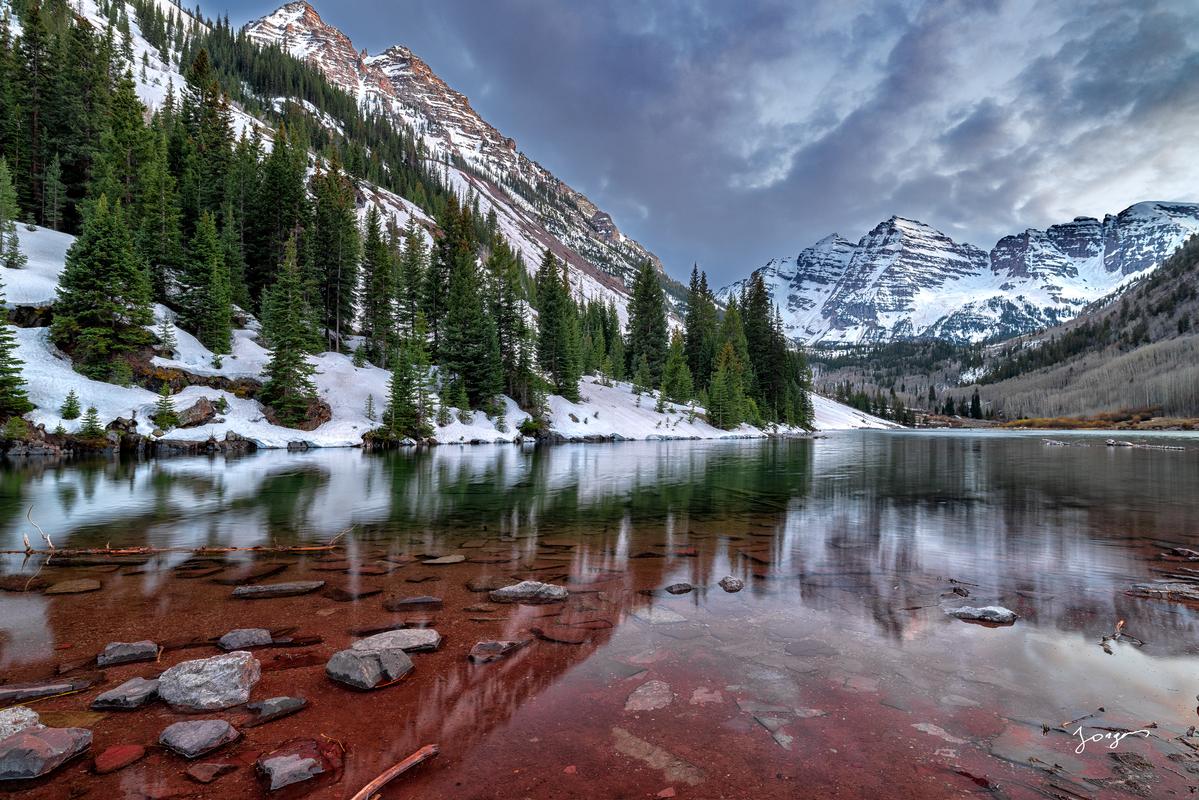 Buy This Print by Eddie Jongas · Limited Edition
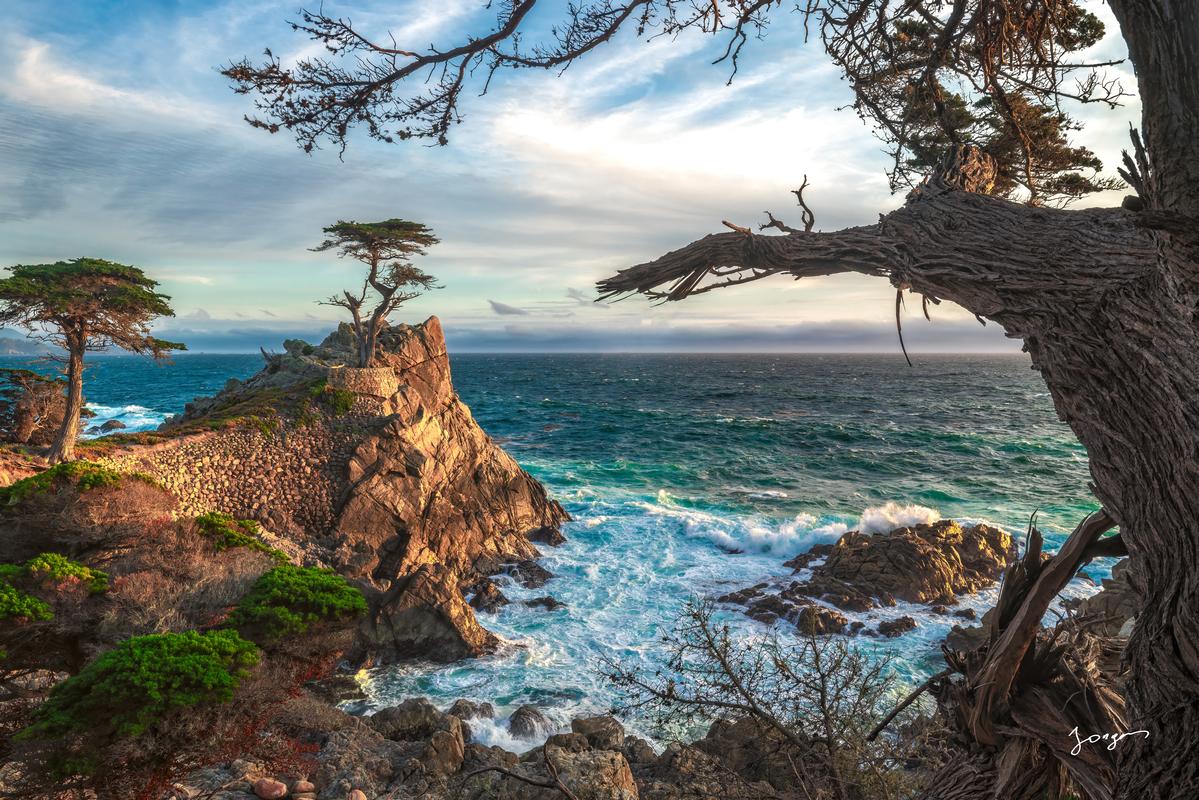 Buy This Print by Eddie Jongas · Limited Edition
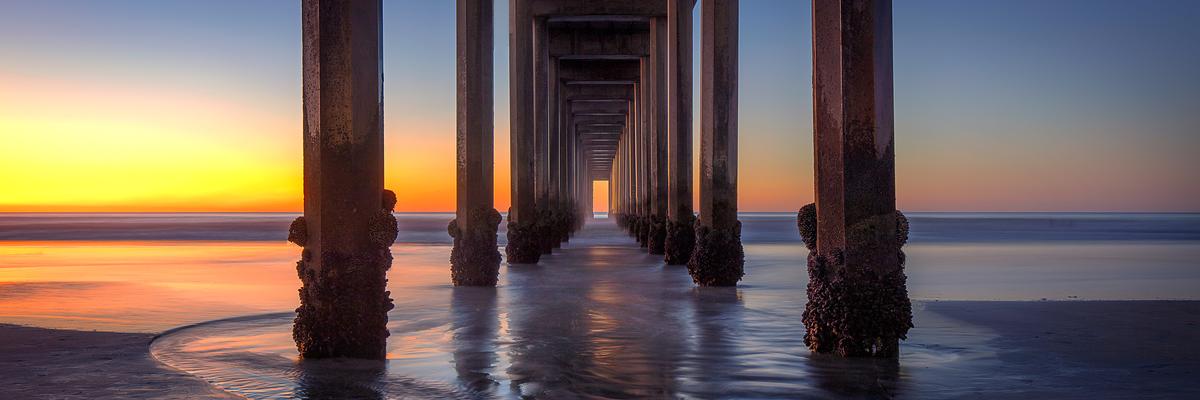 Buy This Print by Eddie Jongas · Limited Edition
