Gertrude Käsebier — The Woman Who Helped Turn Photography Into Fine Art
At the end of the nineteenth century, photography was undergoing a remarkable transformation. What had begun as a scientific invention capable of recording the visible world was becoming something much more ambitious — a medium through which artists could express emotion, imagination, and their own interpretation of reality.
Among the photographers who helped bring about this transformation was an American woman named Gertrude Käsebier (1852–1934), whose name is also commonly written as Gertrude Kasebier in English-language publications.
Unlike many of the early pioneers of photography, Käsebier did not invent a new photographic process. She did not create the first photograph or publish the first photography book. Instead, her contribution was something equally important: she demonstrated that a photograph could possess the emotional depth, artistic sophistication, and cultural significance of a painting.
Through her extraordinary portraits, atmospheric compositions, and mastery of photographic printing, Käsebier became one of the leading figures of the Pictorialist movement and one of the most celebrated photographers of her generation.
She also accomplished something that remains relevant to professional photographers today. She built a successful photography business while pursuing recognition as a serious fine artist.
Her career would eventually bring her into close collaboration — and later into conflict — with Alfred Stieglitz, one of the most influential figures in the history of American photography.
Who Was Gertrude Käsebier?
Gertrude Käsebier was born Gertrude Stanton on May 18, 1852, in Fort Des Moines, Iowa. She spent part of her childhood in Colorado, where her father had moved during the Colorado Gold Rush.
Her experiences growing up in the American West would later influence some of her most important photographic work, particularly her portraits of Native Americans.
In 1874, she married Eduard Käsebier, a German-born businessman, and went on to raise three children.
For much of her early adult life, her artistic ambitions remained secondary to her responsibilities as a wife and mother. It was not until 1889, at the age of 37, that she enrolled at the Pratt Institute in Brooklyn, New York, to pursue formal artistic training.
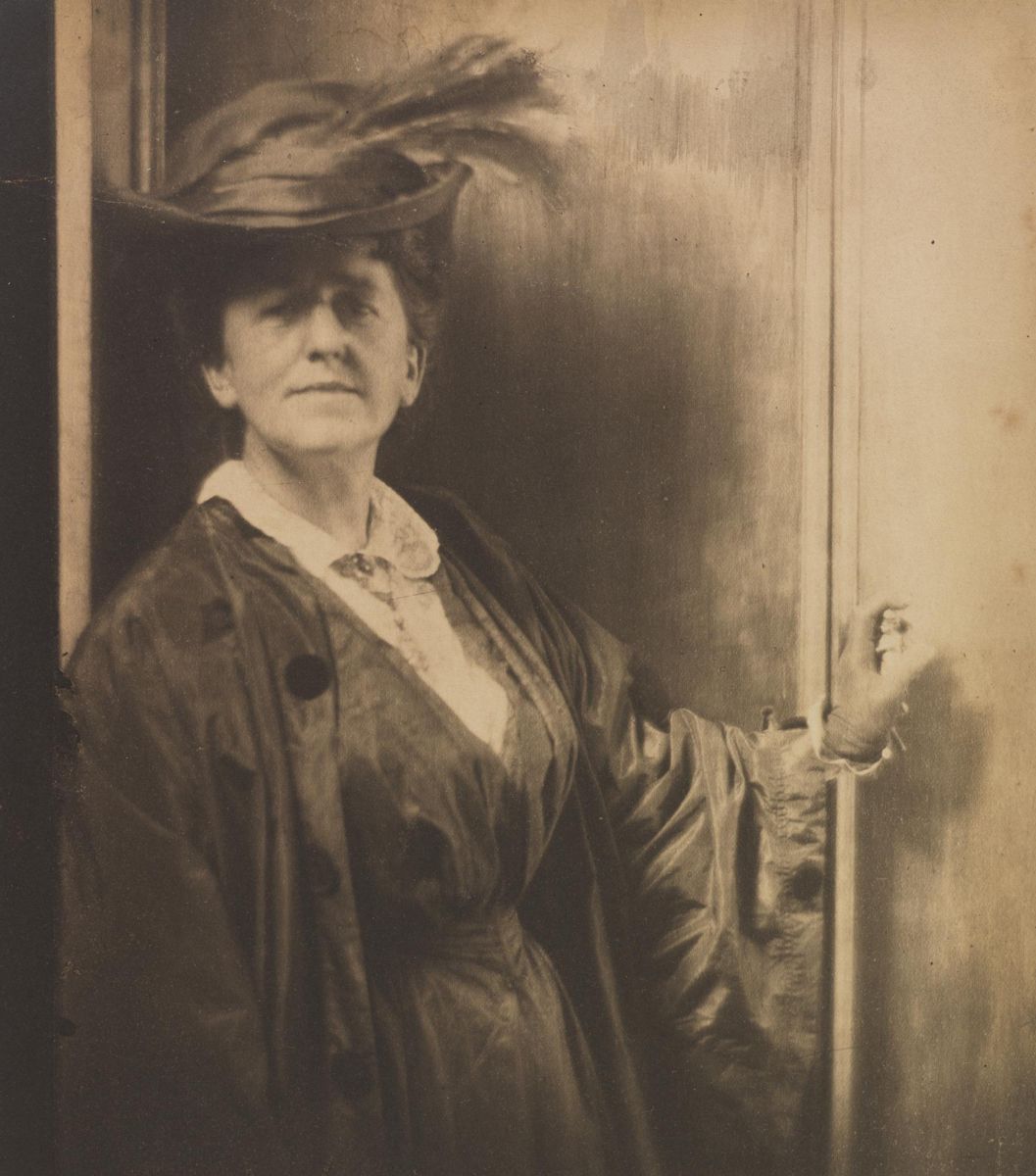
Initially, Käsebier intended to become a painter.
She studied drawing, painting, composition, and the principles of visual art. She continued her artistic education in Europe, where she also gained experience with photographic techniques.
Eventually, photography became her preferred medium.
Her education as a painter, however, would remain central to her photographic identity. Rather than approaching the camera simply as a device for recording appearances, she approached it as an artist concerned with light, form, composition, atmosphere, and emotional expression.
In 1897, Käsebier opened her own portrait photography studio in New York City. Her work quickly attracted wealthy clients, favorable critical attention, and recognition within the emerging world of fine art photography.
Within only a few years, she had become one of America's most respected portrait photographers.
From Portrait Photography to Fine Art
One of the most interesting aspects of Gertrude Käsebier's career is the relationship between portrait photography and fine art photography.
Was Käsebier primarily a portrait photographer, or was she a fine art photographer who happened to use people as her principal subject?
The distinction is important.
During the nineteenth century, commercial portrait studios had become increasingly common. Customers visited photographers to obtain likenesses of themselves and their families, often posing against elaborate painted backgrounds surrounded by decorative furniture and props.
The primary purpose of these photographs was to record what a person looked like.
Käsebier wanted to accomplish something different.
She simplified her studio environment, reduced distracting elements, and concentrated on the individual in front of her camera. She sought to reveal personality, vulnerability, and character rather than simply produce an attractive likeness.
She described her ambition as making “likenesses that are biographies.”
A successful portrait, in her view, could communicate something about a person's life, experiences, and inner world.
This philosophy places her firmly within the history of fine art photography.
Fine art photography is not defined by whether the photographer photographs people, landscapes, architecture, or abstract forms. It is defined by the artistic intention behind the image and the way the photographer transforms a subject into a meaningful visual experience.
Käsebier's portraits were not merely photographs of people. They were interpretations of human experience.
The same principle applies to modern landscape photography. A photograph of a mountain may simply document its appearance, or it may communicate solitude, grandeur, mystery, or the overwhelming power of nature.
The subject alone does not determine whether a photograph becomes art.
It is the photographer's vision that makes the difference.
Gertrude Käsebier and the Pictorialist Movement
To understand Käsebier's significance, it is necessary to understand Pictorialism, one of the most important artistic movements in the history of photography as traditional art.
Pictorialism emerged during the late nineteenth century as photographers began challenging the widespread belief that photography was merely a mechanical process.
If a camera could automatically reproduce the visible world, critics argued, where was the artistic creativity?
Pictorialist photographers responded by emphasizing the photographer's role in shaping the final image.
They used carefully controlled lighting, soft focus, expressive compositions, atmospheric effects, and specialized photographic printing techniques to create images that often resembled paintings, drawings, or etchings.
Their objective was not simply to imitate painting. It was to establish photography as a medium capable of personal artistic expression.
Käsebier became one of the most prominent American practitioners of this approach.
Her photographs frequently featured delicate tonal transitions, simplified backgrounds, flowing fabrics, and carefully arranged figures. Her images could appear intimate, mysterious, spiritual, or deeply contemplative.
The photograph was not necessarily complete when the shutter was released. The negative and the printing process provided further opportunities for artistic interpretation.
Other important Pictorialist photographers included Alfred Stieglitz, Edward Steichen, Clarence H. White, and F. Holland Day.
Together, these photographers helped establish a foundation upon which twentieth-century fine art photography would develop.
What Photography Techniques Did Gertrude Käsebier Use?
Käsebier's artistic achievements were inseparable from her understanding of photographic materials and printing processes.
Like many Pictorialist photographers, she experimented with techniques that allowed her to exercise greater control over the appearance of the finished photograph.
Platinum Printing
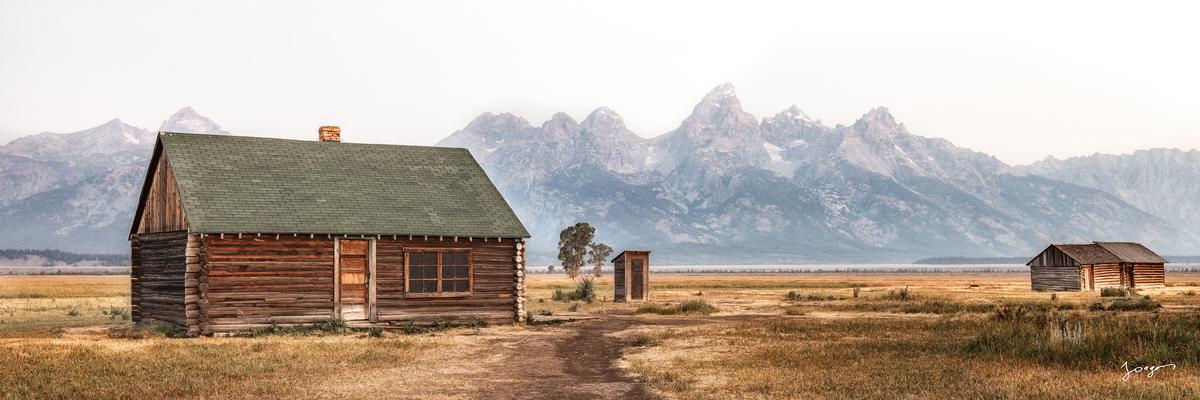 Buy This Print by Eddie Jongas · Limited Edition
Platinum printing was one of the most admired photographic printing processes of the late nineteenth and early twentieth centuries.
Unlike conventional silver-based photographic prints, platinum prints are valued for their matte surfaces, subtle tonal gradations, and remarkable permanence.
The process allowed photographers to produce images with delicate highlights, rich shadows, and a broad range of intermediate tones.
For Käsebier, these qualities were particularly well suited to portraiture. The softness of skin, the texture of fabric, and the transitions between light and shadow could be rendered with extraordinary subtlety.
Platinum prints also possessed a physical beauty that helped distinguish them from ordinary commercial photographs.
They were objects intended to be appreciated as works of art.
Gum Bichromate Printing
Käsebier also experimented with gum bichromate printing, a process particularly popular among Pictorialist photographers.
The process involves coating paper with a light-sensitive mixture containing gum arabic, pigment, and a dichromate compound.
After exposure through a photographic negative, the image is developed in water. The photographer can influence the appearance of the image during development, and additional layers of pigment can be applied through repeated printing.
This allows considerable control over texture, color, contrast, and the visibility of fine detail.
A gum bichromate photograph may resemble a charcoal drawing, watercolor, or other traditional artwork.
Käsebier also produced gum-over-platinum prints, combining the tonal qualities of platinum photography with the expressive possibilities of pigment-based printing.
Artistic Manipulation in the Darkroom
For Pictorialist photographers, the darkroom was not simply a place where photographs were developed. It was an extension of the artist's studio.
The photographer could selectively soften details, alter tonal relationships, manipulate negatives, and influence the appearance of the final print.
Käsebier used these possibilities to create photographs that reflected her artistic intentions rather than merely reproducing the scene in front of the camera.
This is an important distinction in the history of traditional photography.
Long before digital editing software existed, photographers were already making creative decisions after an exposure had been made.
The idea that photographic manipulation began with Photoshop overlooks more than a century of artistic experimentation.
Read more: What Is Traditional Photography? From Film to Fine Art
The Most Famous Photographs by Gertrude Käsebier
Käsebier's best-known photographs reveal the extraordinary range of her artistic interests, from motherhood and domestic life to psychological portraiture and symbolic compositions.
Blessed Art Thou Among Women (1899)
Perhaps Käsebier's most celebrated photograph, Blessed Art Thou Among Women depicts a woman standing beside a young girl in a doorway.
The subjects were Agnes Lee and her daughter Peggy, the wife and daughter of photographer and printer Francis Watts Lee.
The composition is remarkably simple. The mother's flowing white garment, the vertical lines of the doorway, and the child's dark clothing create a carefully balanced arrangement of light and form.
A depiction of the Annunciation appears on the wall behind them, reinforcing the religious associations suggested by the photograph's title.
Yet the image can also be understood without reference to religion.
It is a quiet representation of maternal affection, protection, and the relationship between childhood and adulthood.
The doorway itself may be interpreted symbolically — as a threshold between the protected world of childhood and the uncertainties of the world beyond.
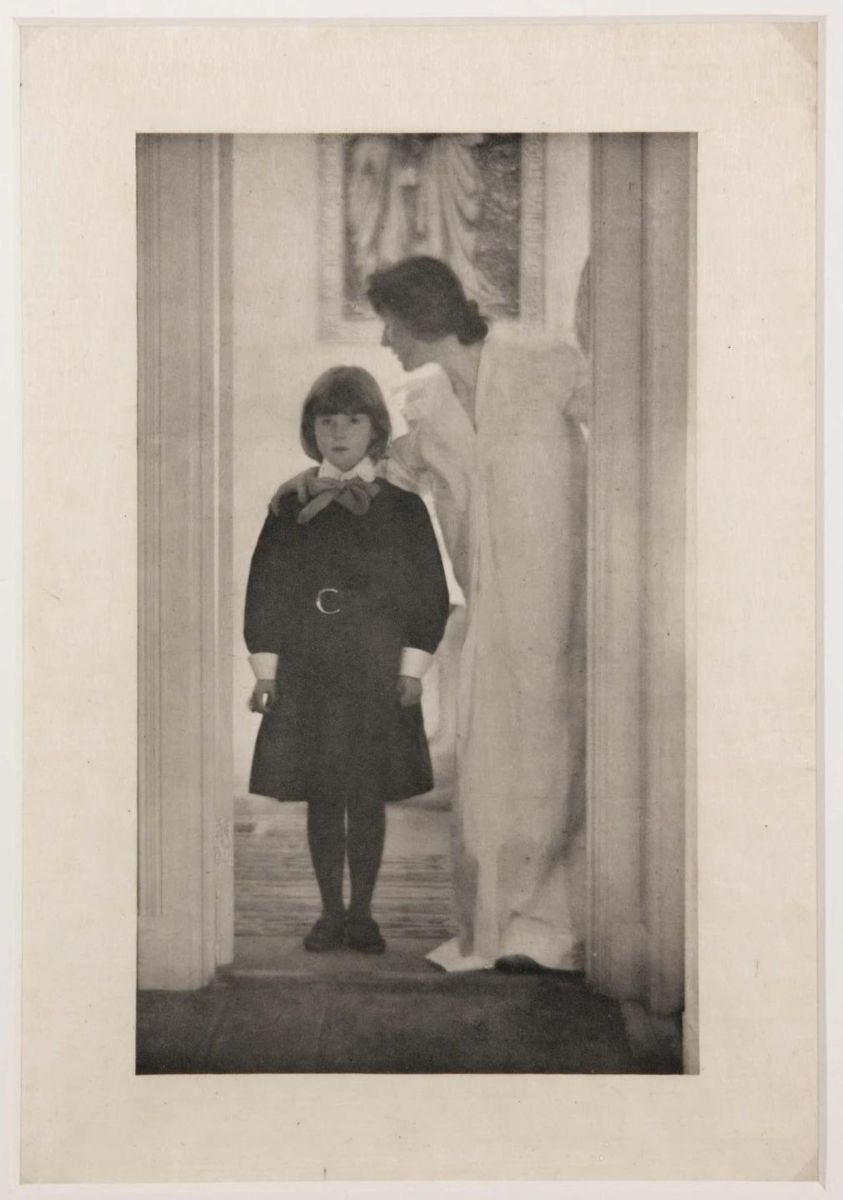
Alfred Stieglitz published the photograph in Camera Notes and subsequently included it in the first issue of Camera Work in 1903.
An original platinum print is held by the Metropolitan Museum of Art in New York.
View Blessed Art Thou Among Women at the Metropolitan Museum of Art
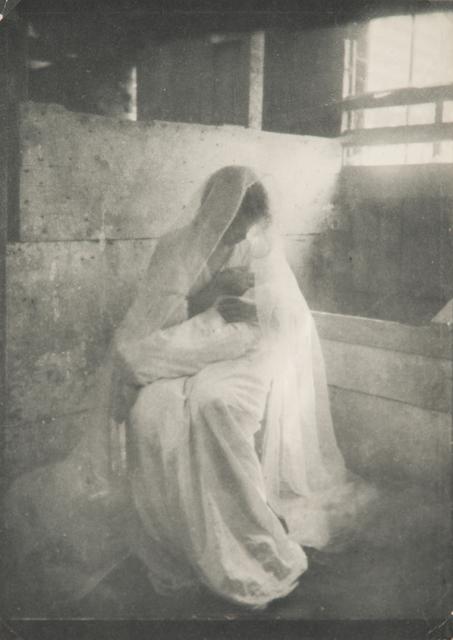
The Manger (1899)
In The Manger, Käsebier created one of her most visually striking studies of motherhood.
The photograph depicts a woman dressed in white, seated inside a stable and holding an infant. Light enters the dark interior, illuminating the figures and creating an atmosphere reminiscent of Renaissance paintings of the Nativity.
The woman who modeled for the photograph was Käsebier's friend, illustrator Frances Delehanty.
Although the religious associations are unmistakable, Käsebier was particularly interested in the artistic possibilities of light and the arrangement of white forms within the composition.
The photograph demonstrates how lighting can transform an otherwise ordinary setting into an emotionally powerful image.
It is also a remarkable example of the way Pictorialist photography borrowed from the visual language of painting while retaining the distinctive qualities of the photographic medium.
Examples of The Manger are held by the Smithsonian American Art Museum and the National Museum of Women in the Arts.
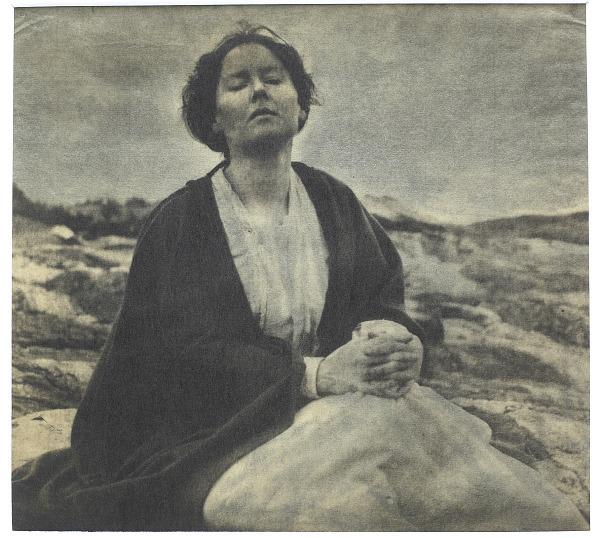
The Heritage of Motherhood (1904)
Not all of Käsebier's photographs presented motherhood as an idealized experience.
The Heritage of Motherhood offers a considerably darker and more introspective interpretation of the subject.
Through its atmospheric setting, somber tonal qualities, and symbolic treatment of the human figure, the photograph suggests the emotional weight and responsibilities associated with motherhood.
Its expressive appearance also demonstrates Käsebier's experimentation with gum-over-platinum printing.
The photograph is particularly important because it complicates the idea that Käsebier's work was merely sentimental.
She was capable of exploring difficult and ambiguous emotions as well as tenderness and affection.
An example of this work is held by the Museum of Modern Art in New York.
Yoked and Muzzled (1910)
One of Käsebier's most unusual photographs is Yoked and Muzzled, an image of two oxen restrained together.
The photograph is frequently interpreted as a symbolic commentary on marriage and the restrictions placed upon women.
Given Käsebier's own experiences balancing marriage, motherhood, artistic ambition, and professional independence, the image acquires particular significance.
Unlike her earlier maternal compositions, this photograph communicates its meaning without depicting a human subject.
It demonstrates that Käsebier's artistic interests extended beyond portraiture and that she was capable of using photographic symbolism to explore broader social and personal themes.
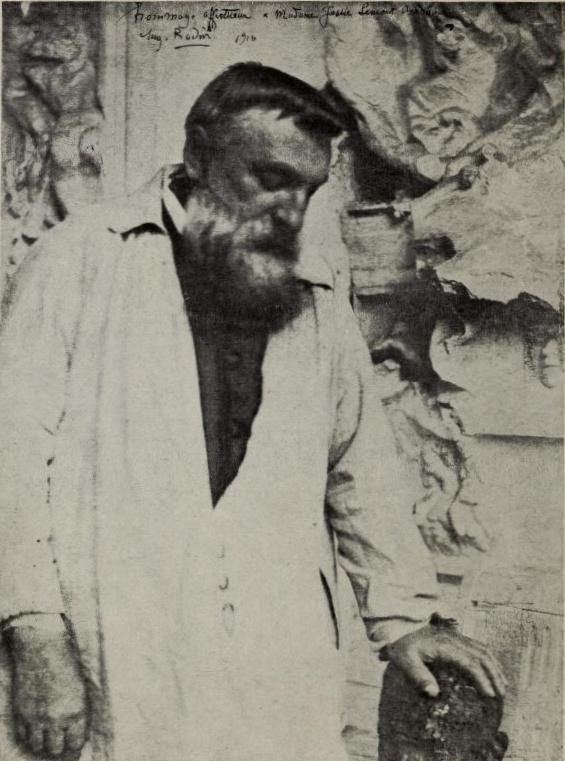
Portrait of Auguste Rodin (1905)
Käsebier's portrait of the celebrated French sculptor Auguste Rodin illustrates her ability to move beyond the conventional photographic portrait.
Rodin, already internationally recognized for his sculpture, was accustomed to being photographed.
According to Käsebier's own recollection, he became rigid and self-conscious whenever he knew a photograph was about to be taken.
Rather than forcing him into a formal pose, she waited for a moment when he relaxed.
She captured him in a contemplative, unguarded state.
The resulting photograph reveals something more interesting than the public image of a famous artist. It suggests the private personality behind the celebrated name.
This ability to recognize the moment when a subject becomes emotionally accessible was one of Käsebier's greatest strengths.
 Buy This Print by Eddie Jongas · Limited Edition
Gertrude Käsebier's Portraits of Native Americans
Among the most historically significant aspects of Käsebier's career was her series of portraits of Native American performers associated with Buffalo Bill's Wild West show.
In 1898, she saw members of the traveling show in New York City and arranged to photograph several of them in her studio.
Her childhood experiences in Colorado had contributed to her interest in Native American cultures, and these encounters provided an opportunity to create a remarkable body of photographic work.
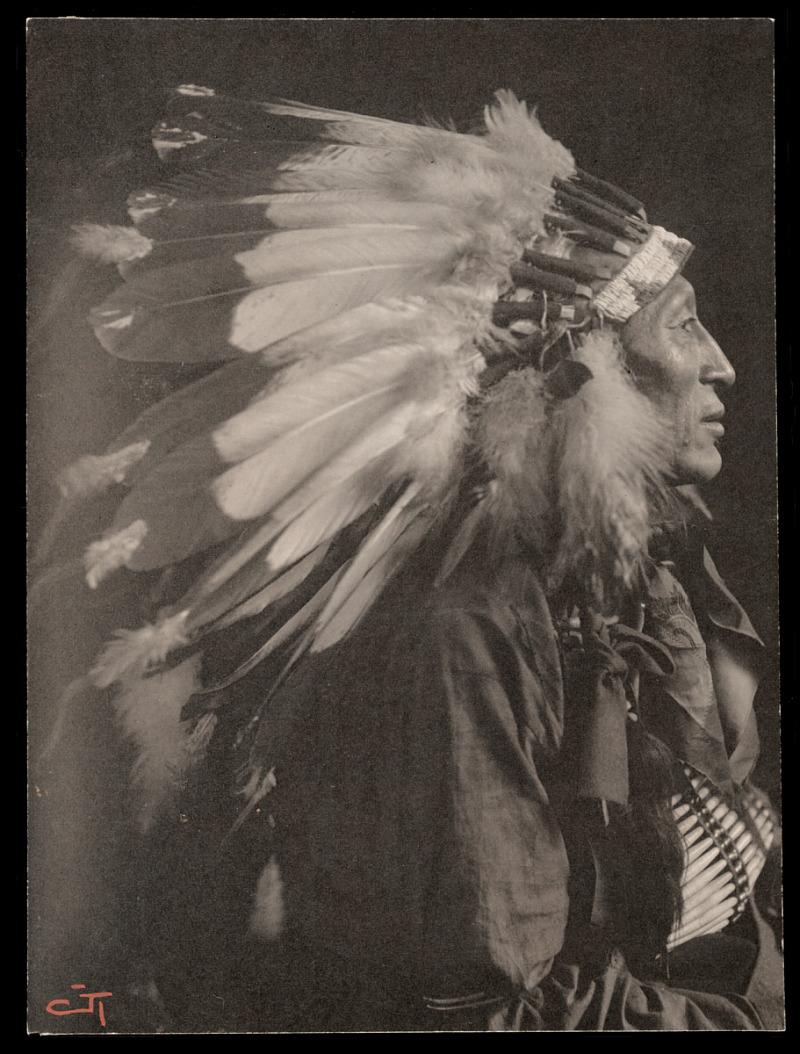
Her subjects included members of the Sioux nations, among them Iron Tail and Joe Black Fox.
Käsebier photographed some of her sitters wearing traditional clothing and ceremonial regalia, while other photographs presented them in more informal circumstances.
The Red Man
Among the best-known images associated with this series is The Red Man, a portrait that demonstrates Käsebier's interest in expressive simplicity and individual character.
Rather than relying on an elaborate theatrical environment, the photograph concentrates attention on the sitter.
The face, clothing, and arrangement of light become the principal elements of the composition.
The historical title reflects terminology commonly used during Käsebier's lifetime and should be understood within that historical context.
Chief Iron Tail
Iron Tail was an Oglala Lakota leader and performer who became one of the best-known Native Americans associated with Buffalo Bill's Wild West show.
Käsebier created several photographs of him, exploring different aspects of his appearance and personality.
These portraits are especially interesting when compared with the theatrical representations of Native Americans commonly circulated at the time.
Although Käsebier's photographs were not entirely free from the cultural assumptions of her era, they frequently convey an intimacy and individuality that distinguish them from more formulaic representations.
Zitkala-Ša
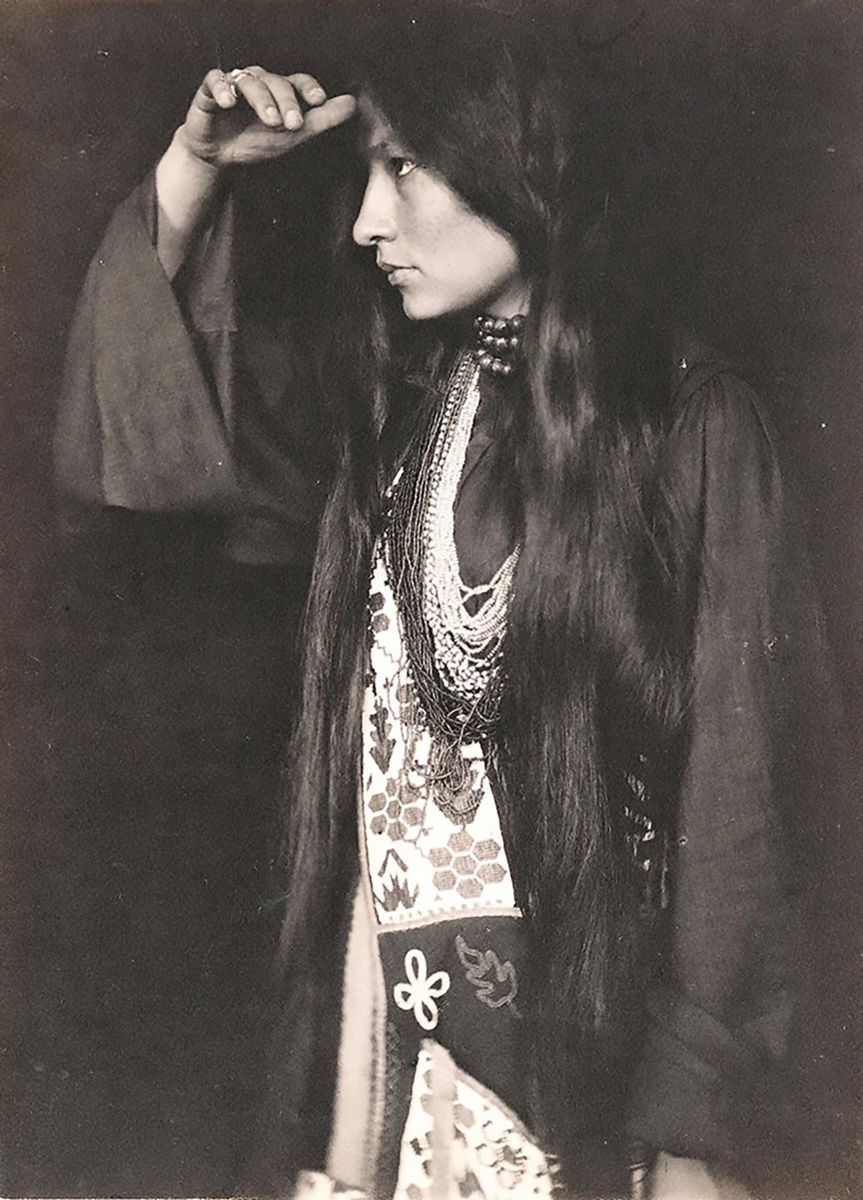
Käsebier also photographed Zitkala-Ša, the influential Yankton Dakota writer, musician, educator, and political activist.
Also known as Gertrude Simmons Bonnin, Zitkala-Ša became an important advocate for Native American rights.
Käsebier's portraits of her preserve the appearance of a remarkable historical figure while also demonstrating the photographer's sensitivity to the expressive possibilities of portraiture.
Today, these images possess both artistic and historical significance.
They remind us that photography can function simultaneously as a work of art and as a record of people whose lives shaped history.
Gertrude Käsebier vs. Julia Margaret Cameron
Gertrude Käsebier's work invites comparison with another pioneering woman photographer, Julia Margaret Cameron.
Both women began their serious artistic careers relatively late in life. Both rejected the assumption that technical sharpness was the principal measure of photographic quality. Both sought to create emotionally expressive portraits rather than merely accurate likenesses.
Yet their careers belonged to different stages in the development of photography.
Cameron began photographing in 1863, decades before Pictorialism became an organized international movement.
Her soft-focus portraits, biblical compositions, and literary allegories anticipated many of the artistic principles later embraced by Pictorialist photographers.
Käsebier emerged during the late 1890s, when photographers were increasingly organizing exhibitions, establishing artistic associations, and campaigning for recognition within the traditional fine arts.
The differences between the two photographers reveal how far the medium had developed.
| Julia Margaret Cameron | Gertrude Käsebier |
|---|---|
| British photographer, 1815–1879 | American photographer, 1852–1934 |
| Began photographing in 1863 | Established her professional studio in 1897 |
| Anticipated Pictorialism | Became a leading member of the organized Pictorialist movement |
| Primarily used wet collodion negatives and albumen prints | Experimented with platinum, gum bichromate, and other printing processes |
| Known for Victorian intellectuals and literary or religious allegories | Known for psychological portraits, motherhood, Native American subjects, and symbolic compositions |
| Exhibited and sold photographs while working within Victorian social circles | Built a successful commercial portrait studio alongside her fine art career |
Cameron helped demonstrate that photography could become an expressive artistic medium.
Käsebier helped carry that artistic ambition into a more organized professional and commercial environment.
 Buy This Print by Eddie Jongas · Limited Edition
The distinction is not that one created art while the other created a business. Both exhibited and sold their photographs.
Rather, Käsebier developed a sustained commercial portrait practice at a time when photography was becoming increasingly established as a profession and collectible art form.
Read more: Julia Margaret Cameron — A Pioneer of Fine Art Photography
Gertrude Käsebier and Alfred Stieglitz — An Alliance That Changed Photography
Few relationships in the history of early American fine art photography were as consequential as the professional relationship between Gertrude Käsebier and Alfred Stieglitz.
Stieglitz was not only a photographer. He was also an editor, exhibition organizer, gallery director, and passionate advocate for the recognition of photography as an independent art form.
He recognized Käsebier's extraordinary talent early in her career.
In 1899, writing in Camera Notes, he described her as:
“Beyond dispute the leading portrait photographer in this country.”
This was an extraordinary endorsement from a man who would become one of the most influential figures in the development of American modern art.
Stieglitz admired Käsebier's ability to capture personality, her artistic sensitivity, and the sophistication of her photographic prints.
He also commissioned her to photograph members of his own family, as well as himself.
Their shared artistic ambitions would soon lead to one of the most important organizations in photographic history.
The Founding of the Photo-Secession — 1902
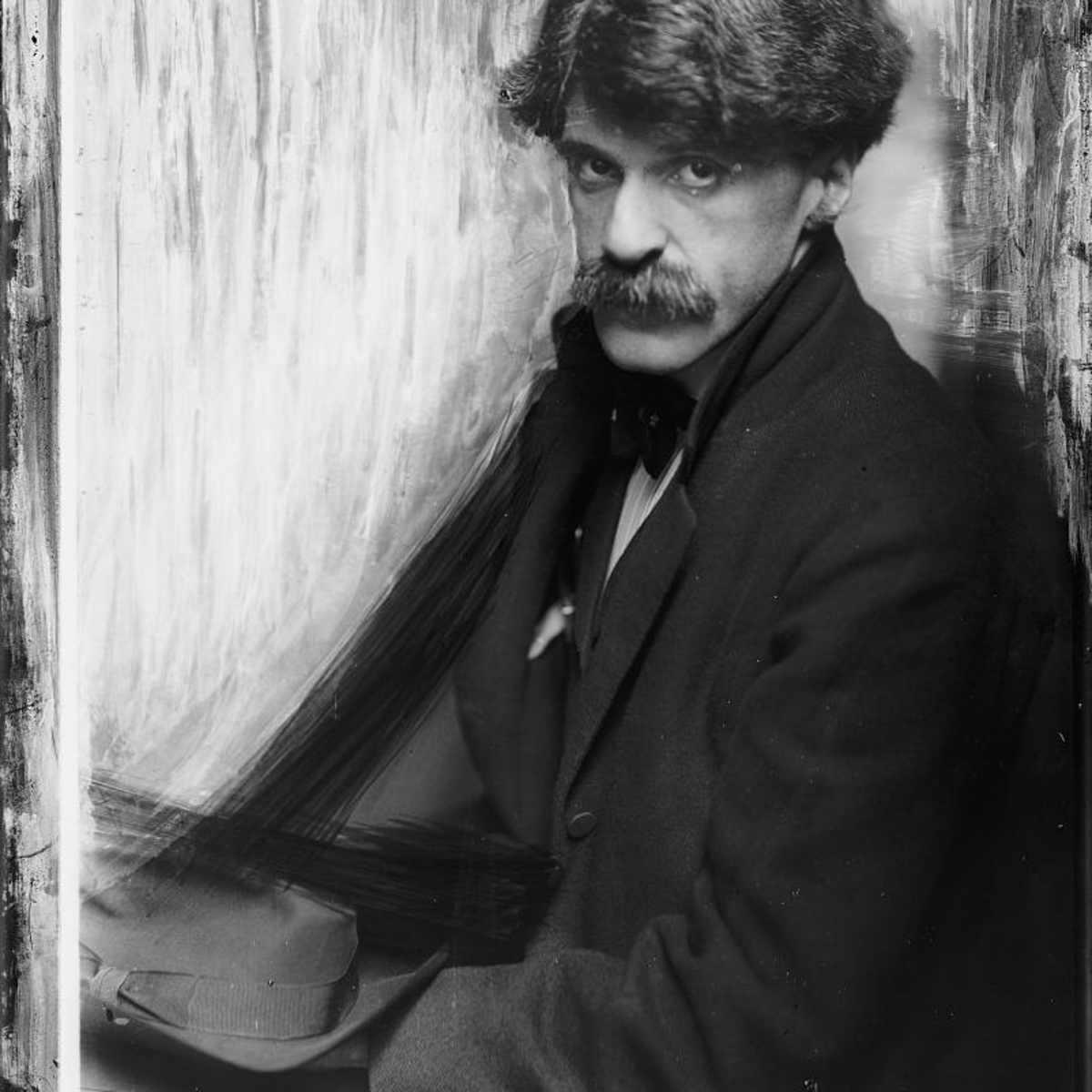
In 1902, Alfred Stieglitz established the Photo-Secession, an association dedicated to advancing photography as a form of artistic expression.
Gertrude Käsebier was one of its founding members, alongside photographers including Edward Steichen and Clarence H. White.
The group challenged the prevailing hierarchy that placed painting and sculpture above photography.
Its members believed that the artistic merit of a photograph should be judged by the photographer's creative vision and the quality of the finished work, rather than dismissed because a camera had been used to create it.
Through exhibitions, publications, and critical discussion, the Photo-Secession helped establish photography within the world of serious art collecting and exhibition.
Käsebier's involvement placed her at the center of this cultural transformation.
Camera Work — The Magazine That Elevated Photography
In January 1903, Stieglitz published the first issue of Camera Work, a photographic journal that would become one of the most influential art publications of the twentieth century.
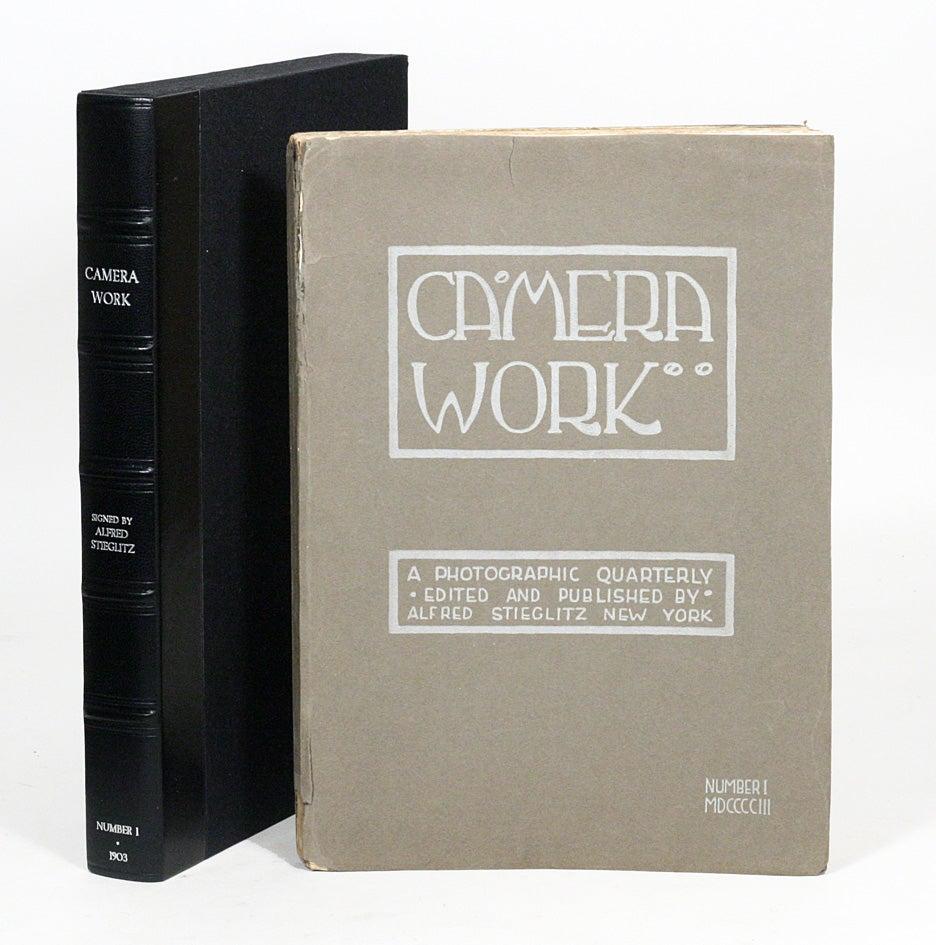
He chose Gertrude Käsebier as the featured photographer for its inaugural issue.
The decision was a remarkable indication of her standing within the photographic community.
Her work appeared in carefully produced photogravure reproductions that allowed readers to appreciate the tonal qualities and artistic sophistication of her photographs.
Camera Work was not an ordinary photography magazine.
Its carefully printed illustrations, critical essays, and attention to artistic presentation made it a publication devoted to photography as a serious cultural medium.
Today, original issues and individual photogravure plates from Camera Work are themselves collectible objects.
The journal also illustrates an important moment in the history of photographic publishing.
Decades earlier, Anna Atkins had demonstrated how photographs could become the principal illustrations in a book. By the early twentieth century, publications such as Camera Work were using photographic reproductions to circulate and promote photography as fine art.
Read more: Anna Atkins — Cyanotypes and the First Photobook
Exhibiting at Gallery 291
In 1905, Stieglitz opened the Little Galleries of the Photo-Secession at 291 Fifth Avenue in New York.
The gallery, later known simply as 291, became one of the most important venues for modern art in America.
Initially devoted primarily to photography, it eventually introduced American audiences to important developments in European and American modern art.
Käsebier's photographs were exhibited there, including in a significant exhibition alongside Clarence H. White in 1906.
This was an important achievement.
Photographs were increasingly being presented not merely as commercial products or technical demonstrations, but as artworks deserving the same careful exhibition and critical consideration as paintings.
The gallery helped create an environment in which collectors could encounter photography as a serious artistic medium.
Why Did Gertrude Käsebier and Alfred Stieglitz Fall Out?
Despite their shared achievements, the relationship between Käsebier and Stieglitz eventually deteriorated.
By 1912, Käsebier had formally resigned from the Photo-Secession.
Their disagreements involved both artistic philosophy and the practical realities of being a professional photographer.
Stieglitz increasingly moved away from the heavily manipulated aesthetic associated with Pictorialism. He became interested in photographs that drew their expressive power more directly from the inherent characteristics of the photographic medium.
Käsebier continued to value the expressive possibilities of Pictorialist printing.
But their disagreement was not simply a debate about photographic style.
It also involved money.
Can a Commercial Photographer Be a Fine Artist?
Käsebier operated a successful portrait business. She charged clients for her work, supported herself through photography, and treated her artistic abilities as the foundation of a profession.
 Buy This Print by Eddie Jongas · Limited Edition
Stieglitz, by contrast, was often skeptical of commercial photography and concerned that financial considerations could interfere with artistic independence.
Within the Pictorialist community, the distinction between the amateur artist and the commercial professional could be a source of considerable tension.
The word amateur did not necessarily imply a lack of skill. In this context, it could describe someone who pursued photography primarily for artistic reasons rather than financial compensation.
Käsebier's career challenged the assumption that these motivations were incompatible.
She demonstrated that a photographer could create important art while operating a successful business.
Her experience raises a question that remains relevant more than a century later.
Does selling a photograph diminish its artistic value?
A painting does not cease to be art when it is purchased by a collector. A sculpture does not lose its artistic significance because its creator receives compensation.
Why should photography be treated differently?
The history of fine art photography demonstrates that artistic independence and commercial success can coexist.
Käsebier's work remains a particularly compelling example.
Life After the Photo-Secession
Leaving Stieglitz's organization did not end Käsebier's career.
She continued her professional work and maintained relationships with other photographers, including Clarence H. White.
In 1916, she helped establish the Pictorial Photographers of America, an organization that continued promoting artistic photography outside Stieglitz's increasingly exclusive circle.
She also contributed to photographic education and encouraged the development of younger photographers.
Her portrait studio remained active into the late 1920s, and in 1929 the Brooklyn Museum presented a major retrospective of her work.
Gertrude Käsebier died in New York City in 1934 at the age of 82.
Her achievements, however, had already become part of the foundation of American fine art photography.
Did Gertrude Käsebier Photograph Landscapes?
Although Käsebier is remembered primarily for her portraits, her photographic interests were not limited to human subjects.
She also produced landscapes, figure studies, and symbolic photographs.
Her landscapes demonstrate that the artistic principles of Pictorialism could be applied beyond the portrait studio.
Atmospheric light, simplified compositions, tonal relationships, and selective detail could transform a natural environment into an expressive image.
This approach was shared by other Pictorialist photographers, particularly Edward Steichen, whose photographs of landscapes and nocturnal scenes demonstrated the expressive possibilities of photography.
Later photographers would pursue a different visual direction.
Ansel Adams, for example, became associated with sharply detailed landscape photography and the principles of Group f/64, which rejected many of the painterly conventions of Pictorialism.
Nevertheless, both approaches were concerned with transforming the photographic image into art.
A softly rendered Pictorialist landscape and a sharply detailed photograph by Ansel Adams may look radically different, but both can communicate the photographer's artistic interpretation of nature.
This is one of the enduring lessons of photography's history: there is no single visual style that defines fine art.
Explore the Jongas Fine Art Landscape Photography Collection
Gertrude Käsebier and Edward Steichen
Another important figure in Käsebier's artistic circle was Edward Steichen.
Both photographers were associated with Alfred Stieglitz and the Photo-Secession, and both explored the expressive possibilities of Pictorialism.
Their careers also shared an important commercial dimension.
Käsebier built a successful portrait studio, while Steichen would eventually become one of the most influential fashion and celebrity photographers of the twentieth century.
Both demonstrated that photography could function as a commercial profession without losing its artistic potential.
Their approaches, however, were different.
Käsebier frequently emphasized psychological intimacy, domestic relationships, and the emotional character of her subjects.
Steichen explored dramatic lighting, atmospheric landscapes, elaborate compositions, and eventually the visual sophistication of modern fashion photography.
Their work also illustrates how Pictorialism was not a single rigid style. It was a broader artistic philosophy that allowed photographers to develop highly individual forms of expression.
Steichen later became an influential museum curator and continued to appreciate Käsebier's work even as photographic styles changed.
From Gertrude Käsebier to Annie Leibovitz
More than a century after Käsebier established her New York portrait studio, contemporary photographers continue to explore many of the same artistic questions.
One particularly interesting comparison is with Annie Leibovitz, one of the most recognizable portrait photographers of the modern era.
Although Käsebier and Leibovitz worked in very different technological and cultural environments, their careers reveal striking parallels.
Both became known for photographs that attempt to communicate something beyond a subject's physical appearance.
Both used carefully considered compositions, lighting, and references to traditional art.
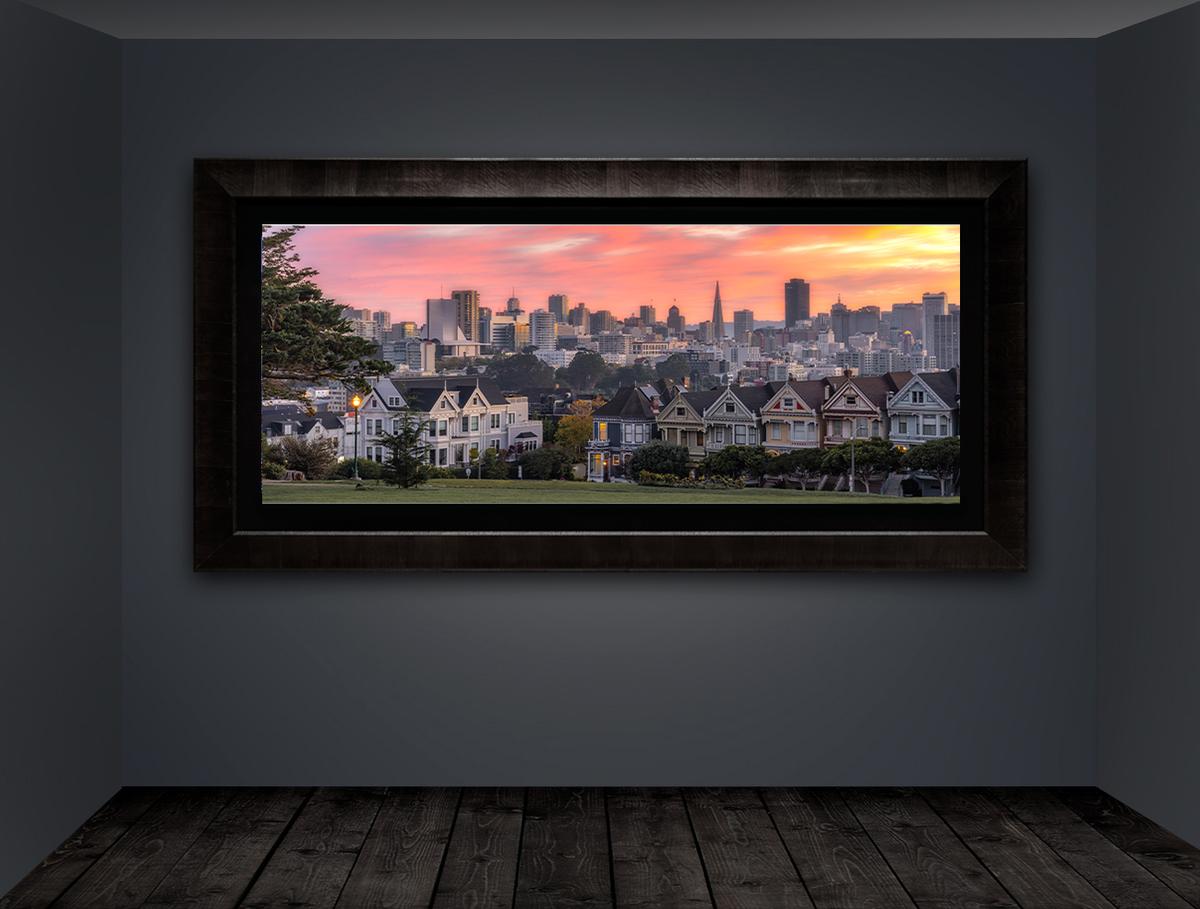 Buy This Print by Eddie Jongas · Limited Edition
Both photographed prominent cultural figures while also exploring intimate personal relationships.
And both established successful professional careers that crossed the boundaries between commercial photography and fine art.
Leibovitz's celebrated portrait of John Lennon and Yoko Ono, photographed in December 1980, demonstrates the emotional possibilities of portraiture in a way that recalls Käsebier's ambition to reveal something essential about her subjects.
Leibovitz's elaborate portraits for publications such as Vanity Fair and Vogue also frequently draw upon the visual traditions of painting and theatrical composition.
The comparison does not imply a direct artistic relationship between the two photographers.
Rather, it demonstrates the continuing relevance of the artistic territory that Käsebier helped establish.
Contemporary photographers still face the challenge she embraced more than a century ago: creating an image that reveals something about a person rather than merely showing what that person looks like.
Are Gertrude Käsebier's Photographs Valuable Today?
Gertrude Käsebier's photographs remain collectible works of art, and original examples periodically appear on the secondary art market.
Her photographs have been offered by established photography auction houses and galleries, where collectors evaluate them according to their artistic importance, rarity, condition, provenance, and photographic printing process.
Not all prints of the same image possess the same value.
An original platinum print produced during Käsebier's lifetime is a very different collectible object from a later reproduction of the same photograph.
Similarly, an original gum bichromate print may possess physical characteristics that distinguish it from other prints made from the same negative.
What Determines the Value of a Historical Photograph?
Several factors influence the value of photographs by important historical photographers:
- Print date: Photographs printed during the artist's lifetime are often particularly desirable.
- Printing process: Platinum, gum bichromate, and other historic photographic processes can contribute to a print's significance.
- Rarity: The number of surviving examples can affect collector demand.
- Provenance: A documented history of ownership can establish authenticity and historical importance.
- Condition: Damage, fading, discoloration, and previous restoration may influence value.
- Exhibition history: Prints included in important historical exhibitions may carry additional significance.
- Artist's involvement: A print made or directly supervised by the photographer may be valued differently from a later reproduction.
Original issues of Camera Work and individual photogravures are also collected, although these should be distinguished from original photographic prints.
A photogravure may be an important historical object in its own right, but its method of production and relationship to the artist's original photograph are different.
Understanding these distinctions is essential when collecting fine art photography.
Read more: Art Auction Houses — Christie's and Sotheby's
Where Can You See Gertrude Käsebier's Photographs Today?
Käsebier's work is preserved in some of the world's most important art museums and photographic archives.
These institutions hold original prints, historical photogravures, and archival materials that document her contribution to photography.
| Museum or institution | Collection highlights |
|---|---|
| Metropolitan Museum of Art, New York | Original prints including Blessed Art Thou Among Women |
| Museum of Modern Art, New York | Portraits, symbolic compositions, and The Heritage of Motherhood |
| Smithsonian American Art Museum, Washington, D.C. | The Manger and other examples of her photographic work |
| Smithsonian National Museum of American History | Native American portraits and photographic history materials |
| National Museum of Women in the Arts, Washington, D.C. | Portraits and an original platinum print of The Manger |
| Art Institute of Chicago | Works associated with the Alfred Stieglitz Collection |
| J. Paul Getty Museum, Los Angeles | Examples of her photographic portraiture |
| University of Delaware | Archival materials relating to her life and photographic career |
The presence of Käsebier's work in these institutions demonstrates how dramatically the cultural status of photography has changed.
During her lifetime, she participated in a movement dedicated to convincing the art establishment that photography deserved recognition.
Today, her photographs are preserved and studied alongside paintings, sculptures, drawings, and other historically significant works of art.
Not every photograph is permanently on public display, however. Museums frequently rotate photographic works to protect light-sensitive materials.
What Gertrude Käsebier Teaches Us About Collecting Fine Art Photography
One of the most important lessons from Käsebier's career is that a fine art photograph is more than the image it contains.
It is also a physical object.
The materials used to create it, the photographer's decisions during printing, the quality of its presentation, and its relationship to the artist's original vision all contribute to its identity.
Käsebier understood this more than a century ago.
Her experimentation with platinum and gum bichromate printing was not merely a technical exercise. It was part of her artistic process.
She selected materials that allowed her to communicate the atmosphere, tonal qualities, and emotional character she envisioned.
Contemporary fine art photographers continue to make similar decisions, although the materials and technologies available today are considerably different.
Modern archival photographic papers, advanced printing technologies, and acrylic face-mounting techniques offer new possibilities for presenting photographic art.
At Jongas Fine Art Photography, the creation of the finished artwork is an essential part of the artistic process.
Our signature Lumachrome HD photographic prints, presented behind TruLife acrylic, are designed to preserve exceptional detail, depth, color, and luminosity while offering a refined, contemporary presentation.
The objective is not to reproduce the appearance of a nineteenth-century platinum print.
It is to apply the same underlying artistic principle: the finished photographic artwork should express the photographer's vision as fully as possible.
For collectors, considerations such as print quality, edition size, authenticity, presentation, and long-term preservation remain just as important today as they were during the emergence of fine art photography.
A photograph intended to be displayed and appreciated as art deserves attention not only to the image itself but also to how that image becomes a physical artwork.
Discover How Jongas Fine Art Photography Prints Are Created
Explore the Jongas Fine Art Photography Collection
Gertrude Käsebier's Place Among the Early Women Photographers
Gertrude Käsebier represents an important chapter in the remarkable history of women who helped shape photography during the nineteenth century.
Each of these pioneers contributed something different to the development of the medium.
Constance Talbot participated in photography's earliest experimental years, when the possibilities of photographic image-making were only beginning to be understood.
 Buy This Print by Eddie Jongas · Limited Edition
Anna Atkins demonstrated how photography could become a powerful tool for scientific illustration and publishing, creating the first book illustrated with photographic images.
Julia Margaret Cameron challenged conventional expectations of photographic accuracy and demonstrated that portraits could become emotionally expressive works of art.
Gertrude Käsebier carried many of these artistic ambitions into the professional, institutional, and commercial world of photography at the beginning of the twentieth century.
Their achievements should not be understood as isolated historical events.
Together, they illustrate the extraordinary evolution of photography from experimental image-making to scientific documentation, artistic expression, and ultimately an internationally recognized fine art medium.
They also demonstrate that women were not merely observers of photography's development.
They were among its most important innovators.
Frequently Asked Questions About Gertrude Käsebier
Who was Gertrude Käsebier?
Gertrude Käsebier was an American photographer who lived from 1852 to 1934. She became one of the leading figures of the Pictorialist movement and was celebrated for her expressive portraits, studies of motherhood, Native American portraits, and contributions to fine art photography.
What is Gertrude Käsebier best known for?
Käsebier is best known for photographs such as Blessed Art Thou Among Women, The Manger, and The Heritage of Motherhood, as well as her portraits of Native Americans and prominent artists, including Auguste Rodin.
Was Gertrude Käsebier a Pictorialist photographer?
Yes. Käsebier was one of the leading American Pictorialist photographers. She used expressive compositions, atmospheric lighting, and specialized printing processes to create photographs intended to be appreciated as fine art.
What photographic processes did Gertrude Käsebier use?
Käsebier experimented with platinum printing, gum bichromate printing, gum-over-platinum printing, and other photographic processes. These techniques allowed her to influence the tonal qualities, texture, and artistic appearance of her finished photographs.
What was Gertrude Käsebier's relationship with Alfred Stieglitz?
Käsebier and Stieglitz were important artistic collaborators and founding members of the Photo-Secession. Stieglitz featured her work in the first issue of Camera Work and exhibited her photographs at his New York gallery. Their relationship deteriorated over artistic and professional disagreements, and Käsebier resigned from the Photo-Secession in 1912.
How was Gertrude Käsebier different from Julia Margaret Cameron?
Cameron began photographing in the 1860s and anticipated many of the artistic principles later associated with Pictorialism. Käsebier emerged in the 1890s as a professional photographer and became a leading member of the organized Pictorialist movement. She also built a successful commercial portrait studio.
Did Gertrude Käsebier photograph landscapes?
Yes. Although primarily known for portraiture, Käsebier also created landscapes, figure studies, and symbolic photographs. Her artistic interests extended beyond conventional portrait photography.
Did Gertrude Käsebier publish any photography books?
Käsebier is not principally known for publishing a standalone photography book during her lifetime. Her photographs were widely circulated through exhibitions and publications such as Camera Notes and Camera Work. Several books examining her life and photography have been published since her death.
Are Gertrude Käsebier's photographs collectible?
Yes. Original photographs by Käsebier are collected by museums and private collectors. Their value depends on factors such as rarity, condition, provenance, printing process, and the historical importance of the individual print.
Where are Gertrude Käsebier's original photographs today?
Her photographs are held by institutions including the Metropolitan Museum of Art, Museum of Modern Art, Smithsonian museums, National Museum of Women in the Arts, Art Institute of Chicago, and J. Paul Getty Museum.
The Enduring Legacy of Gertrude Käsebier
Gertrude Käsebier's career demonstrates that photography's transformation into fine art was not the achievement of a single inventor, artist, or institution.
It was the result of generations of photographers who challenged conventional expectations and expanded the creative possibilities of the medium.
Käsebier helped establish photography as a form of psychological expression, a vehicle for artistic interpretation, and a collectible art object.
She also demonstrated that a photographer could pursue artistic excellence while building a successful professional career.
Her relationship with Alfred Stieglitz, from their early collaboration to their eventual separation, reveals the debates that shaped photography's artistic identity during the twentieth century.
More than a hundred years later, many of those questions remain relevant.
What distinguishes a photograph from a work of photographic art?
How much should a photographer interpret or manipulate an image?
Does commercial success diminish artistic integrity?
And what role does the finished photographic print play in communicating the artist's vision?
Käsebier's work offers a powerful response.
A camera may record the world, but it is the photographer who gives the image meaning.
That principle remains at the heart of fine art photography today.
Explore Contemporary Fine Art Photography
The history of photography continues to inspire contemporary artists who transform the world around them into expressive photographic artworks.
Discover the limited-edition landscape, nature, and abstract photographic prints of Jongas Fine Art Photography, created for collectors and presented using premium archival materials.
Explore the Fine Art Photography Collections
Hang Art Not TVs
 Buy This Print by Eddie Jongas · Limited Edition
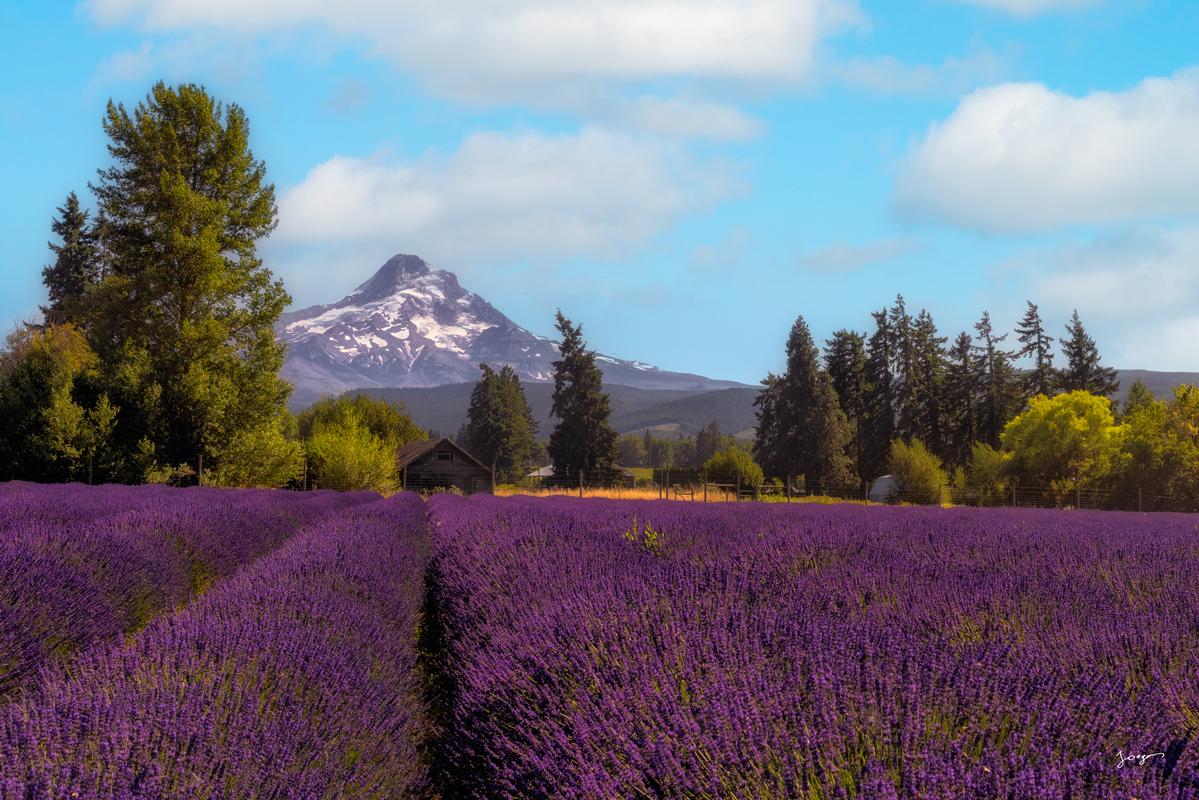 Buy This Print by Eddie Jongas · Limited Edition
